
REVIEW · ITALY
Colosseum with Gladiator Arena, Forum and Palatine in Spanish
The best feature here is the gladiator arena entrance. Instead of seeing the Colosseum only from the regular visitor paths, you enter through the gate once used by fighters and step onto the arena floor. That gives the first hour a clear focus and makes the building’s scale easier to grasp.
I like the sensible three-part route: the Colosseum, Palatine Hill, and Roman Forum each get about an hour. I also like having a Spanish-speaking guide to connect the stones, arches, temples, and imperial palaces into one story. Guides such as Tomás have brought humor and energy to the visit. The main concern is the price, $90.57 per person, and the tour’s maximum of 20 people, which may feel less intimate than the phrase semi-private suggests.
Key points to know before booking
- Gladiator gate access: Enter the Colosseum directly onto the arena level rather than treating the amphitheater as a distant shell.
- Three major Roman sites: The tour gives roughly one hour each to the Colosseum, Palatine Hill, and Roman Forum.
- Spanish-speaking visit: The experience is designed for Spanish speakers, with guides such as Tomás praised for clear explanations and humor.
- Maximum group of 20: The group may be small, but it is not guaranteed to be just a handful of people.
- Bring matching identification: Your voucher must list every participant’s full name, and each person needs a passport or ID matching that booking.
- Plan for hot weather: The route includes open archaeological areas, so water, sun protection, and sensible shoes matter.
Why the gladiator arena changes the Colosseum visit
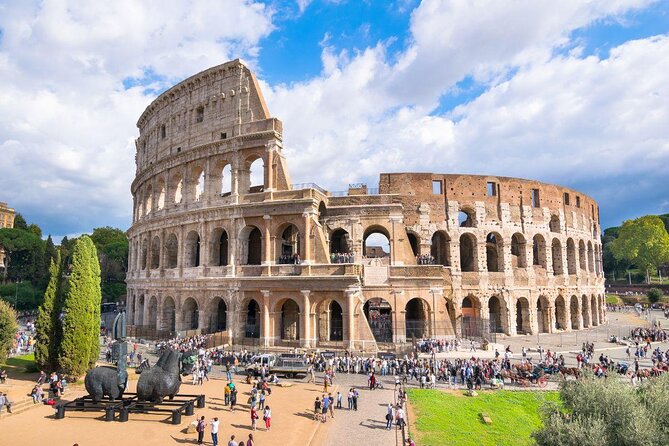
The Colosseum is easy to admire from outside. Its arches rise above modern Rome, and the crowds around Piazza del Colosseo make it hard to miss. The more useful question is what you see once inside.
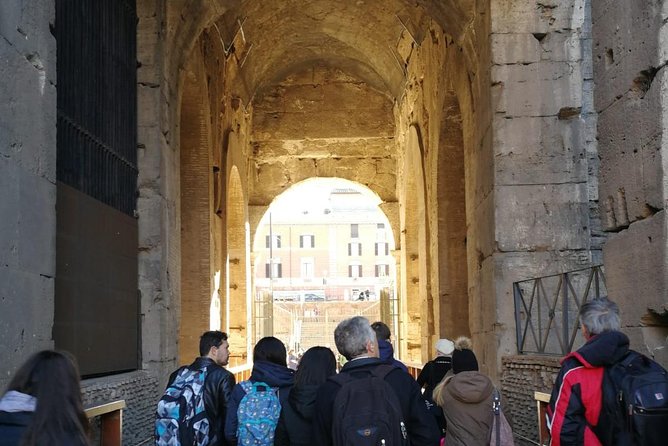
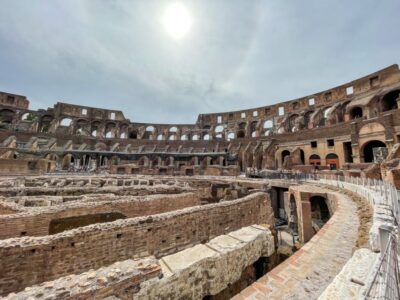
This tour begins with direct entry to the gladiator arena, reached through the historic gladiator gate. You are not simply looking down from an upper tier at a wooden reconstruction or an open pit. You get onto the central arena area, where the building’s shape becomes more immediate.
From this level, look up at the surrounding seating and imagine the view in reverse. The spectators were arranged in tiers around the action, while the arena floor sat at the center of the whole machine. The position helps you understand why the Colosseum was designed for spectacle, movement, and control.
The arena access is the strongest reason to choose this experience over a basic Colosseum ticket. It gives the opening hour a memorable focal point, and it can be especially useful if this is your first visit to Rome.
Still, arena access does not mean every part of the Colosseum is included. The supplied details specify the interior and gladiator arena, but they do not promise access to every restricted level or underground section. If the hypogeum, upper tiers, or attic are essential to you, check the exact access offered before paying.
More Gladiator and Colosseum film tours in Rome:
- Rome: Colosseum Tour with Access to the Gladiator Arena
★ 4.4 · 7,046 reviews - Gladiator’s Gate: Special Access Colosseum Tour with Arena Floor
★ 4.5 · 4,037 reviews - Roman Gladiator School: Learn How to Become a Gladiator
★ 4.5 · 1,477 reviews
One hour inside the Colosseum
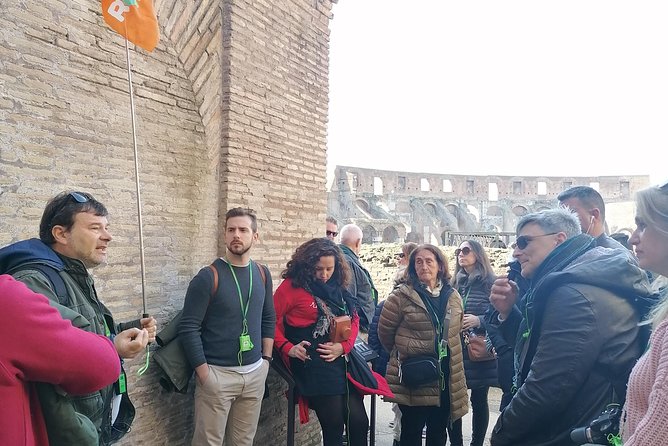
The Colosseum portion lasts about one hour. That is enough time for a guide to explain the arena, the building’s role in Roman public life, and the main features you can see from the permitted route.
A guided hour also keeps the visit moving. You will not spend the morning reading every panel or wandering without a plan. Instead, you can focus on the structure in front of you, then ask questions while you are still standing in the place being discussed.
The short duration has a tradeoff. The Colosseum is enormous, and one hour does not allow unlimited lingering. If you enjoy photographing every arch or reading every sign, you may want extra time after the formal tour. The experience ends at the Colosseum, and you can stay there afterward if you wish.
That ending is useful. You do not have to rush away the moment the guide finishes. You can remain near the monument and take more photographs, revisit a section, or simply let the scale of the place sink in.
Palatine Hill and the Farnese Terrace
After the Colosseum, the route moves to Palatine Hill for about an hour. This is where Rome’s origin stories and imperial power meet.
From the Farnese Terrace, you look across the ancient center and see the places tied to the beginnings of Rome. The hill also contains the remains of the Flavian dynasty’s palace complex, a reminder that Roman emperors chose this high ground for more than a good view.
Palatine Hill is less compact than the Colosseum. Paths cross open ground, ruins appear at different levels, and the meaning of a wall or foundation is not always obvious without explanation. This is where a Spanish-speaking guide can make a real difference. A broken structure becomes easier to picture when you understand how it fit into a palace, garden, or public center.
The open setting can also be demanding. A hot day will feel hotter here than inside the Colosseum, and there is no lunch or bottled water included. Bring your own water and allow for sun exposure. The route is about three hours overall, but the conditions can make it feel longer if you arrive unprepared.
The reward is the view and the sense of Rome developing across time. You see the hill not as a single monument but as part of a wider ancient center, connected to the Forum below and the Colosseum nearby.
Walking the Roman Forum and Via Sacra
The final hour is devoted to the Roman Forum. This is the part of the tour where a guide’s storytelling matters most, because the Forum can otherwise seem like a field of scattered stones.
The route follows the Via Sacra, the ancient processional road through the center of Roman public life. Along the way, you encounter major landmarks such as the Temple of Antoninus, the Curia, the triumphal arches of Titus and Septimius Severus, and the remains of large basilicas.
The Curia helps you picture the political side of Rome. The basilicas were not churches in the modern sense, but major public buildings connected with law, business, and civic activity. The arches mark military victories and imperial memory. Together, these structures show how government, religion, ceremony, and power crowded into one urban center.
You also pass the place associated with Julius Caesar’s final farewell. Details like this can make the Forum feel less like an archaeological park and more like a working city that lost its buildings but kept its central role in Roman memory.
The Forum takes concentration. You will be walking over uneven ancient surfaces and moving through a large open area. Wear comfortable shoes and avoid assuming that the route will feel like a simple paved stroll. The reward comes from seeing the Via Sacra and major monuments in sequence, with the guide explaining how each space worked.
A few more filming locations around Rome worth a look
- Rome: Gladiator’s Gate and Arena Special Colosseum Access
★ 4.7 · 796 reviews - Rome: 2-Hour Gladiator School
★ 4.7 · 630 reviews - Rome: Gladiator Show and Museum Tickets
★ 4.5 · 237 reviews - Colosseum Gladiator Tour for Kids and Families
★ 4.1 · 226 reviews
How the Spanish guide affects the experience
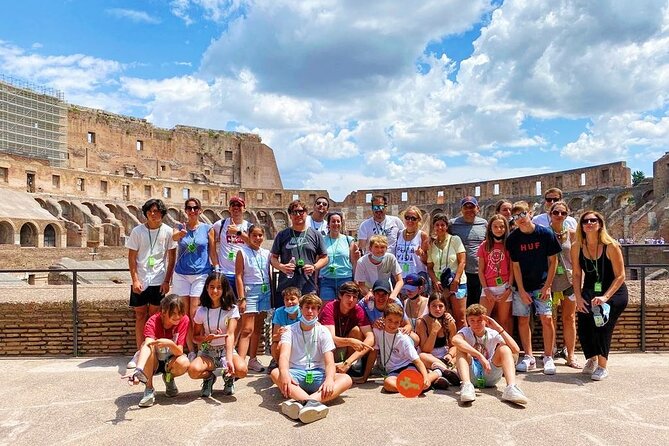
This is an exclusive Spanish-language visit, not a general tour where Spanish commentary may or may not be available. That matters if you understand historical explanations more easily in Spanish or want to discuss the sites without switching languages.
A good guide can also keep these three sites from blending together. The Colosseum is about spectacle and arena design. Palatine Hill focuses on imperial residences and Rome’s beginnings. The Forum centers on civic life, ceremonies, law, and memory. A clear Spanish narrative gives each stop its own purpose.
Tomás is one guide associated with the experience, and his style has been described as lively and humorous. That quality is useful in Rome’s ancient center, where a long list of emperors and building names can quickly become a blur. Another guide has been praised for professional, engaging explanations, although a name was not provided.
Guide quality can vary on any scheduled departure. The strongest possible experience depends on who leads your group that day. Still, the format gives the guide a full three hours to connect the sites, rather than treating the Colosseum as an isolated photo stop.
Is $90.57 a fair price?
At $90.57 per person, this is not a bargain admission ticket. You are paying for the guided format, Spanish language, entry to three major archaeological sites, and the special arena access.
The value is strongest if you want context and prefer not to manage the Colosseum, Palatine Hill, and Forum on your own. The three sites are close together but not always easy to interpret independently. The guide helps you use your limited time well and gives the route a logical order.
The value is weaker if you mainly want entry and plenty of free time. You might prefer a lower-cost ticket if you are happy to read information on site, move at your own pace, or spend much longer inside one monument. The formal tour lasts about three hours, though you can stay at the Colosseum after it ends.
Lunch and bottled water are not included. That is a minor expense, but it matters in Rome, where the archaeological center can be hot and food stops may interrupt your schedule. Carry water from the start rather than waiting until you feel thirsty.
The tour is booked, on average, 43 days ahead. That suggests you should not leave this particular arena-access visit until the last moment, especially if your Rome dates are fixed.
Meeting point, timing, and group size
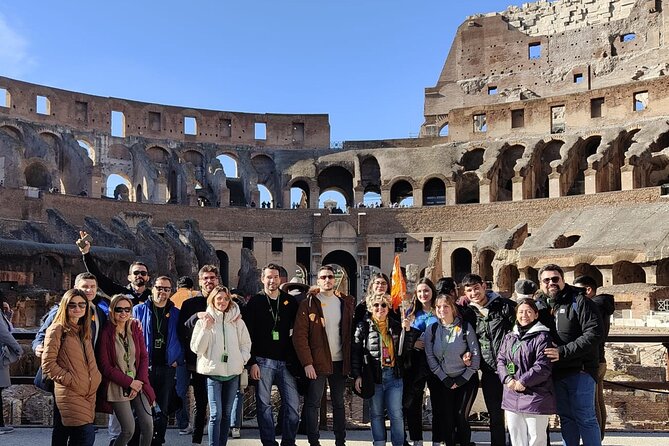
The stated starting point is Largo Corrado Ricci in Rome. The tour ends at the Colosseum, at Piazza del Colosseo 1, and you may remain at the Colosseum afterward if you choose.
The start and end points are not exactly the same, so read the confirmation carefully and arrive at Largo Corrado Ricci rather than assuming you should wait beside the Colosseum entrance. The area is near public transportation, which makes it practical to reach from other parts of Rome.
The maximum group size is 20 people. That is smaller than a large coach tour, but it may not feel truly private if the group reaches its limit. The description presents it as semi-private and in very small groups, so the actual size may be lower, but you should plan around the stated maximum rather than a promise of four or six people.
The route lasts approximately three hours. It is a focused morning or afternoon block, not a full-day outing. That leaves room for a meal, another museum, or an evening walk, but the three hours themselves are active and outdoors in several sections.
What to bring and what can go wrong
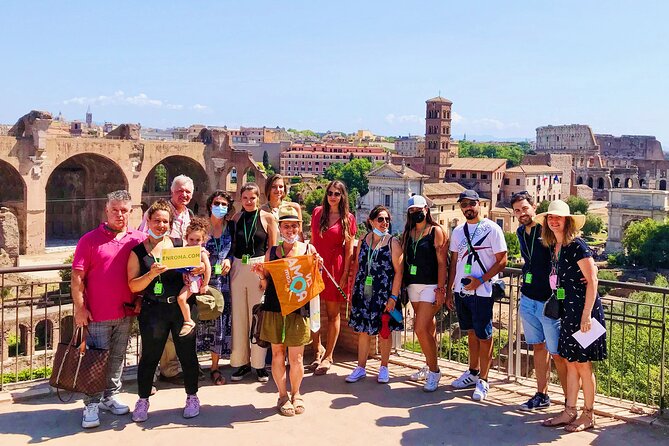
The most important practical rule concerns names and identification. When booking, provide the full name of every person in your party. The voucher must show all those names before entry, and each person must bring a valid passport or ID that matches the booking.
Do not treat this as a minor paperwork detail. A mismatch can result in denied entry to the Colosseum and Roman Forum. Check the spelling before completing the reservation, then keep the voucher accessible on your phone.
The tour uses a mobile ticket, so you do not need a printed ticket simply because the format is mobile. You do need the required voucher and identification ready at the ticket office before entry.
Bring water, sun protection, and shoes suited to uneven historic surfaces. Since lunch is not provided, eat before the start or plan food after the tour. Rome’s ancient center is not the place to discover halfway through the afternoon that you forgot both water and a meal.
There is also a service risk worth taking seriously. One reported booking problem involved a guide who never appeared and a paid reservation that the operator said was unavailable. That is not the expected outcome, but it shows why you should save the confirmation, verify the meeting details, and know how to contact the provider, EnRoma.com, before the day begins.
Cancellation is flexible only up to a point. You receive a full refund if you cancel at least seven full days before the local start time. Cancellations or changes made inside that seven-day window are not accepted for a refund.
Who will get the most from this tour?
I would choose this experience for a first visit to Rome if you want the major ancient sites explained in Spanish and the gladiator arena is important to you. The route gives you the essential trio without forcing you to plan separate tickets, meeting points, and explanations.
It also suits you if you like a guide with personality. Tomás’s good humor, when he is leading the group, fits a three-hour route that could otherwise become a heavy list of names and dates.
Families and mixed-age groups may appreciate the structure. Each stop has a clear time frame, and the guide provides direction. Still, the heat, walking, and uneven surfaces may be tiring for anyone who struggles with long outdoor visits.
Independent history fans should think twice. You may find the one-hour limits at each location too restrictive, especially if you want to study inscriptions, photograph architectural details, or explore beyond the main route.
Should you book it?
Book this tour if you want a Spanish-speaking guide, a compact three-hour route, and direct access to the Colosseum arena through the gladiator gate. The combination of arena entry, Palatine Hill, and Roman Forum gives you a strong first look at ancient Rome, and the chance to remain at the Colosseum afterward adds useful flexibility.
Think twice if $90.57 feels high for a guided visit, if you need a very small group, or if you want extensive free time at each site. Confirm every name on the booking, carry matching identification, arrive at Largo Corrado Ricci, and bring water. With those details handled, this is a practical way to see Rome’s ancient center without losing the thread between its biggest monuments.
FAQ
How long does the tour last?
The tour lasts approximately three hours, with about one hour at the Colosseum, one hour at Palatine Hill, and one hour at the Roman Forum.
Is the tour conducted in Spanish?
Yes. It is an exclusive Spanish-language visit.
Does the tour include the Colosseum arena?
Yes. The experience includes direct entry to the gladiator arena through the gladiator gate.
What other sites are included?
Admission is included for Palatine Hill and the Roman Forum, as well as the Colosseum.
Where does the tour begin?
The stated meeting point is Largo Corrado Ricci in Rome.
Where does the tour end?
The tour ends at the Colosseum, Piazza del Colosseo 1. You can stay at the Colosseum after the tour if you wish.
How many people can join the group?
The maximum group size is 20 people.
What identification do I need?
Each person must bring a valid passport or ID document matching the full name provided at booking. The voucher must also list the full names of all participants.
Can I cancel for a full refund?
Yes, if you cancel at least seven full days before the experience start time, based on local time. Cancellations or changes made less than seven full days before the start are not refunded.
Just added around Rome
- Colosseum Gladiator’s Arena and Ancient Rome Tour★ 4.5 · 7 reviews
- 3-Hour Colosseum Gladiator’s Arena and Ancient Rome Tour★ 4.5 · 8 reviews
- The Colosseum Arena & Gladiator Chronicles Private Tour★ 5.0 · 14 reviews
- Rome : Arena of Gladiators Tour with Forum Access★ 4.0 · 6 reviews
- From Colosseum Gladiators to Via Sacra: Rome’s Historic Heart★ 5.0 · 12 reviews
- Tour of Gladiators Arena and Colosseum with Imperial Forum★ 4.5 · 8 reviews
- Colosseum & Roman Forum with Gladiator Arena For Kids & Families★ 5.0 · 2 reviews
- Marvels Of Rome At Night – Private Tour★ 4.5 · 26 reviews
Italy Film Location Tours, compared.
Colosseum Tour with Access to the Gladiator Arena
Read our review →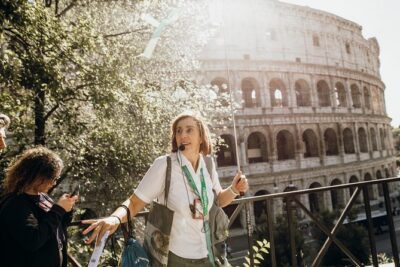
Gladiator’s Gate: Special Access Colosseum Tour with Arena Floor
Read our review →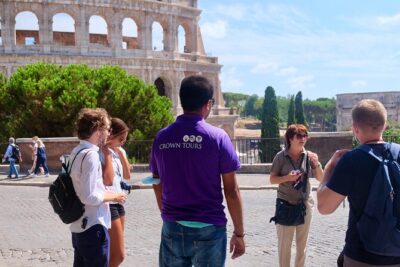
Colosseum Arena Floor, Roman Forum & Palatine Hill Tour
Read our review →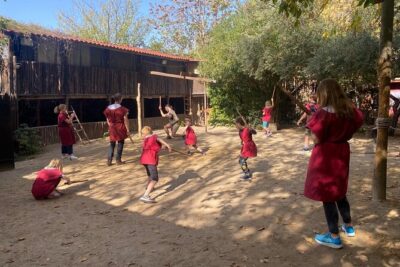
Roman Gladiator School: Learn How to Become a Gladiator
Read our review →
Full Day Tour to Val d’Orcia and Gladiator’s Fields with Wines
Read our review →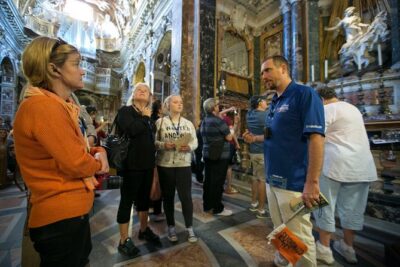
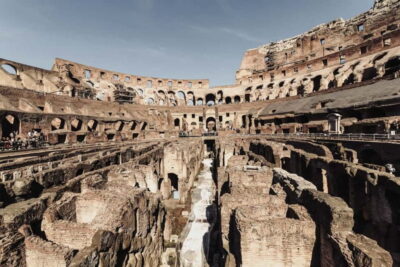
Gladiator’s Gate and Arena Special Colosseum Access
Read our review →
Browse the lists this tour appears in