
REVIEW · ITALY
Rome: 2-Hour Gladiator School
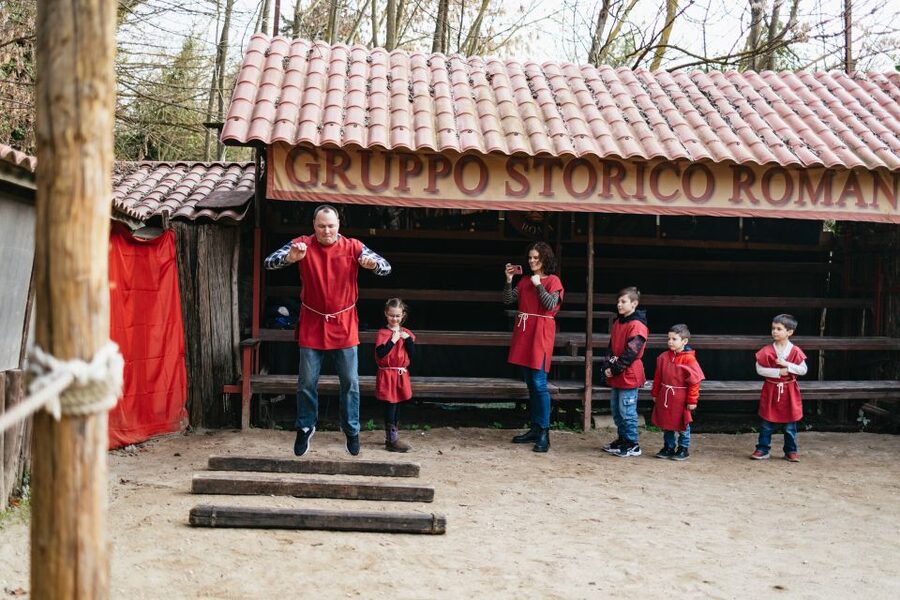
Rome’s Gladiator School turns Roman history into a hands-on lesson. At a site on the ancient Appian Way, you put on a gladiator tunic, learn basic sword moves, and finish with a safe battle using foam weapons. It is active from start to finish, not a long lecture with a few posed photos at the end.
I like the mix of history and play, especially the small museum and the explanation of how gladiators lived. I also like the way the instructors work with different ages. Children can take the spotlight, while adults can join in or watch. The main drawback is the setting: the Appian Way can be hot, and mosquitoes may be bothersome, so bring water-friendly clothing and insect repellent.
Quick points to know
- The final arena battle is the big payoff: After practice, participants face off in a supervised fight with foam swords.
- The lesson suits families: Children as young as five have taken part, and adults can train alongside them.
- You get more than swordplay: The session covers Roman weapons, gladiator life, military ideas, and basic fighting discipline.
- The Appian Way location adds atmosphere: You train away from central Rome, near one of the city’s oldest roads.
- Parents can watch without buying a course ticket: A companion does not pay if not taking part.
- Plan for outdoor conditions: Shady areas and cold water are available, but summer heat and mosquitoes can affect comfort.
Why this two-hour lesson works so well

The clever idea here is simple: children remember what they physically do. A visit to the Colosseum can show where gladiators fought, but this class lets you hold a Roman-style weapon, learn a fighting stance, and take part in a staged contest.
You are not being trained for real combat. The activity is designed as safe historical play, with foam swords and an instructor directing the action. That distinction matters, especially for families with young children. The fun comes from the role-playing, not from hard contact.
The two-hour length is also well judged. It gives the instructor time to explain Roman life and weapons, then leaves plenty of time for movement. Several families have found that children stayed focused because the talk was broken up by demonstrations and practice.
Adults should not assume this is only for small children. Parents often take part, and one of the pleasures is facing your own son or daughter in the final contest. If you prefer to observe, you can do that too. Parents and companions do not need a ticket when they do not join the course.
More Gladiator and Colosseum film tours in Rome:
- Rome: Colosseum Tour with Access to the Gladiator Arena
★ 4.4 · 7,046 reviews - Gladiator’s Gate: Special Access Colosseum Tour with Arena Floor
★ 4.5 · 4,037 reviews - Roman Gladiator School: Learn How to Become a Gladiator
★ 4.5 · 1,477 reviews
Meeting the gladiator school on the Appian Way
The school is on the Via Appia Antica, or Appian Way, one of Rome’s old roads. You meet the instructor at the Gladiator School of Rome, and the activity ends at the same place.
The nearest listed bus stop is Appia Antica-Travicella, served by buses 118 and 218. Check your route before leaving central Rome, since this is not a Colosseum-side activity that you can simply fit between nearby sights. Allow enough time to reach the meeting point without rushing.
The location is part of the appeal. You are not doing a gladiator lesson in a generic indoor attraction. The Appian Way connects the activity to the wider Roman setting, and it makes sense to pair this class with a visit to the Colosseum or other Roman sites.
The tradeoff is that the school is away from the city center. The transport effort is worth it for families who want an active outing, but less appealing if your day is already packed with distant appointments. I would schedule it as a main activity rather than squeeze it into a narrow gap.
The museum: Roman weapons before Roman play
The session includes a museum visit before the training. It is small, but that can work in your favor. You are not trying to cover an entire civilization in one crowded building. Instead, the instructor can point out objects connected to gladiators, soldiers, weapons, and armor.
The best part of this introduction is the link between an object and an action. You hear what a weapon was used for, then see how a related movement works in practice. That gives the lesson a useful sense of order: first learn what the Romans used, then learn how fighters handled it.
The museum is not a replacement for the Colosseum or Rome’s major archaeological museums. If you want a large collection, long inscriptions, or a full academic treatment of Roman society, this is not the place. Its value comes from preparing you for the practical lesson.
The instructor also explains the difference between the Hollywood gladiator and the historical figure. That is a welcome touch. The session presents gladiators as people with a specific place in Roman society, rather than relying only on cinematic sword fights.
What you learn about gladiator life
The opening history section covers life in imperial Rome and the position of gladiators. You hear about their discipline, weapons, and the demands of training. The talk is intended for a broad age range, so the explanation stays lively and accessible.
That balance is important. A five-year-old may remember the tunic and foam sword, while an older child may take away a clearer idea of Roman military life and the role of public combat. Adults get enough background to understand that the activity is more than a costume photo.
The instructor shapes the tone of the class. Guides named Mirko, Cena, Patriccio, Olympus, Marko, and Sina have led sessions, and the teaching style described for them is energetic, patient, and interactive. You can expect the instructor to move around, demonstrate techniques, encourage participants, and adjust the pace for the group.
Some sessions include several generations, from young children to older adults. That is useful to know if your family group has mixed ages. Nobody needs to be a history expert or a skilled athlete to take part.
A few more filming locations around Rome worth a look
- 2-Hour Hollywood Bus Tour
★ 4.5 · 461 reviews - James Bond Shooting Locations 2-Hour Walking Tour of London
★ 4.7 · 332 reviews - 2-Hour Hollywood, West Hollywood and Beverly Hills Open Bus Tour
★ 4.5 · 290 reviews - Los Angeles: 2-Hour Hollywood Trail Horseback Riding Tour
★ 4.7 · 256 reviews
Putting on the tunic and learning the sword moves

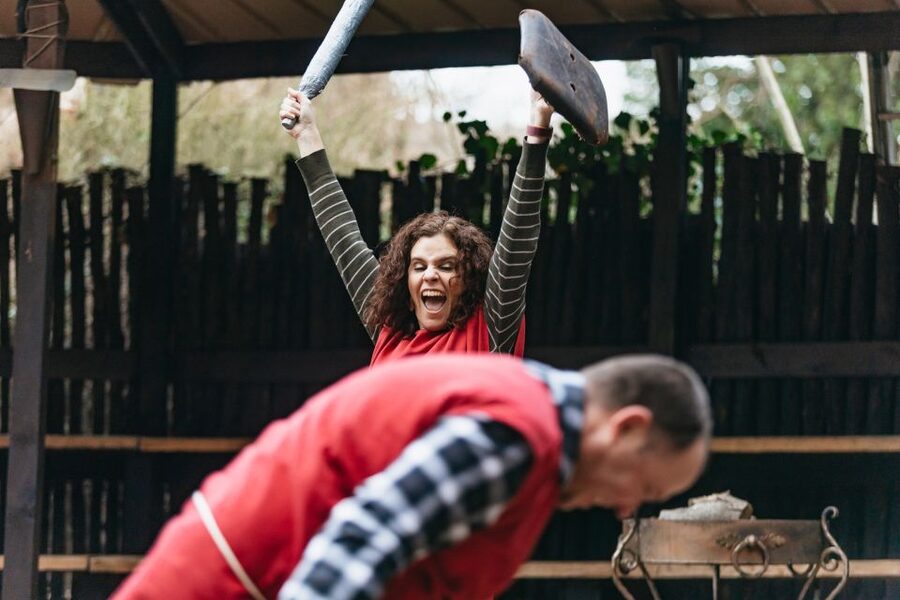
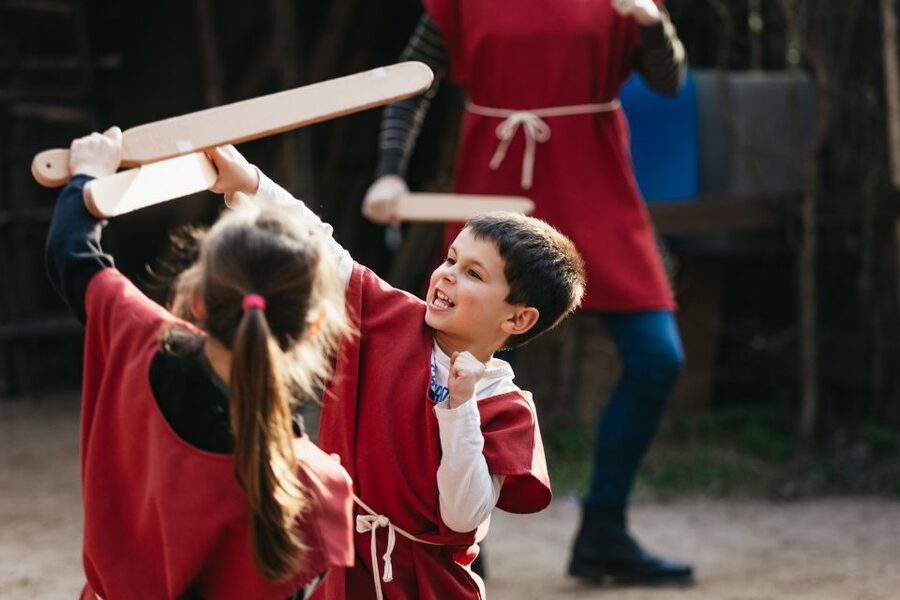
Once the introduction is over, participants put on gladiator tunics and begin training. The instructor teaches basic sword-fighting techniques and gives tips on handling Roman weapons.
The focus is on simple movements that can be followed by children and adults. You learn how to hold the sword, move your body, and respond to an opponent. The point is not to master a complicated martial art in two hours. It is to understand the discipline and rhythm of a gladiator drill, then use those skills in a controlled game.
The training is active. Parents have described sessions with constant movement rather than long stretches spent sitting through safety instructions. That is good news if your children need something to do with their hands and feet.
You should still expect a physical activity. It is not a strenuous fitness class, but you will be standing, moving, and practicing repeatedly. Wear comfortable clothes and shoes. On hot days, light clothing is sensible, and insect repellent is worth packing because mosquitoes have been a problem at the site.
Cold water is available, and shady areas can help on very warm days. One family completed the activity during weather above 95 degrees Fahrenheit, but heat remains a real consideration. I would avoid arriving dehydrated and would treat the water provision as help, not as a reason to skip your own bottle.
The arena battle with foam swords
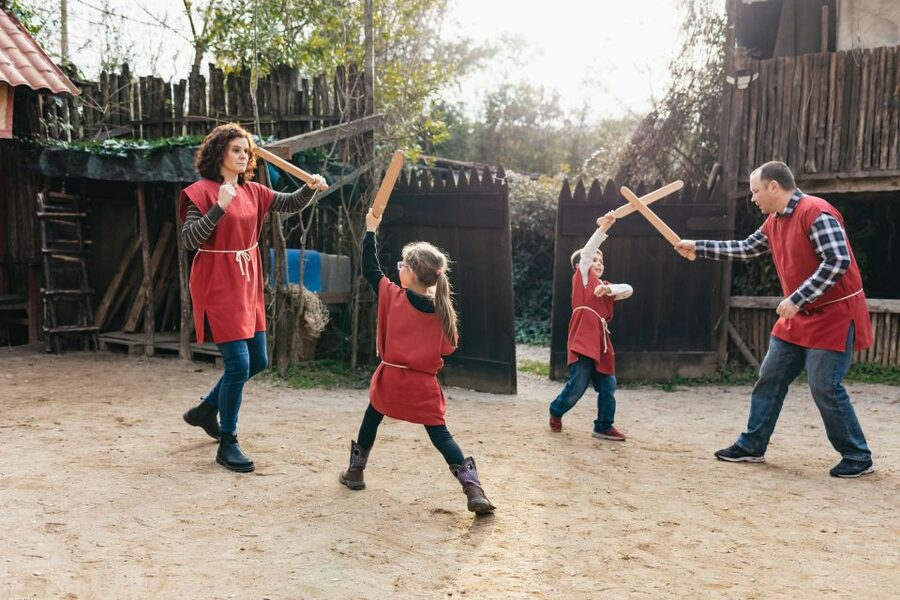
The final battle is the part most children anticipate. After learning the movements, participants enter an arena-style space and face one another under the instructor’s direction. The weapons are foam, so the contest is designed for fun and safety rather than force.
This closing section gives the class a clear purpose. The earlier explanations and drills suddenly have a use. Children can try the moves they have practiced, and adults can join the action or watch from the side.
The battles can include several families and age groups. That creates a playful group atmosphere, but it also means the exact pace depends on who attends your session. A group with very young children may move differently from one made up of teenagers and adults.
The instructor remains important here. The guide organizes the match, keeps the tone friendly, and helps younger participants feel capable. One of the most appealing details is that children can feel accomplished without the event becoming aggressive or overly competitive.
At the end, participants receive a certificate. It is a small souvenir, but it gives children something tangible to take home. The photographs are likely to matter just as much, especially with the tunics, training weapons, and arena setting.
What the price of $135.94 means

At $135.94 per person, this is not a cheap add-on. You are paying far more than you would for a standard museum visit, and a family of four will need to budget carefully.
The value depends on how your group uses the session. If your children are interested in Romans, pretend battles, or active learning, two hours of directed instruction can be worth more than another passive attraction. The price includes the museum visit, training, drinks, and a certificate, so the activity is more than a short photo opportunity.
Parents who only watch can save money because companions do not need to buy a ticket if they do not attend the course. That makes the total cost easier to manage for families where only the children want to train.
I would compare this with the cost of other special activities in Rome, not just with the price of an ordinary sightseeing ticket. You are paying for an instructor-led program, props, participation, and a structured family memory. If your group dislikes role-play, the price will feel high. If your children have reached the point where another church or ruin is likely to lose them, this may be a smart use of the budget.
Pairing the lesson with the Colosseum
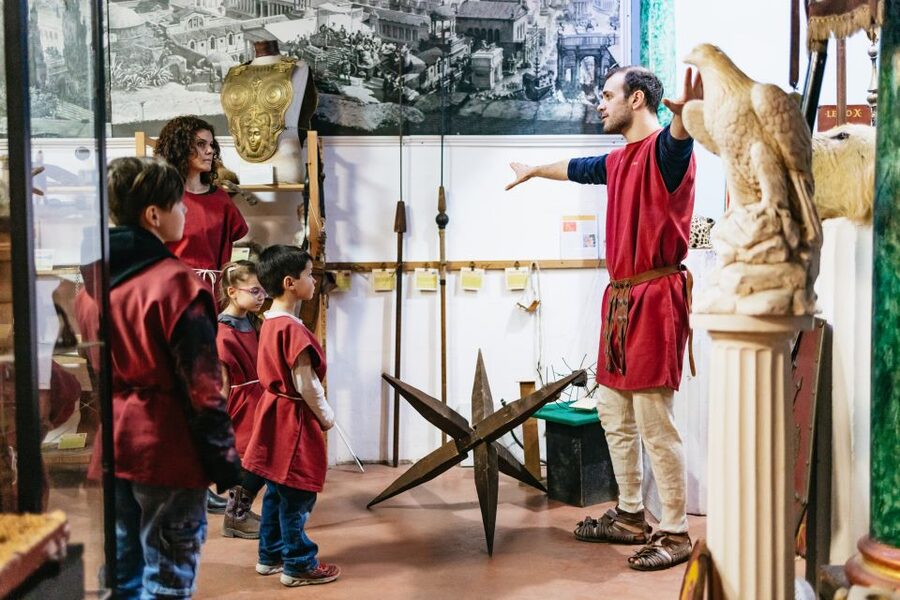
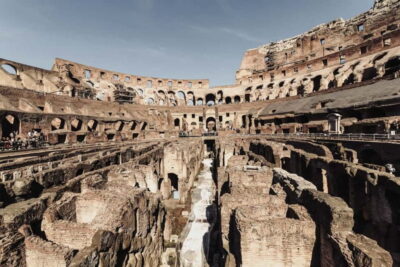
The gladiator school works best beside a Colosseum visit. See the monument first, then come here to explore the human side of the arena. Or take the class first, then visit the Colosseum with a clearer sense of how weapons, waiting areas, and combat might have fit together.
One family paired the class with an Underground Colosseum visit later the same day. That combination is especially useful because the underground areas help explain where gladiators and animals waited before appearing in the arena.
Do not treat the two activities as substitutes. The Colosseum offers the actual ancient structure and archaeological setting. The school offers participation, explanation, and a safe modern reconstruction of training. Together, they give children different ways to remember Roman history.
Leave enough time between bookings. The school is on the Appian Way, while the Colosseum is in another part of Rome. The bus connection is listed, but Rome traffic and walking time can make a tight schedule uncomfortable.
Who will enjoy it most

I would book this for families with children roughly five to early teenage years, especially if the children enjoy swords, costumes, and physical games. The activity has also worked for adults, older teenagers, and multigenerational groups.
It is a good fit if you want:
- A break from traditional sightseeing
- A structured activity that keeps children involved
- A Roman history lesson with movement
- A chance for parents to participate
- A souvenir certificate and family photographs
It is less suitable if you want a quiet museum visit or a serious archaeological seminar. The tone is playful, and the battle is staged. That is the point, but it will not suit every adult’s idea of historical travel.
The English and Italian instruction is useful for international families. If you need a language other than those two, this activity may not be the right choice.
The venue is listed as wheelchair accessible. If accessibility is central to your plans, confirm the details for your specific group and session before booking, since the activity includes movement and training.
Practical advice for a smoother session
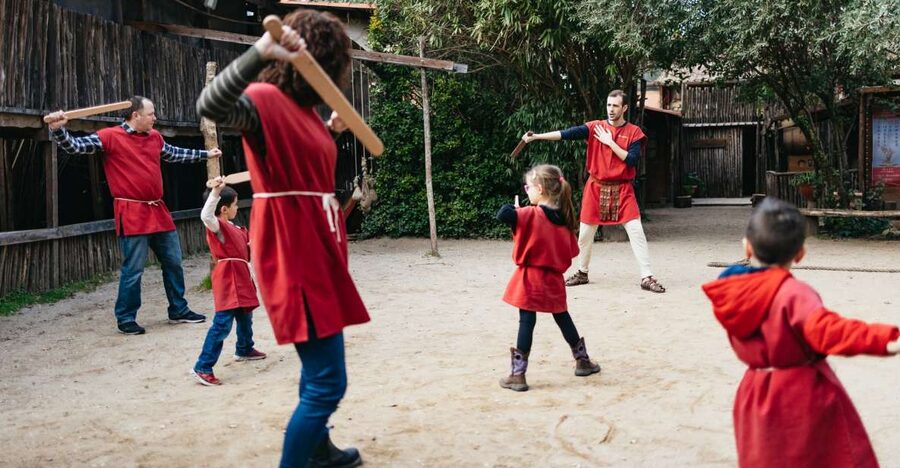
Book with the weather in mind. The experience includes outdoor elements, and heat can make two hours feel longer. Bring insect repellent, drink water before you arrive, and wear clothes that allow comfortable movement.
Arrive with enough time to find the school and settle in. The meeting point is not in the center of Rome, and the bus stop is not directly at the Colosseum. Check the starting time when booking because sessions vary.
If you have children of different ages, tell them that the session includes both history and action. That sets the right expectation. The museum and explanations are not filler, but the class also is not a full two hours of fighting.
Parents should decide in advance if they want to participate. Watching can be entertaining, but joining gives you a better sense of what the children are learning. A parent-versus-child battle is often the most memorable part of the day.
Cancellation is flexible up to 24 hours before the activity for a full refund, and you can reserve now and pay later. Those terms help if your Rome schedule is still changing.
Should you book Rome Gladiator School?
Book it if you want your Roman history day to include laughter, movement, and a little foam-sword drama. The strongest reasons are the enthusiastic instructors, the steady balance of explanation and activity, and the way the final battle gives children a clear reward for paying attention.
I would be especially inclined to book for children who have just visited the Colosseum or are beginning to ask how gladiators lived. Budget carefully at $135.94 per person, plan for heat and mosquitoes, and allow time to reach the Appian Way.
Skip it if your group wants only major archaeological sights or if nobody enjoys role-play. For families who want an active, memorable Roman lesson, this is one of the more distinctive choices in Rome.
FAQ
How long does the gladiator school activity last?
The activity lasts two hours. Check availability for the starting times offered on your chosen date.
Where does the activity begin?
You meet the instructor at the Gladiator School of Rome on the Appian Way.
How can I reach the meeting point?
The nearest listed bus stop is Appia Antica-Travicella, served by bus lines 118 and 218.
What languages are available?
Instruction is available in English and Italian.
Do parents or companions need to buy a ticket if they only watch?
No. Parents and companions do not need a ticket if they do not take part in the course.
Is the activity suitable for children?
Yes. The course is designed for both children and adults, and includes history, sword training, and a safe foam-sword battle.
What is included in the price?
The price includes the museum visit, gladiator training, a certificate, and drinks.
Just added around Rome
- Colosseum Gladiator’s Arena and Ancient Rome Tour★ 4.5 · 7 reviews
- 3-Hour Colosseum Gladiator’s Arena and Ancient Rome Tour★ 4.5 · 8 reviews
- The Colosseum Arena & Gladiator Chronicles Private Tour★ 5.0 · 14 reviews
- Rome : Arena of Gladiators Tour with Forum Access★ 4.0 · 6 reviews
- Tour of Gladiators Arena and Colosseum with Imperial Forum★ 4.5 · 8 reviews
- Colosseum & Roman Forum with Gladiator Arena For Kids & Families★ 5.0 · 2 reviews
- From Colosseum Gladiators to Via Sacra: Rome’s Historic Heart★ 5.0 · 12 reviews
- Marvels Of Rome At Night – Private Tour★ 4.5 · 26 reviews
Italy Film Location Tours, compared.
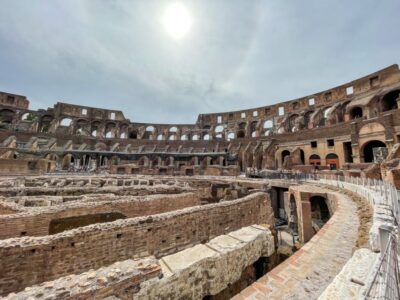
Colosseum Tour with Access to the Gladiator Arena
Read our review →
Gladiator’s Gate: Special Access Colosseum Tour with Arena Floor
Read our review →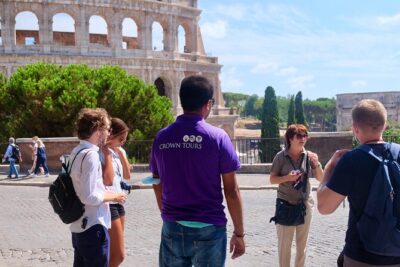
Colosseum Arena Floor, Roman Forum & Palatine Hill Tour
Read our review →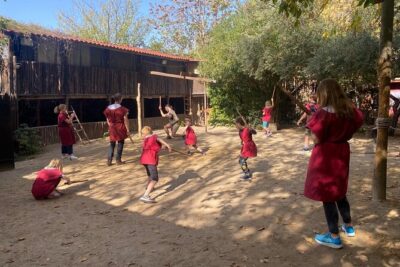
Roman Gladiator School: Learn How to Become a Gladiator
Read our review →
Full Day Tour to Val d’Orcia and Gladiator’s Fields with Wines
Read our review →
Gladiator’s Gate and Arena Special Colosseum Access
Read our review →
Browse the lists this tour appears in