
REVIEW · ITALY
Rome Gladiator Show at Gruppo Storico Romano
The most unusual part of this evening is the setting: a small arena where actors in Roman dress combine gladiator combat, dancing, and pantomime. Before the show, you visit the Roman Legionary Museum, taste wine, sample Roman-style snacks, and may get to handle replica helmets, shields, or weapons.
I like the friendly, hands-on approach, especially for families. I also like that the evening connects the objects in the museum with the action in the arena. The main drawback is the location and return journey. It can be awkward to reach, and you should plan your ride home before the show ends.
Key points to know before booking
- The evening begins at 8:30 pm and lasts about 90 minutes to two hours.
- The museum is small but practical, with Roman armor, weapons, helmets, and shields that help explain the performance.
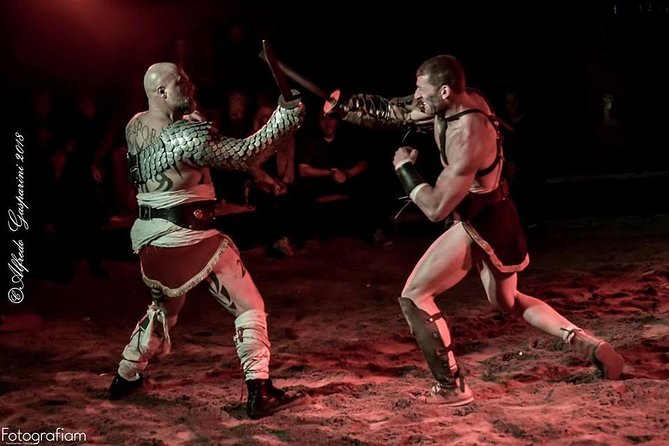
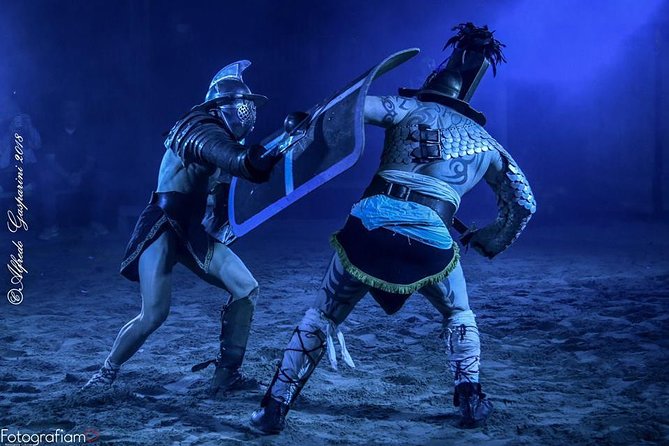
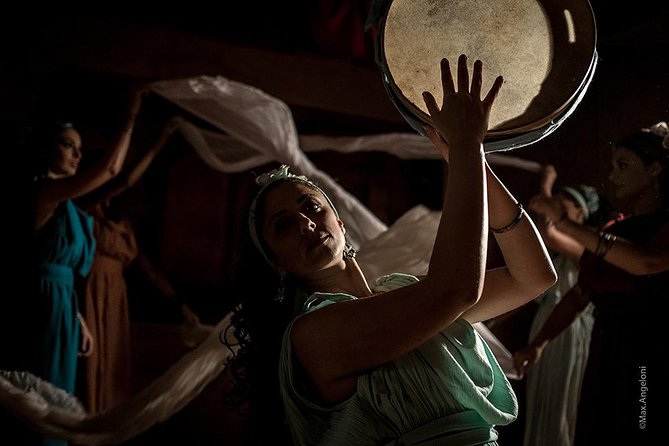
- The arena show includes staged fights, dancing, a procession, and pantomime, not a full dramatic play.
- Wine and snacks are included, though the refreshment may be modest rather than a full meal.
- English is the show language, so you will need enough English to follow the explanations and announcements.
- Plan your return transport, since the venue is outside central Rome and the area may be dark after the performance.
A Roman evening built around a small arena
Rome gives you no shortage of ancient monuments. After a day at the Colosseum, the Roman Forum, and the Palatine Hill, this experience offers something different: a live performance with actors, costumes, replica weapons, and a real audience sitting around a compact arena.
The Gruppo Storico Romano presents the evening through the Scuola Gladiatori Roma. The mood is informal rather than grand. You are not entering the Colosseum itself, and this is not a major theatrical production with elaborate scenery. Instead, you get a local historical reenactment built around the idea of Roman military life and gladiatorial combat.
That distinction matters. If you expect a long, serious drama with a detailed plot, you may find the show thin. If you want a family-friendly evening that gives physical form to the history you saw during the day, the format works much better.
The listed price is about $29.96 per person, which is fair if you value the museum visit, the welcome drink, the snacks, and the roughly hour-long arena program together. It is less appealing if you are paying mainly for a long gladiator battle. The fighting portion can feel brief, with some descriptions putting the combat at only a few minutes and others finding it energetic and satisfying.
More Gladiator and Colosseum film tours in Rome:
- Rome: Colosseum Tour with Access to the Gladiator Arena
★ 4.4 · 7,046 reviews - Gladiator’s Gate: Special Access Colosseum Tour with Arena Floor
★ 4.5 · 4,037 reviews - Roman Gladiator School: Learn How to Become a Gladiator
★ 4.5 · 1,477 reviews
Starting with the Roman Legionary Museum
The evening begins with a short visit to the Roman Legionary Museum. Expect a compact collection rather than a large institution. Its purpose is to set up the show, not to replace a full museum visit in central Rome.
You will see displays connected with Roman soldiers and gladiators, including helmets, armor, shields, and weapons. One of the best parts is the chance to examine some equipment at close range and, in some cases, try it on for photographs. That hands-on element gives children something to do and helps adults picture the weight and appearance of the gear.
The host also explains how gladiators and Roman fighters fit into the wider Roman world. Several guides have been praised for their energy and clear explanations. One guide introduced himself as Titus, though his real name was Giacomo, while another highly praised host was remembered as Ivan. The experience depends partly on who leads your evening, but the strongest guides add useful context and keep the group involved.
The museum is also described as somewhat gruesome. That is worth noting if you are bringing young children. At the same time, the activity is broadly suited to families, and children must be accompanied by an adult.
Do not expect a long lecture. The museum portion is short and serves as an introduction to the arena. I see that as a good choice for an evening activity, since most people will be ready for movement and performance after a day of sightseeing.
Wine, Roman snacks, and a modest welcome
After the museum, you receive a welcome drink and snacks. Wine tasting is included, and water is available. The food is presented as typical of ancient Roman times, but keep your expectations modest.
Some descriptions make the refreshment sound like Roman pastries or biscuits with a small wine serving. This is not dinner. If you arrive hungry, eat beforehand or plan a later meal. The snacks are a pleasant bridge between the museum and show, not a reason to book the experience on their own.
I like this pause because it gives you time to look at the costumes and speak with the performers. The setting is social, and the actors are often available for photographs or brief interaction. It also keeps the evening from becoming one continuous lecture followed by one continuous fight.
Wine is part of the program, but you do not need to drink it to take part. The listed inclusions mention wine tasting and snacks, while the practical descriptions also refer to wine or water. If you are traveling with children, the food and atmosphere still give them something to enjoy.
What happens in the arena
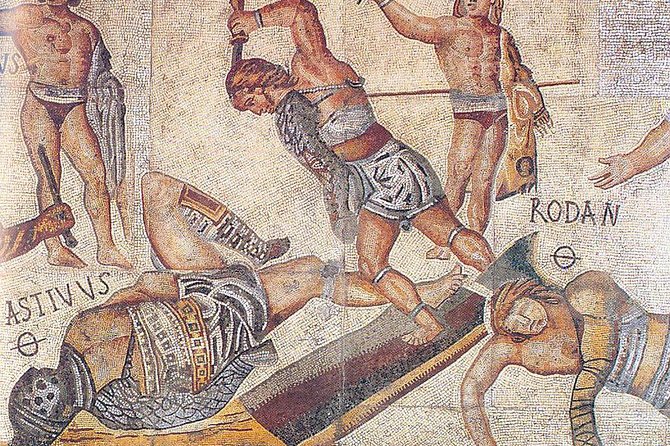
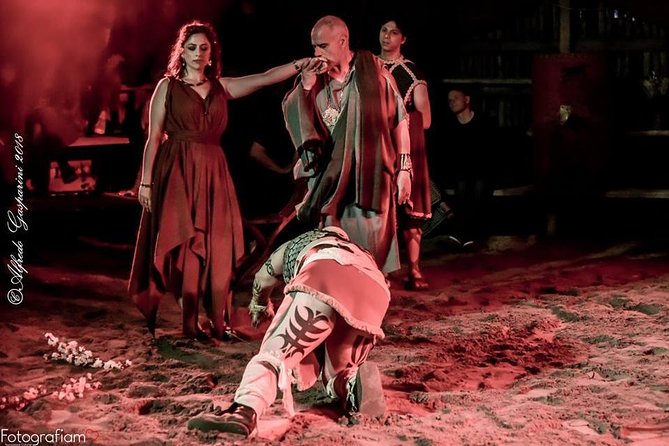
The main performance takes place in a small, miniature amphitheater. The atmosphere comes from the stone or arena-style structure, lighting, sounds, costumes, and the closeness of the performers to the audience.
The show includes a procession, ancient dancing rituals, pantomime, and staged gladiator fights. The combat uses blunt or theatrical weapons, not sharp swords, and is designed as a performance. It can look lively and physical without being a real contest.
The actors are described as enthusiastic and friendly. Audience participation is part of the fun. Someone may be selected to act as the emperor and sit on a raised platform during the show. Children may also be invited to take part, and the performers sometimes select youngsters to try on helmets or other equipment.
That interaction is a major reason I would choose this for a family or mixed-age group. It gives the children a role and keeps the audience watching closely. It also means the evening is not exactly the same for every group.
The show is not built around a strong plot. You will see scenes and demonstrations rather than follow a sustained story with developed characters. Some people find the dances, mime, and mock battles entertaining. Others want more combat and feel that the central fight is too short.
The performance may last about an hour once you enter the arena, though the complete evening is listed at approximately 90 minutes to two hours. Plan on the longer end if the welcome, museum, photographs, and audience participation take extra time.
A few more filming locations around Rome worth a look
- Rome: Gladiator’s Gate and Arena Special Colosseum Access
★ 4.7 · 796 reviews - Rome: 2-Hour Gladiator School
★ 4.7 · 630 reviews - Rome: Gladiator Show and Museum Tickets
★ 4.5 · 237 reviews - Colosseum Gladiator Tour for Kids and Families
★ 4.1 · 226 reviews
How realistic is the gladiator fighting?
The costumes, shields, helmets, and weapons help create the right look. The performers commit to the physical action, and the lighting and sound add atmosphere. For a casual evening show, the fights can feel convincing enough to hold your attention.
Still, this is a reenactment for the public, not an archaeological demonstration or a professional combat tournament. The swords are not sharp, and safety comes first. You should expect choreographed action with a clear family-friendly quality.
This is where the experience divides people. I would book it for the setting, the costumes, the museum, and the chance to see Roman themes acted out. I would not book it if your only goal is an extended sequence of gladiator battles.
The program has also changed over time. Some descriptions of earlier visits recall more fighting, while more recent experiences have felt friendlier for children, with greater emphasis on general entertainment. That makes it a better fit for families than for visitors seeking a hard-edged, historically strict combat display.
Getting there at 8:30 pm
The start time is 8:30 pm. The venue is near public transportation, and bus route 118 has been used to reach the area. One description places a bus stop about a two-minute walk away.
The practical issue is the return. The venue is outside the city center, and the route around the site can be dark and difficult to navigate. Reports also describe a sandy or poorly lit access road. Taxis may not immediately know the exact location, so do not assume you can simply walk out to a busy street and find a ride.
I would arrange your return before the show. Ask the staff about ordering a taxi, and allow time for the car to arrive. Some people have found the easiest option is a taxi both ways, particularly when traveling as a small group and splitting the fare.
This is the single biggest planning concern. The show itself may be relaxed and welcoming, but the end of an evening in a dark, unfamiliar area can take the shine off the experience. If you are traveling alone, as one solo visitor did, public transport may be possible, but check the route and final departure times carefully.
Seats are not assigned in advance. You will not know your exact place until you arrive, so do not book this expecting a reserved front-row seat. The activity can accept up to 200 people, though the actual feel of your evening will depend on the size of the group.
Is the museum worth your time after the Colosseum?
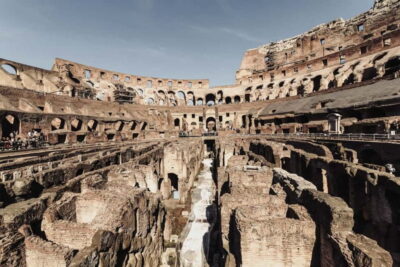
Yes, if you use it as a bridge between ancient ruins and living performance. The Colosseum shows you the structure where spectacles took place. The museum and arena at Gruppo Storico Romano focus on the equipment, costumes, and people who make the subject easier to picture.
I would visit the Colosseum during the day and do this in the evening only if I wanted a second, more relaxed look at Roman entertainment. The program helps connect helmets, shields, fighting styles, and public spectacle to the larger Roman story.
But this is not a replacement for the Colosseum. The museum is small, and the show simplifies history for entertainment. Treat it as an accessible supplement, not a scholarly presentation.
The English-language format also affects the experience. The host’s explanations and audience instructions are given in English. If you do not understand spoken English comfortably, the costumes and action will still be clear, but you may miss the historical points and jokes.
Who will enjoy this evening most?
I would recommend it first to families with children, especially children interested in Roman soldiers, weapons, and costumes. The chance to try on a helmet, see staged combat, and possibly take part in the show gives younger visitors more to remember than a museum label.
It also suits solo visitors and couples who want something different from another restaurant or bar. The format is social, and the hosts make an effort to welcome people who arrive alone.
History fans should come with realistic expectations. You will get useful background and a lively presentation, but not a detailed academic account of Roman gladiators. The value is in seeing the subject acted out.
I would be more cautious about booking it for someone who dislikes audience participation, wants a polished theatrical production, or expects a full meal. I would also think twice if transportation at night is a major concern and you have not arranged a taxi.
Small details that affect the value
At about $29.96, the ticket covers the museum, drink, snacks, and performance. That is a reasonable package for Rome, particularly if you enjoy informal entertainment and want an evening activity that includes more than a seat in an auditorium.
The price is harder to justify if the food matters greatly to you or if you want a long fight sequence. The Roman snack may be little more than a biscuit or pastry, and the combat can feel short. The experience gains value from the whole sequence: welcome, museum, costume interaction, refreshments, and arena show.
Mosquitoes can also be a nuisance, especially since the arena is outdoors. Bring insect repellent or ask the staff for spray. The organizers have some spray available, but it is better not to wait until you have already been bitten.
The cancellation terms are flexible if your plans change. You can cancel for a full refund up to 24 hours before the start time. Changes or cancellations inside that window are not accepted for a refund, and the event needs a minimum number of participants. If the organizers cancel because that minimum is not reached, you are offered another date or experience, or a full refund.
Should you book the Gruppo Storico Romano show?
Book it if you want a friendly, hands-on Roman evening with costumes, a small museum, wine, snacks, and theatrical combat. It is particularly suitable for families, solo visitors, and anyone who wants to add a lighter activity after visiting Rome’s ancient sites.
Skip it if you expect a major stage production, a detailed historical drama, or an evening centered almost entirely on gladiator fighting. Also skip it unless you can settle the return journey in advance.
My practical verdict is positive, with conditions. The guides, audience participation, museum objects, and arena atmosphere give the night real character. Just see it for what it is: an accessible historical reenactment with a short show, not the Colosseum recreated at full scale.
FAQ
What time does the gladiator show begin?
The experience begins at 8:30 pm.
How long does the experience last?
The full evening lasts approximately one hour and 30 minutes to two hours.
What is included in the ticket?
The ticket includes admission to the Roman Legionary Museum, the gladiator show, wine tasting, and snacks.
Is hotel pickup and drop-off included?
No. Hotel pickup and drop-off are not included.
Is the experience offered in English?
Yes. The experience is offered in English, including the historical explanations and show information.
Can children attend?
Yes. Children can attend, but they must be accompanied by an adult.
Can I try on gladiator armor or handle weapons?
The experience includes opportunities to take photographs while trying on gladiator armor and weapons. Children may also be selected to try helmets or other equipment.
Are seats assigned in advance?
No. Seats are not known in advance of the show.
Can I cancel for a full refund?
Yes. You can cancel at least 24 hours before the local start time for a full refund. Cancellations or changes made less than 24 hours before the start time are not refunded.
Just added around Rome
- 3-Hour Colosseum Gladiator’s Arena and Ancient Rome Tour★ 4.5 · 8 reviews
- Colosseum Gladiator’s Arena and Ancient Rome Tour★ 4.5 · 7 reviews
- The Colosseum Arena & Gladiator Chronicles Private Tour★ 5.0 · 14 reviews
- Rome : Arena of Gladiators Tour with Forum Access★ 4.0 · 6 reviews
- From Colosseum Gladiators to Via Sacra: Rome’s Historic Heart★ 5.0 · 12 reviews
- Tour of Gladiators Arena and Colosseum with Imperial Forum★ 4.5 · 8 reviews
- Colosseum & Roman Forum with Gladiator Arena For Kids & Families★ 5.0 · 2 reviews
- Marvels Of Rome At Night – Private Tour★ 4.5 · 26 reviews
Italy Film Location Tours, compared.
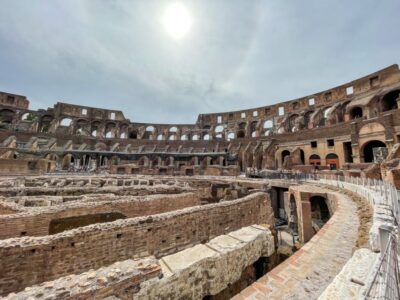
Colosseum Tour with Access to the Gladiator Arena
Read our review →
Gladiator’s Gate: Special Access Colosseum Tour with Arena Floor
Read our review →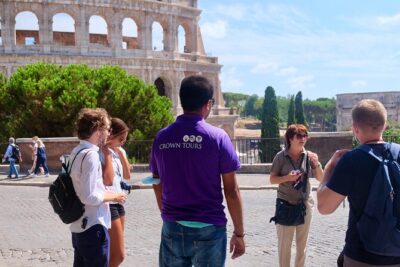
Colosseum Arena Floor, Roman Forum & Palatine Hill Tour
Read our review →
Roman Gladiator School: Learn How to Become a Gladiator
Read our review →
Full Day Tour to Val d’Orcia and Gladiator’s Fields with Wines
Read our review →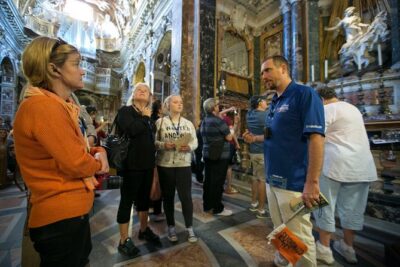
Gladiator’s Gate and Arena Special Colosseum Access
Read our review →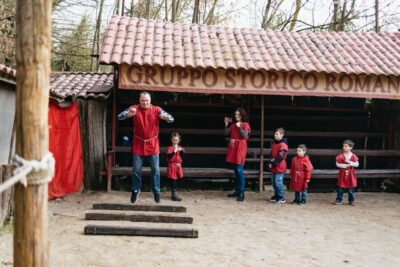
Browse the lists this tour appears in