
REVIEW · ITALY
Capitoline Museums Marvels Private Tour
The Capitoline Museums put Rome’s story in one compact setting. In a few rooms and across Michelangelo’s elegant square, you move from the city’s mythical beginnings to the world of emperors, senators, gods, and generals. I like the private format, which lets you ask questions without waiting for a large group, and I like the choice of an archaeologist or art historian who can explain both objects and ideas.
I also appreciate the flexible morning and afternoon times. Guides such as Serena have been praised for explaining difficult subjects in plain language and adjusting the pace to suit the group. The main drawback is the extra museum fee: adults pay €16 on site and visitors under 18 pay €14, so the advertised tour price is not the full cost.
Key points to know before you book
- Michelangelo’s Piazza del Campidoglio: Begin on one of Rome’s most carefully designed public squares before entering the museum.
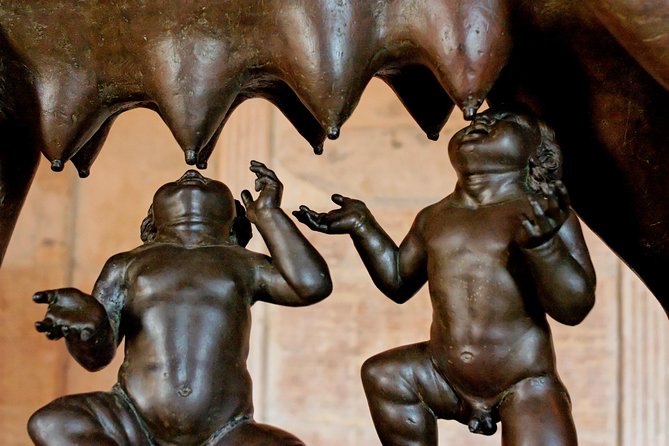
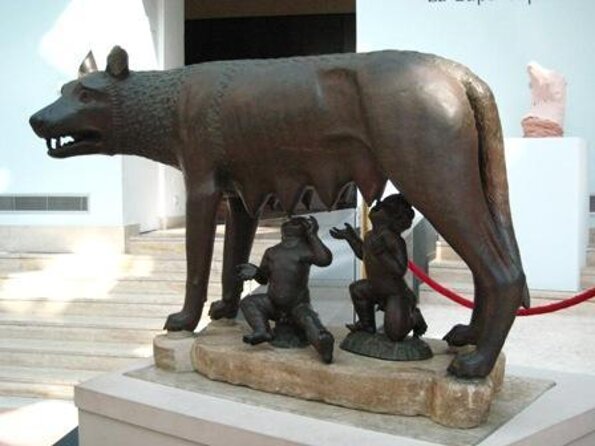
- Ancient art with expert context: An archaeologist or art historian connects marble portraits, bronze figures, myths, and politics.
- Jupiter’s temple foundations: Look beneath the museum for traces of the great temple that once crowned the Capitoline Hill.
- A private two-hour to two-and-a-half-hour visit: Your own group can set the pace and ask as many questions as time allows.
- Tickets are paid separately: Admission costs €16 per adult and €14 for anyone under 18.
- The tour ends near Tiber Island: The route begins at Piazza del Campidoglio and finishes at the Tiber Island area.
Why the Capitoline Museums matter in Rome
Rome has no shortage of famous ruins, but the Capitoline Museums give you something different. Instead of viewing one monument from outside, you see Rome through objects made, used, collected, and displayed across many centuries.
The museum sits on Capitoline Hill, one of the city’s most important heights. This was the site of the ancient Temple of Jupiter, the largest Roman temple in the ancient world according to the tour description. The foundations help you picture how important this hill once was, even though the temple itself is gone.
I like this setting because the museum is not an isolated art collection. Its location connects the galleries to the political and religious life of ancient Rome. The marble heads and bronze figures make more sense when you understand that they represented power, family, worship, and public memory.
Your guide can also help you avoid a common museum problem: seeing a room full of statues and remembering very little. A private explanation gives each work a place in the story. You may hear about emperors and senators, but also about daily life among Rome’s wealthy families and the way upper-class homes were decorated.
More film museums and exhibitions in Rome:
- Rome: Gladiator Show and Museum Tickets
★ 4.5 · 237 reviews - The National WWII Museum Campus Pass plus 4-D Film
★ 5.0 · 672 reviews - Tokyo Studio Ghibli Museum and Ghibli Film Appreciation Tour
★ 4.5 · 421 reviews
Beginning in Michelangelo’s famous square
Meet your guide at Piazza del Campidoglio, the square at the top of Capitoline Hill. The meeting point is central, but you should allow time to find the square before your start time. The approach is uphill, and the surrounding streets can be confusing if you are trying to arrive at the last minute.
The square was designed by Michelangelo in the 16th century. Its long, controlled lines and carefully framed buildings give you an early lesson in how Rome reused its ancient center. Before you even enter the museum, you are looking at a Renaissance response to the city’s Roman past.
This opening matters. A guide can point out how the square directs your eye and how its design changes the way you understand the hill. It is not just a place to meet. It is the first stop in the story.
From here, you enter the Capitoline Museums at your own expense. The included part of the experience is the private guiding, not admission. Keep that distinction in mind when comparing the total price with other museum tours.
Meeting Rome in marble and bronze
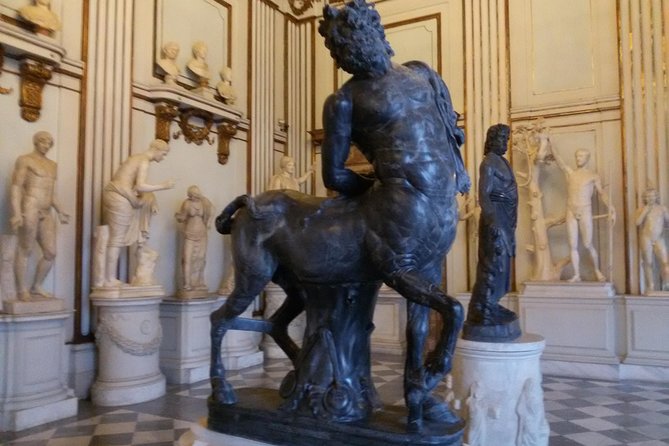
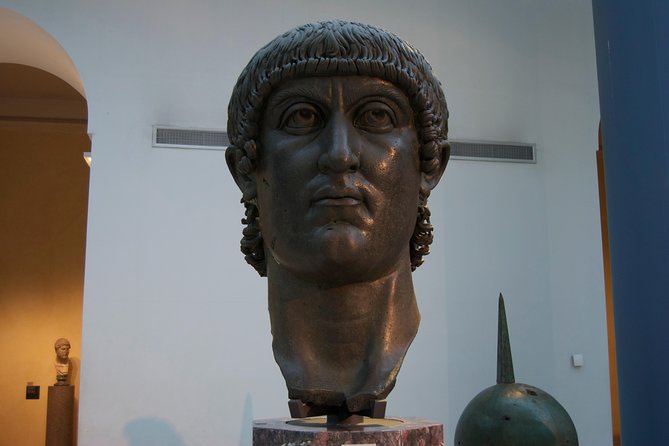
Inside, expect a concentrated lesson in Roman identity. The tour brings you face to face with generals, philosophers, senators, heroes, gods, and emperors, many represented in marble or bronze.
Roman sculpture can look familiar because modern images borrow so much from it. A guide helps you see the details that are easy to miss: the pose of a ruler, the expression on a portrait bust, the symbols attached to a god, or the way a body communicates strength, defeat, beauty, or age.
The collection includes figures such as the wounded queen of the Amazons, the seductive Venus, and the dying Galata. These works give the visit emotional range. You are not looking only at official portraits or stern imperial faces. You also see beauty, suffering, mythology, and the drama of defeat.
I would ask your guide to compare the works rather than simply describe them one at a time. The contrast between an idealized goddess, a wounded warrior, and a dying enemy can reveal how ancient artists shaped sympathy and admiration. A private tour is particularly useful here because you can steer the conversation toward the subjects that interest you most.
From the Temple of Jupiter to everyday Roman life
The museum’s ancient foundations are one of its strongest features. You get a peek at the remains of the Temple of Jupiter, which once dominated the hill. Even partial foundations can be powerful when your guide explains their scale and purpose.
This is also where the tour moves beyond famous statues. You learn about the elegant daily life of Rome’s upper classes, including the objects and artistic choices that signaled status. The supplied details do not promise a separate room or a fixed display for each topic, so the exact presentation may vary, but the guide is there to connect museum pieces with life beyond politics and war.
I value that broader view. Rome was not only emperors, battles, and temples. It was also homes, meals, social rank, family display, and private taste. Those details help you picture people rather than treating the ancient city as a collection of ruins.
The museum is described as the oldest archaeological museum in the world. That long collecting tradition is part of what makes the visit feel different from an outdoor walk through the Forum. At the Forum, you read a ruined space. Here, you examine the objects that carried meaning inside that space.
Same place, a completely different screen:
- Rome: Colosseum Tour with Access to the Gladiator Arena
★ 4.4 · 7,046 reviews - Gladiator’s Gate: Special Access Colosseum Tour with Arena Floor
★ 4.5 · 4,037 reviews - Colosseum Arena Floor, Roman Forum & Palatine Hill Tour
★ 4.5 · 1,568 reviews - Roman Gladiator School: Learn How to Become a Gladiator
★ 4.5 · 1,477 reviews
The famous fountain and other details worth asking about
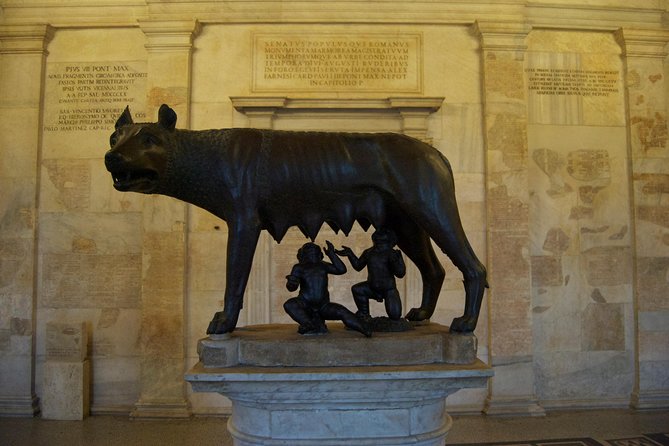
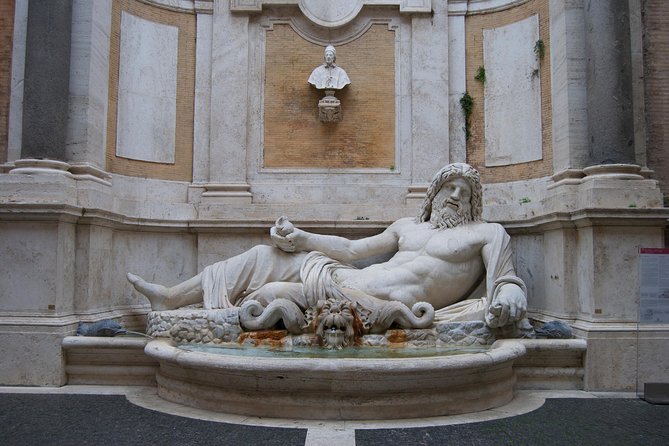
One unusual feature mentioned for the museum is a talking fountain. The name alone makes it worth asking your guide to point it out and explain how it works or why it earned that nickname.
This is exactly the kind of small detail that can make a private museum visit memorable. You may remember a famous statue, but you are also likely to remember the odd fountain that gives Rome a glimpse of its playful public voice.
Do not rush from one major sculpture to the next. Ask your guide about the museum’s less obvious features, the works that need a short explanation, and the objects that reveal how Romans viewed themselves. A private guide can spend more time on your questions than a standard group visit usually allows.
Serena is specifically praised for making complex material understandable, staying patient with the group’s pace, and offering help beyond the basic route. Another guide is described as cheerful, clear, and willing to answer many questions. The names of all guides are not supplied, so Serena is the only named guide you can request or ask about in advance.
What two hours to two-and-a-half hours can cover
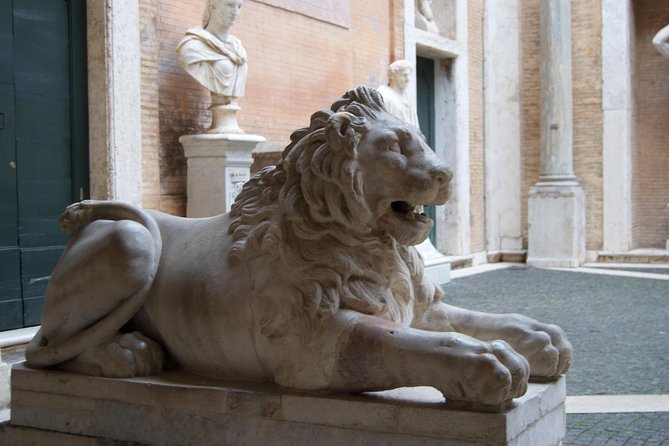
The stated duration is about two hours and 30 minutes, while the museum stop is listed as two hours. Treat this as a focused visit rather than a full day in the museum.
That length works well if you want a strong introduction to the collection without exhausting yourself. You can see major works, hear the story of the hill, and ask questions. The museum is large enough that you will not see every object in detail during this time.
One useful tip is to plan your schedule so you can stay after the guided portion. The tour itself may finish before you feel ready to leave, and the museum has enough to reward extra time. If your schedule allows, a morning tour may be the better choice because you can continue exploring afterward without watching the clock.
The morning and afternoon options make this easy to fit around other Rome plans. I would avoid placing a major timed attraction immediately afterward. The tour ends at the Tiber Island area, and you may want time for a slower walk, lunch, or additional museum viewing.
Why a private guide changes the experience
A private tour is not automatically better than a group tour, but it gives you control. You can ask about Roman religion, sculpture, archaeology, daily life, or the Renaissance design of the square without worrying about holding up strangers.
It also allows your guide to adjust the explanation. If you already know the basics of Roman emperors, you can move toward art and architecture. If the subject is new to you, the guide can slow down and explain terms in simpler language.
The personal attention is especially useful for families, couples, and small groups with different interests. A child may focus on the gods and heroes while an adult asks about politics or archaeology. The guide can respond to both.
The strongest practical advantage is flexibility at the museum itself. You are not locked into a fixed lecture style. Serena, in particular, has been praised for adapting to pace and making the material easy to follow. That is valuable in a collection where a short label cannot explain the political and artistic meaning of every statue.
Accessibility and getting around
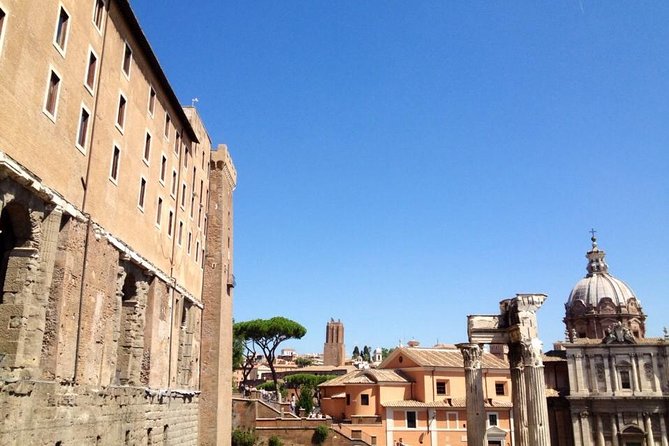
The experience is near public transportation, and most people can take part. The meeting point is Piazza del Campidoglio, with the tour ending at Tiber Island.
If you use a wheelchair or have limited mobility, contact the provider before the visit rather than waiting until arrival. Serena has arranged ramps and elevator access for wheelchair users and helped secure permission for a taxi to reach the museum exit. That kind of assistance cannot be assumed for every booking, but it shows why advance notice matters.
Rome’s historic center can be demanding underfoot, and the hilltop meeting point may require extra care. The supplied information does not specify the full route’s surface, step count, or restroom details, so ask the provider for current access information if those points affect your plans.
Cost, tickets, and what you receive
The tour includes a professional archaeologist or art historian guide, a local guide, and a private visit for your group. Museum entry is not included.
You pay €16 per adult and €14 for anyone under 18 on site. The child rate applies only when the child shares the tour with two paying adults. Add these fees before judging the total value.
The price makes the most sense if you care about interpretation. If you only want to walk through the galleries and read labels, a private guide may be more than you need. If you want to understand why the objects matter and ask detailed questions, the added cost buys time, focus, and a human explanation.
A group discount is available, though the supplied details do not give the exact discount or the group size required. Ask for the current terms when booking. Since only your party takes part, the cost may work best when shared among several people.
Who will enjoy this visit most
This tour suits you if archaeology, ancient sculpture, Roman politics, or art history are high on your list. It is also a good choice if you want a clear introduction to Rome before visiting more ruins.
Families can benefit from the private format because the guide can adjust the pace and make the myths and heroes easier to follow. Couples and small groups who enjoy asking questions will also get more from this format than from a large scheduled walk.
The tour may be less suitable if you dislike guided museum visits or want to spend several hours moving through every gallery at your own speed. You can stay after the guided visit, but the main service is a focused explanation over roughly two hours.
The strong satisfaction record is worth noting, with 100 percent recommendation and a five-star rating based on 20 reviews. The most consistent praise goes to the guides’ clear explanations, patience, humor, and willingness to help. That matters more here than flashy extras because the collection requires context.
Should you book the Capitoline Museums Marvels Private Tour?
Book it if you want the Capitoline Museums to feel like part of Rome’s story rather than a room-by-room display of statues. The setting, Michelangelo’s square, Jupiter’s temple foundations, and works such as Venus and the dying Galata give the visit plenty of substance.
I would choose the morning if possible, especially if you want to remain in the museum after the tour. Budget €16 per adult or €14 per child in addition to the tour price, and arrive with enough time to find Piazza del Campidoglio.
Skip it if you prefer independent browsing and do not want to pay separately for admission. For everyone else, the private format and strong guide record make this a sensible way to understand one of Rome’s most important collections in a short amount of time.
FAQ
How long does the Capitoline Museums Marvels Private Tour last?
The experience lasts approximately two hours and 30 minutes. The museum visit itself is listed as two hours.
Where does the tour begin?
The tour begins at Piazza del Campidoglio, at the Capitoline Museums in Rome.
Where does the tour end?
The tour ends at Tiber Island in central Rome.
Are museum entry tickets included?
No. You pay admission separately on site.
How much is museum admission?
Admission is €16 for each adult and €14 for anyone under 18.
What type of guide leads the tour?
The tour includes a professional archaeologist or art historian who also serves as a local guide.
Is this a private activity?
Yes. Only your group participates in the private tour.
Is cancellation free?
You receive a full refund if you cancel at least 24 hours before the start time. Cancellations or changes made within 24 hours are not refunded or accepted.
Just added around Rome
- Colosseum Gladiator’s Arena and Ancient Rome Tour★ 4.5 · 7 reviews
- 3-Hour Colosseum Gladiator’s Arena and Ancient Rome Tour★ 4.5 · 8 reviews
- The Colosseum Arena & Gladiator Chronicles Private Tour★ 5.0 · 14 reviews
- Rome : Arena of Gladiators Tour with Forum Access★ 4.0 · 6 reviews
- From Colosseum Gladiators to Via Sacra: Rome’s Historic Heart★ 5.0 · 12 reviews
- Tour of Gladiators Arena and Colosseum with Imperial Forum★ 4.5 · 8 reviews
- Colosseum & Roman Forum with Gladiator Arena For Kids & Families★ 5.0 · 2 reviews
- Discover Marvellous Rome: Self-Guided Audio Tour★ 5.0 · 2 reviews
Italy Film Location Tours, compared.
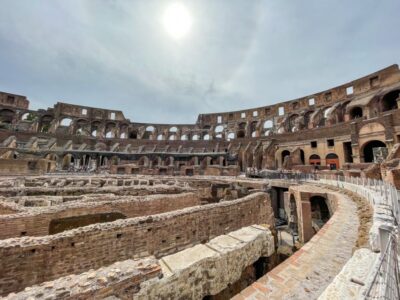
Colosseum Tour with Access to the Gladiator Arena
Read our review →
Gladiator’s Gate: Special Access Colosseum Tour with Arena Floor
Read our review →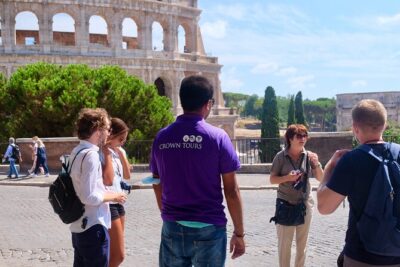
Colosseum Arena Floor, Roman Forum & Palatine Hill Tour
Read our review →
Roman Gladiator School: Learn How to Become a Gladiator
Read our review →
Full Day Tour to Val d’Orcia and Gladiator’s Fields with Wines
Read our review →
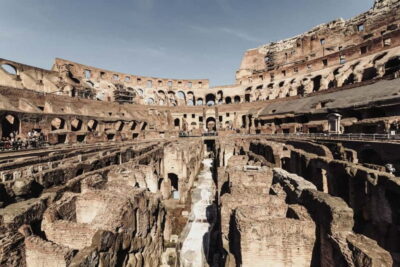
Gladiator’s Gate and Arena Special Colosseum Access
Read our review →
Browse the lists this tour appears in