
REVIEW · ITALY
Capua: The Spartacus Arena and Gladiator Museum Tour
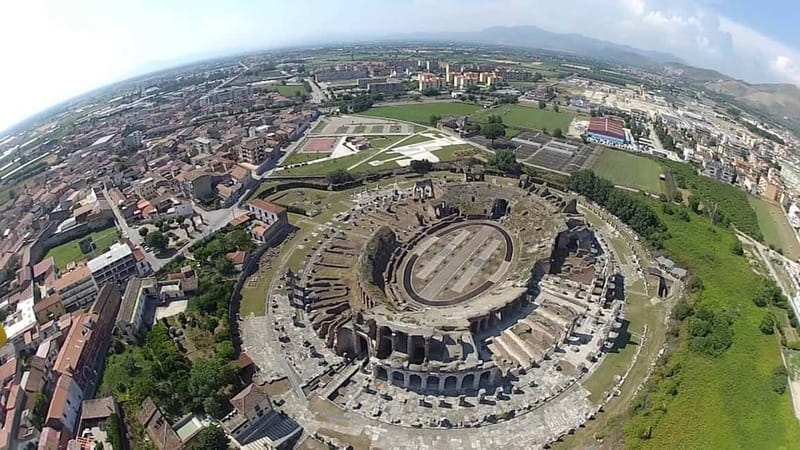
Capua’s Campano Amphitheater gives you a close look at the Roman world without Rome’s crowds. This was the arena linked with Spartacus, and the tour also takes you into the nearby Gladiator Museum, where original amphitheater decorations and a reconstructed fight help put the stones into human scale. The arena is the star, but the museum adds useful context.
I like the archaeologist guide, who can connect the site to Hannibal, Cicero, Spartacus, and the emperors who enlarged the building. I also like the tidy two-hour format, with admission included and no transport problem to solve once you reach the meeting point.
The main consideration is price: $260.56 for a private group of up to one person is a serious cost for two hours. It makes the most sense if you value a private specialist guide and are already visiting the Caserta area. If you need transport from Naples or Caserta, you must arrange that separately.
Key points
- Walk through one of the best-preserved Roman arenas and learn why it may have influenced Rome’s Colosseum.
- Stand where Spartacus began his rebellion, at the ancient Capua site associated with his gladiator school.
- See original amphitheater decorations inside the nearby Gladiator Museum.
- Examine objects reaching back to the Iron Age, extending the story well before Roman rule.
- Tour with a licensed archaeologist in English, Italian, French, or Spanish.
- Enjoy a private two-hour visit with admission tickets included, but no round-trip transportation.
Why Santa Maria Capua Vetere matters
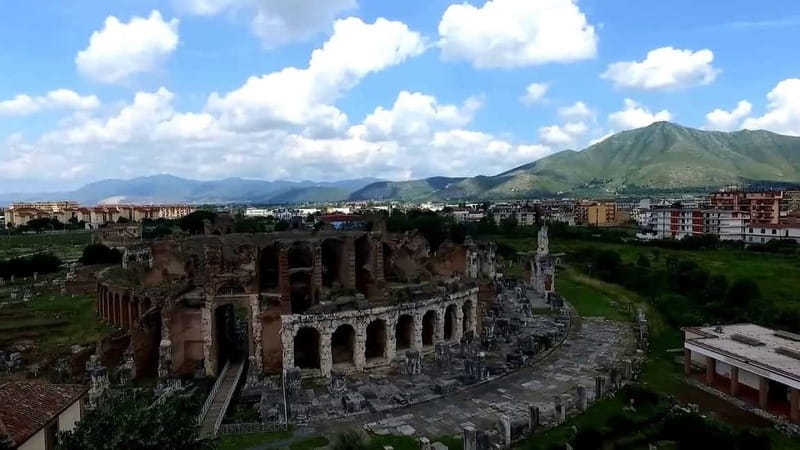
To visit the arena, you go to Santa Maria Capua Vetere, a few kilometers from Caserta. This modern town preserves the remains of ancient Capua, once one of the major cities of the Roman Empire.
Ancient Capua had money, political weight, and a reputation for comfort. Cicero called it altera Roma, or the other Rome. That nickname tells you how important the city was in its day. The ruins here are not a minor roadside stop. They belong to a city that once drew powerful armies, ambitious politicians, gladiators, and emperors.
The tour is especially useful because it brings together several periods. You begin with earlier finds from as far back as the Iron Age, then move into the Roman arena and gladiator displays. You are not looking at one isolated monument. You are following the growth of a place over time.
The most famous name connected with Capua is Spartacus. He was a gladiator here, and his rebellion began in this area. Hannibal also reached Capua with his army and elephants. Those stories can easily become loose legends when you hear them in a busy city center. Here, they are tied to an actual archaeological site.
More Gladiator and Colosseum film tours in Italy:
- Rome: Colosseum Tour with Access to the Gladiator Arena
★ 4.4 · 7,046 reviews - Gladiator’s Gate: Special Access Colosseum Tour with Arena Floor
★ 4.5 · 4,037 reviews - Roman Gladiator School: Learn How to Become a Gladiator
★ 4.5 · 1,477 reviews
Entering the Campano Amphitheater
Your meeting point is the entrance to the archaeological park at the Anfiteatro Campano e Museo dei Gladiatori. Look for a guide wearing a brooch marked Naples Grand Tour. That small detail matters because the entrance is a public archaeological site, not a private hotel lobby.
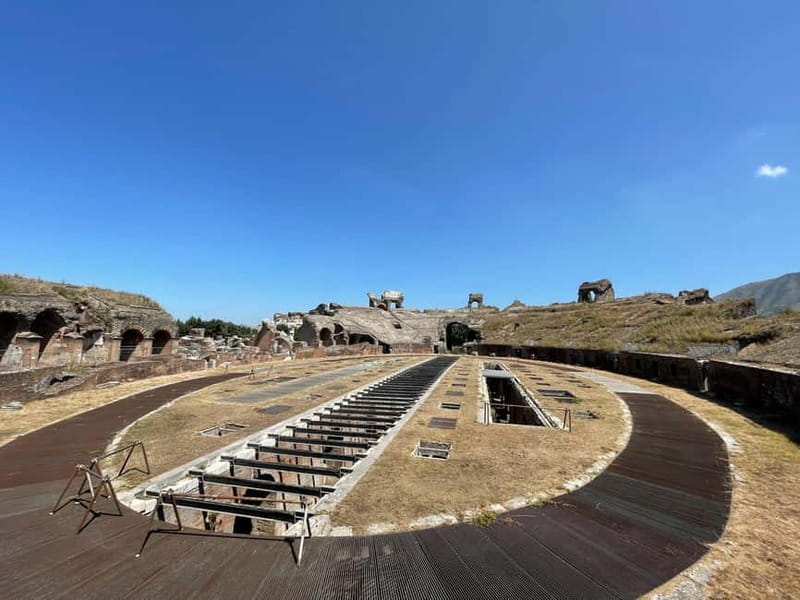
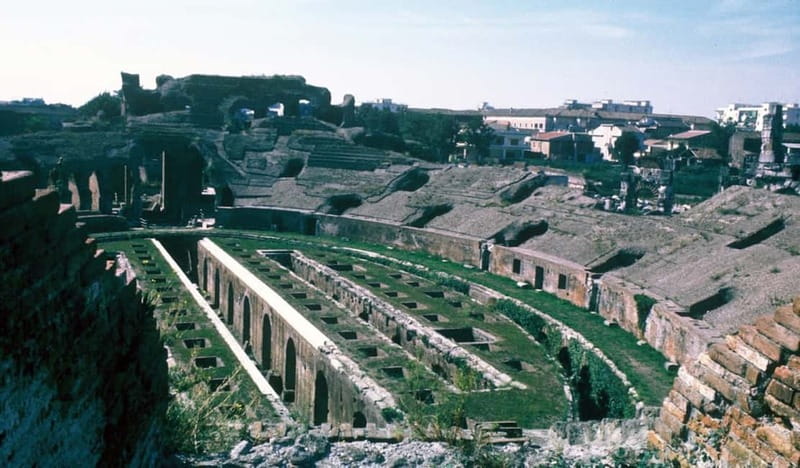
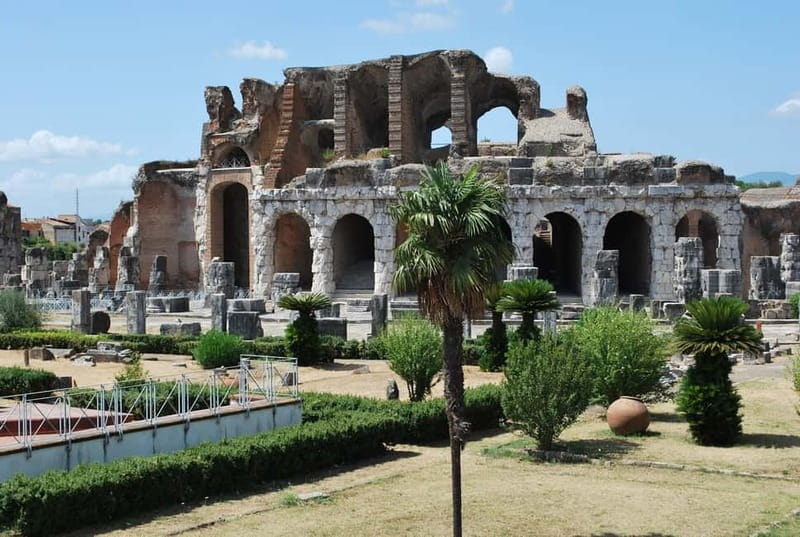
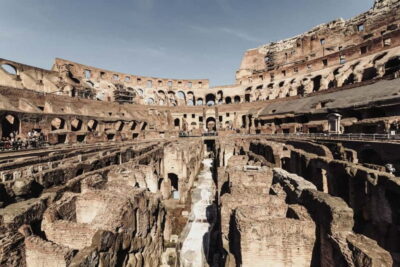
The first major stop is the Campano Amphitheater, also called the Spartacus Arena. It is described as the second largest Roman amphitheater, and its scale becomes clearer once you move through the remains rather than simply viewing the exterior.
The building is known for its strong state of preservation. You can expect to walk through the arena area and along surviving sections that show how Roman public entertainment was organized. The guide helps you read the structure as a working venue, not just a collection of old walls.
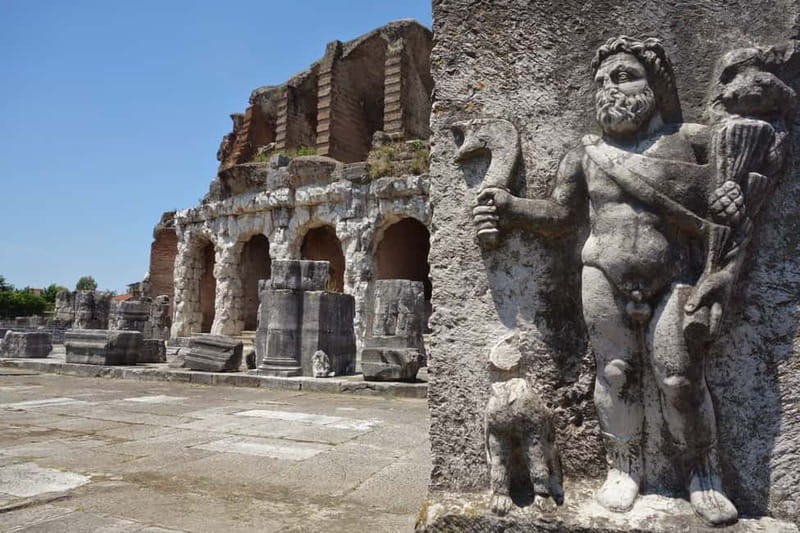
The amphitheater may have served as a model for the Colosseum in Rome. It was later enlarged and decorated under the emperors Hadrian and Antoninus Pius. That sequence gives your guide several useful points of comparison: Capua came before the Colosseum in the popular imagination, and later emperors continued to improve it.
I like this part of the tour because it gives you a different angle on Rome’s famous arena. If you have seen the Colosseum, Capua can help you understand that Roman amphitheaters were part of a larger building tradition. If you have not seen the Colosseum, this site gives you a strong introduction without making Rome the only reference point.
Your guide’s role is important here. The feedback attached to this experience praises a guide who was well spoken, informative, and responsive. Those are useful qualities at an archaeological site, where a good explanation can help you notice why a wall, passage, or seating area matters.
The Spartacus connection without the movie version
The Spartacus story is a major reason many people choose this experience. The useful point is not simply that his name appears in the tour title. Capua is connected with the beginning of his revolt, and the amphitheater area gives that story a physical setting.
You should keep your expectations grounded. This is an archaeological tour, not a live historical show. You will not see actors portraying Spartacus, and the tour does not promise a full reconstruction of gladiator training. Instead, your guide places the rebellion within the setting of ancient Capua and explains why the city mattered.
That approach is better for visitors who want context rather than spectacle. The arena, the museum, and the ancient city remains work together. You can imagine the public side of Roman entertainment while also considering the lives of the people forced to fight there.
The Hannibal connection adds another layer. His army reached Capua with elephants, a detail that helps show the city’s importance during the ancient Mediterranean conflicts. Cicero’s comparison to Rome points in a different direction, toward Capua’s wealth and status. The tour connects these episodes to the same urban center.
Walking through ancient Capua
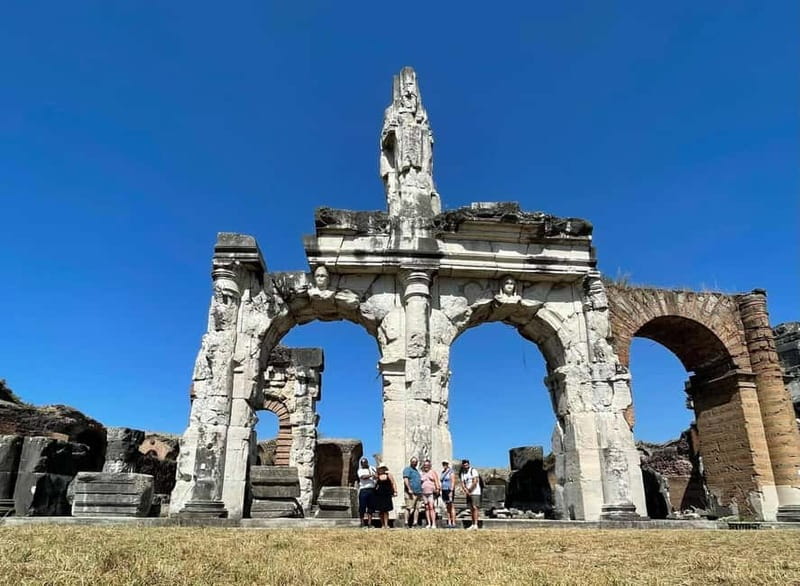
The main guided visit lasts about an hour and a half and includes a photo stop, a visit, and a walk with the guide. The wording suggests that the tour is not limited to one interior space. You can expect to move through the archaeological area and along remains connected with the old city.
This is where an archaeologist guide can make the difference. Ancient streets rarely explain themselves. A route that looks like a line of paving stones can reveal how people moved through the city, how public buildings related to one another, and how the Roman urban system functioned.
The tour does not promise a complete city reconstruction, so you should not expect every building to be intact. Instead, the value comes from seeing the surviving pieces in place and having them explained as part of Capua’s wider story.
The photo stop is a practical feature, especially if you want time to record the scale of the arena. Since the entire experience lasts two hours, the pace is focused. You get a guided introduction rather than a full-day archaeological survey.
I would plan to arrive ready to walk and listen. The supplied information does not specify the exact surface conditions, shade, or restroom arrangements, so you should check local conditions before booking if those details are important to you. The activity itself is wheelchair accessible, which is useful, though the exact route through the archaeological area is not described.
More film museums and exhibitions in Italy:
- Rome: Gladiator Show and Museum Tickets
★ 4.5 · 237 reviews - Turin: Cinema Museum and Bus Tour
★ 4.4 · 200 reviews - Turin: National Museum of Cinema & Mole Antonelliana Tour
★ 4.6 · 170 reviews - Turin: National Museum of Cinema Entry Ticket & Audio Guide
★ 3.6 · 70 reviews
Inside the Gladiator Museum
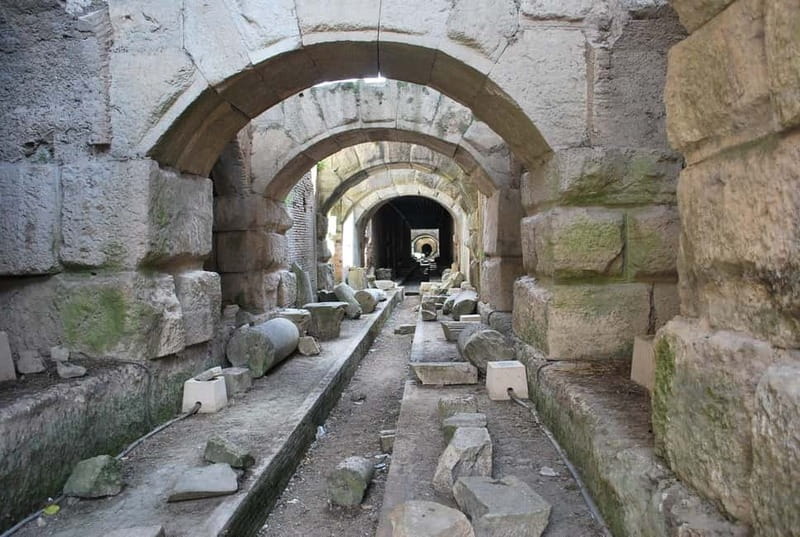
The Gladiator Museum is a short but valuable part of the visit. The guided portion here lasts about 20 minutes, so do not expect a large museum tour with every case explained at length. Think of it as a focused companion to the amphitheater.
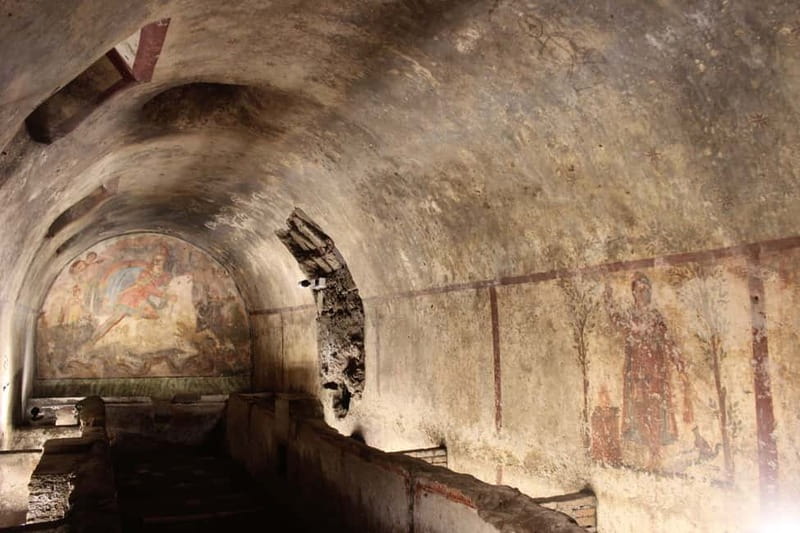
The museum retains original portions of the arena’s decorations. That makes it more than a room of copied objects. You can see elements that once belonged to the public presentation of the building and connect them with the remains outside.
A reconstructed gladiator fight is also on display. This gives you a visual explanation of the arena’s purpose, but it remains a reconstruction rather than an actual performance. For many people, that is enough to make the museum displays easier to understand.
The museum also contains finds dating back to the Iron Age. This is one of the tour’s strongest features because it widens the time frame. You are not only looking at the Roman period or at the Spartacus story. You are seeing evidence of human activity in the area before Capua became a Roman power center.
The 20-minute museum visit may feel brief if you love archaeology museums. Still, the short format keeps the tour moving and gives the museum a clear job: explain the arena and show some of the objects connected with the site.
What the two-hour schedule feels like
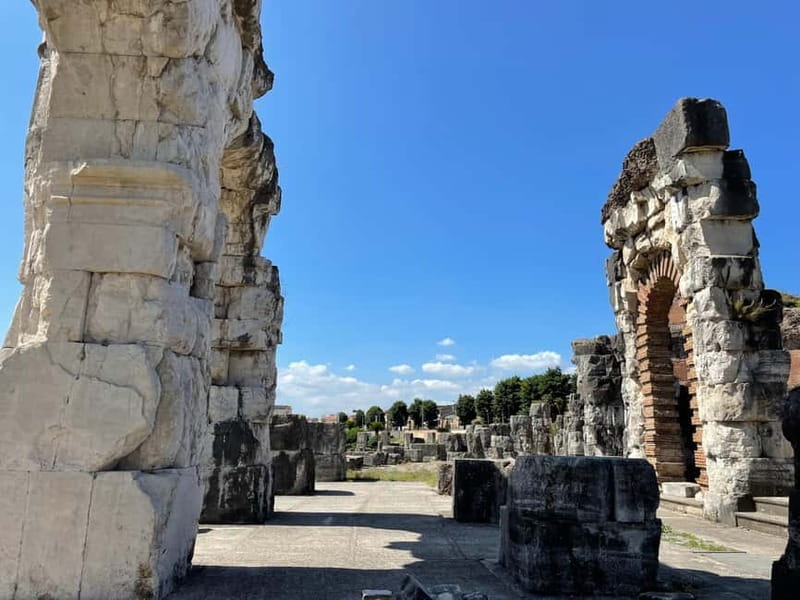
The full activity takes about two hours. The first stop begins at the Campano Amphitheater, followed by roughly 90 minutes in the Santa Maria Capua Vetere archaeological area. The Gladiator Museum then receives about 20 minutes of guided attention before you return to the starting point.
That timing works well if you are building a day around Caserta or other Campania sights. You can see the principal Capua remains without giving up an entire day. It is also long enough for a specialist guide to provide more than a quick orientation.
The trade-off is that the schedule leaves little room for a slow, independent visit. If you like to read every panel, photograph every angle, or linger over individual artifacts, you may want additional time before or after the guided portion. The activity ends back at the original meeting point, so you can continue on your own if the site allows and opening arrangements suit your plans.
Starting times vary, so you need to check availability for the date you want. The tour is offered in Italian, English, French, and Spanish. A private group format can be useful if you want to ask questions freely or keep the visit focused on Roman architecture, gladiators, or local history.
Is the $260.56 price fair?
At $260.56 per group of up to one person, this is not a bargain attraction. The price is easier to justify if you are specifically seeking a private archaeologist-led visit and do not want to join a larger public group.
Admission to the archaeological area is included, along with the guide. That removes the need to buy entry separately, but the price does not include transportation, food, drinks, or souvenirs. Since the meeting point is at the archaeological park, you must pay for your own route to Santa Maria Capua Vetere.
For a solo visitor, the cost is high. For a private booking where the listed group pricing applies to your party, the value depends on how much you care about personal attention and specialist interpretation. You are paying for an organized visit with a professional archaeologist and licensed tourist guide, not simply for access to the ruins.
I would compare the price with your wider Campania plans. If you are already near Caserta, the tour is more practical. If you must make a special trip from Naples and then arrange transport, the total cost rises. The convenience of a guide and included admission may still be worthwhile, but you should calculate the full day rather than looking only at the tour fee.
Who will enjoy this Capua visit
I would recommend this tour to you if you enjoy Roman archaeology, want to see a major arena outside Rome, or have already visited the better-known Campania sites. It is also a good match if you prefer a guide who can answer questions rather than a self-guided audio track.
Families with an interest in gladiators may like the reconstructed fight and the Spartacus connection. The museum portion is short enough to hold attention, while the arena gives children a large setting to explore with adult supervision.
This is also a useful choice for visitors who want a break from Pompeii. Capua offers a different type of archaeological experience. The emphasis is on the amphitheater, the old urban setting, and the gladiator displays, rather than on a whole city frozen by a volcanic eruption.
You may want to skip it if your main priority is a low-cost attraction, hotel pickup, or a long museum visit. You should also think twice if you have only a few hours in Campania and are not already planning to be near Caserta. The tour is focused, but it is not a substitute for seeing every major ancient site in the region.
Practical details before you book
Meet your guide at the entrance of the archaeological park. Look for the Naples Grand Tour brooch. The tour ends at that same meeting point, and round-trip transportation is not included.
The experience is private and wheelchair accessible. Live guiding is available in English, Italian, French, and Spanish. Because the group format is private, you can usually make better use of the guide’s time, though the available information does not identify the guide by name.
You can cancel up to 24 hours before the start for a full refund. You can also reserve now and pay later, which helps if your Campania plans are still changing.
The strongest praise attached to this experience centers on the guide being well spoken, informative, and responsive, along with the site itself. That combination is exactly what you want here. The ruins are important, but their scale and stories become much clearer when someone explains what you are seeing.
Should you book the Spartacus Arena tour?
Book this experience if you want a focused, private look at one of Campania’s major Roman sites and you value an archaeologist’s explanation. The arena, Spartacus connection, original decorations, and Iron Age material give the two hours real range.
I would be more cautious if the $260.56 price stretches your budget or if you need transportation included. For the right visitor, especially someone staying near Caserta or building a Roman archaeology itinerary, this is a worthwhile specialist visit. For everyone else, check the total transport cost first, then decide if private guiding is worth the premium.
FAQ
Where does the tour begin?
The tour begins at the entrance of the archaeological park at the Anfiteatro Campano e Museo dei Gladiatori in Santa Maria Capua Vetere.
How will I recognize the guide?
The guide wears a brooch marked Naples Grand Tour.
How long does the experience last?
The tour lasts two hours.
What languages are available?
Live guiding is available in Italian, English, French, and Spanish.
Is this a private tour?
Yes. The activity is offered as a private group experience.
Is the entrance ticket included?
Yes. Admission tickets to the archaeological area are included.
Does the price include transportation?
No. Round-trip transportation is not included.
What sites are visited?
The experience includes the Campano Amphitheater, also called the Spartacus Arena, the archaeological area of Santa Maria Capua Vetere, and the Gladiator Museum.
Is the tour wheelchair accessible?
Yes. The activity is listed as wheelchair accessible.
Can I cancel for a refund?
Yes. You can cancel up to 24 hours in advance for a full refund.
Just added around Italy
- Mamma Mia Boat Experience!★ 5.0 · 29 reviews
- The Godfather Movie Locations Private Tour in Sicily★ 4.5 · 8 reviews
- The Godfather Movie Shore Tour from Messina,Catania,Naxos seaport★ 5.0 · 2 reviews
- The Godfather Movie Iconic Locations: Savoca & Forza D’Agrò small group tour★ 5.0 · 6 reviews
- Taormina & The Godfather★ 4.5 · 10 reviews
- Godfather tour Sicily: Savoca-Forza d’Agrò★ 4.5 · 10 reviews
- Taormina The Sicilian Colors and Flavors of the White Lotus★ 5.0 · 10 reviews
- Godfather tour , Taormina and Messina★ 5.0 · 4 reviews
Italy Film Location Tours, compared.
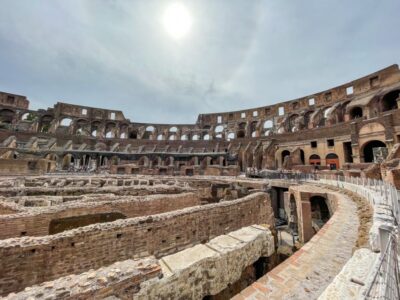
Colosseum Tour with Access to the Gladiator Arena
Read our review →
Gladiator’s Gate: Special Access Colosseum Tour with Arena Floor
Read our review →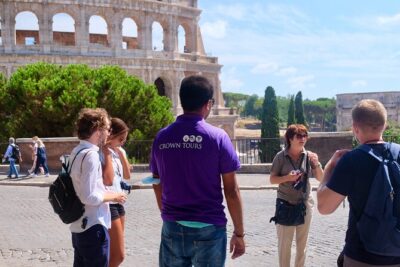
Colosseum Arena Floor, Roman Forum & Palatine Hill Tour
Read our review →
Roman Gladiator School: Learn How to Become a Gladiator
Read our review →
Full Day Tour to Val d’Orcia and Gladiator’s Fields with Wines
Read our review →
Gladiator’s Gate and Arena Special Colosseum Access
Read our review →
Browse the lists this tour appears in