
REVIEW · ITALY
Turin: National Museum of Cinema Entry Ticket & Audio Guide
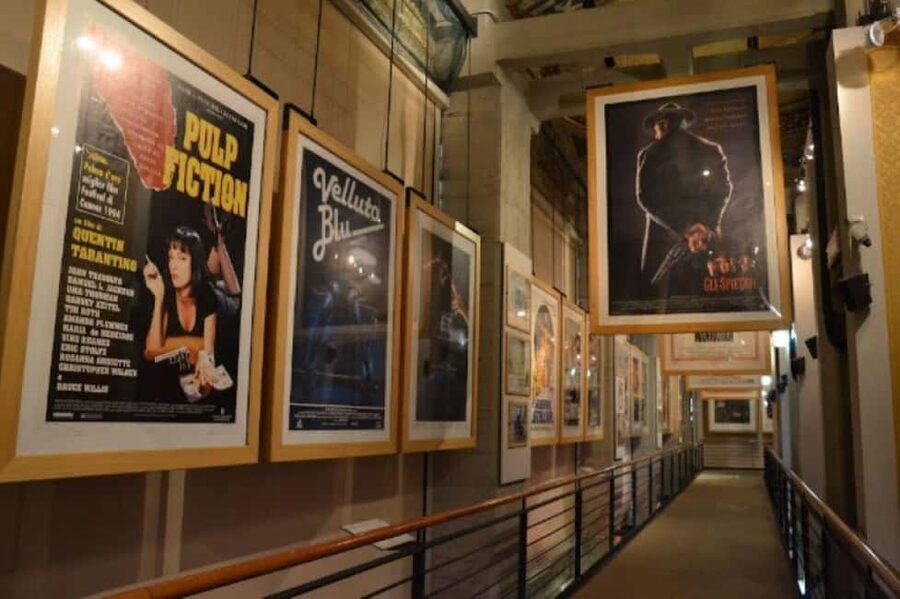
The most striking part of this experience is the setting: Turin’s Mole Antonelliana, the city’s famous architectural landmark, houses a cinema museum that rises through the building in a spiral. You move from shadow theatre and early film equipment toward special effects, set objects, photographs, projections, and modern cinema.
I like the freedom of a self-guided visit. You can pause at the displays, move at your own pace, and use the audio content in Italian, English, French, German, Spanish, Chinese, or Russian. I also like that the ticket gives direct museum entry, with no meeting point or tour group to find.
The main drawback is the audio guide. It is delivered through your smartphone and QR codes, and the content may feel light if you expect detailed commentary at every display. At $45 per person, the museum itself is the main reason to book, not the audio guide alone.
Key points to know before you book
- The museum climbs through the Mole Antonelliana: Expect a spiral route across several exhibition levels rather than a simple series of flat galleries.
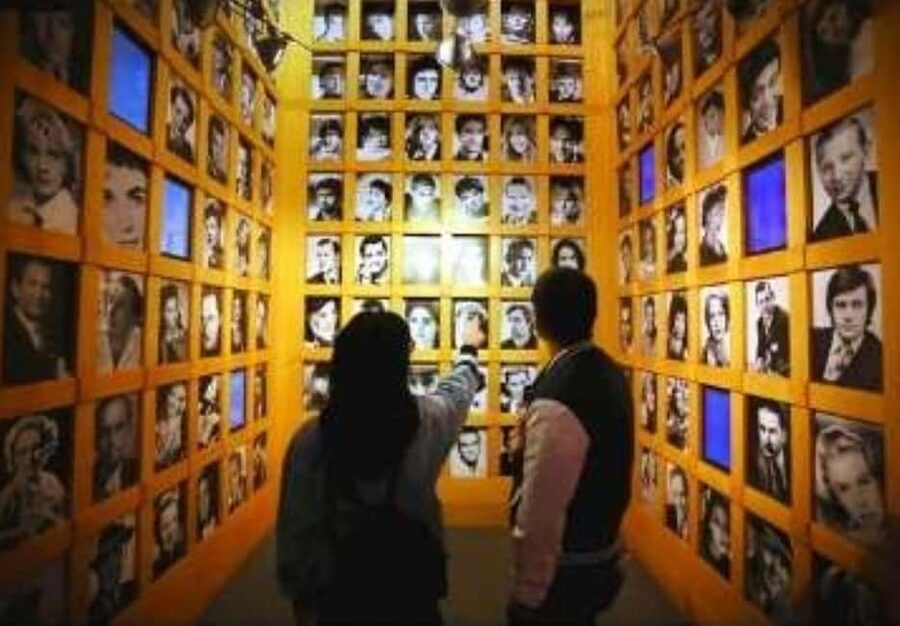
- Cinema comes alive through objects and effects: You’ll see vintage equipment, photographs, film-set objects, projections, scenography, and displays about special effects.
- There is no guide waiting outside: Go directly to the National Museum of Cinema with the actual ticket sent by email.
- The audio guide uses your own phone: Bring headphones and make sure you receive the separate ticket and audio-guide codes.
- The panoramic lift costs extra: The museum entry does not include the panoramic lift ticket.
- The audio guide has seven language options: Italian, English, French, German, Spanish, Chinese, and Russian are available.
Inside Turin’s Mole Antonelliana
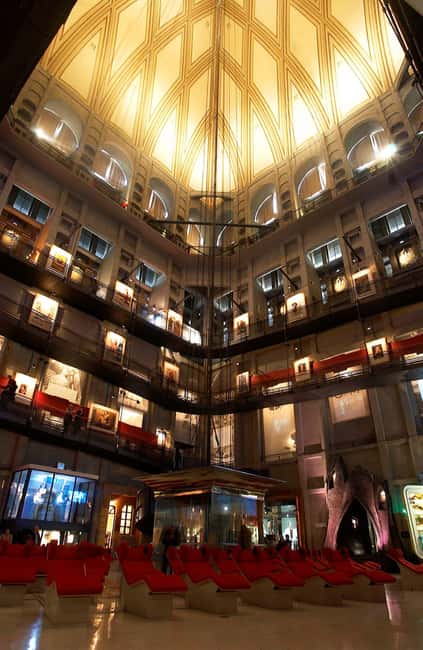
The National Museum of Cinema is not housed in an ordinary gallery building. It occupies the Mole Antonelliana, the tall landmark that gives Turin much of its visual character. The architecture matters here because your museum route moves upward through the structure in a spiral.
That layout gives the visit a natural sense of progress. You start with the earliest ways people created moving images, then work toward the machinery, artistry, and effects that shaped modern film. It is less like walking through a row of rooms and more like following cinema as it develops above you.
I would allow plenty of time rather than treating this as a quick ticketed stop. The admission is valid for one day, so you have flexibility, but the exact length of your visit depends on how closely you examine the displays and how much of the audio content you use.
The building itself can be as memorable as the collection. Even if you are not a serious film fan, the combination of architecture, light, projection, and objects gives you plenty to look at. The museum makes good use of the interior with scenography and visual effects instead of relying only on text panels.
More film museums and exhibitions in Italy:
- Rome: Gladiator Show and Museum Tickets
★ 4.5 · 237 reviews - Turin: Cinema Museum and Bus Tour
★ 4.4 · 200 reviews - Turin: National Museum of Cinema & Mole Antonelliana Tour
★ 4.6 · 170 reviews
From shadow theatre to modern special effects
The route begins with the origins of cinema. One of the most useful ideas presented here is that film did not appear from nowhere. It grew from older attempts to create images, movement, illusion, and performance.
Shadow theatre forms part of this opening story. From there, the displays trace the development of cinema through objects and images that show how people learned to manipulate light and motion. This early section should appeal to anyone curious about the practical side of film, not only famous actors and directors.
As you continue upward, the museum presents original objects connected with film sets. These pieces help turn an abstract story into something you can see at close range. A machine, prop, photograph, or piece of production equipment can reveal more about filmmaking than a long paragraph of explanation.
The museum also focuses on what happens behind the camera. That is one of its strongest features. You are not simply looking at posters or celebrity portraits. You are shown the tools, tricks, and working methods that helped filmmakers create what appeared on screen.
The final stages reach toward the most spectacular special effects of today. The route links early visual illusions with newer film techniques, making the visit useful for families and casual film fans as well as dedicated cinema followers. The displays are designed to be seen, not just read, with projections, light games, and staged settings along the way.
How the smartphone audio guide works

This is not a conventional guided tour. No staff guide accompanies you, and there is no assigned meeting point. Instead, you receive audio-guide codes and ticket information by email, then use your smartphone to access the content.
The audio guide covers Turin and its monuments as well as the Cinema Museum. For this visit, you select the material connected with the Mole Antonelliana and the National Museum of Cinema. The language choices are broad: English, Italian, French, German, Spanish, Chinese, and Russian.
Bring your own headphones. They are not included, and using your phone’s speaker in a museum is neither practical nor considerate. It is also sensible to arrive with your phone charged, since both the ticket and audio content depend on it.
The system uses QR codes at the start of the museum, according to the supplied visitor feedback. That makes the audio easy to access once you are inside, but it also means you should not assume the booking confirmation alone is enough. The GetYourGuide confirmation does not permit entry. You need the separate museum ticket sent by the activity provider.
The audio content is best treated as a helpful layer rather than a full private tour. Some users found the explanations useful, especially for moving through the museum without a physical guide. Others found the commentary too brief and not explicit enough for finding their way around.
That difference matters. If you want detailed film criticism, long explanations of each object, or a carefully narrated route, this package may feel thin. If you mainly want the freedom to explore and occasional context in your language, it can do the job.
A practical look at the museum route
The first stage introduces the basic ingredients of cinema: light, shadow, image, and movement. It gives you a frame for the rest of the museum and helps explain why early visual devices were important.
The next levels bring in the machinery and objects that made film possible. Vintage items are especially useful here because they show cinema as a physical craft. Before digital production, film depended on cameras, projectors, sets, lighting, and carefully managed effects.
Further along, projections and scenography make the route more theatrical. This is where the museum differs from a conventional historical collection. You are not only reading about film techniques. The building uses light and staged presentation to show how illusion works.
The displays connected with film sets add another layer. Original objects can make a production feel more tangible, particularly when you have seen similar items on screen. The supplied information does not identify every individual object or film represented, so you should expect a broad survey rather than a fixed list of famous props.
Toward the upper portions, the subject shifts to more advanced special effects. This gives the visit a clear arc from simple shadow play to complex modern spectacle. It also keeps the museum from feeling trapped in the past.
The route is described as wheelchair accessible. Still, the building’s unusual spiral design means that you may want to confirm any specific mobility needs before arrival if you require detailed information about individual displays or access points.
More self-guided film routes in Italy:
- Self Guided Audio Tour-Coliseum & the Gladiator’s Legends
★ 3.5 · 49 reviews - Discover Marvellous Rome: Self-Guided Audio Tour
★ 5.0 · 2 reviews - London: Self-Guided Notting Hill Walking Tour with an APP
★ 4.3 · 120 reviews - Romans, Vikings and Medieval York: An Audio Tour
★ 4.5 · 118 reviews
Is the $45 price good value?
At $45 per person, this is not a cheap museum admission. The value depends on what you want included.
The price covers entry to the National Museum of Cinema and multilingual audio content for the museum and Turin’s monuments. There is no transport, food, physical guide, headphones, or panoramic lift ticket in the package.
I think the cost makes the most sense for a first-time Turin visitor who already wants to see the Mole Antonelliana and values the convenience of a prearranged ticket. You avoid searching for a separate museum admission and can explore independently in your chosen language.
The value is weaker if you are buying mainly for the audio guide. The commentary has received mixed reactions, with some finding the QR-code system useful and others finding the explanations too light for the price. In that case, the museum entry is doing most of the work.
The separate panoramic lift is another detail to factor into your budget. The lift ticket is not included, so do not assume this admission automatically covers every attraction inside the Mole Antonelliana.
For a film enthusiast, the original set objects, historic equipment, and special-effects displays may justify the price. For a casual sightseer, the cost is easier to accept if you also care about the building itself and plan to spend a good part of the day exploring Turin.
Arrival, tickets, and the details that can trip you up
There is no meeting point and no person on site to check you in. Go directly to the entrance of the National Museum of Cinema inside the Mole Antonelliana.
The most important practical warning is the ticket email. The booking confirmation is not the museum ticket. The actual entry ticket and audio-guide codes are sent by email the day before the visit.
Check your inbox before setting out. If the ticket does not arrive, contact the activity provider rather than relying on the booking confirmation at the door. One poor experience in the supplied feedback involved a ticket being considered invalid, so this is not a minor detail.
Bring headphones, and do not bring food or drinks into the museum. Transport is not included, so you are responsible for reaching the Mole Antonelliana on your own.
The activity is valid for one day, with starting times shown when you check availability. Cancellation is free up to 24 hours in advance for a full refund. The ticket is also listed as wheelchair accessible.
Who will enjoy this experience most?
I would recommend it first to people who enjoy museums with a strong visual element. The projections, light effects, staged settings, and unusual building make the visit more active than a standard display of framed photographs.
Families may also find the route appealing because cinema is explained through objects and illusions rather than only through dense written panels. The move from shadow theatre to special effects gives younger visitors a clear story to follow, though the audio guide may not hold every child’s attention.
Film students, movie fans, and anyone curious about production will get the most from the behind-the-camera material. The focus on equipment, sets, and effects gives you a practical look at how screen images are built.
Independent visitors should appreciate the lack of a fixed group schedule. You can stop when something catches your eye and skip material that does not interest you. The trade-off is that you must manage the audio, ticket email, and route yourself.
This is less suitable if you want a personal guide, detailed commentary at every object, or a panoramic view included in the same admission. It is also not the right choice if you expect transport to or from the Mole Antonelliana.
Should you book the cinema museum ticket?
Book it if you want to see the Mole Antonelliana from the inside and are happy to explore a large cinema collection on your own. The museum’s spiral route, original objects, visual effects, and wide range of film material are the real draw.
Think twice if you are paying $45 mainly for a polished audio tour. The audio content can help you get your bearings, but it may not provide the depth or precision you expect. Bring headphones, check for the actual ticket email, and treat the audio as a supplement to the displays.
For many visitors, the best reason to choose this package is simple convenience: direct entry, flexible exploration, and seven language options in one booking. Just budget separately for the panoramic lift and keep your expectations about the audio guide modest.
FAQ
Where does the experience take place?
It takes place at the National Museum of Cinema inside the Mole Antonelliana in Turin, Piedmont, Italy.
Is there a meeting point?
No. There is no meeting point and no staff member waiting on site. You go directly to the museum entrance.
What does the ticket include?
It includes entry to the National Museum of Cinema and multilingual audio-guide content for Turin, its monuments, and the Cinema Museum.
Which languages are available for the audio guide?
The audio guide is available in Italian, English, French, German, Spanish, Chinese, and Russian.
Do I need to bring headphones?
Yes. Headphones are not included, so you should bring your own.
Is the panoramic lift included?
No. The panoramic lift ticket is separate from the museum admission.
Can I use the GetYourGuide booking confirmation to enter?
No. The booking confirmation does not allow museum entry. The separate museum ticket and audio-guide codes are sent to your email the day before.
What should I do if I do not receive the tickets?
Contact the activity provider if the museum tickets and audio-guide codes do not arrive by email.
Can I cancel the booking?
Yes. You can cancel up to 24 hours in advance for a full refund.
More Audio Location Walks in Italy
- Harry Potter’s Edinburgh: A Self-Guided Audio Tour
★ 4.5 · 42 reviews - Hollywood Fame & Celebrity Homes Self-Guided Audio Bundle Tour
★ 3.5 · 40 reviews - Marvellous Melbourne: A Self-Guided Audio Tour
★ 4.5 · 26 reviews - Bridgerton’s Filming Locations in Bath Audio Guide
★ 5.0 · 7 reviews
Just added around Italy
- The Godfather★ 5.0 · 13 reviews
- Godfather Tour and Taormina★ 5.0 · 5 reviews
- The White Lotus Private Boat Tour Taormina and Giardini Naoxos★ 4.5 · 16 reviews
- Godfather tour★ 5.0 · 14 reviews
- Best of Godfather and Taormina Tour with Street Food Tasting★ 5.0 · 3 reviews
- Godfather Private Tour from Messina cruise port★ 5.0 · 5 reviews
- NETFLIX Family Experience in Sardinia, Blue Zone Longevity – Meet, Cook and Eat★ 5.0 · 10 reviews
- Colosseum Gladiator’s Arena and Ancient Rome Tour★ 4.5 · 7 reviews
Italy Film Location Tours, compared.
Colosseum Tour with Access to the Gladiator Arena
Read our review →
Gladiator’s Gate: Special Access Colosseum Tour with Arena Floor
Read our review →
Colosseum Arena Floor, Roman Forum & Palatine Hill Tour
Read our review →
Roman Gladiator School: Learn How to Become a Gladiator
Read our review →
Full Day Tour to Val d’Orcia and Gladiator’s Fields with Wines
Read our review →
Gladiator’s Gate and Arena Special Colosseum Access
Read our review →
Browse the lists this tour appears in