
REVIEW · ITALY
Angels & Demons Rome Scavenger Hunt: The Illuminati Escape Game
Rome becomes a puzzle board in this self-guided Angels and Demons quest, which links churches, fountains, piazzas, bridges, and Vatican sights into one long walk. You follow clues on your phone, solve riddles at each stop, and pick up bits of story as you go. It is part sightseeing game, part city walk, and part test of your powers of observation.
I like the complete freedom: you can pause for lunch, linger inside a church, or take a slower route without keeping up with a guide. I also like the low price, about $6.02 per person, and the way the route includes major sights along with places you might otherwise pass by. The main caution is the app. Technical trouble, vague clues, scaffolding, closed artwork, or a hot afternoon can turn a playful walk into a tiring one.
The essentials at a glance
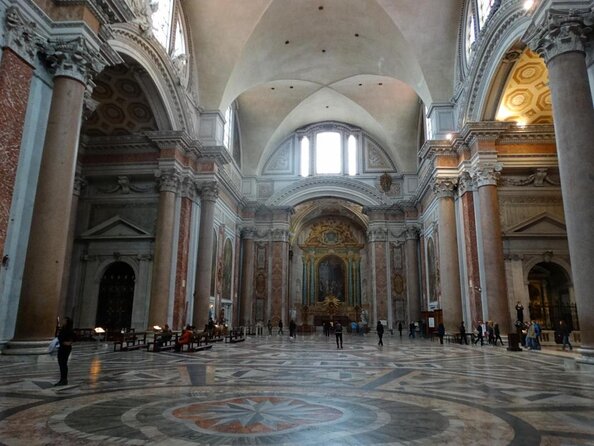
- Follow an 11-stop route: Begin at Basilica di Santa Maria degli Angeli e dei Martiri and finish in St. Peter’s Square.
- Play with your own group: This is a private activity, with no physical guide and no mixed group.
- Use your phone as the guide: The app provides the story, directions, riddles, and answers in English.
- Plan for a long city walk: The stated play time is about 90 minutes to two hours, but lunch, sightseeing, and wrong turns can stretch it much longer.
- Expect changing access: Most stops are free to visit, but St. Peter’s Basilica admission is not included, and some artworks or clues may be blocked during restoration.
- Best value for families and fans: The format works especially well for families with children and anyone who enjoys the Angels and Demons theme.
What kind of Rome experience is this?
This is not a conventional guided tour. Nobody meets you at the starting point to lead the way, explain every monument, or keep the group moving. Instead, you download the Questo app, open the quest, and let the story direct you through central Rome.
The route uses 11 clue-based challenges and riddles. At each place, you read the next instruction, inspect your surroundings, and enter an answer. The app then gives you the next step and adds story or background before sending you onward.
The Angels and Demons connection is the hook. The route draws on locations linked with the film and novel, though you should set your expectations correctly. The story flavor is present, but this is not a detailed film-location tour or a scene-by-scene literary commentary. If you want extensive discussion of Robert Langdon, the Illuminati, or the differences between book and movie, you may find the storytelling fairly light.
The best way to approach it is as a themed walk with puzzles, not as a substitute for a professional art or history guide.
Other filming locations people visit in Rome:
- Rome: Colosseum Tour with Access to the Gladiator Arena
★ 4.4 · 7,046 reviews - Gladiator’s Gate: Special Access Colosseum Tour with Arena Floor
★ 4.5 · 4,037 reviews - Colosseum Arena Floor, Roman Forum & Palatine Hill Tour
★ 4.5 · 1,568 reviews
Why the flexible format works
The freedom to set your own pace is the strongest feature. You can take ten minutes at one stop, twenty at another, and pause whenever you need food, shade, coffee, or a closer look at a church. You are not tied to a departure time beyond opening the experience during the listed availability, which runs from 7:00 AM to 11:30 PM.
That flexibility matters in Rome. A short route on a map can become a slow walk once you stop for photos, cross busy streets, enter churches, or wait for space around a fountain. One group chose to make a full day of the quest, stopping for lunch at a family-run restaurant and taking more than two hours to complete it. That is a sensible way to use the experience.
The private setup also helps. Your party works together rather than competing with strangers, and a larger family can split up small tasks. Groups over 15 people need to make multiple bookings, so large school or corporate groups should plan around that limit.
Stop 1: Santa Maria degli Angeli sets the tone
The quest starts at the Basilica of Saint Mary of the Angels and Martyrs, at Piazza della Repubblica. You reach the church by solving the opening clue, then spend as much time as you like before beginning the next section.
This is a strong starting point because the basilica gives you an immediate sense that the route is not simply a string of famous outdoor photo stops. You are asked to look closely, notice details, and connect what you see with the puzzle.
The listed stop time is about ten minutes. That is enough for the challenge, but not enough for a detailed visit to every feature. If you want a longer look at the church, add your own time.
One warning: some art or statues may not be visible when you visit. Access can change, and restoration work has affected parts of the route. Do not assume every feature referenced by a clue will be fully available.
Stop 2: Santa Maria della Vittoria and the Bernini problem
The next clue leads to Santa Maria della Vittoria, another important church stop. The route uses the building and its art as material for another puzzle, giving you a reason to inspect details rather than simply walk in, take a photo, and leave.
This stop can be rewarding for people who enjoy connecting art with a story. It can also be frustrating if access is restricted. The Ecstasy of Saint Teresa has not always been visible, and restoration or church conditions can make a clue harder to answer.
That is a recurring issue with any app-based city puzzle. The software can guide you to a place, but it cannot control scaffolding, closed chapels, missing statues, or temporary restrictions. Bring patience and be ready to use the hint system or skip a detail if something is blocked.
Same place, a completely different screen:
- Roman Gladiator School: Learn How to Become a Gladiator
★ 4.5 · 1,477 reviews - Castel Sant’Angelo Tour with Panoramic Views
★ 4.5 · 1,103 reviews - Rome: Gladiator’s Gate and Arena Special Colosseum Access
★ 4.7 · 796 reviews - Rome: 2-Hour Gladiator School
★ 4.7 · 630 reviews
Stop 3: Bernini’s Triton at Piazza Barberini
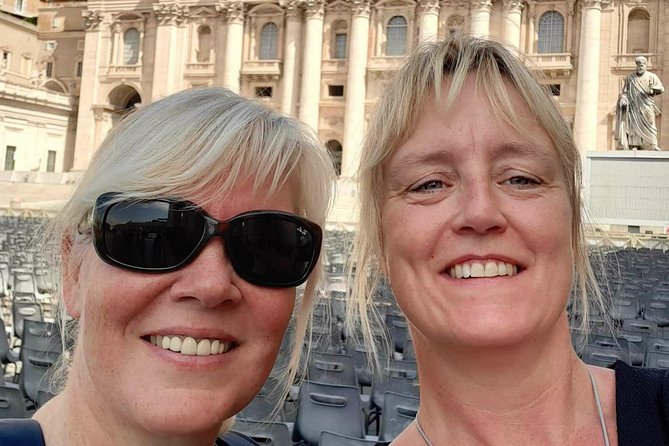
Fontana del Tritone takes the quest outdoors to Piazza Barberini. The fountain is one of Gian Lorenzo Bernini’s best-known works, and its dramatic form gives the puzzle a clear visual target.
This is the kind of stop where the game format earns its keep. Instead of hearing a guide list dates and names, you inspect the fountain for the feature needed to answer the clue. The challenge is simple enough for a family to discuss together, though the exact difficulty can vary with the condition of the monument.
The surrounding square is also a useful place to take a breath before the route continues. The walk is not difficult because of one single stop. It becomes demanding through repetition, especially in heat.
Stop 4: Trevi Fountain brings the crowds

From Piazza Barberini, the route continues to the Trevi Fountain. This is the most familiar sight on the early part of the walk, and the puzzle gives you a small task to perform in a place that can otherwise feel like a wall of people and cameras.
The listed game time is about ten minutes. In practice, you may need longer simply to reach a useful viewing spot. The fountain area can be packed, so keep your phone secure and do not expect a quiet setting for solving the clue.
The route’s value here is not exclusive access or expert commentary. You are seeing the same public monument as everyone else, but the riddle gives you a reason to study it. That makes the stop more active and can help children stay interested.
Stop 5: The Pantheon adds serious Roman history
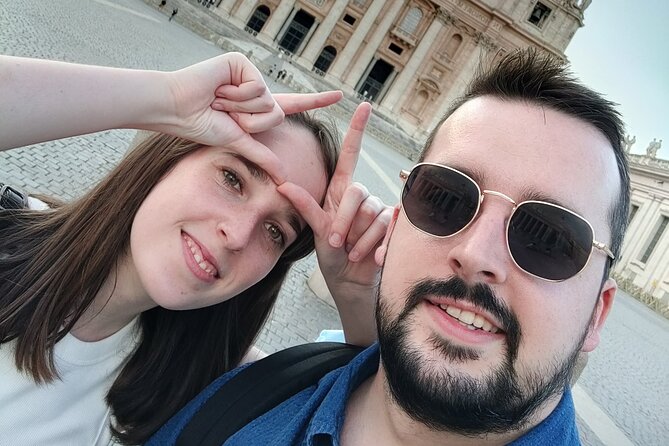
The Pantheon is one of the route’s strongest landmarks. Its great dome, ancient structure, and busy square give the quest a major historical anchor.
You have about ten minutes assigned to the challenge, but the attraction deserves more if you have time. The game may lead you to inspect a particular feature, then provide a short piece of background before sending you onward. That extra information is useful, but it does not replace a full visit.
Admission handling is worth noting. The itinerary lists the Pantheon as a free stop, but the supplied information does not promise admission arrangements beyond the quest itself. Check current access conditions if you plan to go inside, and treat the puzzle as one part of the visit.
Stop 6: Piazza Navona turns the walk into a city tour
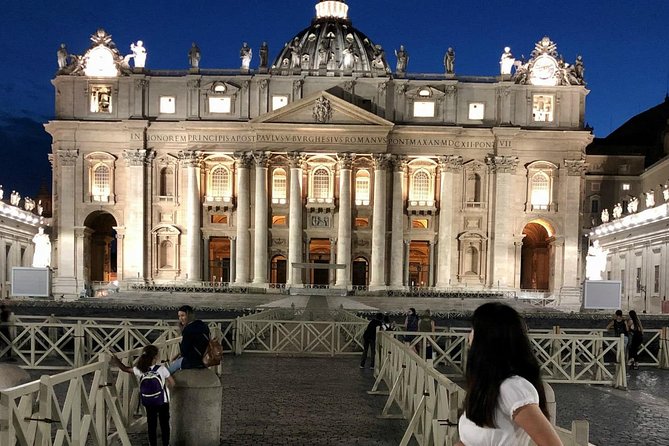
Piazza Navona is one of Rome’s best settings for a clue. Its long shape, fountains, churches, and layers of public life give you plenty to inspect while you work out the answer.
This is also where the route begins to feel like a proper city walk rather than a series of isolated attractions. You move through streets and open spaces, and the game directs your attention to details you might otherwise miss.
The experience works best if you resist the urge to race. The app may record progress, but the main reward is seeing Rome along the way. Stop for a snack or lunch if the timing suits you. There is no physical guide waiting to move you along.
Stop 7: St. Angelo Bridge connects Rome to the Vatican
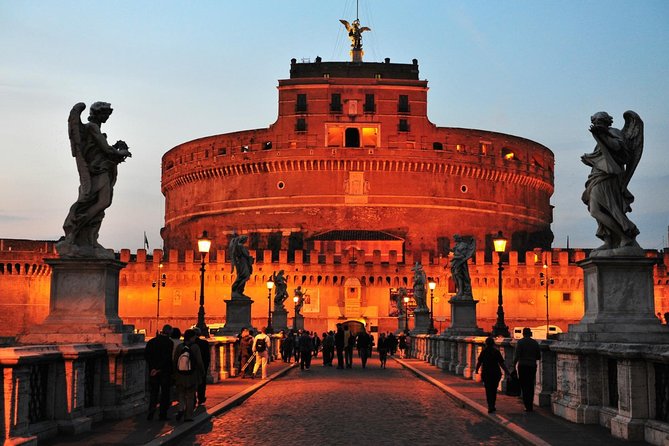
The route next reaches St. Angelo Bridge, where the walk crosses toward the Vatican area. This is a useful transition point, both geographically and visually.
The bridge gives you a broad view toward Castel Sant’Angelo and the river, while its statues provide more material for observation. The puzzle may be easy for some groups and less clear for others, depending on what is visible and how carefully the clue is written.
This is one of the places where the app’s limits can show. Some people find the riddles straightforward. Others find them too general, especially when a statue or detail is covered. If your group gets stuck, check the wording carefully and use the app’s help functions rather than spending too long on one answer.
Stops 8 and 9: St. Peter’s Square and the Vatican obelisk
St. Peter’s Square is the next major stage. The scale changes here. Bernini’s colonnade, the open square, and the Vatican setting make this one of the route’s most memorable locations.
The game gives you about ten minutes at the square, followed by a shorter five-minute challenge at the Vatican obelisk. These are separate steps, but you will experience them as part of one large public space.
The obelisk is especially useful for a clue-based game because it is an obvious fixed point. You can orient yourself quickly, then focus on the task. This section also gives you a chance to appreciate how the route has carried you from central Rome to Vatican City without a bus or a scheduled group.
Remember that the route is outdoors and public. You do not receive special entry, reserved access, or a guided explanation of St. Peter’s Square.
Stops 10 and 11: St. Peter’s Basilica and Vatican City
The final section includes St. Peter’s Basilica, followed by Vatican City. The Basilica stop is listed as about five minutes, while Vatican City receives about twenty minutes.
The Basilica entry is the one place where the admission note is clear: a ticket is not included. The quest can still direct you to the location and provide a clue, but you should not treat this purchase as a Basilica ticket or a way around security and admission rules.
Access may also vary. Church hours, security, ceremonies, temporary closures, and crowd control can affect what you can see. If the clue refers to a feature that is unavailable, you may need to rely on the app’s help or move forward.
Ending at St. Peter’s Square is practical. You finish in a major public area with transport nearby, rather than being left at a remote location. It also gives you a natural point from which to continue sightseeing or head back toward your accommodation.
Price, timing, and the real value
At about $6.02 per person, the price is unusually low for a Rome activity. You receive access to the full mobile quest, step-by-step instructions, the storyline, and lifetime access after purchase. For a family or private group, the cost can be far less than booking a live walking tour.
The trade-off is clear. You are paying for a digital game, not a human guide. There is no one beside you to explain a confusing clue, answer detailed questions about Bernini, adjust the route, or tell you where to eat.
I see the best value in using it as a first-afternoon orientation or a flexible family activity. You can cover many central sights while learning the basic shape of Rome. It is less suitable if you want deep commentary, carefully paced sightseeing, or guaranteed access to every listed feature.
The stated duration is 90 minutes to two hours, but that is a game estimate. Add time for photos, church visits, lunch, crowds, heat, and navigation. Wear comfortable shoes and consider starting early or later in the day during hot weather.
App reliability and how to avoid frustration
The biggest practical risk is technical. The game depends on downloading and opening the Questo app, loading the booking, and connecting the purchase correctly. Some people have had trouble getting the booking to appear or downloading the app at all.
Install the app before you reach the starting point. Confirm that the quest loads, check that your phone has enough battery, and bring mobile data. The experience is offered in English, so make sure your group is comfortable reading English clues and instructions.
A few clues may feel basic, while others can become difficult when monuments are under repair. Rome has ongoing cleaning and restoration work, and scaffolding can hide the very feature you are supposed to identify. Take a screenshot of important information when possible, and do not let one blocked clue ruin the whole walk.
The provider offers support through its contact channels, but you should not count on instant help while standing in a crowded piazza. A little preparation is worth it.
Who should book this quest?
I would recommend it most strongly to families with children around school age, groups of friends who enjoy puzzles, and fans of Angels and Demons who want a themed route through Rome. Children around 10 to 13 can take an active role, especially when the group shares the clues rather than letting one adult handle the phone.
It also suits independent planners who dislike fixed departure times. You can play early, late, or in sections, and the purchase provides lifetime access to the game.
I would be more cautious if you are visiting Rome during a heatwave, have limited walking ability, or want a traditional history tour. The route is long, app-dependent, and not designed around a physical guide. Most people can participate, and service animals are allowed, but the information does not describe a shortened route or a special accessibility plan.
Should you book the Angels and Demons Rome quest?
Book it if you want a cheap, private way to walk through Rome, solve simple riddles, and keep children engaged. The route covers an impressive set of places, from Santa Maria degli Angeli to St. Peter’s Square, and the freedom to stop for lunch or linger is a real advantage.
Skip it if your main goal is expert commentary, a polished film study, or guaranteed access to every church and artwork. The app can be imperfect, clues may be vague, and restoration work can interfere with the answers.
For the price, I think it is a good add-on to a Rome visit, especially on a first afternoon when you want a broad introduction without committing to a formal tour. Just download the app in advance, allow more than two hours if you want to enjoy the city, and treat the quest as a playful guide rather than the whole story of Rome.
FAQ
How long does the Angels and Demons Rome quest take?
The expected play time is about one hour and 30 minutes to two hours. You can take longer because the activity is self-guided and allows you to pause at the stops.
Where does the quest start?
It starts at the Basilica of Saint Mary of the Angels and Martyrs, at Piazza della Repubblica 8 in Rome.
Where does the quest finish?
The route ends at Saint Peter’s Square in Vatican City.
Is there a physical tour guide?
No. The experience is guided through the Questo mobile app. You receive step-by-step instructions, a storyline, and 11 clue-based challenges.
Is this a private activity?
Yes. Only your own group participates. Groups larger than 15 people need to make multiple bookings.
Is the quest available in English?
Yes. The activity is offered in English.
Is admission to St. Peter’s Basilica included?
No. Admission to St. Peter’s Basilica is not included. The quest can guide you to the location, but it does not provide a Basilica admission ticket.
Can I cancel for a full refund?
Yes, if you cancel at least 24 hours before the scheduled start time. Cancellations or changes made less than 24 hours before the start time are not accepted for a refund.
Just added around Rome
- Colosseum Gladiator’s Arena and Ancient Rome Tour★ 4.5 · 7 reviews
- 3-Hour Colosseum Gladiator’s Arena and Ancient Rome Tour★ 4.5 · 8 reviews
- The Colosseum Arena & Gladiator Chronicles Private Tour★ 5.0 · 14 reviews
- Rome : Arena of Gladiators Tour with Forum Access★ 4.0 · 6 reviews
- From Colosseum Gladiators to Via Sacra: Rome’s Historic Heart★ 5.0 · 12 reviews
- Tour of Gladiators Arena and Colosseum with Imperial Forum★ 4.5 · 8 reviews
- Colosseum & Roman Forum with Gladiator Arena For Kids & Families★ 5.0 · 2 reviews
- Marvels Of Rome At Night – Private Tour★ 4.5 · 26 reviews
Italy Film Location Tours, compared.
Colosseum Tour with Access to the Gladiator Arena
Read our review →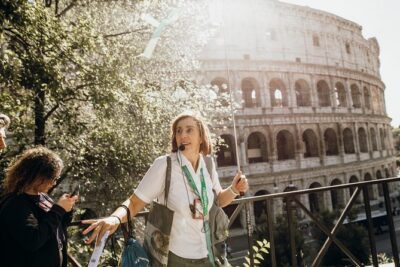
Gladiator’s Gate: Special Access Colosseum Tour with Arena Floor
Read our review →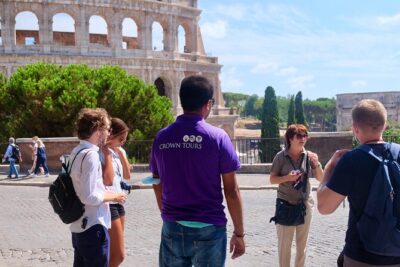
Colosseum Arena Floor, Roman Forum & Palatine Hill Tour
Read our review →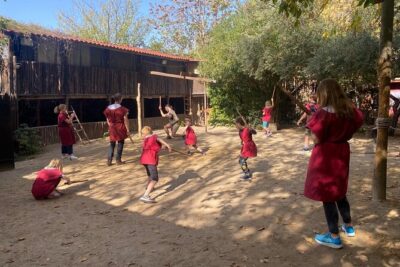
Roman Gladiator School: Learn How to Become a Gladiator
Read our review →
Full Day Tour to Val d’Orcia and Gladiator’s Fields with Wines
Read our review →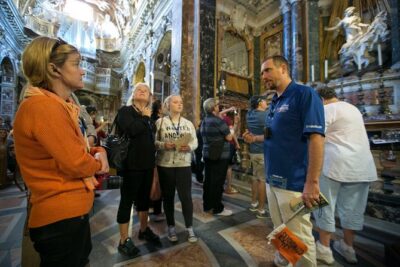
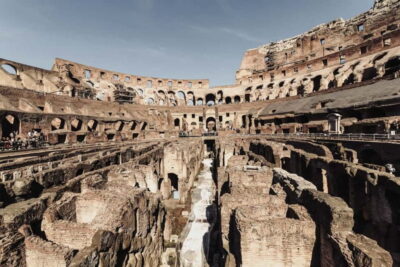
Gladiator’s Gate and Arena Special Colosseum Access
Read our review →
Browse the lists this tour appears in