
REVIEW · ITALY
Rome: Angels and Demons Private Tour with Transfers
Rome’s Angels and Demons tour turns a Dan Brown thriller into a real walk through the city. You’ll connect Bernini’s Ecstasy of Saint Teresa, the Pantheon, Piazza Navona, Ponte Sant’Angelo, and St. Peter’s Square while sorting fact from fiction about the Illuminati. Bernini’s sculpture is the artistic high point, while the route links famous sights in a clever way.
I like the private format, since your guide can shape the conversation around your interest in the novel, Baroque art, or Roman history. I also like the hotel pickup and drop-off within the Aurelian Walls, a useful perk when you have only half a day or are still finding your way around Rome.
The main drawback is price: at $460.57 per person, this is a costly three-and-a-half-hour outing, especially if only one or two people book. The tour also includes plenty of outdoor sightseeing, and some locations may change order or close during ceremonies, restoration, or Jubilee events.
Key points at a glance
- Bernini takes center stage: See the dramatic Ecstasy of Saint Teresa inside Santa Maria della Vittoria and the Fountain of the Four Rivers in Piazza Navona.
- The route links fiction to real Rome: Your guide explains the Illuminati stories, symbols, myths, and historical facts behind Angels and Demons.
- Private means flexible: Only your group participates, so you can ask questions and set the pace within the fixed three-and-a-half-hour schedule.
- Hotel transfers save time: Pickup and return are offered at centrally located accommodations within Rome’s Aurelian Walls.
- Most stops are free to view: No entrance tickets are required for the suggested sites, though the tour does not include food, drinks, or a St. Peter’s Basilica admission ticket.
- Dress modestly: Knees and shoulders must be covered for places of worship and selected museums.
Following the Angels and Demons trail through Rome
This experience is best understood as a themed city walk, not a full museum tour. Dan Brown’s story supplies the thread, but the real attractions are Rome’s churches, fountains, squares, bridges, and the art that makes the fictional clues believable.
You begin with a hotel pickup in a sanitized vehicle, assuming your accommodation lies within the Aurelian Walls. That transfer matters more than it may seem. Rome’s center can be confusing, and getting to the first stop without arranging a taxi gives you a cleaner start to a short tour.
The tour lasts about three hours and 30 minutes. That is enough time to connect the major locations, but not enough for long visits inside every building. You should expect short stops, explanations, photographs, and walking between sights rather than a relaxed afternoon at each monument.
Because this is a private tour, you are not tied to the questions of a large group. If you care more about Bernini than the novel, you can ask for more art context. If you came mainly for the film and book locations, the guide can keep the story in view.
Other filming locations people visit in Rome:
- Rome: Colosseum Tour with Access to the Gladiator Arena
★ 4.4 · 7,046 reviews - Gladiator’s Gate: Special Access Colosseum Tour with Arena Floor
★ 4.5 · 4,037 reviews - Colosseum Arena Floor, Roman Forum & Palatine Hill Tour
★ 4.5 · 1,568 reviews
Santa Maria della Vittoria and Bernini’s most dramatic sculpture
Santa Maria della Vittoria is the first major stop, with about 15 minutes set aside for the church. Admission is listed as free, though church opening times and religious services can affect access.
The church’s main prize is Bernini’s Ecstasy of Saint Teresa in the Cornaro Chapel. The sculpture shows Saint Teresa in a moment of spiritual revelation, with an angel holding a spear near her heart. Bernini made the scene theatrical, using light, marble, gesture, and the surrounding chapel to create a work that feels almost like a stage performance.
This is also one of the most useful stops for understanding why Angels and Demons works so well as a setting. The novel presents Rome as a city of codes and secret signs, but the church offers something more solid: an actual masterpiece with dramatic symbolism and a charged setting.
You get only a short visit here, so do not expect time to study every fresco, marble detail, and side chapel. Still, this stop gives the tour a strong start. It is not just a filming location or plot point. It is a serious Baroque church with one of Rome’s most memorable sculptures.
Trevi Fountain, a quick stop among the crowds
The itinerary includes the Trevi Fountain, Rome’s grandest Baroque fountain. It is known for the immense figure of Oceanus, the horses, the rocky setting, and the familiar custom of tossing a coin over your shoulder to wish for a return to Rome.
The fountain is one of the city’s busiest sights, and the experience can feel more like crowd management than quiet sightseeing. That is not a flaw unique to this tour. It is simply part of seeing Trevi. Your guide can help explain the monument and connect it to the larger Rome of the story, but you should not expect an empty foreground for photographs.
The practical value here is efficiency. You see the fountain as part of a larger route instead of spending a separate morning working out how to connect it with the Pantheon and Piazza Navona. Since the tour is private, you can ask about the fountain’s imagery, coin tradition, or place in the novel without waiting for a group to move on.
The Pantheon and the scale of ancient Rome
The Pantheon is one of the most impressive buildings on the route. Emperor Hadrian built the present structure between AD 118 and 125, and it remains remarkably well preserved. In the seventh century, it became a Christian church, which helped protect the building through later centuries.
Its great concrete dome was the largest in the world until Brunelleschi’s dome in Florence was built in the fifteenth century. The central opening, known as the oculus, brings in daylight and can also let in rain. That simple opening gives the interior much of its character.
The planned stop is about 15 minutes, so the visit is brief. You may have time to look up into the dome, take in the round interior, and hear the basic story, but not to linger over every tomb or architectural feature. The available information says no entrance ticket is required for the suggested sites, though opening rules can change.
I like the contrast here. Santa Maria della Vittoria represents Baroque drama. The Pantheon gives you the calm, massive geometry of ancient Rome. Together, they show how the city layers different eras within a few blocks.
Same place, a completely different screen:
- Roman Gladiator School: Learn How to Become a Gladiator
★ 4.5 · 1,477 reviews - Castel Sant’Angelo Tour with Panoramic Views
★ 4.5 · 1,103 reviews - Rome: Gladiator’s Gate and Arena Special Colosseum Access
★ 4.7 · 796 reviews - Rome: 2-Hour Gladiator School
★ 4.7 · 630 reviews
Piazza Navona and the Fountain of the Four Rivers
Piazza Navona is the most open and social part of the walking route. The long oval square follows the shape of an ancient Roman stadium, and today it is lined with cafés, restaurants, artists, and fountains.
The tour allows about 15 minutes in the piazza, followed by about five minutes specifically at the Fountain of the Four Rivers. The short timing means your guide will focus on the main design and its connection to Bernini rather than cover every building around the square.
The fountain represents four major rivers: the Nile, the Danube, the Ganges, and the Rio de la Plata. Each river appears as a sculpted figure, giving the fountain a worldwide reach that was striking in seventeenth-century Rome. Bernini created movement through twisting bodies, rock forms, water, and an arrangement that feels different from every angle.
This is one of the clearest places to connect the novel’s idea of hidden signs with the real city. The fountain is full of symbols and political meaning, but it is also a working public monument in a lively square. You are not simply looking at an isolated object in a gallery. You are seeing art still woven into daily Roman life.
Ponte Sant’Angelo and the road toward the Vatican
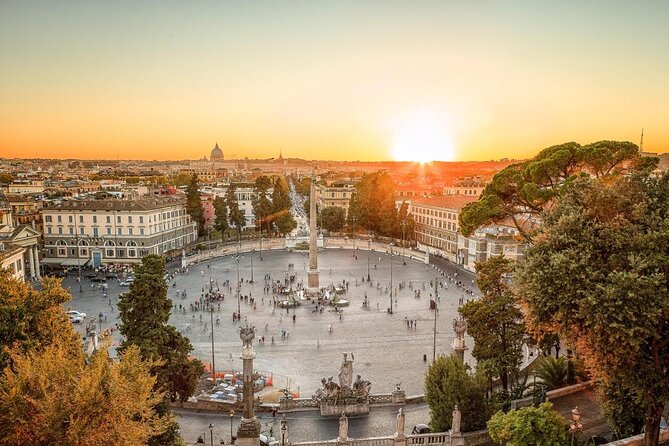
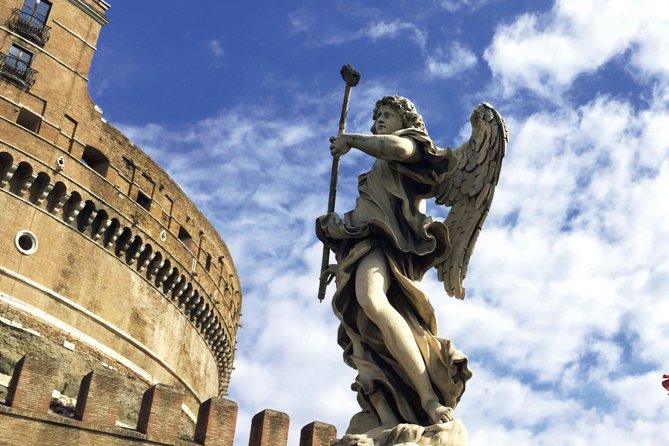
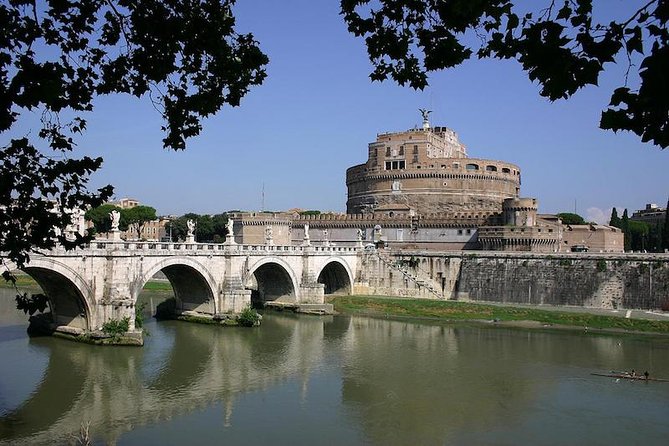
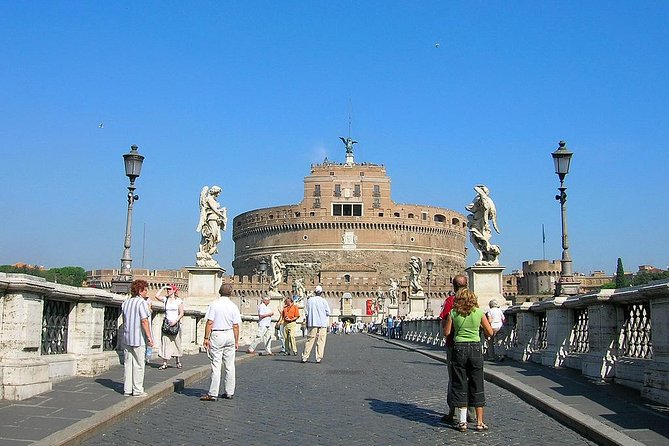
The walk continues to Ponte Sant’Angelo, the bridge leading toward Castel Sant’Angelo and the Vatican area. Emperor Hadrian built the bridge in AD 134, originally to connect the city with his mausoleum.
The bridge is lined with angel statues associated with the Passion of Christ. Bernini oversaw the Baroque project, and the figures give the crossing a solemn, theatrical look. The planned visit lasts about 10 minutes, enough to examine the angels and take in the view along the river.
This stop works well in the sequence because it shifts the mood. Earlier, you move through fountains and public squares. Here, the route becomes more ceremonial. The statues guide your eye toward the Vatican, and the bridge itself feels like a passage from central Rome into the world around St. Peter’s.
You should wear comfortable shoes. The tour is not an exhausting full-day walk, but it combines several stops and city streets in a short period. Hotel transfers reduce the transport hassle, but they do not remove the need to walk.
St. Peter’s Square and the story of symbols
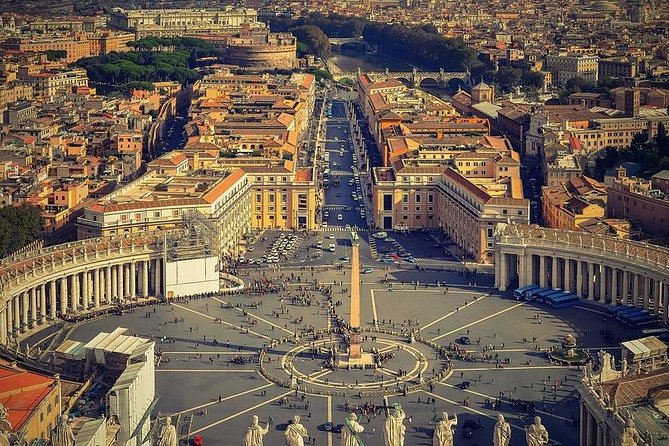
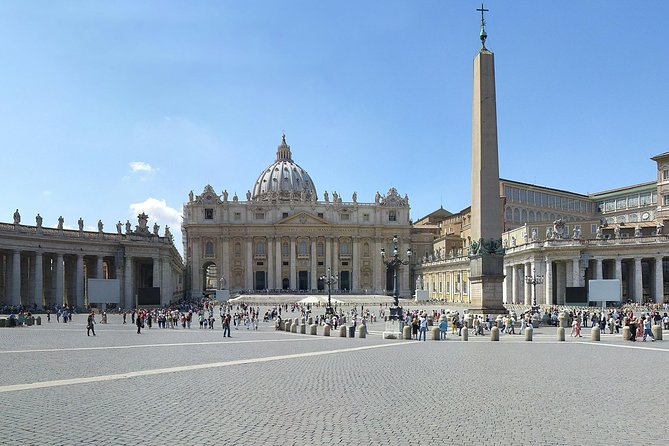
The final major stop is St. Peter’s Square, with about 15 minutes planned here. The focus is on the square and its mysterious or alchemical symbols, rather than a guaranteed interior visit to St. Peter’s Basilica.
That distinction matters. St. Peter’s Basilica is one of Rome’s great buildings, linked with Bramante, Michelangelo, Bernini, and the traditional tomb of Saint Peter. Yet the information for this experience does not include a basilica entrance ticket. You should book this tour expecting an outdoor visit to the square, not a full basilica tour.
The square itself is worth careful attention. Bernini’s sweeping colonnades create a welcoming embrace, and the central arrangement guides your eye toward the obelisk and the basilica façade. The tour’s Angels and Demons theme encourages you to look for signs and patterns, but the guide also has to separate genuine symbols from the imaginative claims of the story.
Ceremonies, restoration, Jubilee celebrations, and unexpected closures can affect access. The order of stops may also change. That flexibility is sensible in Rome, where religious events can alter a day’s plan with little warning.
What $460.57 per person really buys
The price is $460.57 per person, which puts this firmly in the premium private-tour category. You are paying for the guide’s time, private transportation to and from a central hotel, and a route designed around a specific story rather than a general Rome sightseeing circuit.
The value improves if you are a small group that would otherwise book several taxis and a private guide separately. It also makes more sense if your Rome stay is short, you dislike arranging transport, or you want one focused experience that combines major landmarks with a theme.
The value is weaker if you are traveling alone or mainly want to enter museums and monuments. This is a walking and interpretation tour, not a ticket package. Food and drinks are not included, and the short stops limit the time available inside each site.
The experience has an average booking lead time of 16 days. I would not treat that as a strict rule, but it is a useful sign that you should reserve ahead if your schedule is fixed, particularly during busy periods or Jubilee events.
Who will enjoy this private tour most
I would choose this for a reader who has read Angels and Demons, seen the film, or simply enjoys Rome’s puzzles and legends. It also suits repeat visitors who have seen the obvious monuments but want a themed route that links them in a fresh way.
Art lovers should pay special attention to Santa Maria della Vittoria and Piazza Navona. The Bernini connection gives the experience more substance than a simple film-location walk.
Families can participate, and most people can take part. Children under 18 must be accompanied by at least one adult. Service animals are allowed.
The tour is less suitable if you want a slow, detailed church visit, a full Vatican experience, or a day built around ancient Roman archaeology. It is also not the right choice if your accommodation sits outside the stated pickup area, since hotel transfers are limited to central locations within the Aurelian Walls.
Dress carefully. Knees and shoulders must be covered for places of worship and selected museums, and entry can be refused if you arrive in shorts or a sleeveless top. Pack a light layer or wear clothing that meets the rule from the start.
Booking decision
Book this tour if you want a private, tightly themed introduction to Rome and value a guide who can connect fiction, Baroque art, church symbolism, and famous streets. The punctual hotel pickup, praised as a strong part of the experience, is especially useful when time is short.
Skip it if $460.57 per person feels high for a mostly outdoor route, or if your priority is entering St. Peter’s Basilica and spending long periods inside major monuments. For the right reader, this is a smart way to turn a few famous Roman sights into one connected story. For everyone else, a standard walking tour will likely offer better value.
FAQ
How long does the Angels and Demons private tour last?
The tour lasts approximately three hours and 30 minutes.
Where does hotel pickup take place?
Pickup and drop-off are offered at hotels or accommodations in central Rome within the Aurelian Walls.
Is this a private tour?
Yes. Only your group participates in the activity.
Is St. Peter’s Basilica admission included?
No entrance ticket for St. Peter’s Basilica is included. The planned stop is St. Peter’s Square, where the tour focuses on symbols and the surrounding setting.
What should I wear?
Knees and shoulders must be covered when entering places of worship and selected museums. Shorts and sleeveless tops may result in refused entry.
Can I cancel for a full refund?
Yes. You can cancel at least 24 hours before the experience start time for a full refund. Changes or cancellations made less than 24 hours before the start time are not accepted for a refund.
Just added around Rome
- Colosseum Gladiator’s Arena and Ancient Rome Tour★ 4.5 · 7 reviews
- 3-Hour Colosseum Gladiator’s Arena and Ancient Rome Tour★ 4.5 · 8 reviews
- The Colosseum Arena & Gladiator Chronicles Private Tour★ 5.0 · 14 reviews
- Rome : Arena of Gladiators Tour with Forum Access★ 4.0 · 6 reviews
- From Colosseum Gladiators to Via Sacra: Rome’s Historic Heart★ 5.0 · 12 reviews
- Tour of Gladiators Arena and Colosseum with Imperial Forum★ 4.5 · 8 reviews
- Colosseum & Roman Forum with Gladiator Arena For Kids & Families★ 5.0 · 2 reviews
- Marvels Of Rome At Night – Private Tour★ 4.5 · 26 reviews
Italy Film Location Tours, compared.
Colosseum Tour with Access to the Gladiator Arena
Read our review →
Gladiator’s Gate: Special Access Colosseum Tour with Arena Floor
Read our review →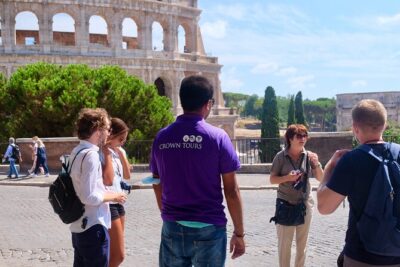
Colosseum Arena Floor, Roman Forum & Palatine Hill Tour
Read our review →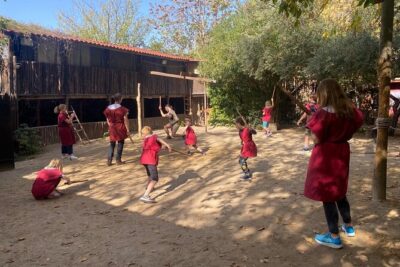
Roman Gladiator School: Learn How to Become a Gladiator
Read our review →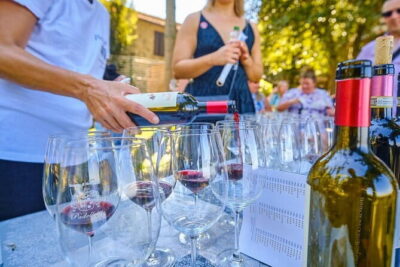
Full Day Tour to Val d’Orcia and Gladiator’s Fields with Wines
Read our review →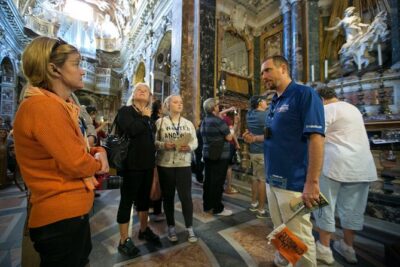
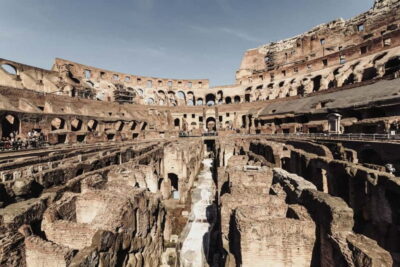
Gladiator’s Gate and Arena Special Colosseum Access
Read our review →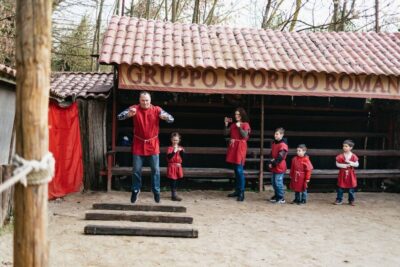
Browse the lists this tour appears in