
REVIEW · ITALY
Verona: the Arena at the Gladiators’ time
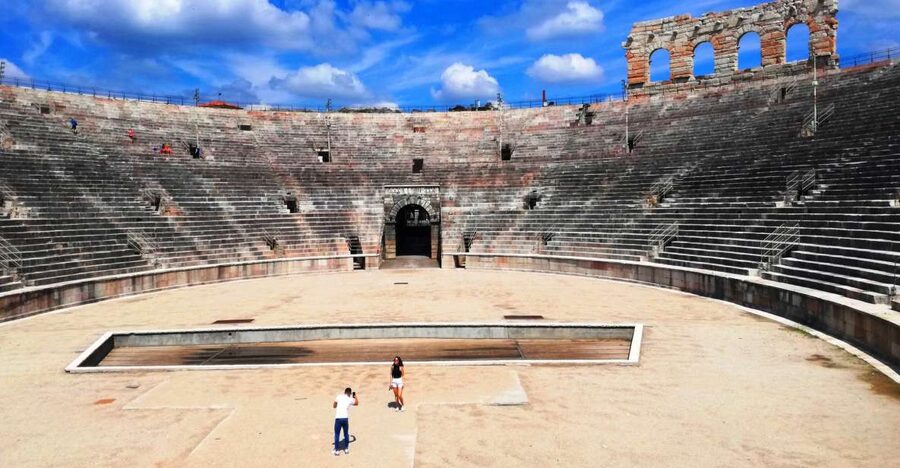
Verona’s Arena is more than a handsome oval of ancient stone. On this one-hour walk, you learn how its gates, corridors, seating, and underground spaces moved thousands of people through the building. The most vivid moment comes when Fabio Massimo Rapanà invites you to enter the arena as a gladiator might have done, then sit among the stone steps where spectators still watch performances today.
I like the outside-in approach, which lets you understand the building’s size and place in Verona before entering it. I also like the private format for families and small groups, since Fabio can answer questions and adjust the explanation. The main drawback is that the €159 group price does not include the Arena ticket, so you need to add that cost and allow a little time to arrange admission.
Key points to know before booking
- Fabio Massimo Rapanà leads the walk: The certified local guide offers the tour in English, Italian, German, or Spanish.
- You study the Arena before entering: The route begins outside with views of the amphitheater’s original scale, wings, gates, and relationship to the square.
- The Roman engineering is the star: Corridors and vomitoria show how the building connected outer entrances with the seating area.
- Gladiator life gets local context: Fabio discusses gladiators, wild beasts, games, and evidence found in Verona.
- The group is private: One booking covers up to eight people, making the €159 cost easier to judge for a family or small party.
- You get free time at the end: After the guided portion, you can remain inside the Arena for as long as you wish, subject to access rules.
Why this Arena tour is different from a quick visit
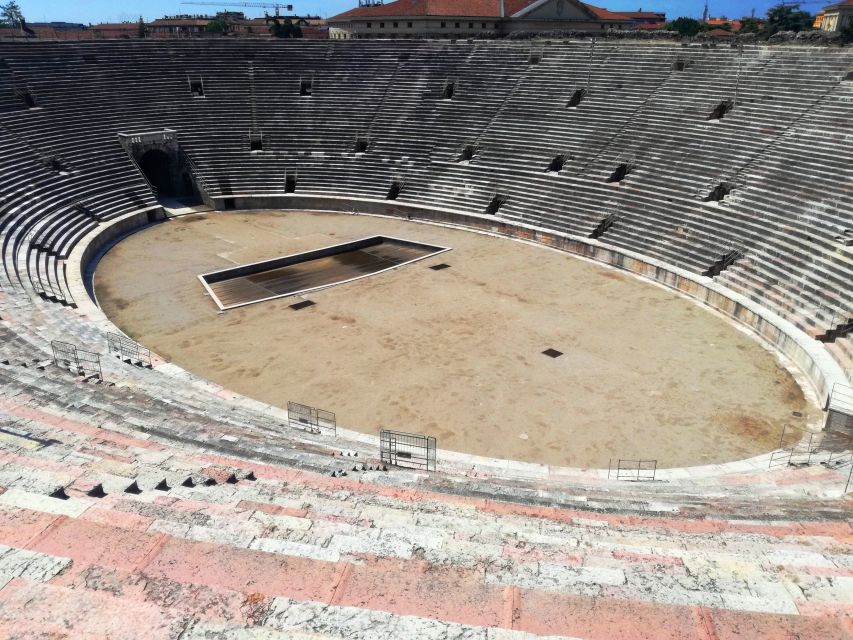
A standard visit lets you walk into Verona’s amphitheater, look at the stone tiers, and take photographs. That is worthwhile, but the building can be hard to read without help. Its size is obvious. Its logic is not.
This tour focuses on how the Arena worked. You learn why the exterior had multiple access points, how crowds reached their seats, and how the passages linked the city side of the building with the interior. The result is less about memorizing dates and more about understanding a functioning Roman venue.
Fabio’s strongest role is storytelling. He connects the physical remains with anecdotes about gladiators and the evidence found locally. That matters because the surviving stonework alone cannot tell you how people used the Arena. You need someone to point out the route a fighter might have taken, the areas associated with wild animals, and the way spectators entered and settled into the seats.
The hour is compact, but it is not empty. One person in a six-adult, six-child group said the children stayed engaged and that Fabio answered every question, later researching one point he could not answer on the spot. That detail gives you a useful sense of his approach: he is prepared to respond rather than simply recite a fixed speech.
Other filming locations people visit in Italy:
- Rome: Colosseum Tour with Access to the Gladiator Arena
★ 4.4 · 7,046 reviews - Gladiator’s Gate: Special Access Colosseum Tour with Arena Floor
★ 4.5 · 4,037 reviews - Colosseum Arena Floor, Roman Forum & Palatine Hill Tour
★ 4.5 · 1,568 reviews
Meeting Fabio beneath the Italian flag
The meeting point is in front of Palazzo Barbieri, Verona’s town hall, beneath the Italian flag. This is on the southern side of Piazza Bra, the large square in front of the Arena. Look for Fabio at the town hall rather than going straight to the amphitheater entrance.
That distinction matters. The tour begins outside the Arena, and the first part is designed to help you read the building from the square. Arrive ready for a short walk, and wear shoes that feel secure on old stone surfaces. The entire experience lasts about one hour, with the final 45 minutes listed as the main Arena visit and short walking sections between the viewing points.
The tour is private and accepts groups of up to eight people. For a couple, €159 is a sizable fee for one hour. For a family or group of eight, the per-person value improves sharply, especially if you prefer direct access to a guide rather than a large shared group. The private setup also gives children more room to ask questions and gives adults a chance to focus on details that interest them.
Piazza Bra reveals the Arena’s full shape
Fabio first leads you toward the northern part of Piazza Bra, near the Bra Gardens. From here, you can take in the amphitheater as a complete structure rather than as a doorway and a few arches.
This outside view is one of the tour’s best choices. The Arena is so large that you need distance to grasp its original size. Fabio points out how the amphitheater relates to the town and explains the complex arrangement of its entrances. You begin to see the building as a carefully planned public machine, not simply an old monument in a city square.
You also get a short photo stop here. Do not expect a long photography session with extensive time for every angle. The purpose is to use the exterior view as a lesson, with photographs as a useful extra.
The guide then moves you toward the Arena’s wing, the surviving outer section that projects from the main oval. In its shade, Fabio points out further details that are easy to miss when you are looking only at the famous facade.
This portion is especially helpful if you have seen photographs of the Arena but never understood what remains original, incomplete, or altered. The tour description emphasizes the evolution of the amphitheater, so you should expect attention to its changing form rather than a narrow focus on one period.
Corridors, archways, and the Roman crowd system
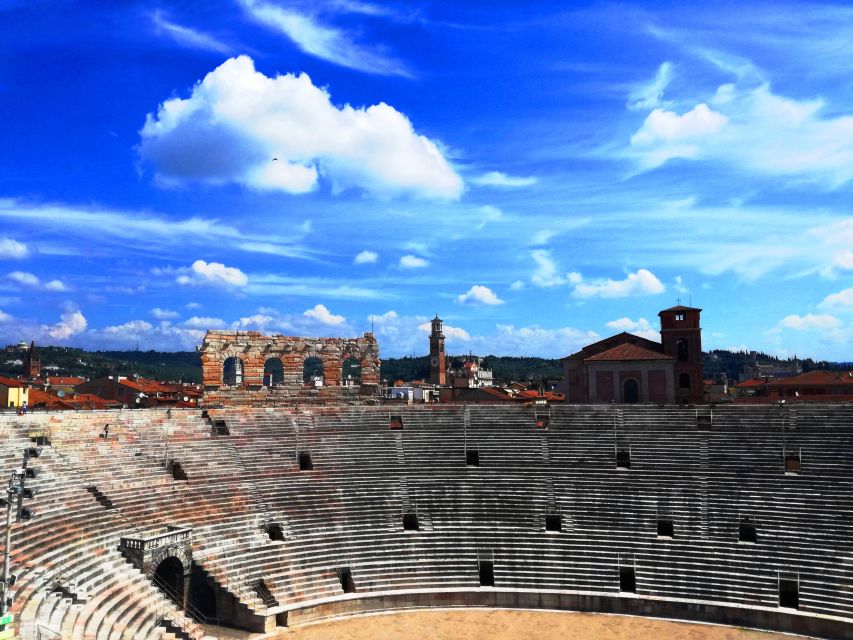
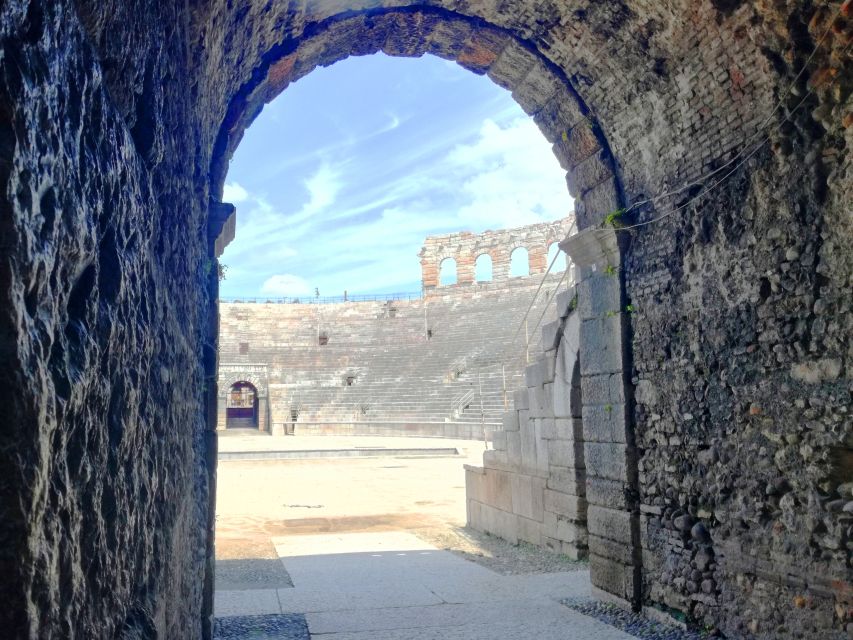
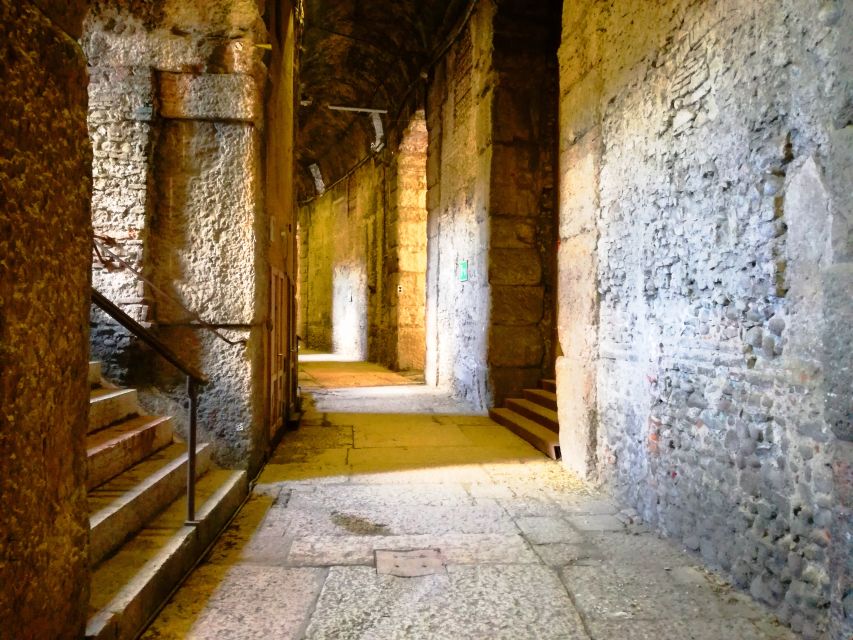
Once inside, the tour turns from the Arena’s appearance to its internal design. You walk through corridors and archways that linked the external gates with the internal vomitoria.
In Roman amphitheaters, vomitoria were passageways that allowed crowds to reach seating areas and leave efficiently. Here, the word is best understood as an architectural term, not a reference to the modern meaning. Fabio uses these passages to explain how the Arena could handle large numbers of people.
This is where the tour earns its fee for anyone interested in buildings and ancient city life. You are not just looking at seats. You are following a system of movement. The arrangement of the gates and passageways shows how Roman planners separated routes, directed crowds, and connected the outside of the building with the viewing area.
The old stonework also gives the explanation a physical anchor. Instead of hearing a general account of Roman entertainment while standing in a modern plaza, you are looking at the arches and walking through the spaces that made the events possible.
Some parts may feel more like a performance than an interactive activity. One participant described the hour that way, noting that Fabio shared a great deal of information in a short time but that the format was mainly guided storytelling. That is useful to know. If you want a hands-on reenactment, this is not that. If you like a guide-led explanation with a strong sense of place, the format should suit you.
Same place, a completely different screen:
- Roman Gladiator School: Learn How to Become a Gladiator
★ 4.5 · 1,477 reviews - Full Day Tour to Val d’Orcia and Gladiator’s Fields with Wines
★ 4.5 · 1,106 reviews - Castel Sant’Angelo Tour with Panoramic Views
★ 4.5 · 1,103 reviews - Rome: Gladiator’s Gate and Arena Special Colosseum Access
★ 4.7 · 796 reviews
Following the gladiators and the wild animals
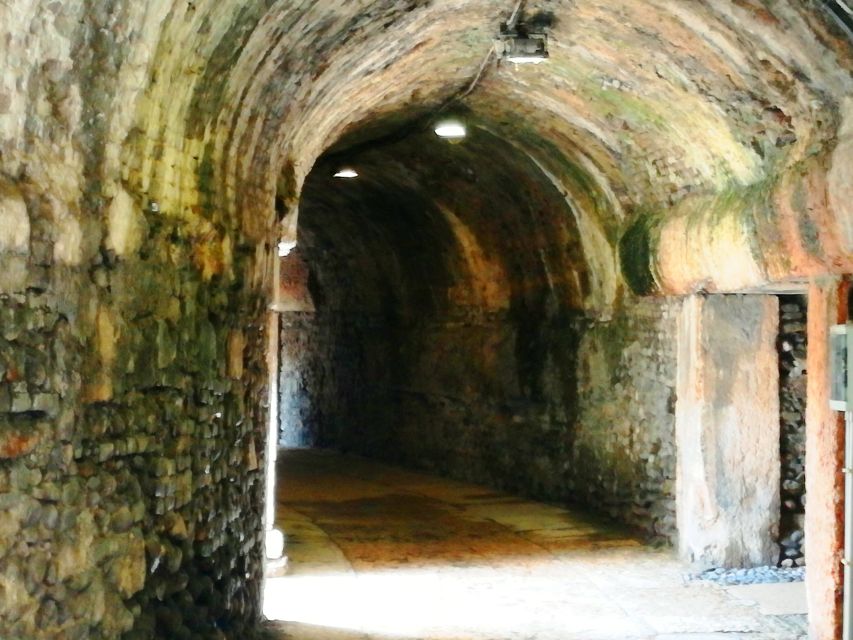
The tour brings the building closer to human scale by discussing the people who used its working spaces. Fabio identifies places connected with gladiators and areas used to house wild beasts.
The source material does not give every detail of those spaces, so you should not expect a fully reconstructed backstage tour. Instead, the value comes from linking the remains to the practical needs of the games. Fighters, animals, officials, performers, and spectators all needed different routes and areas. The architecture helped manage that activity.
The stories about gladiators add a welcome human element. Roman amphitheater history can become a list of emperors, dates, and construction phases. Fabio’s anecdotes bring the focus back to the individuals who faced the public spectacle, along with the physical evidence found in Verona.
Families may find this section particularly useful. The group of six adults and six children enjoyed the stories, and Fabio answered questions from the younger members. The topic includes combat and wild animals, so parents should decide if that material suits their children, but the account suggests that the guide can hold a mixed-age group’s attention.
Fabio also appears willing to follow up. When he could not answer one question during the tour, he researched it and sent the answer later. I consider that a meaningful sign of care, especially for visitors who enjoy asking specific historical questions.
Entering the arena as a gladiator
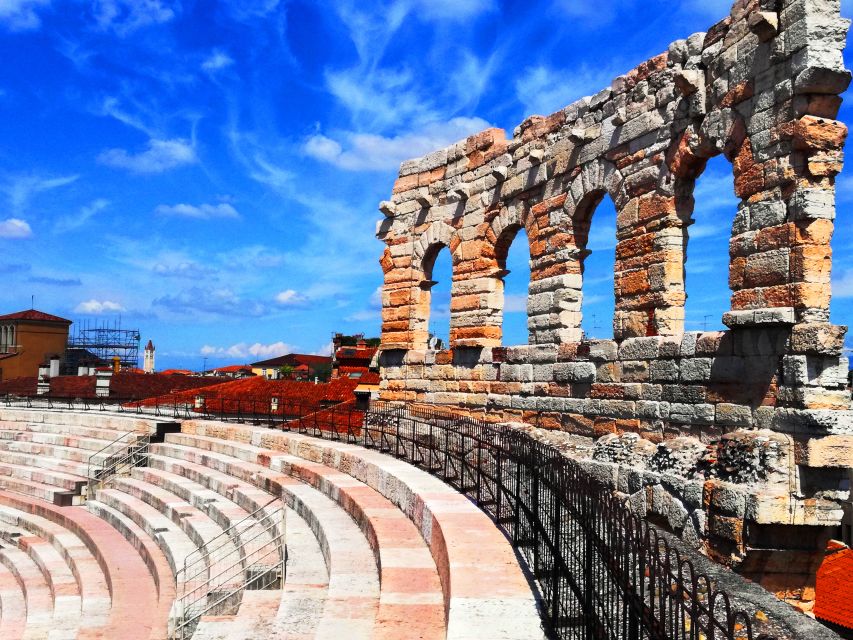
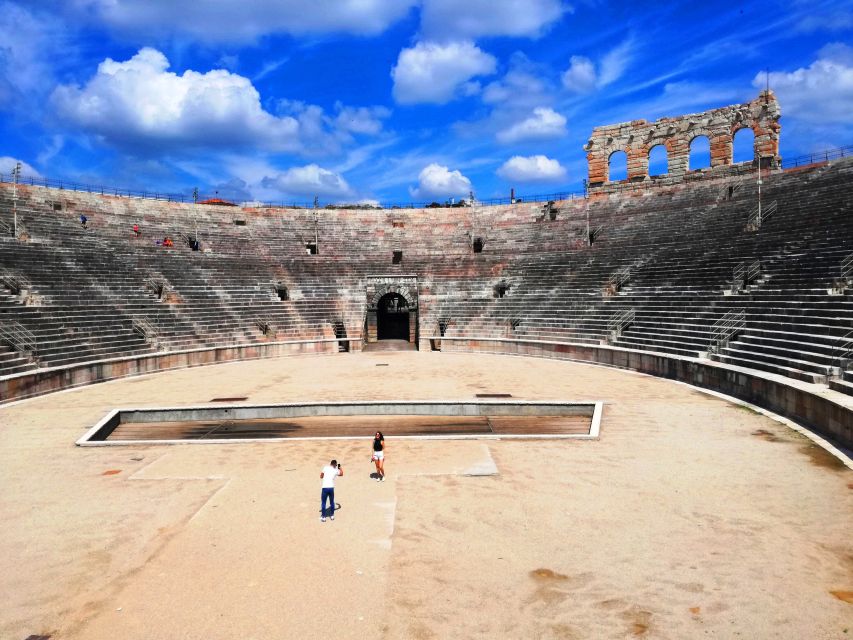
One of the tour’s most memorable prompts is the invitation to enter the arena as a gladiator would have done. It is a simple act, but it changes your perspective.
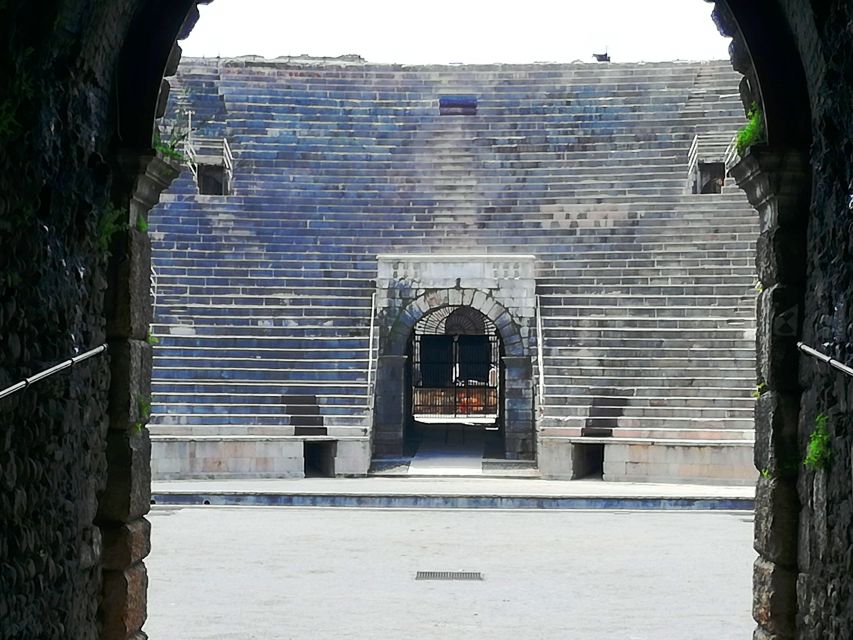
From the audience seats, the Arena can feel like a grand shell. Walking into the central space reverses the viewpoint. You face the stone tiers and can picture the crowd looking down toward the action. Fabio uses that shift to explain the emotional and practical difference between being a spectator and being part of the show.
You can also take a seat on the stone steps, as spectators still do. This is a brief physical connection with the building, not a staged reenactment. The point is to sense how the Arena organized attention, with the central space below and the rising seating around it.
The experience is likely to work best if you play along with the guide’s prompts. You do not need to dress up or act out a fight. Simply entering through the relevant route and sitting where the audience sat gives the explanation more force.
The quiet final corner and time to explore
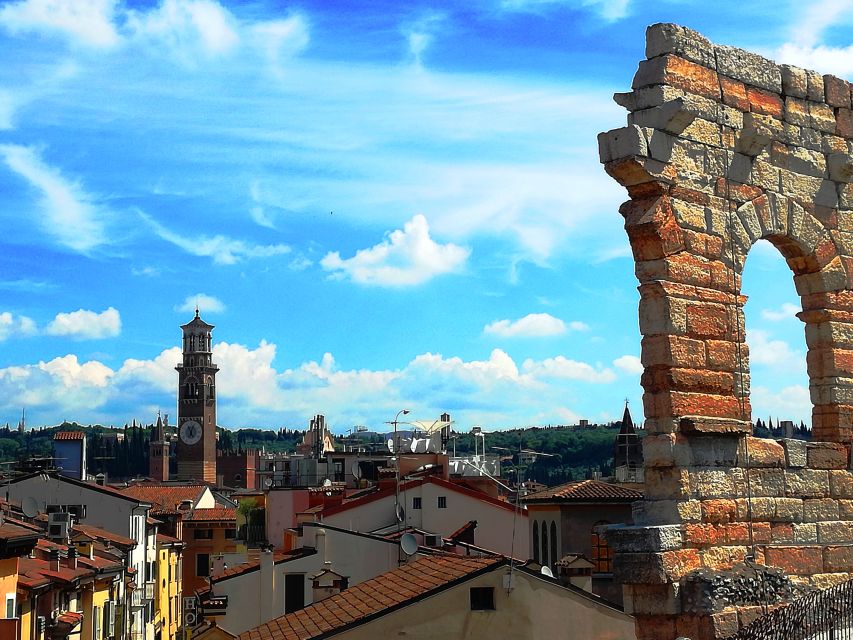
The guided portion ends in what is described as the most hidden and evocative part of the amphitheater. The exact location is not specified, so do not book expecting a named chamber or a guaranteed view. What you can expect is a final stop away from the most obvious public spaces, where Fabio completes the story of the Arena.
After that, your free time begins. This is a useful feature because the one-hour tour does not force you to leave as soon as the explanation ends. You can remain inside and look again at the corridors, arches, arena floor, and stone seating at your own pace.
The free time also helps balance the guided format. The tour is information-heavy, and some people will want a few quiet minutes afterward to take photographs or revisit a detail they missed. Others may be ready to continue around Verona. You have room to choose.
The activity ends back at the meeting point, but the description says you can stay in the Arena for as long as you wish. In practice, follow the current access instructions from the staff and your guide.
The extra ticket cost and the real value
The tour price is $159 per group of up to eight people. Arena admission is separate. The stated prices are €12 for adults, €9 for people over 65, €3 for European Union citizens aged 18 to 25, and free for minors and Verona Card holders. From November through March, admission is €1 on the first Sunday of the month.
That changes the value calculation. A couple pays a high per-person amount for the private guide, then adds two adult tickets. A family of four to eight spreads the guide fee across more people, while minors may enter free. If you already hold a Verona Card, the separate entrance cost is not required according to the provided information.
The guide can help you obtain the Arena ticket on the spot, but the information also says tickets can be purchased online or at the venue. The tour includes skip-the-ticket-line access, though that should not be confused with free admission. You still need a valid entrance ticket to enter the amphitheater.
For a group that wants only a quick look inside, the fee may be hard to justify. For a family, a group of friends, or visitors who care about Roman engineering and gladiator culture, the private explanation adds much more than a self-guided circuit. Fabio’s ability to answer questions and follow up later also gives the experience a personal edge.
Languages, timing, and practical limits
Fabio offers the tour in English, Italian, German, and Spanish. Check the available starting times before booking, since the hour is tied to a scheduled meeting.
The experience is not suitable for wheelchair users. The route includes corridors, archways, old stone surfaces, and seating areas inside an ancient amphitheater, so anyone with mobility concerns should confirm whether the physical route works for them before paying.
You can cancel up to 24 hours in advance for a full refund, and the reserve-now, pay-later option keeps you from paying at the time of booking. Those policies are useful when your Verona schedule is still changing, but they do not remove the need to plan for the separate Arena ticket.
The tour is short enough to fit into a day of sightseeing. It also pairs well with a broader Verona walk. Fabio’s other city tour was used by one group on arrival, followed by this Arena tour the next morning. That order makes sense: first get your bearings around town, then return for a focused look at Verona’s main Roman monument.
Who should book this private Arena walk?
I would choose this tour if you want more than photographs and prefer to ask questions as you go. It suits families particularly well, since the gladiator stories, animal areas, and opportunity to enter the arena give children something concrete to follow.
It is also a good fit for visitors who enjoy architecture. The best material concerns gates, corridors, crowd movement, seating, and the changing form of the amphitheater. If you care mainly about opera performances or modern events, this tour keeps its attention on the Roman Arena and its gladiator-era use.
You may want to skip it if your budget is tight, you are traveling alone, or you plan to spend only a few minutes inside. The fee is easier to defend when shared by a larger private group. You should also avoid it if you need a wheelchair-accessible route.
Should you book the Arena at the Gladiators’ Time?
Book it if you want Verona’s Arena to make sense as a working Roman building rather than just an impressive oval. Fabio Massimo Rapanà gives you a clear route from the town hall, across Piazza Bra, through the external structures, and into the corridors and seating.
The strongest reasons to go are the private group format, the focus on how the Arena moved people, and the lively connection to gladiators and wild animals. The main caution is cost: $159 covers the guide for up to eight people, but every visitor who needs a ticket must pay separately.
For a family or small group seeking a focused, story-led introduction, this is a sound choice. For a solo visitor or a couple watching every euro, compare the guide fee with the price of a simple Arena admission. If you do book, meet beneath the Italian flag, buy or arrange the entrance ticket, and leave yourself a few minutes after the tour to enjoy the amphitheater without a guide’s voice in your ear.
FAQ
Where does the tour meet?
Meet Fabio in front of Palazzo Barbieri, Verona’s town hall, directly beneath the Italian flag. The activity ends back at the meeting point.
How long does the experience last?
The guided experience lasts one hour. Check availability for the exact starting times.
Is the Arena entrance ticket included?
No. You must purchase an entrance ticket separately, either online or at the venue. Fabio can help you arrange it on the spot.
How much does Arena admission cost?
The stated prices are €12 for adults, €9 for people over 65, €3 for European Union citizens aged 18 to 25, and free for minors and Verona Card holders. On the first Sunday from November through March, admission is €1.
What languages are available?
The tour is offered in Italian, German, English, and Spanish.
Can wheelchair users join?
The activity is not suitable for wheelchair users.
Just added around Italy
- Mamma Mia Boat Experience!★ 5.0 · 29 reviews
- The Godfather Movie Locations Private Tour in Sicily★ 4.5 · 8 reviews
- The Godfather Movie Shore Tour from Messina,Catania,Naxos seaport★ 5.0 · 2 reviews
- The Godfather Movie Iconic Locations: Savoca & Forza D’Agrò small group tour★ 5.0 · 6 reviews
- Taormina & The Godfather★ 4.5 · 10 reviews
- Godfather tour Sicily: Savoca-Forza d’Agrò★ 4.5 · 10 reviews
- Taormina The Sicilian Colors and Flavors of the White Lotus★ 5.0 · 10 reviews
- Godfather tour , Taormina and Messina★ 5.0 · 4 reviews
Italy Film Location Tours, compared.
Colosseum Tour with Access to the Gladiator Arena
Read our review →
Gladiator’s Gate: Special Access Colosseum Tour with Arena Floor
Read our review →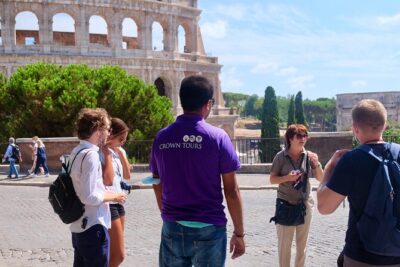
Colosseum Arena Floor, Roman Forum & Palatine Hill Tour
Read our review →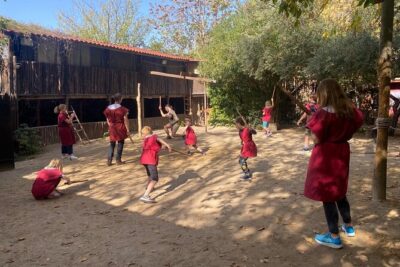
Roman Gladiator School: Learn How to Become a Gladiator
Read our review →
Full Day Tour to Val d’Orcia and Gladiator’s Fields with Wines
Read our review →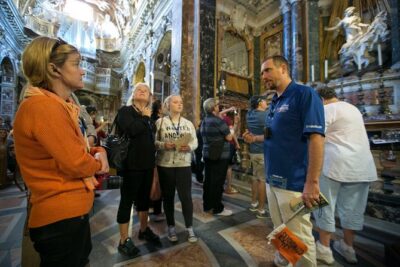
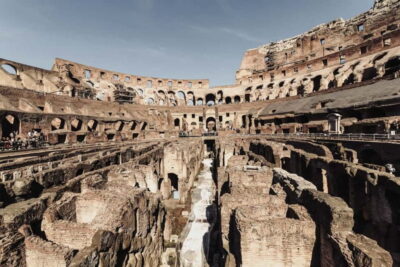
Gladiator’s Gate and Arena Special Colosseum Access
Read our review →
Browse the lists this tour appears in