
REVIEW · LOS ANGELES
Oscar History and Film Set Studio Tour at the Biltmore Hotel
The clever part of this Biltmore tour is the augmented-reality smartglasses. You do not just hear that a film was shot in a room. You can stand in that room while a matching scene, old photograph, or piece of footage appears before you. The hotel becomes both the exhibit and the screen.
I like the strong link between Hollywood film history and Los Angeles history. I also like the small group limit of 10, which should make it easier to follow the guide and see the material on your glasses. The main drawback is the short one-hour length. You will see several important spaces, but this is a brisk introduction rather than a slow architectural tour.
Key points to know before you book
- Smartglasses put the past into view: Watch old photographs, Oscar footage, political events, and movie scenes while standing in the original spaces.
- The hotel is part of Hollywood history: The tour covers the first Academy Awards, film locations, music videos, and major events held inside the Biltmore.
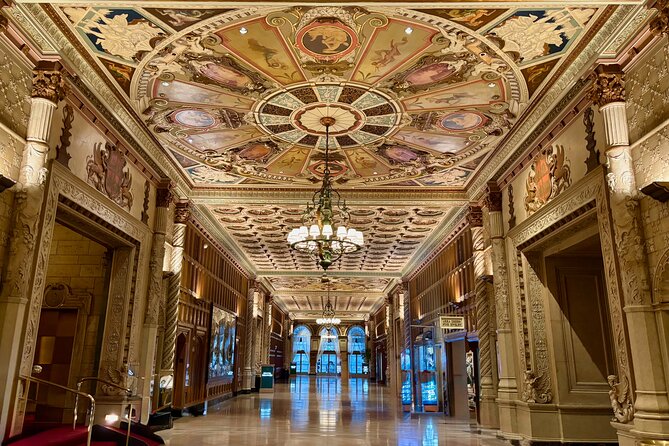
- You visit several ornate interiors: The route includes the Music Room, Galleria, Historic Corridor, VIP Olive Street Entrance, Crystal Ballroom, Gold Room, and Rendezvous Court.
- Guides include Eloi and Mark: Both lead the presentation and help you use the glasses and phone during the tour.
- Small groups keep it personal: A maximum of 10 people is allowed, and group discounts are available.
- The practical format is simple: The tour lasts about an hour, begins and ends at the Millennium Biltmore, and costs $25 per person.
Why the Biltmore makes a strong film-history setting
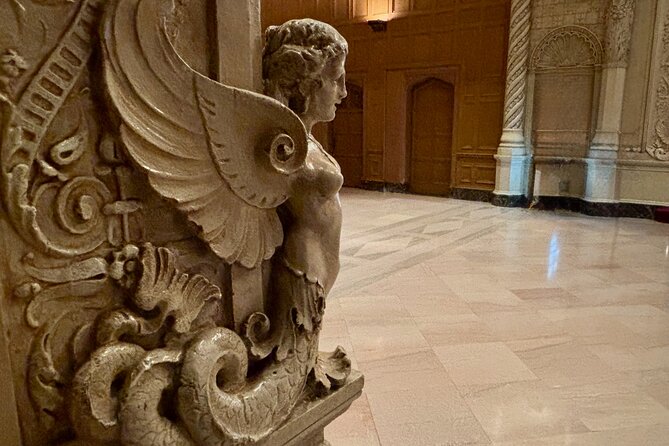
The Millennium Biltmore Hotel sits in Downtown Los Angeles, and its interiors give this tour more substance than a simple list of movie locations. You move through grand rooms built for ceremonies, parties, politics, and hotel life, then see how those same rooms appeared on screen.
That mix matters. A film-set tour can feel thin if you only point at a doorway and name a production. Here, the guide connects the doorway to the building’s past. You get the room in front of you, then the earlier version of the room or the filmed scene placed into your view.
The Biltmore also carries a major connection to the Academy Awards. The first Academy Awards were held in the hotel, so the Oscar theme is not an afterthought added for movie fans. It is one of the building’s defining stories.
The tour also reaches beyond old Hollywood. The material includes scenes connected with Ghostbusters, Beverly Hills Cop, Fight Club, Chinatown, and Oppenheimer. You may also see footage from Taylor Swift and Jisoo music videos. That range gives the experience a useful balance: silent-film-era Los Angeles, Prohibition, mid-century politics, modern studio work, and current pop culture all share the same rooms.
More Film Studio Tours in the USA
- Warner Bros. Studio Tour Hollywood
★ 4.5 · 5,246 reviews - Warner Bros. Studio Tour & Celebrity Homes Tour Package
★ 3.5 · 225 reviews - Los Angeles: Warner Bros Studio Hollywood & Bus Tour Package
★ 3.6 · 150 reviews
Starting in the Music Room
The tour begins at the Millennium Biltmore Historic Hotel, at 507 South Olive Street. The route starts with the hotel itself, so you are not rushed straight into a film clip before understanding the setting.
The Music Room is one of the first major interiors. Its Italian Renaissance influence shows in the design, while an intricate ceiling filled with cherubs gives you plenty to look at before the technology enters the picture. The room works well as an opening stop because it makes the hotel’s scale and decoration clear.
This is where the tour’s format begins to make sense. Instead of looking at a photograph of the room on a phone, you can compare the actual space with historical images and footage shown through the smartglasses. The contrast between the room as it looks now and the room as it appeared in earlier decades is the point.
Give yourself a moment to look up from the glasses, too. The technology is the hook, but the ceilings, walls, and details are the reason the material has a convincing setting.
The Galleria and the Historic Corridor
The Galleria brings a different look. Its ornate corridors were painted by Giovanni Smeraldi, and the decorative work gives the route a grand, theatrical feel. You are walking through a passageway, but the setting has enough detail to hold your attention between clips.
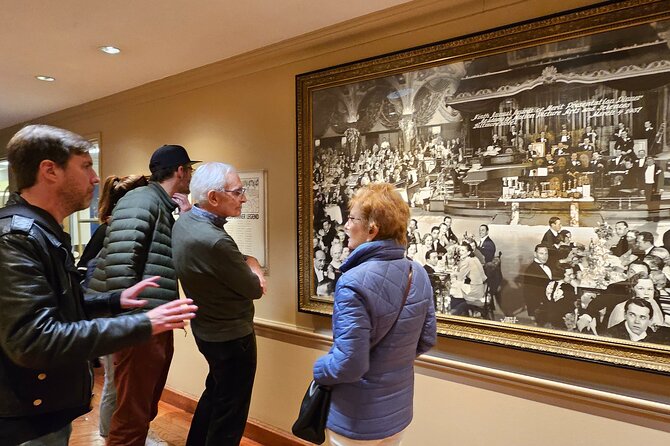
The Historic Corridor is especially important for anyone booking this tour for Oscar history. This is where the first Academy Awards were held. The smartglasses can place historic images and footage into the location, helping you picture the event where it happened instead of treating it as a date in a timeline.
I find this kind of presentation more useful than a long spoken account of an old ceremony. You can connect the event to a physical room, then compare that room with what you see today. It gives the Oscar story a sense of place, which is often missing from standard movie tours.
The guide, either Eloi or Mark, leads you from one section to the next and sends the selected images and clips to the glasses. The experience depends on paying attention to both the guide and the visual material, so it is worth staying close to the group.
The Olive Street Entrance and Chinatown
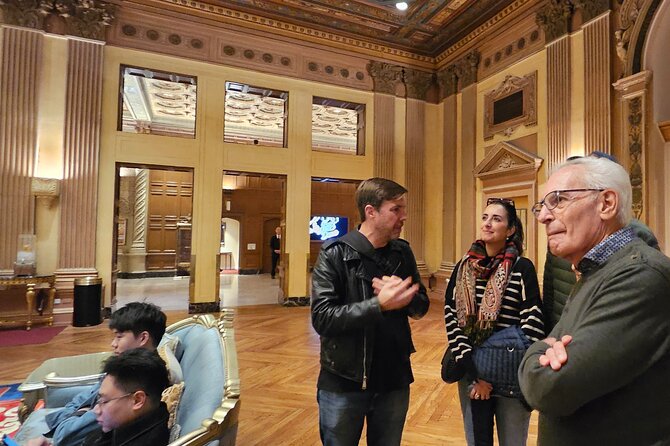
The VIP Olive Street Entrance has a direct film connection through Chinatown. This stop shows how the Biltmore’s public-facing spaces can work on screen. A grand entrance can suggest wealth, secrecy, power, or old Los Angeles glamour, depending on how a director frames it.
For you, the value is in seeing the exact setting rather than a generic hotel exterior. The guide can show the scene through the glasses while you stand near the place used in the production. That makes the film reference more precise and gives fans a better sense of how much of a movie location remains recognizable.
This is also a good part of the tour for people who are not major film historians. You do not need to remember every title or production detail. The visuals supply the link, and the guide explains why the space mattered.
More film studio tours in Los Angeles:
- Warner Bros. Studio Tour & Hop-on Hop-off Bus Tour Package
★ 3.5 · 55 reviews - From London: Harry Potter Warner Bros Studio Tour
★ 4.7 · 26,588 reviews - Los Angeles: Warner Bros. Studio Tour Hollywood
★ 4.6 · 7,191 reviews - Harry Potter: Warner Bros. Studio Tour from King’s Cross
★ 4.7 · 6,442 reviews
Inside the Crystal Ballroom
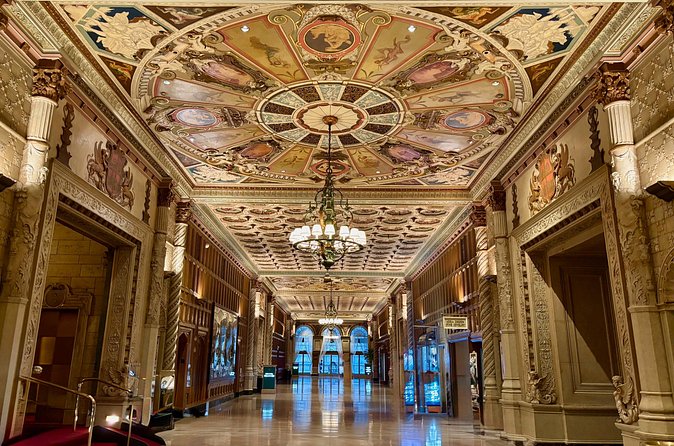
The Crystal Ballroom is one of the most impressive stops on the route. It has hosted Hollywood galas, and its scale suits the kind of events associated with the Biltmore. You can expect this part of the tour to focus on the room’s social and entertainment history as well as its screen appearances.
The ballroom also connects the building to a major political event. One of the most striking pieces of historical footage shown during the experience concerns the 1960 Democratic National Convention, where John F. Kennedy was nominated for president. You can stand in the same ballroom while viewing footage of that event.
That pairing is a real strength. The room is not only a movie set, and the tour is not only about celebrity culture. The Biltmore has also hosted moments tied to national politics and public life. Seeing that footage in the ballroom adds weight to the visit.
The Crystal Ballroom may also be one of the places where the tour feels most crowded visually. There is a lot to notice in the room, and the glasses add another layer. If you want time for careful architectural study, the one-hour schedule may feel quick.
The Gold Room and its Prohibition story
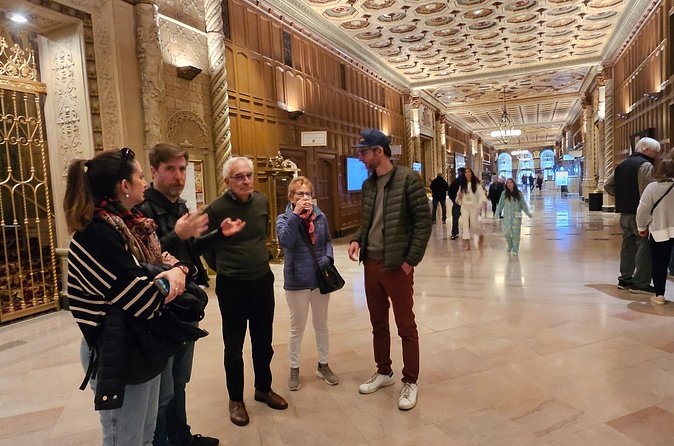
The Gold Room brings a darker story into the route. It has a connection to Prohibition-era speakeasy activity, giving the tour a chance to move away from formal galas and public ceremonies.
This part works because the smartglasses can show the hotel in an earlier period while you remain in the present-day room. You get a sense of how the same building could serve very different purposes depending on who entered, what was happening, and what had to remain out of sight.
The Gold Room also helps broaden the experience for visitors who are less interested in Oscars. The tour covers architecture, film, politics, and social history, so you are not relying on one subject to carry the full hour.
Listen closely to the guide here. The speakeasy story is the kind of detail that can be reduced to a quick label in a normal hotel visit. Eloi and Mark use the visual material to give the room a stronger sense of time and place.
Ending in the Rendezvous Court
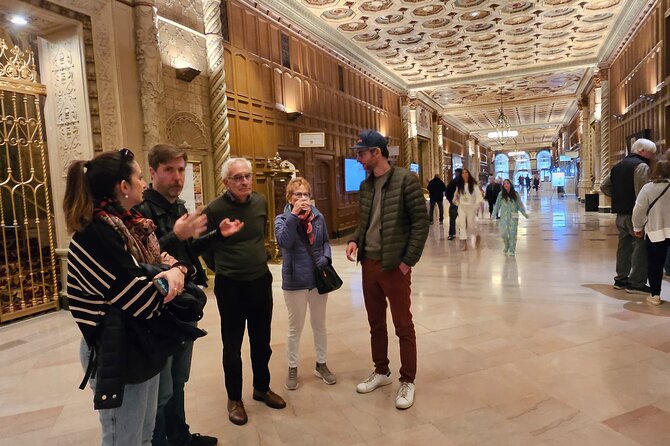
The final stop is the Rendezvous Court, a Moorish-inspired interior that provides a strong closing view of the hotel. Its style differs from the Italian Renaissance character of the Music Room and the grand scale of the ballroom, so the ending gives you one more architectural change before the tour finishes.
The Rendezvous Court is also a fitting place to reflect on the experience. You have moved through a hotel that can look like a movie set, a political venue, a luxury gathering place, and a historic Los Angeles landmark, often within the same hour.
The activity ends back at the meeting point. That makes it easy to continue exploring Downtown Los Angeles afterward, although the tour itself does not include additional Downtown stops.
How the smartglasses work during the hour
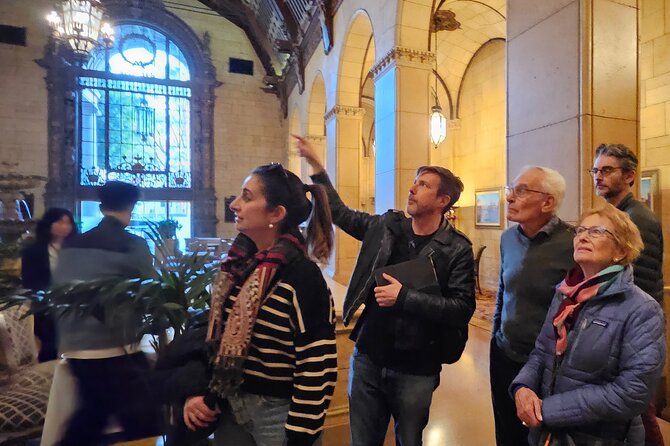
This is not a standard guided walk with occasional photos held up by the guide. You receive smartglasses and use your phone as part of the experience. Eloi or Mark controls the visual material as the group reaches each location.
The clips and photographs can include:
- Historical views of the Biltmore and Los Angeles
- Academy Awards material
- Footage connected with the 1960 Democratic National Convention
- Scenes from films shot at the hotel
- Music-video material
- Images showing how spaces appeared in earlier periods
The strongest effect comes when the footage matches the room around you. Seeing a Ghostbusters scene while standing in the same Biltmore space gives the film reference a physical link that a screen at home cannot provide.
The glasses also make this a good choice if you want more than verbal storytelling. You are listening, looking at the current room, and comparing it with the historical or film material at the same time. That said, some people may prefer a traditional tour where they can look freely at the architecture without wearing equipment. The technology is central to the activity, not a small extra.
Who will get the most from this Biltmore tour
I would put this tour high on the list for:
- Film fans who want to see locations connected with Ghostbusters, Chinatown, Fight Club, Oppenheimer, and Beverly Hills Cop
- Visitors curious about the first Academy Awards
- People interested in the history of Downtown Los Angeles
- Pop-culture fans who want to see music-video locations
- First-time AR users looking for a guided introduction to the format
- Longtime Angelenos who want a fresh way to look at a familiar building
The experience is also described as suitable for a broad age range, and most people can participate. English is the offered language.
I would be less likely to choose it if your main goal is a long, technical discussion of architecture. The tour covers notable interiors, but its attention is split between design, film, historic events, and the smartglasses presentation.
Is $25 a fair price?
At $25 per person, the tour offers a fairly focused hour inside a major Los Angeles landmark. The value comes from the combination of access, guiding, and visual material. You are not paying only to enter the hotel, and you are not watching generic movie clips in a separate theater. The content is tied to the rooms around you.
The price makes the most sense if you enjoy film locations or want a guided look at the Biltmore without committing to a long tour. The small maximum group of 10 is another positive. A small group should make it easier to hear the guide and keep up with the visual sequence.
The one limitation is duration. At about one hour, the cost is reasonable for a specialized introduction, but you should not expect a full architectural survey or an extended Downtown history walk. Group discounts may improve the value if you are booking for several people.
The tour is offered in English and is available with a mobile ticket. Confirmation comes at booking. The Biltmore is near public transportation, which is useful given the Downtown Los Angeles location.
Timing, cancellation, and useful planning details
The meeting point is the Millennium Biltmore Historic Hotel at 507 South Olive Street, Los Angeles, California 90013. The activity begins and ends there.
Bookings are made, on average, about 25 days ahead, so I would not leave it until the last moment if your Los Angeles schedule is fixed. You can cancel for a full refund up to 24 hours before the start time. Cancellations or changes made less than 24 hours before the start time are not accepted for a refund.
The small group limit is worth noting. A maximum of 10 people keeps this from feeling like a large coach excursion and supports the close-up visual format. If you are booking for a larger party, ask about the available group discount.
Should you book the Biltmore AR tour?
Book it if you want to connect Hollywood productions with the real rooms where scenes were made, or if the idea of viewing Oscar footage, old photos, and historical events through smartglasses appeals to you. The mix of film, architecture, Prohibition, politics, and pop culture gives the hour more range than a standard movie-location stop.
I would especially recommend it to first-time visitors who want an unusual introduction to Downtown Los Angeles, and to local residents who think they already know the Biltmore. Eloi and Mark bring the presentation to life, but the technology is the main reason to choose this tour.
Skip it if you want a quiet, unhurried architecture visit or a longer city walk. For everyone else, $25 is a sensible price for a compact, highly specific experience that lets you see the Biltmore as both a historic hotel and a working piece of Hollywood memory.
FAQ
Where does the Biltmore film and Oscar tour begin?
It begins at the Millennium Biltmore Historic Hotel, 507 S Olive St, Los Angeles, CA 90013, USA.
Where does the tour end?
The activity ends back at the meeting point at the Biltmore.
How long does the tour last?
The walking tour lasts approximately one hour.
How much does the tour cost?
The listed price is $25 per person.
What language is the tour offered in?
The tour is offered in English.
How many people can join the tour?
The maximum group size is 10 travelers.
Does the tour use augmented-reality glasses?
Yes. You use smartglasses, along with a phone, to view historical photographs, film clips, Oscar material, and other footage during the route.
Can I cancel for a full refund?
Yes. You can cancel at least 24 hours before the experience start time for a full refund. Changes or cancellations made less than 24 hours before the start time are not accepted for a refund.
More History Behind the Scenes in Los Angeles
- Historic Hollywood Boulevard and Movie Palaces Walking Tour
★ 5.0 · 9 reviews - Hollywood History Tour
★ 5.0 · 8 reviews - Historic Hollywood Boulevard and Movie Palaces Walking Tour
★ 4.8 · 4 reviews - Los Angeles: Hollywood Hills Spiritual and Cultural Tour
★ 5.0 · 2 reviews
Just added around Los Angeles
- Hollywood and Beverly Hills Bus Tour★ 5.0 · 2 reviews
- LA Walk of Fame 100 Years of Hollywood Tour By Junket★ 5.0 · 3 reviews
- The Premier Hollywood Sign Tour: Nature in the Heart of the City★ 5.0 · 4 reviews
- The Ultimate Hollywood Tour★ 5.0 · 8 reviews
- Total Hollywood Experience with Walk of Fame and Celebrity Homes Tour★ 4.0 · 3 reviews
- Ghosts of Hollywood Night-Time Walking Tour★ 5.0 · 25 reviews
- Hollywood: the Real Walking Tour★ 5.0 · 26 reviews
- Small-Group Warner Bros and Hollywood Tour from Anaheim★ 5.0 · 19 reviews
Los Angeles Film Location Tours, compared.
Full-Day Iconic Sights of LA, Hollywood, Beverly Hills, Beaches and More
Read our review →
Hollywood, Beverly Hills & Celebrity Homes Tour by Open Air Bus
Read our review →
Hollywood Sign 2.5-Hour Tour with Comedians and Their Dogs
Read our review →
Full-Day LA Tour: Santa Monica, Hollywood and Beverly Hills
Read our review →
Hollywood & Celebrity Homes Open-Air Bus Tour
Read our review →Browse the lists this tour appears in