
REVIEW · FRANCE
Montmartre Marvels Small Group Guided Stroll in Bohemian Paris
Montmartre is Paris at its most theatrical: white-domed Sacré-Coeur above the city, painters working around Place du Tertre, old windmills, tiny streets, and a cabaret with a red windmill out front. This small-group walking tour packs that character into roughly two to two and a half hours, with a guide to connect the sights instead of leaving you to guess what matters.
I like the limited group size of 15, which gives you more room to ask questions, and I like the early 9:30 a.m. start. Guides such as Olivia and Julie bring humor and personality to the walk, including stories about women artists, Dalida, Picasso, and the legendary donkey Lolo. The catch is simple: Montmartre is steep, with stairs, slopes, and cobblestones, so comfortable shoes and a moderate level of fitness are essential.
Key points to know before you book
- Sacré-Coeur views: Reach one of Paris’s best overlooks and learn about the famous basilica.
- A lively local guide: Olivia and Julie are noted for clear explanations, humor, and personal energy.
- Artists beyond the postcard: See Picasso’s Bateau-Lavoir, Renoir’s Moulin de la Galette, and the cabaret Au Lapin Agile.
- A compact morning route: Finish at Blanche with the rest of your day free.
- Small-group setting: A maximum of 15 people makes questions and conversation easier.
- Bring proper shoes: Expect hills, stairs, and uneven cobblestones throughout the walk.
Why this Montmartre walk works well
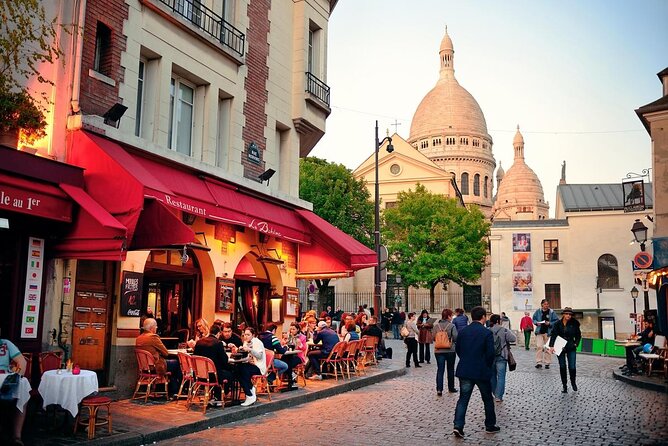
Many people come to Montmartre for Sacré-Coeur, take a few photos, and leave without understanding the neighborhood around it. This tour gives you the larger picture. You move through the former village, the artists’ meeting places, the old vineyard, the cabaret district, and the film locations that helped make Montmartre famous.
The route is not just a march from one major sight to another. It adds small stories that give the area its personality. You hear about the artists who worked and argued here, the singer Dalida, Picasso’s early experiments, Renoir’s connection to the neighborhood, and the odd tale of Lolo the donkey. Those details are useful because Montmartre can otherwise feel like a string of attractive streets with little context.
The group limit matters. With no more than 15 people, you are not part of a large crowd trying to hear a guide over traffic and footsteps. You can ask about a building, an artist, or a film reference while the group remains small enough to move through narrow lanes at a reasonable pace.
The experience is offered in English and begins at 9:30 a.m. at Anvers. It ends near Blanche, a practical finish close to the Moulin Rouge and the Pigalle area. At about two hours to two and a half hours, it gives you a focused introduction rather than consuming an entire day.
More guided location tours in Paris:
- Paris: Emily TV Show Locations Guided Walking Tour
★ 4.6 · 140 reviews - Mamma Mia! Paris Louvre Museum Guided Tour Kid-Friendly Activity
★ 4.5 · 28 reviews - Private Tour with Guide to Midnight in Paris Movie Locations
★ 4.5 · 5 reviews
Starting at Anvers and climbing into the village
The meeting point at Anvers places you near the lower slopes of Montmartre. From here, the route leads uphill into the historic neighborhood, where the mood changes from city traffic to village-like streets and small squares.
That change is one of the best reasons to walk Montmartre with a guide. The district has a strong visual identity, but the slopes can make the route tiring if you wander without a plan. A guide helps you use your time well and points out the places that are easy to miss.
The first hour centers on Montmartre itself. Expect a steady walk rather than a series of long indoor visits. You will be outside most of the time, so dress for the weather and wear shoes that handle stone streets comfortably.
Sacré-Coeur and the big Paris view
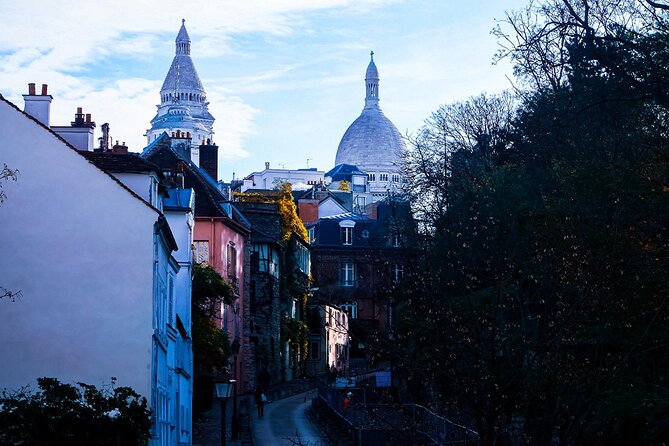
Sacré-Coeur is the tour’s grand visual moment. The white basilica sits on the highest point in Paris, and the open view from the hill reaches across much of the city.
Your guide introduces the building and explains its place in Montmartre. The scheduled stop is about 15 minutes, so this is an orientation rather than a long architectural study. If you want a quiet visit inside the basilica or extra time for photographs, you may need to return on your own later.
The admission listing marks this stop as not included, so check the exact arrangements when booking. The tour clearly includes the guide’s introduction and the hilltop visit, but it is wise not to assume that every interior access detail is covered by the price.
The view is especially useful early in your Paris stay. From above, you can get a sense of the city’s scale and layout before spending the rest of your trip at street level. It also makes this morning walk feel like more than a neighborhood stroll.
Place du Tertre and Montmartre’s artistic identity
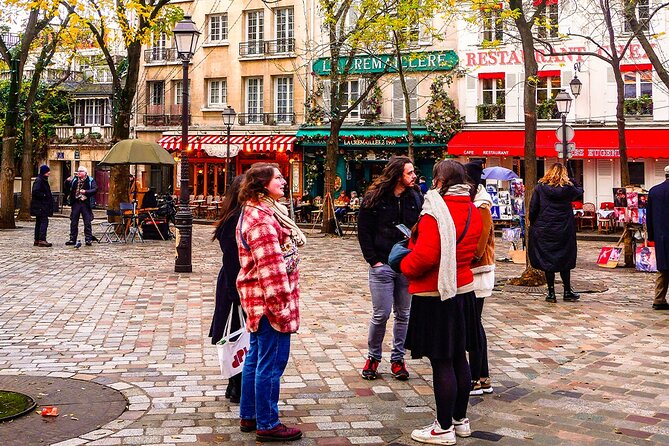
Place du Tertre is the historic center of the old Montmartre village. Its restaurants and artists keep alive the neighborhood’s familiar artistic image, though the square can feel busy and commercial compared with quieter side streets.
The caricaturists are part of the appeal. You can watch artists work, browse the activity around the square, and connect the present-day scene with Montmartre’s long association with painters and performers. Your guide adds the background that a quick walk through the square cannot provide.
This is also a good place to keep expectations realistic. Place du Tertre is famous, so it is not an untouched village square. You are seeing a working tourist district with strong links to its artistic past. The value of the stop comes from understanding that mix rather than expecting an empty Paris postcard.
Same place, a completely different screen:
- Behind the Scenes of the Grand Rex: 50-Minute Studio Tour
★ 4.6 · 1,138 reviews - The Official Emily in Paris Locations Walking Tour
★ 4.9 · 383 reviews - Paris Photo Session: Be the Star of Your Own Movie
★ 5.0 · 87 reviews - The Official Emily in Paris Croissant-Making Workshop
★ 4.9 · 85 reviews
The vineyard, Au Lapin Agile, and unusual local stories
The Clos Montmartre vineyard is a small urban vineyard on the hill. Founded in 1933, it produces limited amounts of wine and hosts the Fête des Vendanges harvest festival each October.
The stop itself lasts about five minutes, so you will not tour a large wine estate or taste wine as part of this experience. Instead, you get a quick look at a surprising piece of Paris and an explanation of how winemaking remains part of Montmartre’s identity.
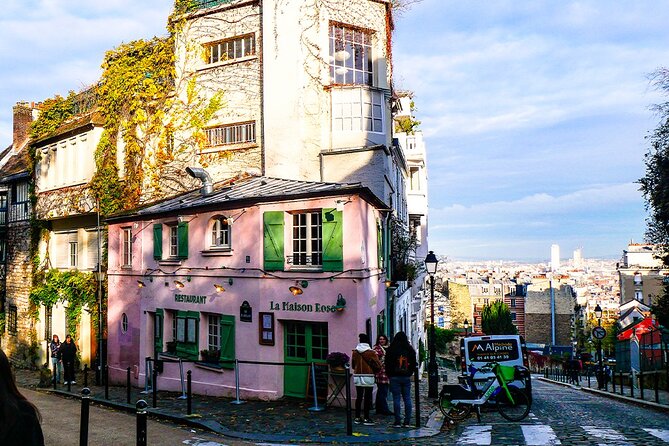
Near Au Lapin Agile, the focus shifts to the cabaret and the artists who gathered there. This is where the story of Lolo the donkey-artist comes in, one of those strange local tales that helps the neighborhood feel human rather than museum-like. The cabaret is viewed from outside, with the guide providing the story.
These brief stops are valuable because they break up the major sights. Montmartre is not only Sacré-Coeur and painters’ portraits. It is also vineyards, cabarets, eccentric characters, and small reminders of village life.
Place Dalida and the neighborhood’s musical side
Place Dalida honors the singer who lived in Montmartre and became a major figure in French music. The stop is short, about five minutes, but it adds a modern cultural note to a route often dominated by nineteenth- and early twentieth-century artists.
This is one of the places where a guide’s storytelling makes a real difference. A statue or named square means little without the person behind it. The tour connects Dalida to Montmartre as a beloved local figure, showing that the district’s cultural story did not end with the painters.
If you are interested in French music, cinema, and popular culture, this part of the route gives the walk a wider appeal. It is not limited to art history in the narrow sense.
Moulin de la Galette and Renoir’s Montmartre
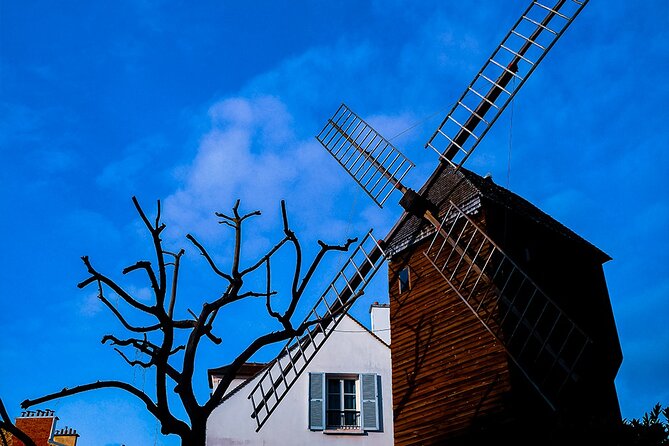
The Moulin de la Galette is one of the last windmills associated with Montmartre. It is also linked to Renoir, who captured the area’s social life in his painting of the same name.
The stop lasts about ten minutes and is primarily an exterior visit. You will not spend a long period studying a painting in a museum. Instead, you see the setting and learn why this windmill became such a familiar part of Montmartre’s artistic image.
This is a strong example of what the tour does best: it puts famous art references back into the streets where they belong. You are not only hearing a painter’s name in a gallery. You are standing in the neighborhood that helped shape the work.
Bateau-Lavoir and Picasso’s early work
Le Bateau-Lavoir was one of Montmartre’s important artist workshops. Picasso worked there, among other artists, and painted some of his first Cubist works in the building.
The stop is scheduled for about ten minutes. Admission is not included, so expect to see the site from outside unless your guide explains a different arrangement on the day. The main benefit is the setting and the explanation of its role in the art world.
For anyone interested in Picasso, this is a meaningful stop. It also helps explain why Montmartre became such a magnet for artists: studios, cabarets, cafés, and cheap working spaces brought creative people into close contact. The neighborhood’s artistic reputation grew from places like this, not just from the famous names later attached to it.
Café des Deux Moulins and the Amélie connection
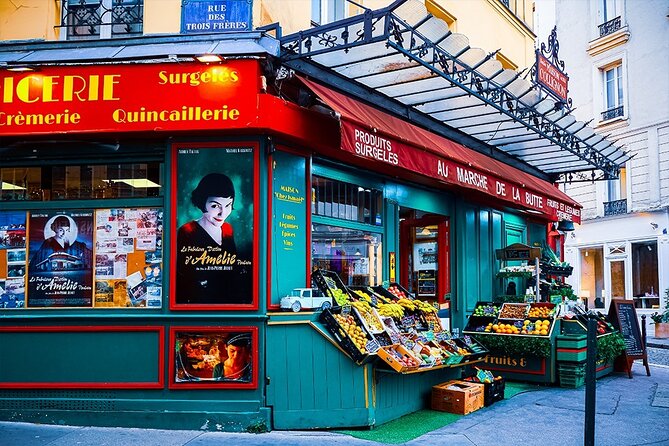
Café des Deux Moulins is known from the film Amélie. The stop lasts about five minutes and is aimed at giving film fans a quick look at the café associated with the character.
This is not presented as a full café visit or meal, and food and drinks are not included. If you want to sit down and order something, you can treat the stop as a useful orientation for a later return.
The film connection adds a playful modern layer to the walk. After hearing about painters, cabarets, and musicians, you get a reference many people know from cinema. It also shows how Montmartre continues to shape popular ideas of Paris.
Finishing at Moulin Rouge and Blanche
The final stop is Moulin Rouge, near the Blanche area rather than at the center of the hill. Its red windmill remains a symbol of Montmartre’s cabaret past and the wider Pigalle district.
The tour ends at Blanche, making this location more than a quick photo stop. You finish close to one of Paris’s most recognizable entertainment districts, with the afternoon still available for another museum, a meal, or a return to any part of Montmartre that caught your attention.
The Moulin Rouge is viewed from outside, and admission is not included. If you want a show, dinner, or interior visit, that requires a separate plan and budget. The walking tour gives you the setting and the story, not a cabaret performance.
What the $107.76 price means
At $107.76 per person, this is not a bargain-priced orientation walk. The value depends on how much you want a guide to organize the neighborhood and add context to places that you could technically see on your own.
You are paying for a certified local guide, a small group capped at 15, and a carefully connected route through many parts of Montmartre. The price makes more sense if you have limited time in Paris, want to ask questions, or prefer not to spend your first visit sorting out the hills and landmarks yourself.
It makes less sense if you mainly want to see Sacré-Coeur, take photographs, and wander independently. You would be paying for interpretation and structure that you may not use. Food, drinks, and transport to and from Anvers are also separate costs.
The strongest value is the concentration of sights. In one morning, you cover Sacré-Coeur, Place du Tertre, the vineyard, Au Lapin Agile, Place Dalida, Moulin de la Galette, Bateau-Lavoir, Café des Deux Moulins, and Moulin Rouge. You see many places quickly, though none receives the time of a dedicated museum visit.
Who should book this walk
I would choose this experience if you are visiting Paris for the first time, have only a short window for Montmartre, or want a guide who can bring together art, music, cinema, and local stories. It also suits people who enjoy conversation and prefer a small group to a large tour.
The walk is a good fit for anyone curious about the neighborhood beyond Sacré-Coeur. The emphasis on women artists, Dalida, Picasso, Renoir, and local anecdotes gives it more range than a basic basilica visit.
I would hesitate if stairs are difficult for you or if uneven cobblestones cause trouble. The route requires a moderate physical fitness level, and the uphill sections are not a minor detail. Wear sports shoes or other firm, comfortable footwear.
Book at least 24 hours ahead if your plans may change. Cancellation is free up to that point, but changes or cancellations inside the final 24 hours are not accepted for a refund.
My take on Montmartre Marvels
Book this tour if you want a brisk, story-filled introduction to Montmartre and value a personable guide. Olivia’s humor and focus on women artists, along with Julie’s lively approach, fit the experience’s strongest qualities: clear explanations, warmth, and plenty of local color.
Skip it if you prefer long visits inside monuments, a slow café morning, or an unstructured wander. This is an active outdoor walk with several short stops, not a deep examination of each site.
For the right visitor, the route gives you the best kind of first look: a hilltop view, famous landmarks, odd stories, art connections, and a clear sense of how Montmartre became one of Paris’s most distinctive neighborhoods.
FAQ
Where does the Montmartre tour begin?
The tour begins at Anvers, 75018 Paris, France, at 9:30 a.m.
Where does the walking tour end?
The tour ends at Blanche, 75018 Paris, France, near the Moulin Rouge and the Pigalle district.
How long does the experience last?
The walk lasts approximately two hours to two hours and 30 minutes.
How large is the tour group?
The maximum group size is 15 people.
Is transportation included?
No. Transport to and from the meeting point is not included. Food and drinks are also excluded.
Can I cancel for a full refund?
Yes, if you cancel at least 24 hours before the local start time. Cancellations or changes made less than 24 hours before the tour are not refunded.
Just added around Paris
- The Official Emily in Paris Macaron Making Workshop★ 5.0 · 4 reviews
- The Official Emily in Paris Montmartre Walking Tour★ 5.0 · 2 reviews
- The Official Emily in Paris Croissant Making Workshop★ 5.0 · 3 reviews
- The Official Emily in Paris Food Tour★ 5.0 · 3 reviews
- The Official Emily in Paris Locations Walking Tour★ 5.0 · 12 reviews
- Mamma Mia! Paris Louvre Museum Guided Tour Kid-Friendly Activity★ 4.5 · 28 reviews
- The Da Vinci Code in Paris: Follow the Trail with a Local★ 3.5 · 7 reviews
- Feel like a star in Paris with photos and a mini movie!★ 5.0 · 19 reviews
France Film Location Tours, compared.

Behind the Scenes of the Grand Rex: 50-Minute Studio Tour
Read our review →
The Official Emily in Paris Locations Walking Tour
Read our review →


The Official Emily in Paris Croissant-Making Workshop
Read our review →
The force to escape – Escape game in Montpellier
Read our review →
Browse the lists this tour appears in