
REVIEW · JAPAN
Kamakura Tour with Pro Photographer: Anime Train & Fuji view
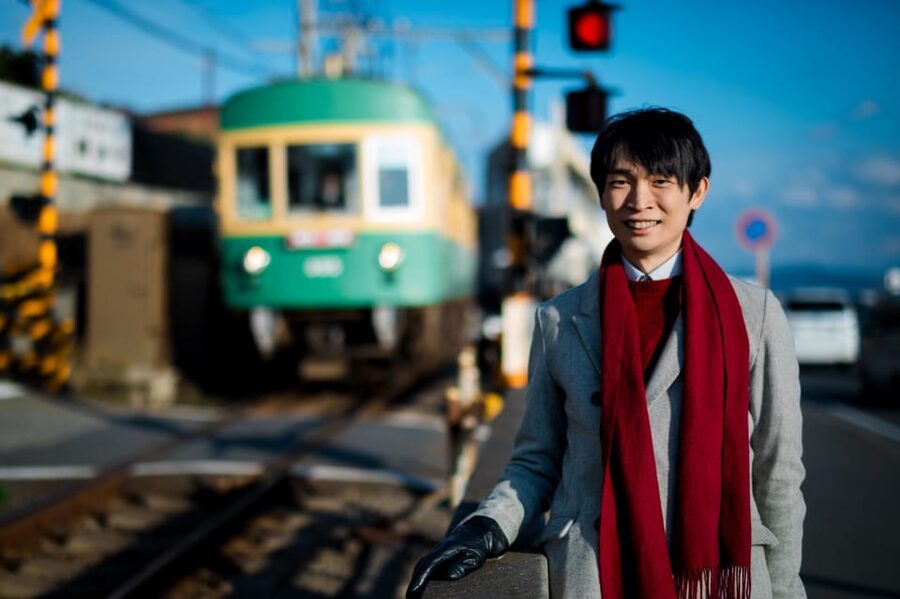
Kamakura’s famous Enoden crossing is where Slam Dunk anime meets real life. This two-hour walk brings you to Kamakurakōkō-Mae Station, the train crossing, and the beach, while a local photographer guides your poses and takes polished portraits.
I like the personal scale: you get a photographer who can move you away from the thickest crowd and find better angles. I also like the mix of anime appeal, sea views, Enoshima, and a chance to see Mount Fuji on a clear day. The main catch is that Fuji is weather-dependent, and you must pay for your own transport to the station.
- Anime location in real life: Visit the station and Enoden crossing linked with Slam Dunk.
- Professional portraits: Receive 30 edited digital photos within 72 hours.
- Local photographer-guide: Get posing help, cultural notes, and stories about Kamakura.
- Sea and island views: Photograph Enoshima from the beach, with Fuji possible in good weather.
- Small-group format: The activity is limited to eight participants, though the price is listed per group of up to ten.
- Simple two-hour plan: Meet and finish outside Kamakurakōkō-Mae Station, with only a short walk between stops.
Why the Slam Dunk crossing matters
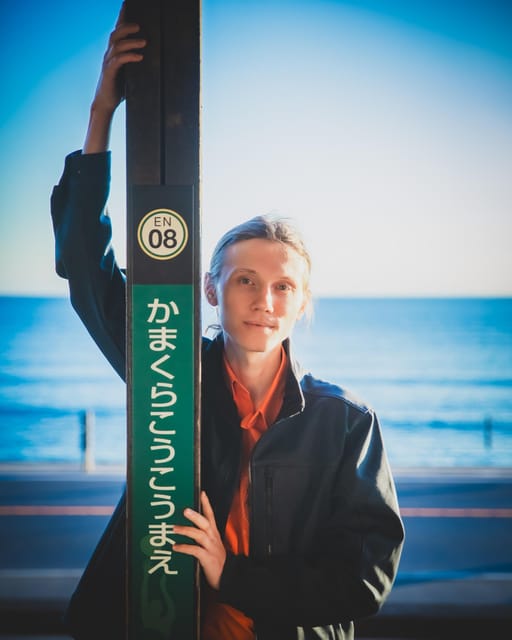
The appeal here is not just a train crossing. Kamakurakōkō-Mae Station and the nearby Enoden tracks are tied to one of Japan’s best-known sports anime settings, so fans can place themselves in a scene that feels familiar before they even arrive.
The experience begins outside the main exit of Kamakurakōkō-Mae Station on the Enoshima Line. Look for the photographer wearing branded Photo Star clothing. That clear meeting point matters because the station area can attract plenty of people, and you do not want to waste the short session searching for your guide.
Your photographer gives you more than a camera pointed in your direction. The guide explains the local connection to the anime and shares stories about Kamakura as you move between photo spots. If Luis is leading your session, the available feedback describes him as attentive, professional, and skilled at finding a flattering angle. That is exactly the kind of help you want when a busy public place leaves little room for repeated attempts.
You should also set your expectations correctly. This is a portrait walk, not a long sightseeing tour of Kamakura. You will see a small but memorable part of the coast, with the photographer shaping the visit around images rather than a broad historical tour.
The station meeting point and first 15 minutes
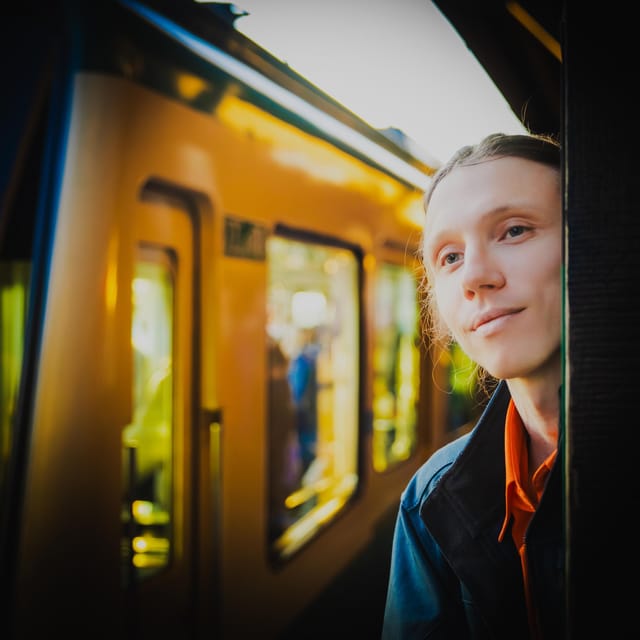
The first stop is Kamakurakōkō-Mae Station, often written as Kamakura Koko-mae. The station is directly on the Enoshima Line, and the meeting point is just outside its main exit.
The guided portion lasts about 15 minutes. This is when you get your bearings, hear about the anime connection, and learn how the session will work. Your photographer can point out the useful angles and explain where the train, road, coast, and station come together in the familiar scene.
I like this short introduction because it gives the photos some context. You are not simply stopping at a random crossing because it looks good on a phone screen. You learn why the place matters, then use that setting for portraits.
The station itself is also practical for people who do not feel comfortable posing right away. You can start with a few simple shots, watch how the photographer directs you, and ease into the more visible parts of the session.
More anime and manga location tours in Japan:
- Tokyo Studio Ghibli Museum and Ghibli Film Appreciation Tour
★ 4.5 · 421 reviews - Akihabara Anime & Game Adventure Walking Tour (Group or Private)
★ 5.0 · 404 reviews - Ghibli Park 1-Day Bus Tour from Nagoya
★ 4.5 · 277 reviews
The Enoden crossing photo session
The main attraction is the Enoshima Line crossing near the station. Trains pass through the frame while the sea opens behind the tracks, creating the anime-like setting that brings many people here.
The planned photo time around Kamakurakōkō-Mae totals roughly 70 minutes, divided between guided time and two photo stops. That is a useful amount of time for a portrait session. You are not forced to take one quick picture and move on. The photographer can work through several angles, poses, and expressions.
You will get a mixture of candid moments and more arranged portraits. The posing guidance is particularly helpful if you usually feel awkward in front of a camera. Instead of standing stiffly and hoping for the best, you can follow simple direction from someone who is watching posture, face angle, and the background.
The guide also aims to use less crowded spots. That does not mean the crossing will be empty. It is a popular public place, and train traffic and other people remain part of the setting. Still, moving a short distance can make the difference between a clean portrait and a background full of strangers.
The train itself is part of the timing. You may need patience while waiting for a useful composition, and a train will not necessarily pass at the exact second you want. The photographer’s job is to make the most of the setting rather than promise a perfectly controlled scene.
This is where the tour has its strongest appeal for anime fans. You get a recognizable location, but your final photographs are not limited to a standard snapshot of the crossing. The photographer can frame you with the tracks, station, sea, and passing train, giving the images a personal connection to the setting.
From the station to the beach
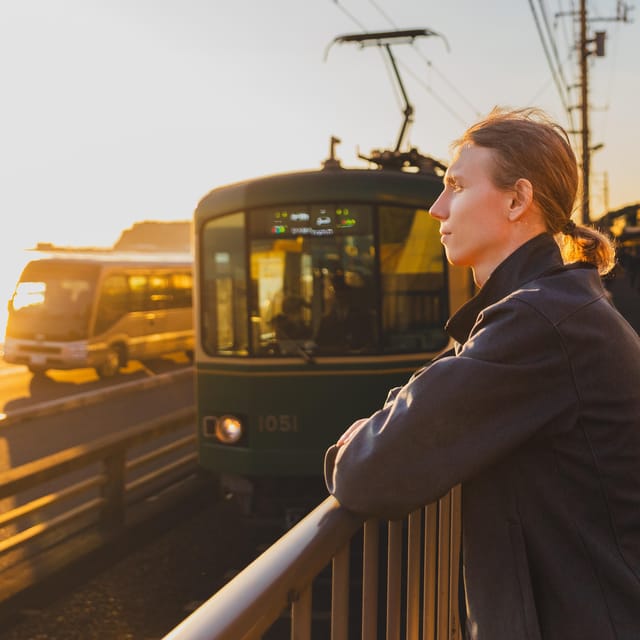
After the station-area photos, the group walks for about five minutes to the beach. The short transfer keeps the tour easy to follow and adds a second type of background without requiring a long hike.
At the beach, the mood changes. The station and crossing provide the anime reference, while the shore gives you open views and a calmer setting for portraits. Enoshima appears across the water, and Mount Fuji may be visible if the weather is clear enough.
The Fuji view needs a firm qualification. It is an added possibility, not a guaranteed part of the tour. Haze, cloud, and visibility can hide the mountain even when the rest of the coast looks fine. You should book this for the full combination of anime setting, sea, and professional portraits, not for a guaranteed Fuji photograph.
The beach session lasts about 20 minutes. That is enough for a few different poses and compositions, but it is not a long beach visit. You will likely get a set of portraits facing the water, with Enoshima or the open coast behind you, plus some candid images as the photographer directs you between positions.
Because this is still a public outdoor setting, comfortable shoes are a sensible choice. The activity is listed as wheelchair accessible, but the route includes movement from the station to the beach, so you may want to confirm the exact conditions if you need specific mobility support.
What your photographer adds
The photographer is the main reason to choose this activity instead of visiting the crossing on your own. You can take a phone picture there without paying for a tour, but you would have to manage the timing, composition, posing, and crowd around you.
Here, the photographer handles those details. You receive guidance on both natural expressions and stylized poses, with different angles and compositions throughout the session. That gives you a more useful collection than 30 near-identical shots from one position.
I especially like the promise of a mix of candid and posed images. Formal portraits can look too rigid, while candid photos can catch an unflattering moment. A good balance gives you images for different uses, from a polished profile picture to a relaxed travel memory.
The cultural comments also give the walk more substance. The guide is a Kamakura resident, so the anime location is placed within the wider setting of the city. Do not expect a full history lecture in two hours, but you will hear local stories and facts while the photographer works.
The available feedback gives Luis particular credit for listening to people’s wishes and finding their best angle. That matters if you have a preferred side, a pose you want to try, or a strong idea for the final pictures. You can communicate what you want, then let the photographer handle the technical work.
More screen journeys by train in Japan:
- Kamakura Tour with Pro Photographer: Anime Train & Fuji Sunset
★ 5.0 · 4 reviews - 3-Day Isle of Skye, ‘Hogwarts Express’ Train and Highlands Tour
★ 5.0 · 972 reviews - From Edinburgh: Magical Highlands Tour with Jacobite Train
★ 4.5 · 726 reviews - London: Warner Bros. Studio Tour and Morning Train Ticket
★ 4.7 · 176 reviews
Thirty edited photos within 72 hours
The package includes 30 professionally edited digital photos, delivered within 72 hours of the tour. This is an important part of the value because you are paying not only for the two hours on location, but also for the work that follows.
A photographer may take far more images during the session, then select and edit the strongest ones. The 30 delivered photos should give you a useful range from the station, crossing, and beach portions of the route.
You should not read the promise as a guarantee that every image will include a train or Mount Fuji. The final selection depends on weather, timing, other people, and the moments captured during your session. The value is in receiving a finished set rather than sorting through every unedited frame yourself.
The 72-hour delivery window is also practical if you are traveling onward. You do not need to wait weeks for the files, though you should still make sure the email or contact details used for booking are correct.
Is $133 a fair price?
The listed price is $133 per group of up to 10, while the activity is described as a small group limited to eight participants. That works out well for a couple, family, or friends who can share the cost. For one person, it is a more substantial purchase, but you are still getting a private-feeling portrait session rather than simply paying for an escort to a viewpoint.
The price includes the photographer, posing direction, local commentary, two hours of time, and 30 edited images. You also avoid having one person in your group sit out of every picture while trying to photograph everyone else.
You must arrange and pay for your own transportation to and from Kamakurakōkō-Mae Station. Build that cost and travel time into your budget. The tour starts and ends at the same station, so it does not provide transport from central Tokyo or another Kamakura attraction.
For a group already planning to visit the coast, this can be a good use of money. You get a clear meeting point, a focused route, and photos that are harder to produce on your own. If you only want to see the crossing and do not care about portraits, visiting independently will cost less.
Who will enjoy this most
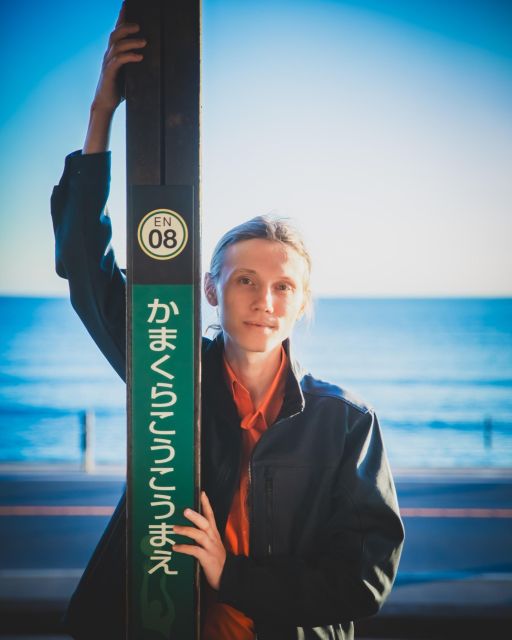
I would recommend this to Slam Dunk fans who want more than a quick photograph of the famous crossing. The anime connection gives the tour a clear purpose, and the photographer helps turn the visit into a personal set of images.
It also suits couples, families, and friends who want everyone included in the pictures. The group limit keeps the session smaller than a standard sightseeing outing, although you should check the exact group arrangement when booking because the supplied details give both eight and ten as capacity figures.
You do not need to be an experienced model. The photographer provides posing help and works with both candid and more directed shots. That makes the experience suitable for people who normally feel uncertain in front of a camera.
This is less suitable if you want a detailed tour of Kamakura’s temples, shrines, or food scene. The focus stays on the station, crossing, beach, and photography. It is also not listed as suitable for people with heart problems, so take that restriction seriously.
Timing, weather, and practical details
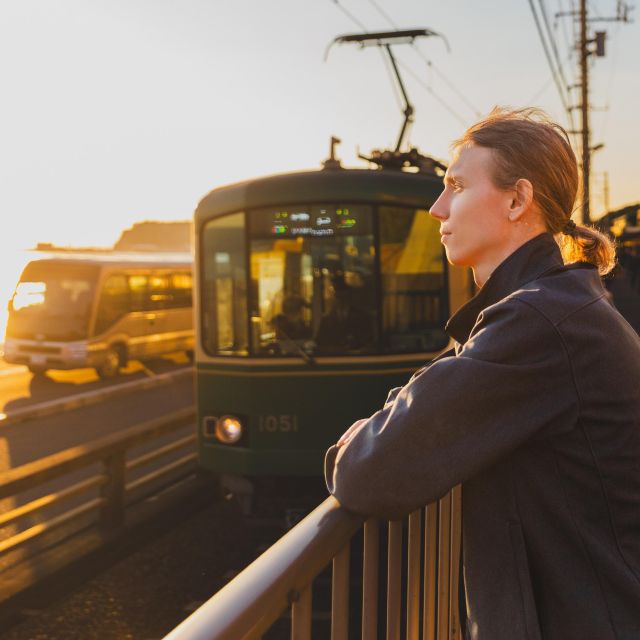
The activity lasts two hours, with starting times available by date. Since the coast and train crossing are central to the experience, weather can shape the final result. Mount Fuji is only visible when conditions allow, and strong weather changes may affect the beach portion.
Free cancellation is available up to 24 hours before the activity for a full refund. You can also reserve now and pay later, which helps if your wider Japan schedule is still shifting.
The tour is offered with a live guide in English, Spanish, French, or Japanese. Confirm the language you need when choosing a time. The meeting point is outside the main exit, and the photographer wears branded Photo Star clothing.
The route returns to the original meeting point. That makes the activity easier to fit before or after another plan on the Enoshima Line, but leave yourself some margin if you need to catch a train immediately afterward.
Should you book the Kamakura photo tour?
Book it if you want three things in one short outing: the real-life Slam Dunk setting, professional portraits, and coastal views that may include Enoshima and Mount Fuji. The strongest value comes when you share the $133 group price and care about receiving edited photographs.
Skip it if your main goal is a broad Kamakura sightseeing day or a guaranteed Fuji view. The crossing can be visited without a guide, and the mountain may be hidden by weather.
For most anime fans, couples, and small groups, I would book this with realistic expectations. Treat Fuji as a bonus, arrive ready to pose, and allow time for your own transport. The professional direction, thoughtful angles, and quick delivery make this more useful than a simple stop for a phone snapshot.
FAQ
Where does the Kamakura photo tour start?
It starts just outside the main exit of Kamakurakōkō-Mae Station on the Enoshima Line in Kamakura. The photographer wears branded Photo Star clothing.
Where does the activity finish?
The tour ends back at the original meeting point outside Kamakurakōkō-Mae Station.
How long does the experience last?
The activity lasts two hours. Starting times are available when you check the date.
Is transportation to the station included?
No. You must arrange and pay for your own transportation to and from Kamakurakōkō-Mae Station.
How many people can join?
The activity is described as a small group limited to eight participants. The listed group price is also described as covering up to 10 people, so check the booking details for the exact capacity on your date.
Are the photos included in the price?
Yes. The experience includes 30 professionally edited digital photos.
When will I receive the photos?
The edited photos are delivered digitally within 72 hours after the tour.
Can I cancel for a full refund?
Yes. You can cancel up to 24 hours in advance for a full refund.
More Photo Shoots on Location in Japan
- Tokyo: Private Makeover Photography Studio in Luxury Kimono
★ 5.0 · 22 reviews - Anime Character Cosplay Photoshoot-Includes 50 photo data
★ 5.0 · 3 reviews - LA: Hollywood Sign Tour with Comedians, Dogs, & Epic Photos
★ 4.9 · 1,193 reviews - LA: Express Hollywood Sign Guided Walking Tour with Photos
★ 4.9 · 310 reviews
Just added around Japan
- Anime shopping tour in Osaka: figures, Manga, Maid Cafe, Knife★ 5.0 · 4 reviews
- Osaka Cinematic Film experience Video + Photo (ONLY ONE BOOKING)★ 5.0 · 3 reviews
- Kichijoji Food & Anime Tour in Tokyo with Lunch★ 5.0 · 7 reviews
- Whimsical Walk to a Hidden Anime World: Tokyo Half-Day Tour★ 4.5 · 18 reviews
- Toei Kyoto Studio Park Admission Ticket : Japan’s Edo Period★ 4.0 · 2 reviews
- Kamakura Tour with Pro Photographer: Anime Train & Fuji Sunset★ 5.0 · 4 reviews
- Hiroshima:Private lacquer workshop experience tour(gift included)★ 5.0 · 13 reviews
- Explore the Nature that Inspired Ghibli Movies by Kayak (Half Day)★ 5.0 · 10 reviews
Japan Film Location Tours, compared.
Tokyo Studio Ghibli Museum and Ghibli Film Appreciation Tour
Read our review →
Akihabara Anime & Game Adventure Walking Tour (Group or Private)
Read our review →
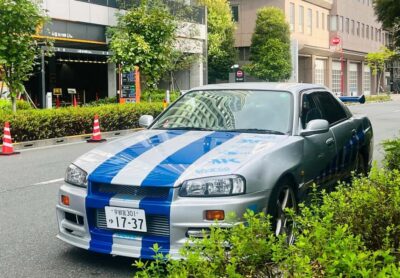
Go Daikoku PA Fast & Furious 3 Sports Car Meetup
Read our review →

Fast & Furious Tokyo Drift 3 (Kaila Yu-SP) : Experience Ride JDM
Read our review →
Warner Bros. Studio Tour Tokyo – The Making of Harry Potter
Read our review →
Browse the lists this tour appears in