
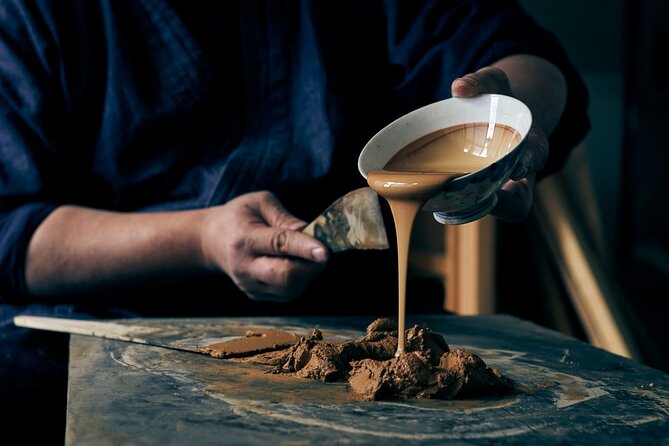
REVIEW · JAPAN
Hiroshima:Private lacquer workshop experience tour(gift included)
The remarkable part of this Hiroshima experience is the direct link between Buddhist altar craftsmanship and objects made for daily life. Artist Naoya Takayama shows how an old local skill can move beyond temple furnishings and become useful tableware, then gives you a chance to try lacquer painting yourself.
I like the small group limit of six, which gives the workshop a personal feel, and I like that the session explains both technique and the present decline of traditional crafts. The main drawback is the price: at $287.41 per person for about two hours, this is a serious splurge, especially if you mainly want a quick souvenir activity.
Key points to know before booking
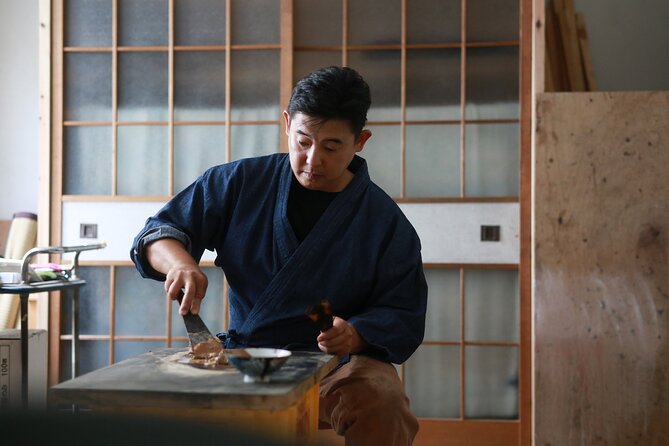
- Learn from a recognized Hiroshima lacquer artist: Naoya Takayama’s work was selected as a gift at the G7 Summit.
- See a living craft up close: The workshop connects Buddhist altar lacquer methods with modern tableware.
- Try the technique yourself: You receive instruction in lacquer painting rather than only watching a demonstration.
- Keep the group small: A maximum of six people allows more room for questions and guidance.
- Take home two reminders: You receive your own workshop experience plus a gift made by the instructor.
- Plan around a short but focused visit: The activity lasts about two hours and returns to the starting point.
Why this small Hiroshima workshop matters
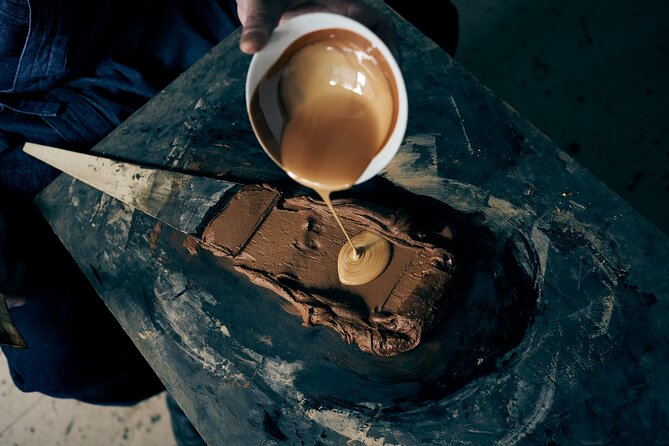
Many craft demonstrations show you a finished object, explain a few tools, and send you on your way. This workshop offers more context. You learn where Hiroshima Buddhist altar lacquer work comes from, how its techniques developed, and why this kind of skilled handwork is becoming harder to sustain.
That last point matters. Traditional crafts do not survive simply because people admire them. They need working artists, paying customers, practical uses, and younger people willing to learn the methods. By adapting lacquer work for everyday tableware, Takayama is showing one possible route forward.
I like that the workshop does not treat tradition as something frozen in a display case. The craft remains tied to its older purpose, but the objects can fit modern daily life. You get a clearer sense of how Japanese artisans preserve a method while changing the setting in which it is used.
The setting is a studio at 2-17 Horikawachō, Naka Ward, Hiroshima, 730-0033. The activity begins and ends there, and the location is near public transportation. Since the session is only about two hours, that straightforward arrangement makes it easy to fit into a day of sightseeing in central Hiroshima.
More film workshops in Japan:
- Tokyo: Mochi-Making Class in a Private Studio
★ 5.0 · 8 reviews - Hiroshima Lacquer Studio Tour & Workshop With a Gift
★ 5.0 · 2 reviews - Bangkok: White Lotus Thai Cooking Class with Market Tour
★ 5.0 · 285 reviews
Meeting Naoya Takayama’s lacquer tradition
Naoya Takayama learned traditional Kyoto lacquer painting techniques and later developed his own approach. His work incorporates the roiro, or wax color, technique, giving his pieces a distinctive finish and appearance.
You will hear about this work directly through the workshop and presentation. The focus is not simply on buying a beautiful object. It is on understanding the decisions behind the object, from the use of natural materials to the careful handling of lacquer.
Takayama also carries forward the work of Kiyoshi Takayama, the company founder. The workshop presents this as a family and studio tradition, linking older craftsmanship with newer designs. The name Kiyoshi Takayama appears in the explanation of Hiroshima Buddhist altar methods, while Naoya Takayama is the artist associated with the current lacquer work and award-winning pieces.
That distinction is useful if you care about craft lineage. You are not just seeing an isolated artist at work. You are learning how techniques, values, and workshop knowledge pass from one generation to the next.
The artist’s reputation adds interest, but it should not be the only reason you book. Awards and the G7 gift connection tell you that his work has received high-level recognition. The real value for you comes from seeing how that quality is achieved and getting a limited chance to handle the process yourself.
What the two-hour session includes
The experience has five clear parts. First, you learn the origins and techniques connected with Hiroshima Buddhist altars. This gives you the background needed to understand why the work demands patience and precision.
Next, the session addresses the current decline of traditional crafts. This is an important part of the experience because it places the hands-on activity in a wider setting. You are not merely copying a decorative pattern. You are considering why a craft can be admired yet still struggle to survive.
The workshop then introduces Naoya Takayama’s own lacquer technique and selected works. His pieces were chosen as gifts for the G7 Summit, so you get a close look at work that has been presented at an important international event.
After that comes your own lacquer painting experience. The supplied details do not specify the exact object, design, or number of painting steps, so you should not expect a detailed project list in advance. What is clear is that you receive instruction and try some of the techniques yourself.
Finally, you receive a gift made by the instructor. That is separate from the satisfaction of making something during the workshop. It gives you a finished example to keep, study, and compare with your own work.
The session is compact, but it is not a rushed sightseeing stop. Two hours gives enough time for explanation, demonstration, and participation without taking up half a day. If you like long, slow studio visits, the time may feel short. If your Hiroshima schedule is tight, the format is a practical fit.
Watching the craft before picking up the tools
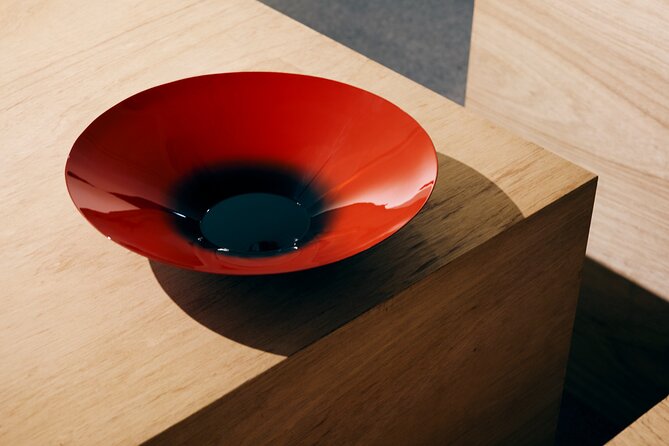
The strongest part of the experience is likely the transition from seeing the artist’s work to trying a small part of the process yourself. Several aspects of lacquer work are difficult to understand from photographs. The surface, finish, and fine detail become easier to appreciate when an artisan explains what goes into them.
The studio staff are described as welcoming, and the experience includes a chance to try techniques rather than simply stand at a distance. That hands-on element changes the way you look at lacquerware afterward. Even a simple mark can make you more aware of the control and patience required for a finished piece.
Guide support also adds value. Michi is specifically praised for being kind and professional during one session. The workshop may therefore include more than the artist’s technical explanation. A guide can help connect the demonstrations to Hiroshima’s craft traditions and make the session easier to follow.
Still, keep your expectations realistic. A two-hour class cannot turn you into a lacquer artisan. You will get an introduction and a guided attempt, not a full apprenticeship. The goal is appreciation, not mastery.
Same place, a completely different screen:
- Tokyo: Fast & Furious Tokyo Drift III Experience
★ 4.8 · 2,432 reviews - Tokyo Studio Ghibli Museum and Ghibli Film Appreciation Tour
★ 4.5 · 421 reviews - Akihabara Anime & Game Adventure Walking Tour (Group or Private)
★ 5.0 · 404 reviews - Tokyo: Go Daikoku PA Fast & Furious 3 Sports Car Meetup
★ 4.6 · 356 reviews
Natural materials and everyday tableware
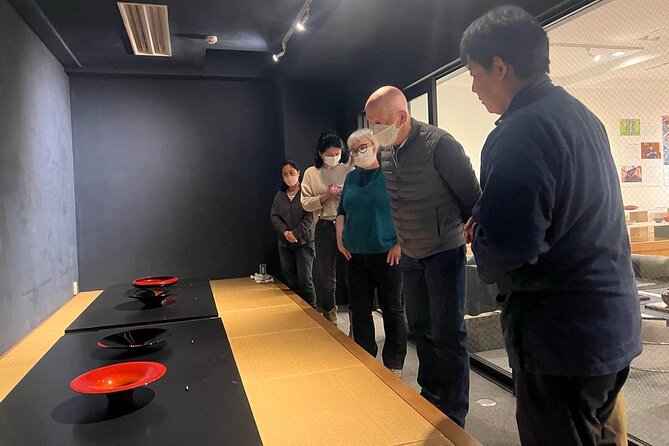
One of the more interesting ideas here is the use of natural materials in lacquerware intended for everyday use. That places the craft somewhere between art and ordinary household life.
The finished objects are not described only as precious works for display. Takayama’s approach brings lacquer into tableware and other items used in daily routines. That change in purpose can help traditional techniques remain relevant.
I find this especially useful for shoppers who want a souvenir with a story but do not want another mass-produced trinket. The instructor-made gift gives you a physical reminder of Hiroshima’s craft tradition, while the workshop explains why the object looks and feels the way it does.
You should also remember that natural materials and hand-applied finishes can require care. The supplied information does not give specific cleaning instructions, so ask the studio about maintenance if you later buy or receive lacquerware. Do not assume that every lacquered item can be treated like ordinary machine-made dishes.
Is $287.41 a fair price?
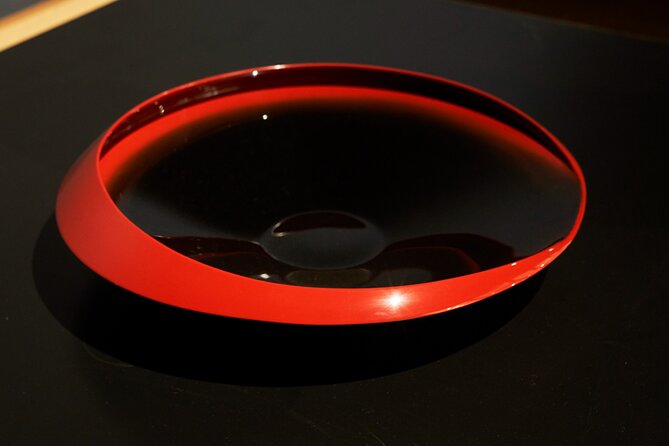
At $287.41 per person, this is expensive for a two-hour activity. The price will not make sense to everyone, and I would not choose it simply because you have a spare morning in Hiroshima.
The value improves if you care about Japanese art, traditional techniques, studio visits, or meaningful souvenirs. You are paying for access to a specialist, a small group of no more than six people, an explanation of the craft’s background, a practical painting session, and an instructor-made gift.
The G7 connection also adds interest, but it should be treated as context rather than a reason to overpay. You are not purchasing one of those official gifts. You are receiving a gift made by the instructor as part of the workshop.
I would compare this price with your wider Hiroshima budget. If you are choosing between several hands-on activities, ask yourself how much direct contact with an artist matters to you. A standard museum visit costs less, but it will not give you the same chance to try lacquer painting or take home a handmade piece.
For a dedicated craft enthusiast, the price may be reasonable. For a family looking for a low-cost activity, it is likely too high. Children may be allowed to participate because most people can take part, but the provided details do not give a minimum age or child pricing, so check before booking.
Who will enjoy this most?
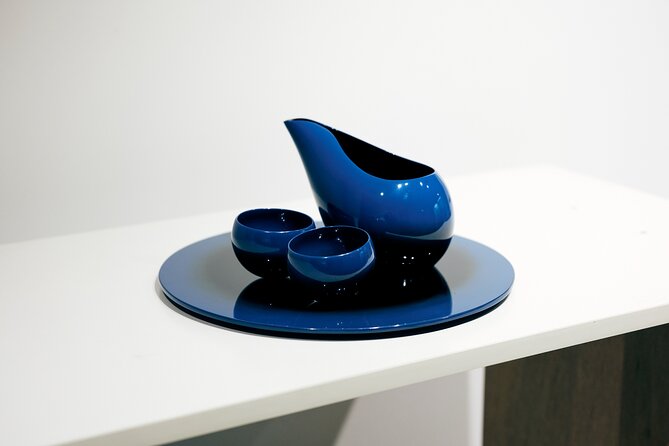
I would recommend this workshop most strongly to:
- People who prefer craft and culture to quick photo stops
- Art lovers interested in Japanese materials and technique
- Visitors who want a small-group activity with direct instruction
- Shoppers seeking a handmade Hiroshima souvenir
- Repeat visitors who have already seen the city’s main memorial sights
- Anyone who wants to understand how traditional skills can adapt to modern life
It may be less suitable for you if you want a broad overview of Hiroshima, a long museum visit, or a cheap activity. The subject is narrow, and the cost is high compared with the short duration.
The workshop also suits different levels of prior experience. You do not need to be an artist to participate, and most people can take part. You should simply be comfortable following instruction and working carefully with the materials provided.
Location, timing, and group size
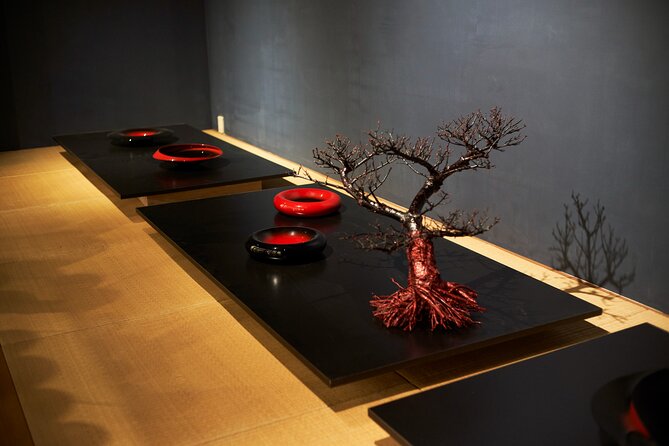
The meeting point is 2-17 Horikawachō in Hiroshima’s Naka Ward. The activity ends at the same location, so you do not need to arrange a separate return transfer.
It is near public transportation, though the supplied information does not name a particular station or give walking directions. Check the exact route before setting out, especially if you have a timed train, ferry, or reservation afterward.
The average booking lead time is 39 days. That suggests you should not leave this until the last morning of your trip if the date matters to you. The six-person maximum is another reason to reserve early. A small class can fill faster than a large sightseeing bus.
A mobile ticket is provided, and confirmation arrives when you book. You can cancel for a full refund up to 24 hours before the start time. Cancellations or changes made less than 24 hours before the start are not accepted for a refund, and the cut-off uses Hiroshima local time.
What to expect from the atmosphere
This is a quiet, focused workshop rather than a high-energy group outing. The most praised qualities are the quality of the lacquer work, the chance to watch the artisan, and the warmth of the studio team.
You should expect time for explanation and observation before your own practical turn. That rhythm works well for people who like to understand a process before trying it. It also means the experience is about more than making a quick painted object.
The session has received a five-star rating from 13 reviews, with 100 percent recommending it. I would read those figures as a sign of strong satisfaction, especially among people who already value art and culture. I would not use them to assume that every visitor will consider the price a bargain.
One especially strong reaction described the workshop as the best experience of a 17-day Japan trip. That is a high bar, but it makes sense for someone who values close contact with skilled workmanship more than a long list of famous sights.
Should you book this Hiroshima lacquer workshop?
Book it if you want a personal introduction to Hiroshima lacquer craft, appreciate small-group instruction, and are willing to pay for access to an award-winning artist’s studio tradition. The chance to try lacquer painting, hear about the decline of traditional crafts, and receive an instructor-made gift gives the two hours real substance.
Skip it if you are watching your budget, want a longer activity, or prefer sightseeing that covers several parts of Hiroshima at once. The experience is focused and costly.
For the right person, this is one of those rare activities where the souvenir is only part of the reward. You leave with a better eye for lacquerware and a clearer understanding of the hands behind it.
FAQ
Where does the Hiroshima lacquer workshop meet?
The meeting point is 2-17 Horikawachō, Naka Ward, Hiroshima, 730-0033, Japan.
Where does the activity end?
The activity ends back at the meeting point.
How long does the lacquer workshop last?
The experience lasts approximately two hours.
Who leads the lacquer workshop?
The experience features Hiroshima artist Naoya Takayama and his lacquer tradition. The studio also has guides, including Michi, who has led a session.
How many people can join the workshop?
The activity has a maximum group size of six people.
Is a mobile ticket available?
Yes. The experience includes a mobile ticket, and confirmation is received at the time of booking.
Can I cancel for a full refund?
Yes. You can cancel at least 24 hours before the local start time for a full refund. Cancellations and changes made less than 24 hours before the start are not accepted for a refund.
Just added around Japan
- Anime shopping tour in Osaka: figures, Manga, Maid Cafe, Knife★ 5.0 · 4 reviews
- Osaka Cinematic Film experience Video + Photo (ONLY ONE BOOKING)★ 5.0 · 3 reviews
- Kichijoji Food & Anime Tour in Tokyo with Lunch★ 5.0 · 7 reviews
- Whimsical Walk to a Hidden Anime World: Tokyo Half-Day Tour★ 4.5 · 18 reviews
- Toei Kyoto Studio Park Admission Ticket : Japan’s Edo Period★ 4.0 · 2 reviews
- Kamakura Tour with Pro Photographer: Anime Train & Fuji Sunset★ 5.0 · 4 reviews
- Explore the Nature that Inspired Ghibli Movies by Kayak (Half Day)★ 5.0 · 10 reviews
- Tokyo: Mochi-Making Class in a Private Studio★ 5.0 · 8 reviews
Japan Film Location Tours, compared.

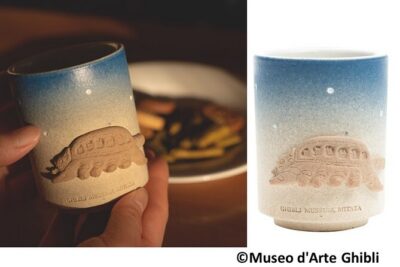
Tokyo Studio Ghibli Museum and Ghibli Film Appreciation Tour
Read our review →
Akihabara Anime & Game Adventure Walking Tour (Group or Private)
Read our review →
Go Daikoku PA Fast & Furious 3 Sports Car Meetup
Read our review →

Fast & Furious Tokyo Drift 3 (Kaila Yu-SP) : Experience Ride JDM
Read our review →
Warner Bros. Studio Tour Tokyo – The Making of Harry Potter
Read our review →
Browse the lists this tour appears in