
REVIEW · SPAIN
Cavalleria: Guided Stargazing at the Beach with Telescope
The best part of this Menorca experience is its setting: you watch the stars from a coastal Starlight Reserve, far from city glare. A guide links the sky to familiar figures such as Hercules, Andromeda, Cassiopeia, and Draco, then uses professional telescopes to show clusters, binary stars, and other space objects. I like the mix of clear astronomy and old myths, and I like that mattresses let you lie back instead of craning your neck. The main consideration is that direct telescope viewing may not feel as extensive as some people expect, so ask how much observing time is planned.
At $35 per person, this is a fair price for a focused two-hour activity with a live guide, two telescopes, a group photograph, and a special coastal location. The tour is conducted in Spanish, with an audioguide option in English or French that plays on your own phone. Good weather is essential, and the outing needs at least five participants to run.
Key points to know before you book
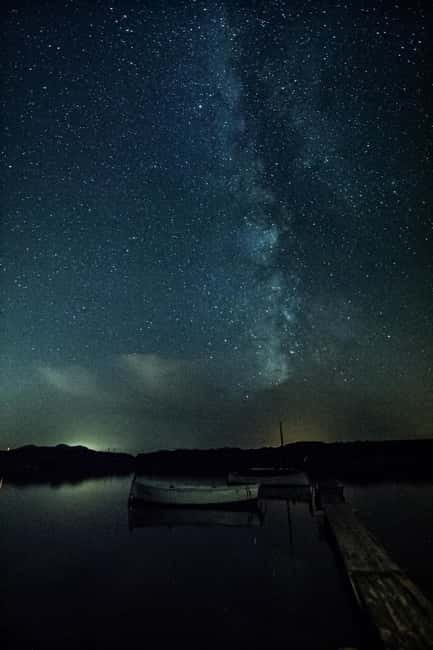
- Cala Viola de Ponent after dark: You meet at the beach parking lot, not at your hotel, so plan your own transport.
- A Starlight Reserve setting: The location is chosen to reduce city light and make faint stars easier to see.
- Two professional telescopes: The session includes views of objects such as open clusters, globular clusters, and binary stars.
- Stories behind the constellations: Mythology gives you an easy way to remember what you are seeing.
- Spanish-led, with phone-based audio options: Bring a charged phone and headphones if you book the English or French audioguide.
- Weather and numbers matter: Clouds or poor conditions can cancel the session, and at least five participants are required.
Why the Cala Viola de Ponent setting matters
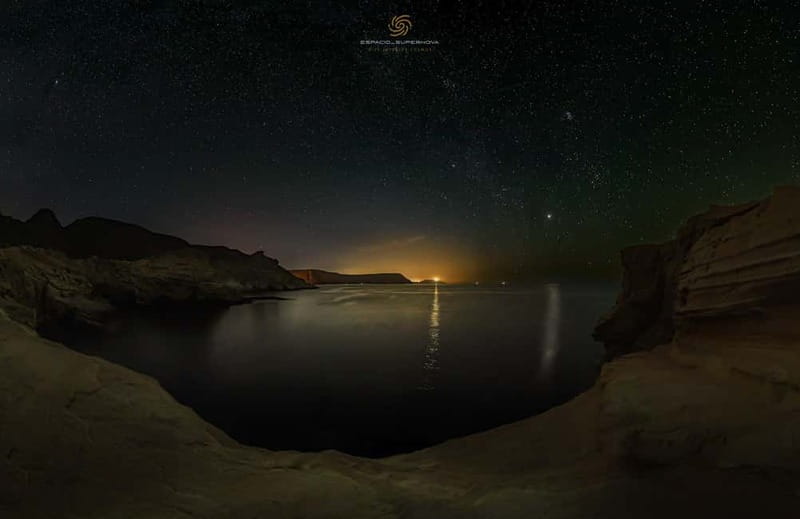
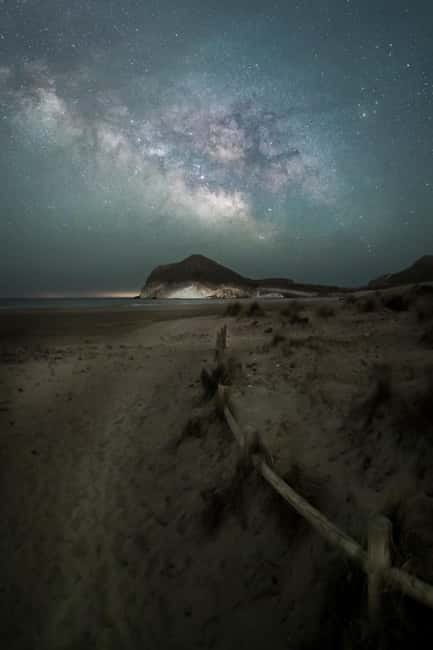
Stargazing is only as good as the sky above you. This experience takes you away from strong urban lighting and places you beside the coast at Cala Viola de Ponent, within a designated Starlight Reserve. That means the setting is doing real work: a darker sky makes more stars visible and gives the telescopes a better chance to show faint objects.
You meet in the beach parking lot. There is no hotel pickup or drop-off, so you need to arrange your own way there and back. The meeting point is useful to know in advance, since a nighttime beach visit is different from a daytime sightseeing stop. Check your route before sunset, and arrive with enough time to find the parking area without rushing.
The coast also gives the evening a strong sense of place. You are not sitting in a planetarium or classroom. You are outside, looking upward from Menorca, with the sea nearby and the sky as the main show. The information provided does not promise a particular view of the water, so I would treat the coastal location as part of the atmosphere rather than a separate scenic stop.
More guided location tours in Spain:
- Barcelona in 2 Hours: Guided Walk Through History and Sights
★ 5.0 · 203 reviews - Barcelona Marvels: A Guided Walking Tour of the City’s Highlights
★ 5.0 · 43 reviews - Mallorca Hidden Marvels: Guided Routes for Small Groups
★ 4.5 · 24 reviews
The first look at Menorca’s night sky
The session lasts two hours, which is long enough to build a simple picture of the sky without taking over your whole evening. The guide begins by helping you identify the main constellations visible that night. This is more useful than memorizing a fixed list, since the stars you can see change with the season and the conditions.
The guide also explains positional astronomy and shows you how to make star leaps. In plain terms, you use one recognizable group of stars to find another. That gives you a practical way to orient yourself after the tour rather than leaving with a few names you cannot locate again.
This part should suit first-time stargazers particularly well. You do not need a background in astronomy to follow it, and the mythological stories give the patterns a human connection. Hercules, Andromeda, Cassiopeia, and Draco are not just points of light once you know the stories attached to them.
The guide named in the strongest personal feedback is Gonzo, who is described as making the subject interesting for both adults and children. The official language for the live tour is Spanish. If you do not speak Spanish, check the exact option you book, since the audioguide is handled separately from the live presentation.
What the telescopes add to the evening
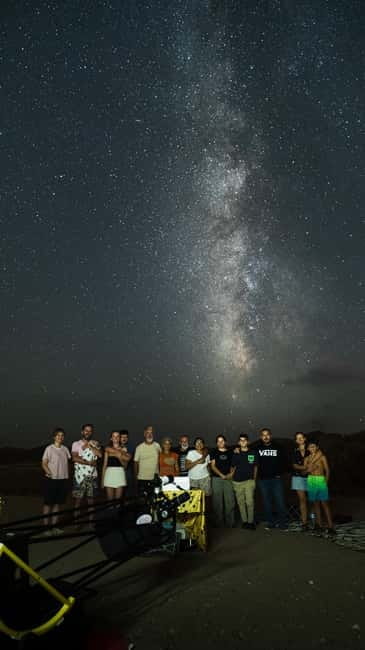
The activity includes two professional, current-generation telescopes. The purpose is not simply to point at the brightest star and move on. The program is designed to show a range of deep-space objects, including open clusters, globular clusters, and binary stars.
An open cluster is a loose gathering of stars that can appear as a bright patch through a telescope. A globular cluster is a much tighter, rounder concentration of stars. Binary stars are pairs that appear connected or closely placed when viewed from Earth. Seeing these categories side by side helps you understand that the night sky is not a flat blanket of identical lights.
The telescopes are an important part of the price, but you should set your expectations carefully. One piece of direct feedback praised the explanations but wished there had been more direct observation through the telescope. That tells me the balance can feel weighted toward teaching and guided orientation, depending on the evening and group.
If looking through the eyepiece is your main goal, ask at the start how the telescope time will be shared. Weather, the number of people, the visible objects, and the guide’s plan can all affect the rhythm. The activity promises professional telescopes and observation of space objects, but it does not give a fixed list of objects or a guaranteed number of individual viewing turns.
Moonlight nights and the shape of the craters
On nights when the moon is visible, the guide can focus on its craters and explain how they formed. This gives the program a different feel from a session centered on faint deep-space objects. The moon is bright and familiar, but through a telescope its surface becomes much more textured.
The moon phase will affect the experience. A bright moon can make some faint stars harder to see, while a clear view of the lunar surface can become the evening’s most immediate attraction. The supplied details do not promise a moon view on every date, so think of this as a possible part of the program rather than a guaranteed feature.
I like this flexibility. You are not given a one-size-fits-all lecture that ignores what is actually overhead. The guide can respond to the visible sky, which makes the session feel more connected to the night you are sharing rather than to a script that could happen anywhere.
Same place, a completely different screen:
- Barcelona: Icebar experience, located at the beach !!
★ 4.1 · 1,063 reviews - Girona: Game of Thrones Small Group Tour
★ 4.9 · 816 reviews - Valencia: City of Arts and Science 3D Movie at Hemisfèric
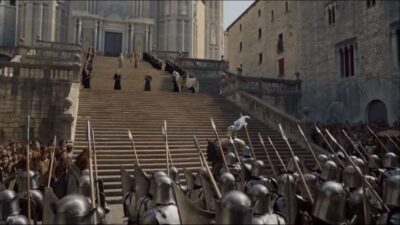
★ 4.1 · 455 reviews - Game Of Thrones Walking Tour in Girona
★ 5.0 · 406 reviews
Myths that make the constellations easier to remember
Astronomy can become dry when it is reduced to names and distances. The stories of Hercules, Andromeda, Cassiopeia, and Draco give the guide another way to make the constellations stick in your mind.
These myths also provide a bridge between science and culture. You learn how people used the stars to picture characters, creatures, and stories, then move into the more practical question of how to find those patterns overhead. The result should feel less like a technical class and more like learning a visual map.
The stories will be delivered in Spanish by the live guide. If you book the English or French audioguide, the files play on each participant’s own phone. You need to bring that phone, make sure it has enough battery, and bring headphones if you have them. The provider does not supply the phone for this part.
That phone requirement is easy to miss and matters more at a remote nighttime meeting point, where you may not want to depend on a weak battery. Charge it before leaving your accommodation, and download or access anything required before the activity if instructions tell you to do so.
Lying back under the stars
Mattresses are included, and they change the physical side of the evening. Looking straight up for two hours can strain your neck, especially if you are trying to follow a guide’s directions across different parts of the sky. A mattress lets you settle in and watch for longer stretches.
This is also a good choice for families, provided everyone can manage the beach setting and the late-night timing. One enthusiastic account specifically described the experience as suitable for adults and children. Still, the program is not listed as suitable for wheelchair users, so check your own access needs before booking.
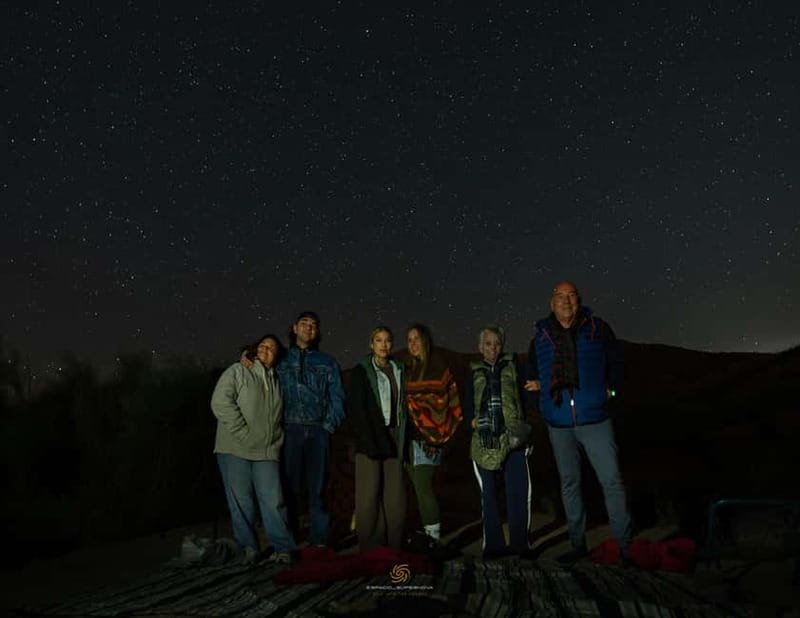
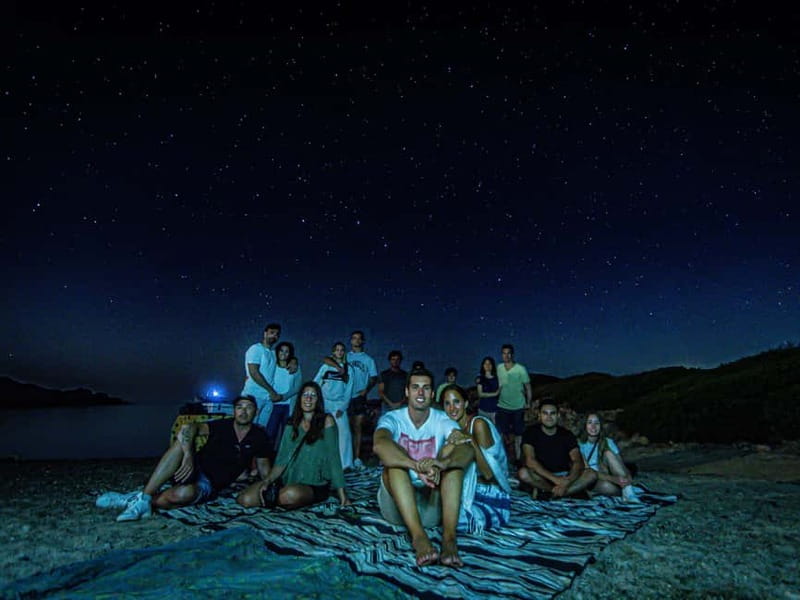
The session ends with a group photo featuring the stars in the background. This is a small extra, but it gives you something concrete to take home from an evening that otherwise consists of sights no camera phone can easily capture.
How the $35 price measures up
At $35 per person, I see this as a reasonably priced specialist activity rather than a cheap filler. You are paying for two hours, a Spanish-speaking certified guide, professional telescopes, mattresses, access to a dark coastal setting, and a group photograph.
The value is strongest if you are curious about astronomy and want help making sense of what you see. A free night on the beach can give you stars, but not the same structure, constellation stories, telescope equipment, or guidance on finding your way around the sky.
The value is weaker if you want a highly private session or a long series of guaranteed eyepiece views. This is a group activity, and the information does not state the group size. Telescope time may be shared, and the guide may spend a substantial part of the session explaining constellations, myths, and sky orientation.
I would also factor in the risk of weather disruption. Clouds can cancel the activity, and the minimum of five participants adds another condition. You can cancel up to 24 hours in advance for a full refund, and you can reserve now and pay later, which helps keep the commitment flexible. If the provider cancels because of weather or insufficient numbers, the team will contact you to arrange a new date or a refund.
Who will enjoy this most
I would recommend this for you if you:
- Want a calm evening activity away from bright city lights
- Enjoy learning through stories as well as facts
- Are visiting Menorca with children who like space
- Want to see more than the usual bright stars
- Are happy with a shared tour rather than a private astronomy lesson
- Can reach Cala Viola de Ponent independently
- Understand that the activity is delivered in Spanish, with separate audio support available in English or French
You may want to choose another activity if you need step-free access, do not want to use your own phone for an audioguide, or expect uninterrupted telescope viewing. The experience asks for some patience. You may spend time lying back, listening, finding constellations, and waiting while the group shares the equipment.
People over 95 are also listed as unsuitable for the activity. That is a stated restriction, so take it seriously when booking.
Practical advice for a smoother night
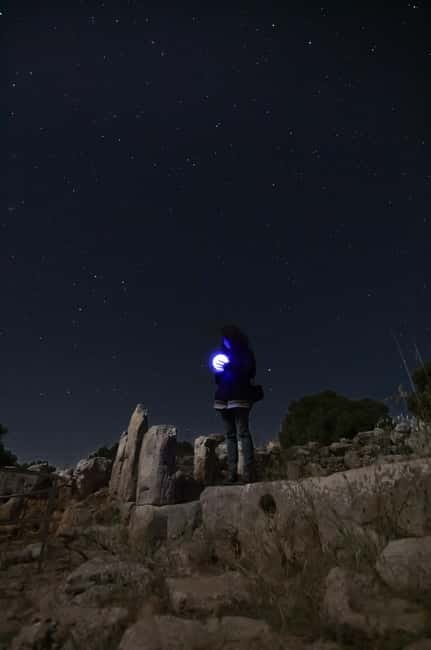
Wear clothing suitable for sitting outside after dark. The supplied details do not specify temperatures, seating beyond the mattresses, or restroom facilities, so plan for a simple outdoor experience rather than a fully serviced attraction.
Bring your phone if you have booked the audioguide, and charge it fully. Headphones are useful for the English or French files. If Spanish is comfortable for you, the live guide is the central source of information.
Check the weather close to the date and keep your schedule flexible. The activity depends on good conditions, and stargazing cannot be repaired by enthusiasm once clouds cover the sky. Since you must make your own way to the beach parking lot, allow extra time for the evening meeting.
The activity is rated 4.9 from 87 ratings, and the praise is especially strong for the guide’s ability to make the subject interesting and for the unexpected amount of learning packed into the evening. The one useful caution is just as clear: some people may want more direct time at the eyepiece.
Should you book Cavalleria stargazing?
Book it if you want an approachable introduction to the sky in a memorable Menorca setting. The combination of a Starlight Reserve, constellation myths, star-leap guidance, moon-crater explanations, and professional telescopes gives the evening more substance than simply sitting on the beach and looking up.
I would book early if the date matters to you, then keep your plans flexible because of the weather and five-person minimum. If telescope viewing is your top priority, contact the provider before booking and ask how the two-hour session divides time between explanations and eyepiece observation.
For $35, this is a good choice for curious families, couples, and anyone who wants a quieter night activity with real content. It is less suitable for visitors seeking a private session, guaranteed moon or planet views, or easy accessibility.
FAQ
Where does the stargazing activity meet?
You meet at the parking lot at Cala Viola de Ponent Beach in Menorca.
How long does the experience last?
The activity lasts two hours.
What language is the live tour in?
The live tour guide speaks Spanish.
Is an English or French audioguide available?
An audioguide can be booked in English or French. It plays on each participant’s own phone, so bring a sufficiently charged phone and headphones if you have them.
Are telescopes provided?
Yes. The activity includes two professional telescopes for observing space objects such as open clusters, globular clusters, and binary stars.
Can I see the moon during the activity?
On moonlight nights, the guide can show you the moon’s craters and explain how they formed. A moon view is not stated as guaranteed for every date.
Is hotel pickup included?
No. Hotel pickup and drop-off are not included. You need to make your own way to the meeting point.
Can the activity be cancelled because of weather?
Yes. The activity depends on good weather conditions. If it is cancelled, the provider’s team will contact you to arrange a new date or a refund.
Is the activity accessible to wheelchair users?
No. The activity is listed as not suitable for wheelchair users. It is also listed as not suitable for people over 95 years old.
Just added around Spain
- City of Italica and Game of Thrones★ 5.0 · 2 reviews
- Game of Thrones filming locations, Itálica, Seville★ 4.5 · 27 reviews
- Game of Thrones Basque Coast Locations Tour from San Sebastian★ 5.0 · 5 reviews
- Mallorca: 5-hours Hidden Marvels Tour★ 5.0 · 4 reviews
- Mallorca Hidden Marvels: Guided Routes for Small Groups★ 4.5 · 24 reviews
- Malaga Film Adventure Star in a Wizards Movie★ 5.0 · 3 reviews
- Mallorca: 5-hours Hidden Marvels Tour★ 5.0 · 17 reviews
- Yoga and Brunch on the beach★ 5.0 · 9 reviews
Spain Film Location Tours, compared.
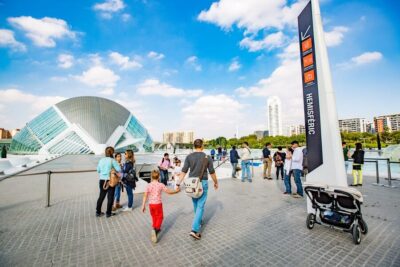
Valencia: City of Arts and Science 3D Movie at Hemisfèric
Read our review →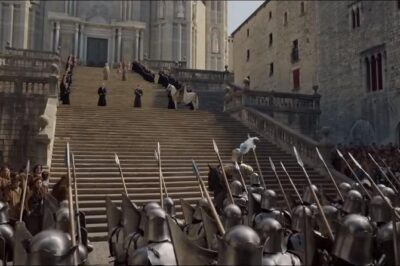
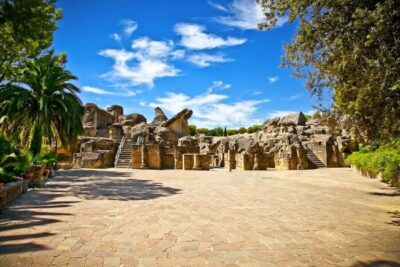
From Valencia: Peniscola Day tour, Game of Thrones
Read our review →
Browse the lists this tour appears in