
REVIEW · BARCELONA
Barcelona Marvels: A Guided Walking Tour of the City’s Highlights
Barcelona’s past is packed into the narrow lanes of the Gothic Quarter, and this tour gives you a useful thread to follow. In two hours, you move from the artists’ table at Els 4 Gats to Roman remains, saintly legends, Civil War scars, royal power, and the sea-facing church of Santa Maria del Mar.
I like the route’s range. You get stories about Catalan culture, not just quick photographs, and the small group limit of 20 should make it easier to hear the guide. I also like the practical restaurant and cultural tips that guides such as Juan, Sara, Mariah, and Tamara have shared along the way.
The main drawback is pace. You spend about 10 minutes at each of 11 stops, so this is a brisk introduction rather than a detailed visit inside every building. The starting point is also in a maze of old lanes, so you should use the exact map location and arrive early.
Key points at a glance
- From artists to saints: Begin at Els 4 Gats, linked with Picasso and Gaudi, then hear the story of Barcelona’s patron saint at the cathedral.
- Roman remains in plain sight: Casa de l’Ardiaca reveals pieces of the city’s ancient wall and aqueducts beside the cathedral.
- History with its scars showing: Plaça Sant Felip Neri helps explain the painful and complicated chapters of Catalan history.
- A strong Gothic Quarter overview: The route covers El Call, Plaça Sant Jaume, Plaça del Rei, and Plaça de l’Àngel before reaching El Born.
- Guides make the difference: Mariah, Sara, Rolene, Tamara, Petra, Jamie, Vanessa, and others have been praised for warmth, humor, and clear storytelling.
- Good value at $22.83: The tour includes a guide and a wide range of central sights, but cathedral and Santa Maria del Mar entry fees are not included.
Why this two-hour walk works well in Barcelona
I see this tour as a first look at Barcelona’s oldest center. You are not crossing the whole city or racing between distant districts. Instead, you stay mainly in Ciutat Vella, where a short walk can move you from Roman Barcelona to medieval royal power and then into the maritime quarter of El Born.
That focus matters. The Gothic Quarter can feel confusing when you explore alone. Lanes bend, squares appear suddenly, and several landmarks are tucked behind plain doorways. A guide gives you a route and explains why each place matters, so you spend less time checking your phone and more time looking around.
The format also suits a short city break. Two hours is long enough to get your bearings, but short enough to fit before lunch, after arrival, or early in a stay. You will walk and stand for most of the time, so comfortable shoes and water are sensible.
The group can include up to 20 people. That is not a private tour, but it is small enough to keep a story from disappearing into a crowd. The tour is offered in English and uses a mobile ticket.
More location walks in Barcelona:
- Barcelona in 2 Hours: Guided Walk Through History and Sights
★ 5.0 · 203 reviews - Marvels of Barcelona Walking Tour
★ 4.9 · 53 reviews - Barcelona: Marvels of Barcelona Walking Tour
★ 4.9 · 36 reviews
Els 4 Gats and the artists of Casa Martí

The first stop is Els 4 Gats, a restaurant inside Casa Martí, one of Barcelona’s modernist buildings. The setting is tied to artists such as Pablo Picasso and Antoni Gaudi, giving the tour an early change of mood: you begin not with kings or battles, but with the city’s creative life.
You have about 10 minutes here. That is enough for the guide to explain the restaurant’s place in Barcelona’s cultural story, but not enough for a full meal or a long look around. Admission is free, and the stop works best as an introduction to the city’s modernist side.
If you like food suggestions, pay attention here and throughout the walk. Several guides have shared restaurant recommendations and local addresses, which can be useful later in your stay.
A kiss with a story at El Mon Neix En Cada Besada
The large photo mosaic called El Mon Neix En Cada Besada looks simple at first. It shows a kiss, but the image is made from small photographs and carries a story connected with war, freedom, and the Catalan independence movement.
This is one of the tour’s more unusual stops. It shows how Barcelona can place political memory inside an ordinary public image. You get another 10 minutes, usually enough to understand the idea and take photographs without turning the visit into a long art lecture.
I like this stop because it widens the tour beyond medieval stone. Barcelona’s identity is not only about old churches and Roman walls. Modern Catalan feeling is part of the story too.
Barcelona Cathedral and the story of Saint Eulalia
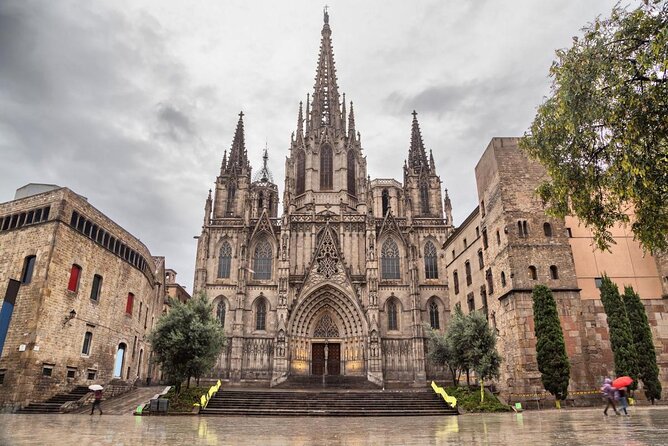
The Cathedral of Barcelona brings you into the Gothic center proper. The building is impressive from the outside, but the guide focuses on the story of the city’s patron saint and the violent death associated with her.
You have 10 minutes at the cathedral, and admission is not included. That detail matters. You can view the exterior as part of the walk, but you should not assume that the tour price covers entry inside. If you want a longer visit, check the cathedral’s admission arrangements separately and plan it for another time.
This stop also shows the limits of the tour. Ten minutes is enough for an explanation and a look at the façade, but not a thorough examination of the interior. Think of the walk as a guided introduction. It helps you decide which places deserve a return visit.
More guided location tours in Barcelona:
- Barcelona: Gothic Quarter Cinematic Photoshoot and Guide
★ 3.8 · 7 reviews - Exclusive Gaudi Segway Guided Tour Architectural Marvels
★ 5.0 · 2 reviews - Magical London: Harry Potter Guided Walking Tour
★ 4.7 · 22,044 reviews - Edinburgh: Harry Potter Magical Guided Walking Tour
★ 4.8 · 11,944 reviews
Casa de l’Ardiaca and Barcelona below street level
Just beside the cathedral, Casa de l’Ardiaca gives the tour a glimpse of Barcelona’s Roman past. Ruins of the old Roman wall and aqueducts, dating to the first century B.C., are associated with this small house.
The appeal is that the remains are woven into the later city. You do not need to travel to a separate archaeological site to hear about Roman Barcelona. The guide points out how different periods overlap in the same few steps.
Admission is free. Again, allow the guide to provide the context, then consider returning later if you want more time with the remains.
The Bishop’s Bridge and a famous Gothic Quarter legend
Pont del Bisbe is one of the Gothic Quarter’s most photographed details. Its neo-Gothic design links buildings above the lane and creates a dramatic frame for photographs.
The guide also explains the mysterious legend attached to the bridge. That mix of architecture and story is central to the tour’s style. You are not just told when something was built. You get the tale that has helped give the place its character.
The stop takes about 10 minutes and costs nothing to visit. Expect other people in the area, since this is a popular photograph spot. The guide’s explanation is the real reason to pause here, not simply the picture.
Plaça Sant Felip Neri and the painful side of Catalan history
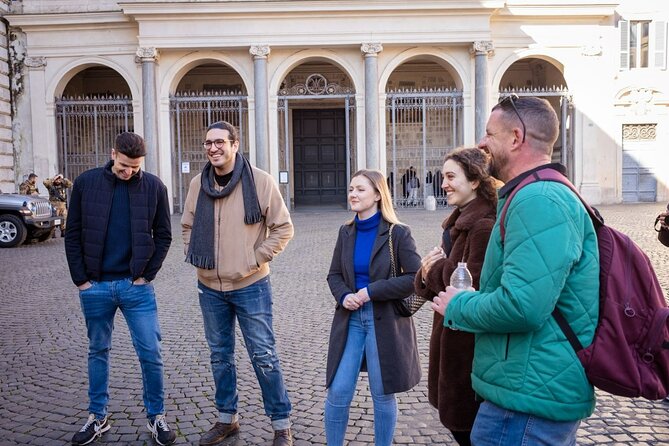
Plaça Sant Felip Neri is a quiet square with a much heavier story. Its walls still bear scars from a sombre period in Barcelona’s past, and the guide uses the site to explain the complexity of Catalan history.
This is likely to be one of the more serious moments of the walk. The square’s calm appearance can make its past easy to miss when you explore alone. A guide helps connect the marks on the walls with the events they represent.
The stop is free and lasts about 10 minutes. I would not treat it as a quick photo stop. Give yourself a moment to look closely and listen.
El Call, the former Jewish quarter
The route then reaches MUHBA El Call, the former Jewish district of Barcelona. Here, fact and legend meet. The guide places the narrow streets within the story of Jewish life in the city and the changes that followed.
This part is valuable because the Gothic Quarter is often presented only through churches, kings, and picturesque lanes. El Call adds another community and another layer to the city’s past.
The stop is free. The tour does not promise a full museum visit, so expect an outdoor explanation rather than an extended indoor museum experience.
Plaça de Sant Jaume and Catalan government
Plaça de Sant Jaume is the political center of the Gothic Quarter. The square contains both the seat of the Catalan government and Barcelona City Hall, making it a useful place to discuss Catalonia’s identity and public life.
The guide also connects the square with one of Catalonia’s most beloved saints. That combination of politics, religion, and civic ceremony helps explain why this open space matters beyond its architecture.
You have about 10 minutes here. The square can be busy, and the setting is broad compared with the surrounding lanes. Stay close to the guide while the group crosses or gathers.
Plaça del Rei and the darker royal past
Plaça del Rei is one of the strongest architectural settings on the route. Its royal buildings introduce Barcelona’s medieval court, but the guide also addresses the darker role the setting played during the Spanish Inquisition.
That balance is important. The square is visually grand, yet its history is not simply a parade of royal success. You get a reminder that power often brought fear and punishment as well as ceremony.
Admission to the square is free. The 10-minute stop gives you the main story and the setting. If you want to explore the buildings in detail, plan a separate visit.
Plaça de l’Àngel and a saintly name change
Plaça de l’Àngel was once known as Wheat Square. Its name changed through a story involving a procession for Santa Eulalia and a heavenly apparition.
This is a smaller, lighter story after the darker material at Plaça Sant Felip Neri and Plaça del Rei. It also shows how names preserve local memory. A square can carry a story long after the event itself has passed.
You have about 10 minutes here, with no admission charge. The stop is less about a single grand monument and more about how legends shape the everyday city.
Santa Maria del Mar and the walk into El Born
The final stop is the Basilica de Santa Maria del Mar, in the El Born neighborhood. The church is closely tied to Barcelona’s maritime past and offers a fitting end to a route that has moved through the old center toward the sea.
The basilica is beautiful from the outside, but entry is not included. You can use the tour’s final explanation to decide if you want to pay for a separate visit. The route ends at Plaça de Santa Maria, 1, so you are well placed to continue exploring El Born afterward.
Ending here gives the tour a clear shape. You begin with artists and modernist Barcelona, pass through Roman, Jewish, religious, royal, and political history, then finish with a church linked to the city’s maritime life.
What the guides add to the experience
The strongest part of this tour is the guide’s delivery. Mariah has been singled out for her enthusiasm, personal attention, and ability to keep a slower group together. Sara’s storytelling and humor have helped make difficult history easier to follow, while Rolene has been praised for clear communication and an approachable manner.
Tamara has been especially useful when the streets are crowded, adjusting the route and finding ways around busy spots. Petra, Jamie, Vanessa, Juan, and other guides have also been described as friendly, entertaining, and well informed.
You should not expect every guide to tell the tour in exactly the same way. That is part of the nature of a walking experience with several guides. The common thread is storytelling, local context, and a willingness to answer questions.
The tour has a 4.9 rating from 43 reviews, with 98 percent recommending it. Those numbers suggest very steady satisfaction, but they do not remove the practical limits: this is a group walk, a short visit at each stop, and an English-only experience.
Price, meeting point, and practical concerns
At $22.83 per person, the tour offers good value if you want a guided introduction to eleven central sights. You are paying for a route, interpretation, and the chance to connect places that can seem unrelated when seen alone.
The price does not include entry to Barcelona Cathedral or Santa Maria del Mar. If you want to go inside both, add those costs and extra time to your plan. The other listed stops are free.
The tour starts at Plaça del Vuit de Març in Ciutat Vella and ends at Santa Maria del Mar. Public transportation is nearby. Because the starting area includes twisting Gothic Quarter lanes, use the exact meeting-point details and give yourself extra time. One person missed the start after struggling to locate the meeting place without internet access, so downloading the map or arranging phone service is a wise precaution.
Free cancellation is available up to 24 hours before the start time. Cancellations or changes made within 24 hours are not refunded or accepted.
Who should book this Barcelona walk?
I would choose this tour for a first visit, a short stay, or a morning when you want the old city explained rather than simply photographed. It is also a good fit if you like local legends, religious stories, Catalan politics, and the way several centuries sit side by side.
You should consider another format if you want long interior visits, a private guide, or a relaxed pace with lots of time for photographs. The tour covers a lot in two hours, so you will stand and walk often.
Should you book it?
Book it if you want a low-cost orientation to Barcelona’s Gothic Quarter and prefer stories to silent sightseeing. The route has real variety, and the guide can turn confusing lanes into a readable map of the city.
Just arrive early, confirm the starting point, wear comfortable shoes, and remember that two major church entries cost extra. For many visitors, this is a smart first Barcelona activity, followed by a return to the cathedral, El Call, or Santa Maria del Mar with more time.
FAQ
How long does the Barcelona Marvels walking tour last?
The tour lasts approximately two hours.
What language is the tour offered in?
The tour is offered in English.
Where does the tour start?
It starts at Plaça del Vuit de Març, Ciutat Vella, 08002 Barcelona, Spain.
Where does the tour end?
It ends at Basílica de Santa Maria del Mar, Plaça de Santa Maria, 1, Ciutat Vella, 08003 Barcelona, Spain.
Is admission to Barcelona Cathedral included?
No. Admission to Barcelona Cathedral is not included in the tour price.
Is admission to Santa Maria del Mar included?
No. Admission to the Basilica de Santa Maria del Mar is not included.
How many people can join the tour?
The group can include a maximum of 20 people.
Is the tour close to public transportation?
Yes. The tour information states that it is near public transportation.
Can I cancel for a full refund?
Yes. You can cancel at least 24 hours before the experience start time for a full refund. Cancellations made less than 24 hours before the start time are not refunded.
Just added around Barcelona
- Paint & Wine Workshop in an Art Studio in Barcelona★ 5.0 · 25 reviews
- Shine in the Streets of Barcelona: cinematic & candid photos★ 5.0 · 3 reviews
- 20-min Barceloneta & The Beach Supercar City Tour★ 4.5 · 16 reviews
- Marvellous Montserrat Private Day Tour : Train & Cable-car tickets Included★ 4.5 · 2 reviews
- Game of Thrones: Medieval Girona Private Tour with Hotel pick-up★ 5.0 · 15 reviews
- Barcelona: Professional Photoshoot by the Beach★ 5.0 · 2 reviews
- Exclusive Gaudi Segway Guided Tour Architectural Marvels★ 5.0 · 2 reviews
- 6 hours private tour of Girona: GAME OF THRONES from Barcelona with pick up★ 5.0 · 5 reviews
Barcelona Film Location Tours, compared.

Barcelona in 2 Hours: Guided Walk Through History and Sights
Read our review →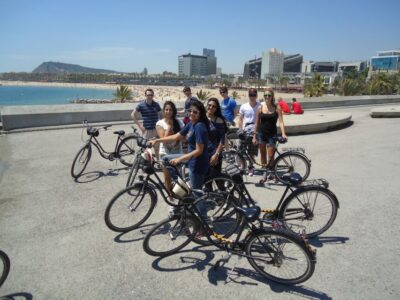
Barcelona Highlights Bike Tour: Cycle along the beach!
Read our review →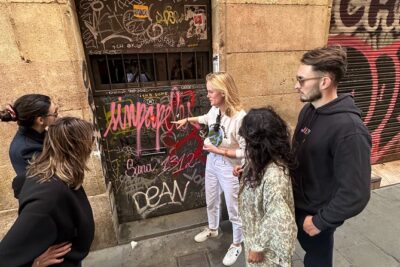
Barcelona Street Art Tour with Exclusive Artist Studios Visit
Read our review →
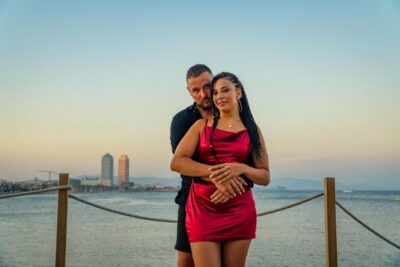
Barcelona Photo Experience: famous landmarks or the beach!
Read our review →Browse the lists this tour appears in