
REVIEW · NEW YORK CITY
Broadway Backstage: From Times Square to Studio
Broadway’s real story is not only on the marquee. It is in the stage doors, rehearsal rooms, alleyways, and workspaces where singers, dancers, stagehands, understudies, and creative teams turn an idea into a show. This two-hour walk finishes with a visit to a working studio in Hell’s Kitchen, where you may see a rehearsal or class in progress.
I like the small group limit of 12, which gives the guide room to answer questions instead of delivering a speech to a crowd. I also like the clear historical arc, from vaudeville and early Broadway through the Golden Age, the district’s rougher 1970s period, and its modern revival. The main drawback is that most of the theater stops are viewed from outside, and the studio visit requires three flights of stairs.
Key points to know before you book
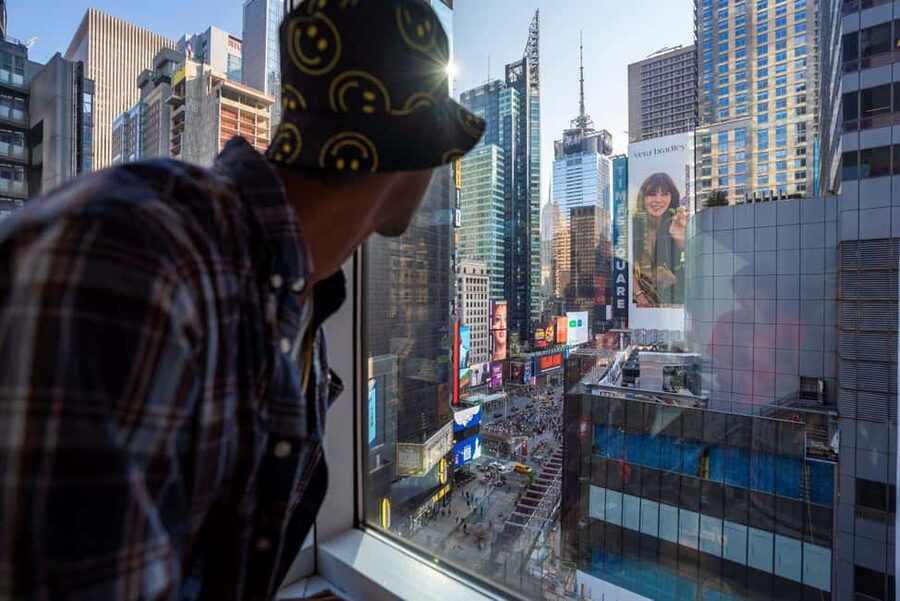
- The studio visit is the tour’s special feature: You may catch actors, dancers, or crews working in a Hell’s Kitchen rehearsal space.
- The walk covers major theaters: Expect the New Amsterdam, Richard Rodgers, Majestic, Shubert, and other Broadway landmarks.
- The history has a useful timeline: Your guide explains Broadway’s move from vaudeville to musicals, decline, and renewal.
- Small groups make a difference: The standard group has no more than 12 people, and private groups are also available.
- Plan for outdoor weather: The tour runs in rain or shine, except during unsafe conditions, so wear comfortable shoes and dress for the forecast.
Why the rehearsal studio changes the usual Broadway tour
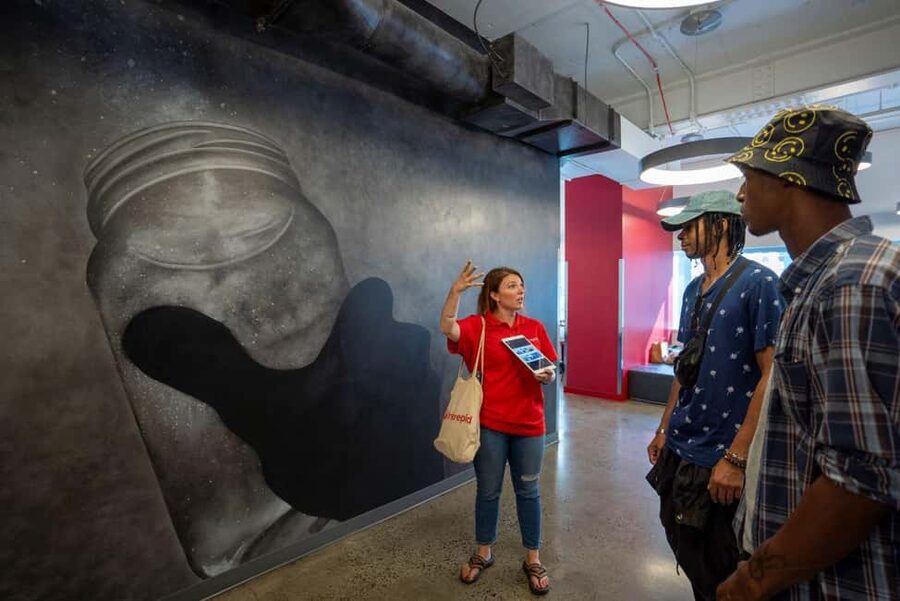
Many Broadway walks stop at a theater facade, point out a famous name, and move on. This one adds a working rehearsal studio, which gives the tour a more practical look at how shows are built.
The studio is in Hell’s Kitchen, and access is not guaranteed to a rehearsal in progress. You may hear live music or see a class, but the room’s schedule can change. That uncertainty is part of the deal, so you should not book this expecting a private performance or a full backstage tour.
Still, even an empty studio helps explain the work behind a production. Space may be used by singers, dancers, and Broadway companies training a new actor in music and choreography. That makes the stop useful for anyone curious about the daily jobs behind the curtain, not just the stars who receive billing.
The studio visit also gives the walking route a good ending. You begin among flashing signs and famous theaters, then finish in a place built for repetition, correction, and preparation. Broadway may look effortless at showtime, but this stop reminds you how much practice sits behind a polished performance.
Other filming locations people visit in New York City:
- Sex and the City Hotspots Bus Tour NYC
★ 4.5 · 1,284 reviews - NYC TV & Movie Locations Bus Tour – Friends, Seinfeld & More
★ 4.5 · 1,270 reviews - NYC: Sex and the City Hotspots Bus Tour (On Location Tours)
★ 4.6 · 892 reviews
Starting under the Winter Garden Theatre marquee
Meet outside the Winter Garden Theatre at 1634 Broadway, directly under its large marquee. Do not go inside the theater. The meeting point is on the sidewalk, and the canopy is well lit and easy to spot.
Arrive about 10 minutes early. Times Square can be confusing, especially if you are watching traffic, reading signs, and trying to find the right theater entrance. Search for Winter Garden Theatre if you use a navigation app.
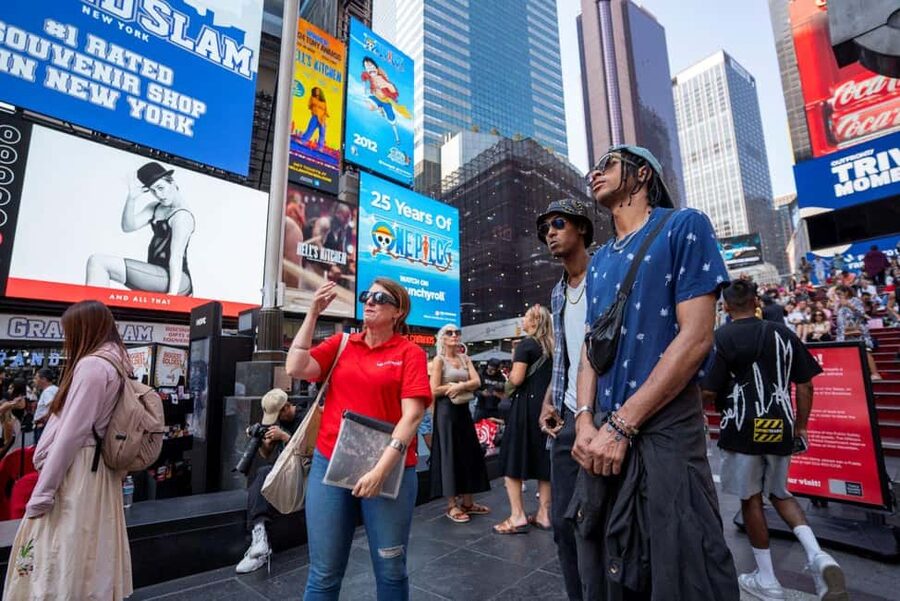
The Winter Garden is a fitting starting point because it puts you directly in Broadway’s main corridor. From here, your guide can explain how the area grew from Longacre Square into the center of American commercial theater. You get the setting first, then the story.
That opening matters. The district can feel like a wall of advertisements if you only pass through on your way to a show. A guide gives you a reason to look above the signs and notice the theater names, entrances, architectural details, and narrow spaces between the major avenues.
Times Square and Duffy Square, beyond the bright signs
Times Square is easy to photograph and hard to understand. The tour uses it as a starting point for explaining the area’s development rather than treating it as a quick photo stop.
You will hear about the district’s earlier identity as Longacre Square and its growth into a theater center. The guide connects Broadway to the older entertainment traditions that came before modern musicals, including vaudeville and related stage forms.
At Duffy Square, the pace may slow enough for the guide to point out how the public spaces, theaters, and commercial signs fit together. This is also where the contrast between the tourist image of Broadway and the working theater district becomes clear. The lights are part of the story, but they are not the whole story.
Expect some standing on sidewalks and short stretches of walking through crowded streets. Times Square is rarely quiet, and the tour does not remove you from that energy. If you dislike dense crowds, this part may feel tiring. The small group helps, but you will still be moving through one of Manhattan’s busiest public areas.
Broadway’s theater corridor and the shift from vaudeville to musicals
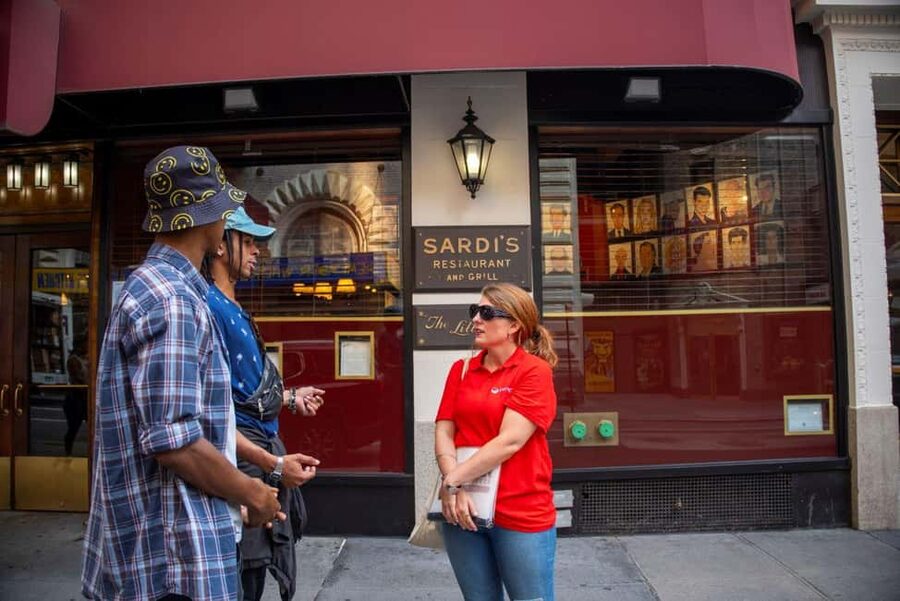
The strongest part of the tour is the way it links buildings to changes in American entertainment. Instead of treating every theater as an isolated landmark, the guide places them in a longer sequence.
You will hear how Broadway developed out of earlier popular entertainment, including vaudeville, then moved toward the large-scale musicals associated with its Golden Age. The story also includes the difficult period in the 1970s, when the Theater District lost some of its appeal, before later renewal brought major shows and renewed attention.
That timeline helps you understand why Broadway is more than a street name. It is an industry, a neighborhood, and a set of working traditions. The actors onstage are only one part of it. Stagehands, understudies, directors, choreographers, designers, musicians, and rehearsal staff all help keep the system moving.
Guides such as Mickey, A.J. Stevens, Jessie, Hannah, Micaela, Cullen, and others have been praised for bringing personal theater experience and strong storytelling to the walk. Guides change, so you should not assume you will receive a particular person, but the tour is designed around an English-speaking local guide who can respond to questions and adapt the discussion to the group.
That flexibility matters. One guide may spend more time on architecture, while another may focus on performers, production work, or Broadway’s social history. If you have a special interest, ask early. The group size makes a two-way conversation realistic.
Same place, a completely different screen:
- NYC: Central Park Celebrity Homes & Film Spots Pedicab Tour
★ 4.9 · 817 reviews - NYC: Harry Potter and the Cursed Child on Broadway
700 reviews - Central Park TV and Movie Sites Walking Tour
★ 4.5 · 499 reviews - NYC The Sopranos Iconic Filming Locations Bus Tour
★ 4.5 · 427 reviews
Richard Rodgers, the Majestic, and the Shubert
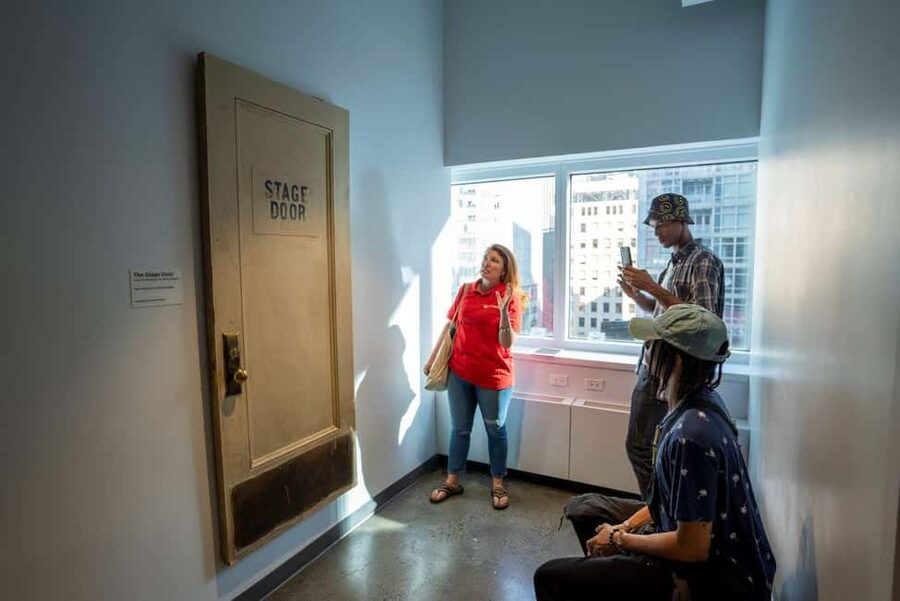
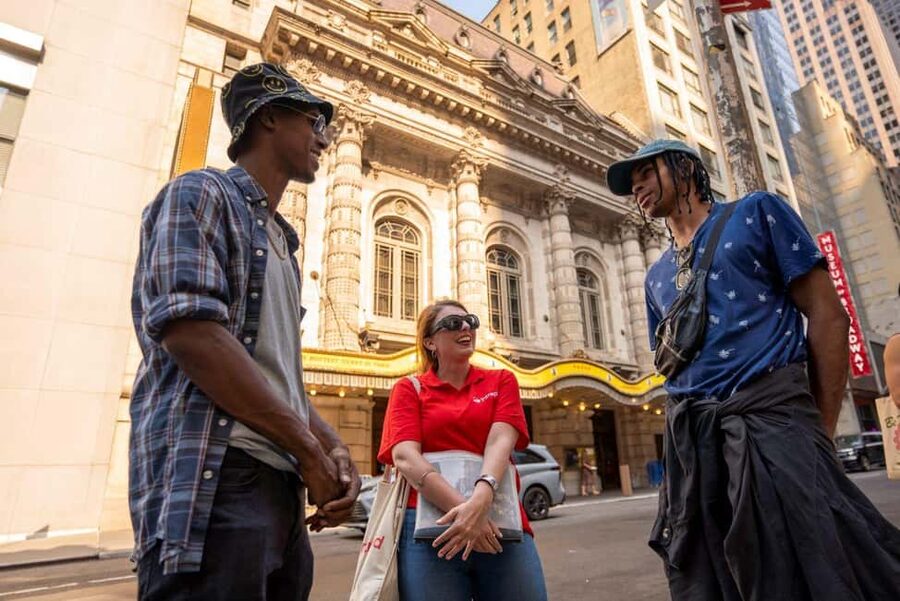
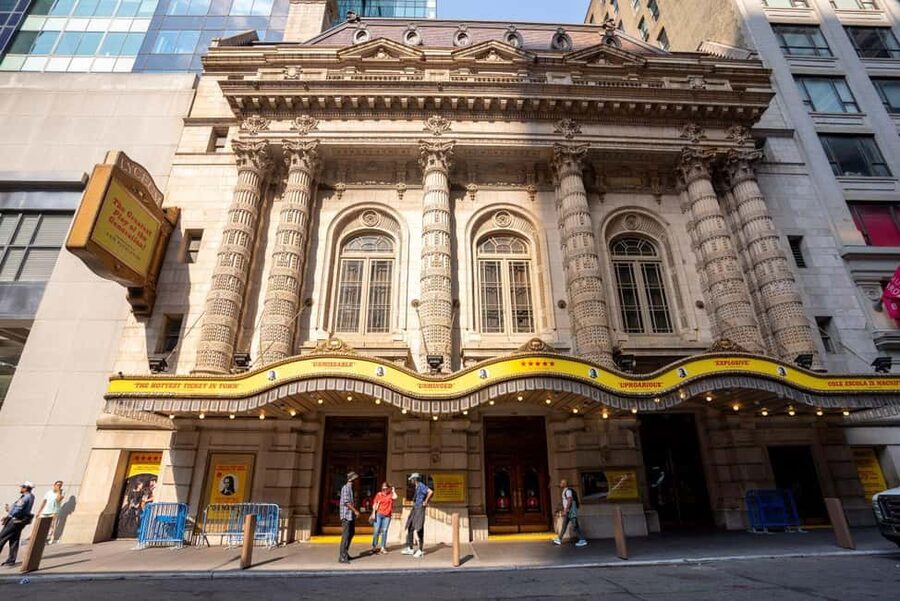
The route includes the Richard Rodgers Theatre, Majestic Theatre, and Shubert Theatre, along with other Broadway buildings. These stops are viewed as part of an outdoor walking tour, not as scheduled theater visits.
The Richard Rodgers is especially useful for discussing the continuing life of Broadway productions and the buildings that have hosted major works. The Majestic and Shubert add more examples of how many theaters are concentrated within a relatively small area.
You will not simply count theater names. The guide explains what happened around them, how the district changed, and how the people working inside these buildings differ from the public image of Broadway. The details may include performers waiting in the wings, understudies preparing for sudden calls, and crews handling the technical work that audiences rarely see.
One practical point: the route is not a seat in a theater. If you want to see a full interior, stage, or production, you will need a separate Broadway performance or theater tour. This experience is better for context and access to a rehearsal setting than for lavish theater interiors.
The walk may cover a large part of the Theater District. One particularly enthusiastic account described seeing around 20 of the more than 40 Broadway theaters during the outing. The exact number will depend on the guide and route, but you should expect more than a few famous facades.
Hell’s Kitchen and the working studio visit
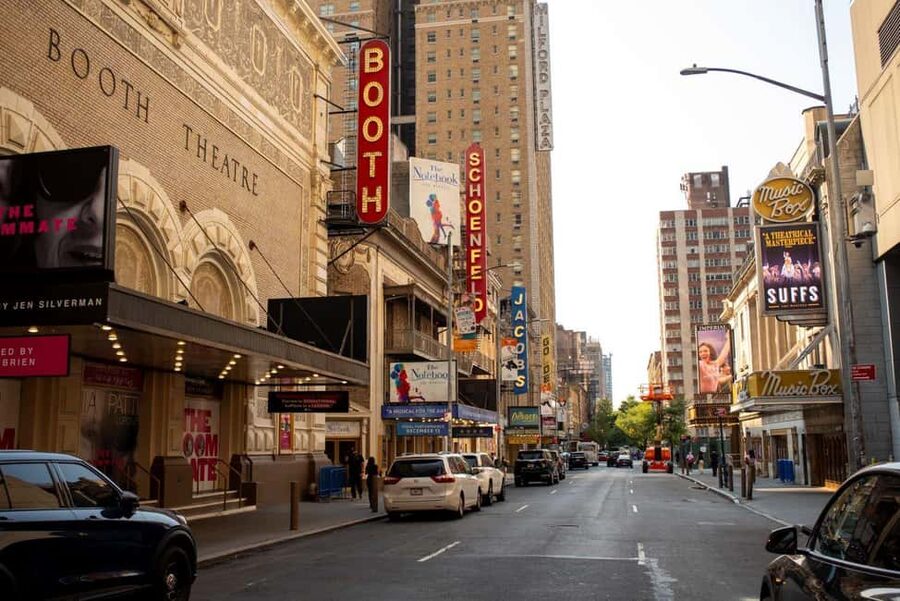
The move from central Broadway into Hell’s Kitchen changes the mood. You leave the biggest signs and marquee crowds behind and head toward a practical workspace used by people preparing shows.
This is the point where the tour earns its title. You may get a peek inside a rehearsal studio and hear a live rehearsal or class. Space can be rented by singers and dancers, and Broadway productions may use it when a new actor needs to learn music and choreography.
Do not expect guaranteed celebrity sightings or a scheduled performance. One guide may know that a production is working nearby, and you might happen upon a familiar face, but that is luck rather than a promise. The valuable part is seeing the kind of room where performers repeat movement, work through music, and prepare for the demands of a live show.
The studio is not wheelchair accessible because the visit involves three flights of stairs. This is the most important physical limitation on the tour. If stairs are difficult for you, ask the operator about the current arrangement before booking, but the stated experience is not suitable for people with mobility impairments.
What two hours feels like on foot
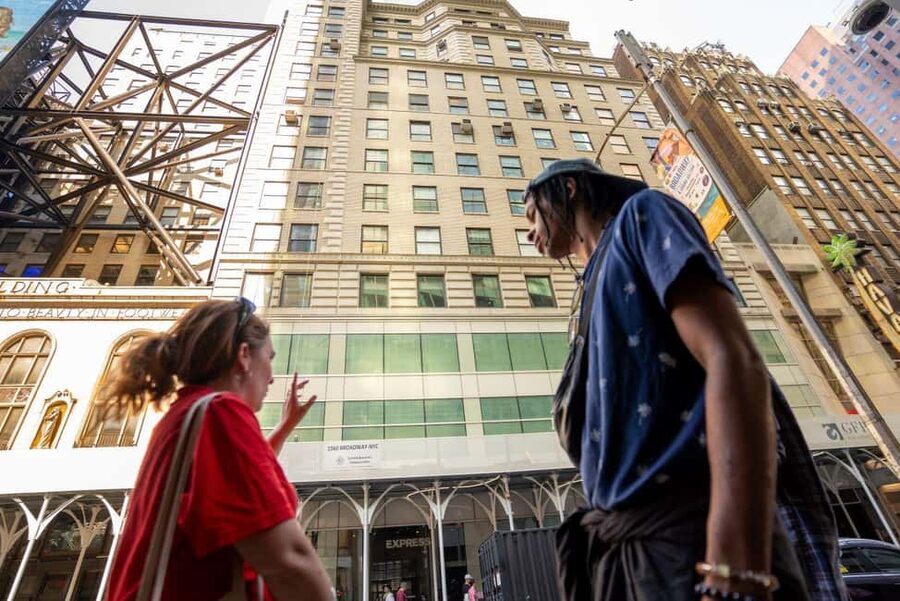
Two hours is enough time to build a clear picture of Broadway without turning the outing into an all-day commitment. You will spend most of the time walking and standing outdoors, with the studio visit providing a change of setting near the end.
Wear comfortable shoes. This is simple advice, but it matters on Manhattan sidewalks, especially if you have a Broadway show later and do not want tired feet before the curtain rises.
The tour runs in rain or shine and only cancels for unsafe weather. In winter, wind can make Times Square feel much colder than the temperature suggests. A January outing took place in temperatures around 28 degrees with strong wind gusts, yet the small group was able to find shelter and continue the route. For bad-weather days, bring warm layers and protection from rain rather than assuming the tour will be postponed.
Children under six may join free of charge, and the tour is described as child-friendly. The subject will suit older children and teenagers best if they already like theater, performance, or New York history. Younger children may enjoy the lights and buildings but could find the historical explanation long.
Is $49 a good value?
At $49 per person, the tour sits in a reasonable range for a guided Manhattan experience lasting two hours. The value comes from the guide’s interpretation and the studio access, not from admission to a theater.
If you already know Broadway well, recognize the major theaters, and mainly want to take photographs, you may find the price less compelling. You can see many facades on your own. The tour makes more sense if you want someone to explain what you are seeing and connect it to the people and work behind each building.
The small group also improves the value. A limit of 12 allows for questions, and groups can be smaller if others do not show. One particularly small outing gave the guide time to ask each person what interested them and shape the conversation around those interests.
A private group is available if you want more control over the pace and discussion. That option may suit a family, theater club, or group with a strong interest in Broadway production.
The booking terms are flexible: you can cancel up to 24 hours before the start for a full refund, and reserve now while paying later. Food and drinks are not included, but the two-hour length makes it easy to fit around a meal or evening performance.
Who will get the most from this Broadway walk
I would choose this tour before seeing a Broadway show, not after. The background gives you more to watch for when the curtain rises, from the work of the ensemble to the people operating the show out of sight.
It is a strong fit for:
- First-time New York visitors who want a clear introduction to the Theater District
- Broadway fans who want more than theater photographs
- Families with children interested in singing, dancing, or acting
- Visitors curious about stagehands, understudies, choreographers, and rehearsal work
- Solo visitors who prefer a small group and the chance to ask questions
- Anyone who wants a short activity that combines history with a working studio
It is less suitable if you need step-free access, want to enter several historic theaters, or expect a guaranteed live rehearsal. The tour is also not ideal for someone who dislikes outdoor walking in poor weather.
The best guides make a major difference. A.J. Stevens has been described as especially enthusiastic about Broadway, while Mickey, Jessie, Hannah, Micaela, Cullen, and others have been praised for humor, passion, organization, and personal attention. Since guide assignments can change, book for the format and subject rather than a specific name.
Should you book Broadway Backstage?
Book it if you want Broadway explained by a person who can connect the famous names to the workers and rehearsal spaces behind them. The walk is strongest when the guide turns an ordinary theater facade into part of a larger story, then takes you into a functioning studio where performers may be practicing.
Do not book it expecting a full backstage theater tour or a guaranteed celebrity encounter. Most of the route is outdoors, and the studio visit has both a stair limitation and an uncertain rehearsal schedule.
For $49, the experience offers a useful mix of local storytelling, theater history, and access you would not get from simply walking through Times Square. If you are seeing a Broadway show later, schedule this earlier in your visit. You will look at the stage, the ensemble, and the work around the performance with sharper eyes.
FAQ
Where does the tour meet?
Meet outside the Winter Garden Theatre at 1634 Broadway, directly under the theater marquee. Do not enter the theater.
How early should I arrive?
Arrive 10 minutes before the scheduled start time.
How long does the tour last?
The walking tour lasts two hours.
What language is the tour conducted in?
The tour is conducted in English by a live English-speaking guide.
How large is the group?
The tour is limited to 12 guests. Private groups are also available.
Which places are included on the route?
The route begins at the Winter Garden Theatre and includes Times Square, Duffy Square, Broadway, the Richard Rodgers Theatre, the Majestic Theatre, the Shubert Theatre, Hell’s Kitchen, and a return to the Winter Garden Theatre.
Will I enter a Broadway theater?
The listed theater stops are part of an outdoor walking tour. The special indoor visit is a peek inside a rehearsal studio in Hell’s Kitchen.
Can I see a live rehearsal?
You may hear or see a live rehearsal or class in session, but this is not guaranteed.
Is the studio visit wheelchair accessible?
No. The rehearsal studio visit involves walking up three flights of stairs and is not wheelchair accessible.
What should I bring?
Bring comfortable shoes. The tour runs in rain or shine, except when weather becomes unsafe, so dress for the forecast.
Just added around New York City
- New York City Superheroes Tour Marvel and DC Comics Origins★ 4.5 · 27 reviews
- Tour of Dr. Laser’s Holographic Studios and Laser Lab★ 4.5 · 3 reviews
- The Story of Grand Central Terminal: An Art And Engineering Marvel★ 5.0 · 10 reviews
- Stranger Things: The First Shadow on Broadway Ticket★ 4.5 · 3 reviews
- SUCCESSION Walking Tour of Uptown Manhattan Filming Locations★ 5.0 · 2 reviews
- Self Guided “Central Park Movie Tour” Solo Walking Tour in New York City★ 4.5 · 2 reviews
- Private Sex and The City Tour in New York with Movie Scenes from famous TV show★ 4.0 · 23 reviews
- Private Marvelous Mrs. Maisel Sites Guided Tour★ 5.0 · 4 reviews
New York City Film Location Tours, compared.

NYC TV & Movie Locations Bus Tour – Friends, Seinfeld & More
Read our review →
NYC: Sex and the City Hotspots Bus Tour (On Location Tours)
Read our review →
NYC: Central Park Celebrity Homes & Film Spots Pedicab Tour
Read our review →
NYC The Sopranos Iconic Filming Locations Bus Tour
Read our review →NYC The Sopranos Iconic Filming Locations Bus Tour
Read our review →Browse the lists this tour appears in