
REVIEW · JAPAN
Kyoto : Samurai Movie Star Experience at Myokaku-ji Temple
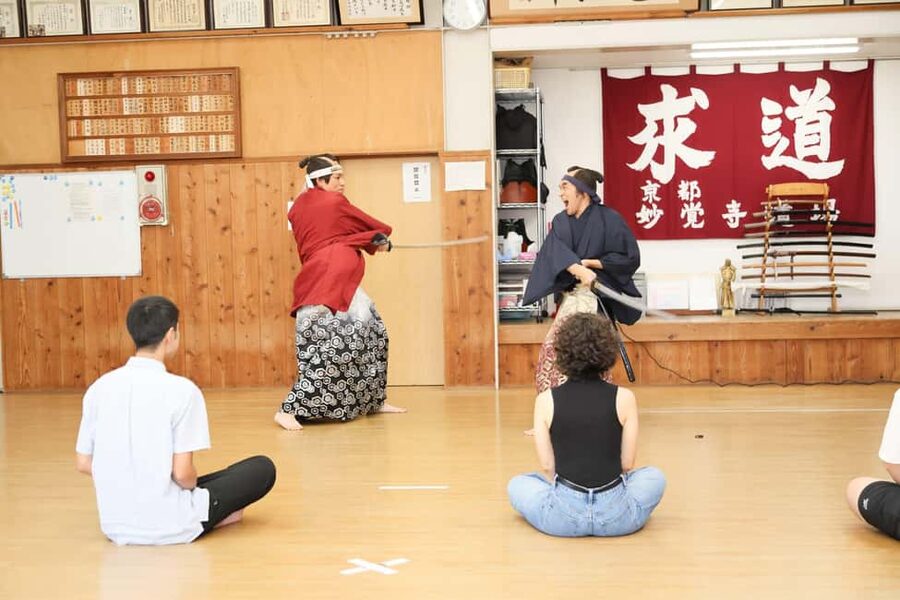
At Myokaku-ji Temple, you do more than pose with a sword. You learn a short set of chambara techniques, put on a kimono, and film yourself performing them in a temple setting linked with Sengoku warlords such as Nobunaga Oda. It is part acting lesson, part costume experience, and part souvenir shoot.
I like the mix of hands-on instruction and finished video. I also like that your teachers, including professional period-drama actors Keisuke Irie and Kazuya Naito, bring stage experience to the lesson. The main consideration is physical: sword movements require comfortable clothing and some activity, so this is not a good fit for pregnant women, people with back problems, or anyone with certain medical conditions.
Key points to know
- Learn theatrical sword moves: Practice techniques such as makkogiri and kesagiri under instructor direction.
- Film at a real Kyoto temple: Myokaku-ji provides a setting with a strong connection to Japan’s samurai past.
- Wear a traditional kimono: Kimono rental is included, adding costume and ceremony to the session.
- Watch trained performers first: Professional chambara actors demonstrate the style before you try it.
- Take home your scene: Photos are available for download, and your performance is recorded with your camera.
- Plan for movement: Bring comfortable clothes, and remember that transportation and meals are not included.
A sword lesson inside Myokaku-ji Temple
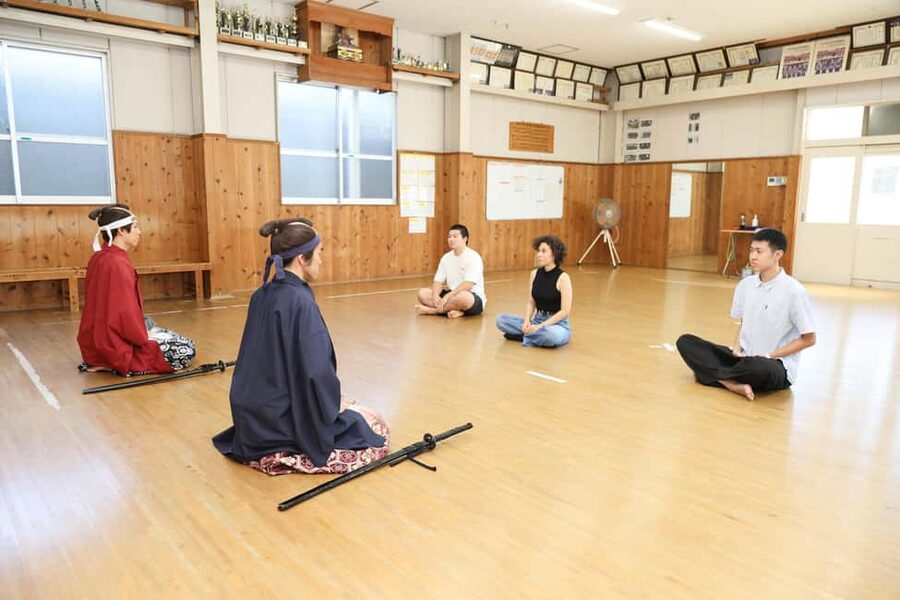
The experience begins at the Myokaku-ji Dojo, just to the left after you enter the temple’s main gate. That detail matters. You do not meet at a hotel lobby or a modern entertainment venue. Your first steps take you into a temple setting, then toward a dojo where the activity unfolds.
Myokaku-ji is presented as the only place in Japan where you can take part in this kind of chambara experience. The temple also has a Sengoku-era connection, with warlords such as Nobunaga Oda said to have stayed there around 400 years ago. You are not taking a full history tour, so do not book this expecting a long lecture about the temple. The historical setting works best as a backdrop for the swordplay and filming.
Once the session begins, the instructors show you how to hold and wield the sword for performance. The lesson includes named movements such as makkogiri, a straight downward cut, and kesagiri, a diagonal cutting motion. The point is not to become a working swordsman in one visit. You are learning a compact sequence that looks clear on camera and gives you a feel for the rhythm and posture of Japanese sword performance.
That difference is worth understanding. This is a chambara activity, meaning theatrical sword fighting, rather than a martial arts qualification. The lesson gives you enough structure to perform a scene, but you should approach it as a practical acting workshop with sword technique.
A few more filming locations around Japan worth a look
- Tokyo Studio Ghibli Museum and Ghibli Film Appreciation Tour
★ 4.5 · 421 reviews - Akihabara Anime & Game Adventure Walking Tour (Group or Private)
★ 5.0 · 404 reviews - Warner Bros. Studio Tour Tokyo – The Making of Harry Potter
★ 4.8 · 181 reviews
The kimono adds more than a costume photo
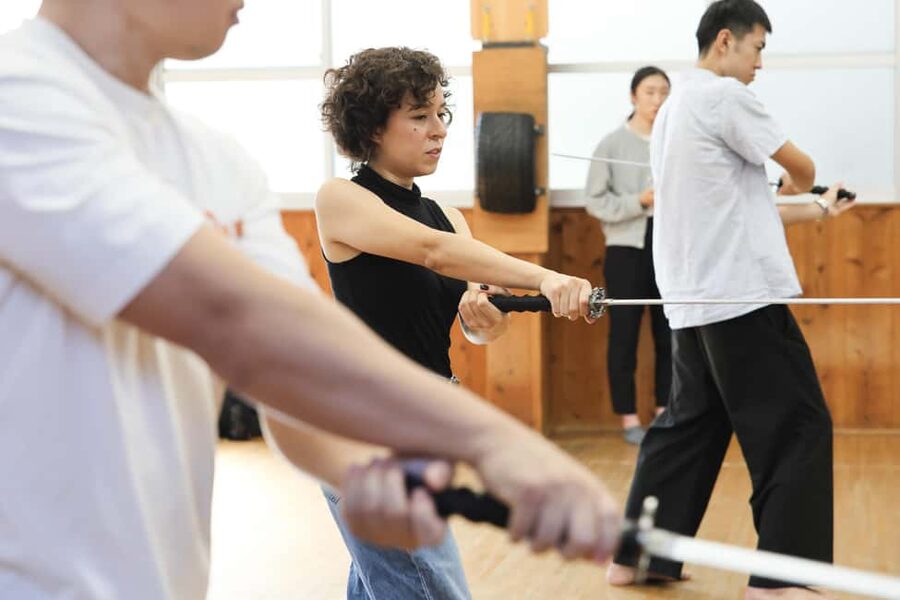
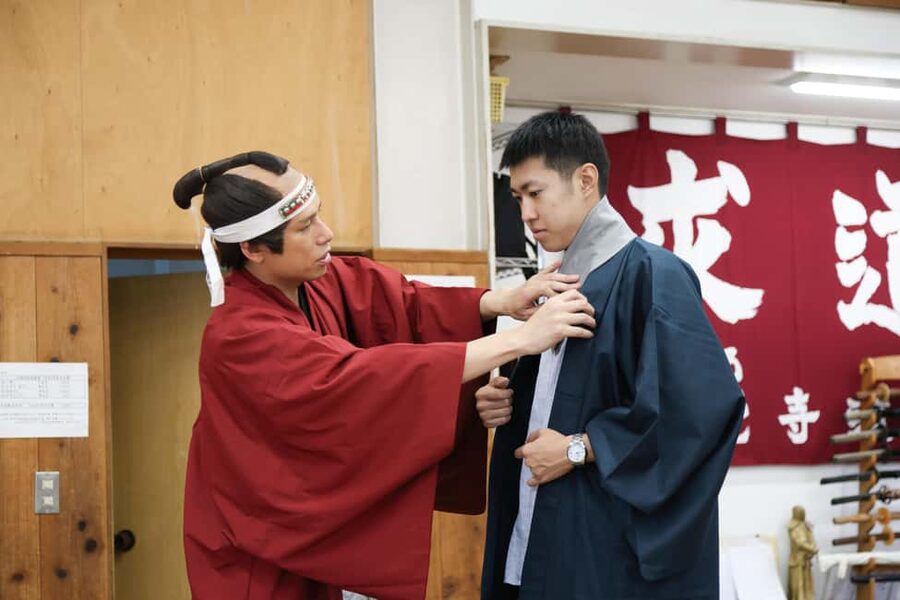
A rental kimono is included in the price. You also learn about the traditional art of kimono dressing, so changing clothes is part of the cultural experience rather than a quick costume handoff.
The kimono helps the final photographs and video feel like a scene instead of a standard holiday snapshot. It also changes the way you move. You become more aware of posture, arm position, and the broad gestures needed for a samurai performance. That makes the clothing useful to the lesson, not just decorative.
Wear comfortable clothes underneath. The activity advises clothing suitable for physical activity, and that is sensible even though the session is not described as strenuous. You will be standing, moving your arms, and repeating sword actions. Loose, practical clothes will make the changing process easier and keep your attention on the instruction.
The kimono fee is included, which improves the value of the $133 price. Similar photo experiences often charge separately for costumes, so here you are paying for a connected experience: dressing, learning, watching, and filming. The price still may feel high if you only want a quick photograph, but it makes more sense if you want a guided activity and downloadable memories.
Watch the professionals before you take your turn
Before your own performance, you watch a chambara demonstration by professional samurai actors. The instructors have worked in Japanese period dramas, and Keisuke Irie and Kazuya Naito are specifically identified as teachers with film and television experience.
This demonstration gives you a visual target. Sword acting can look simple until you try to coordinate your stance, hand position, timing, and facial expression. Seeing the movement first helps you understand that the performance depends on control and presentation, not just swinging a sword around.
The professional performance also adds a useful touch of theater. You get to see the style at full strength, then attempt a shorter version yourself. Expect your own movement to look less polished. That is part of the fun, and the instructors are there to guide the process rather than judge your acting.
Several details from the experience make it suitable for people who want a lighthearted activity. The instructors are described as funny, patient, and encouraging, and the teaching style appears designed to keep beginners involved. If you are shy about performing, the structured moves and costume give you something specific to focus on.
Your swordplay becomes a short movie scene
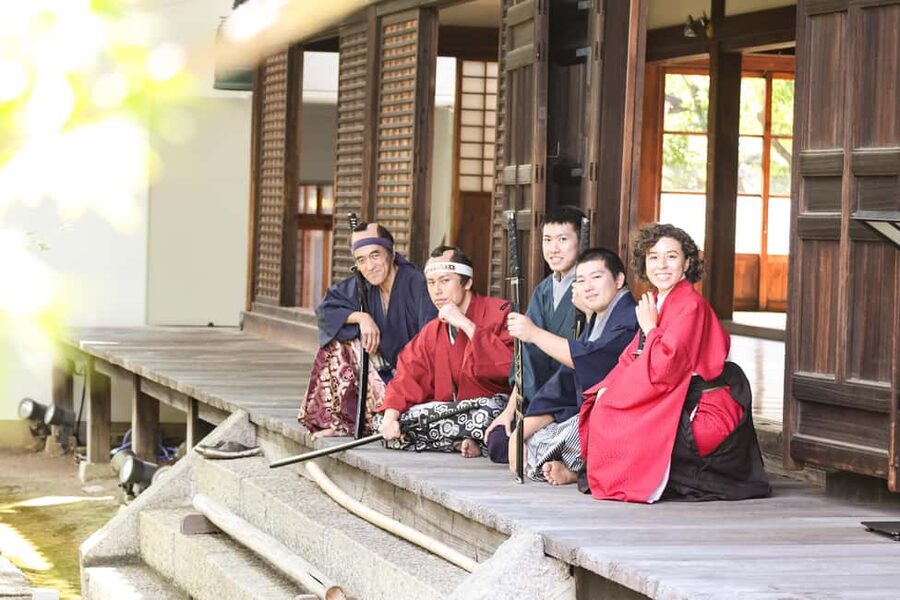
After learning the techniques, you perform them for the camera. This is the central payoff: you are not only practicing in the dojo, you are using the movements in an action sequence filmed at the temple.
You can bring your own camera, and the activity includes photography and video recording with the customer’s camera. That means you should arrive with a device ready to use and enough storage and battery power for the session. The staff also provide a photo download service, so you have a way to keep the finished images.
The wording around the filming is important. Your performance is recorded with your camera, and you can shoot the scene yourself or have the staff help with recording. Ask at the start how they want your device set up. Since the exact filming process is not specified, it is wise to clarify who will hold the camera, which clips will be recorded, and how the download works.
You are welcome to take photos and videos during the experience. That makes the activity particularly appealing for families, couples, and friends who want to document the whole process, not just receive a final clip. If you are sending children or teenagers while you do something else, confirm the age and health requirements first. Children under five cannot take part.
The final footage is likely to be more memorable than a standard posed portrait because it captures movement and personality. You might look a little dramatic, a little awkward, or both. That is exactly why the video works as a holiday souvenir.
Same place, a completely different screen:
- Tokyo: Fast & Furious Tokyo Drift III Experience
★ 4.8 · 2,432 reviews - Tokyo: Go Daikoku PA Fast & Furious 3 Sports Car Meetup
★ 4.6 · 356 reviews - Ghibli Park 1-Day Bus Tour from Nagoya
★ 4.5 · 277 reviews - Fast & Furious Tokyo Drift 3 (Kaila Yu-SP) : Experience Ride JDM
★ 4.5 · 189 reviews
What the lesson feels like for beginners
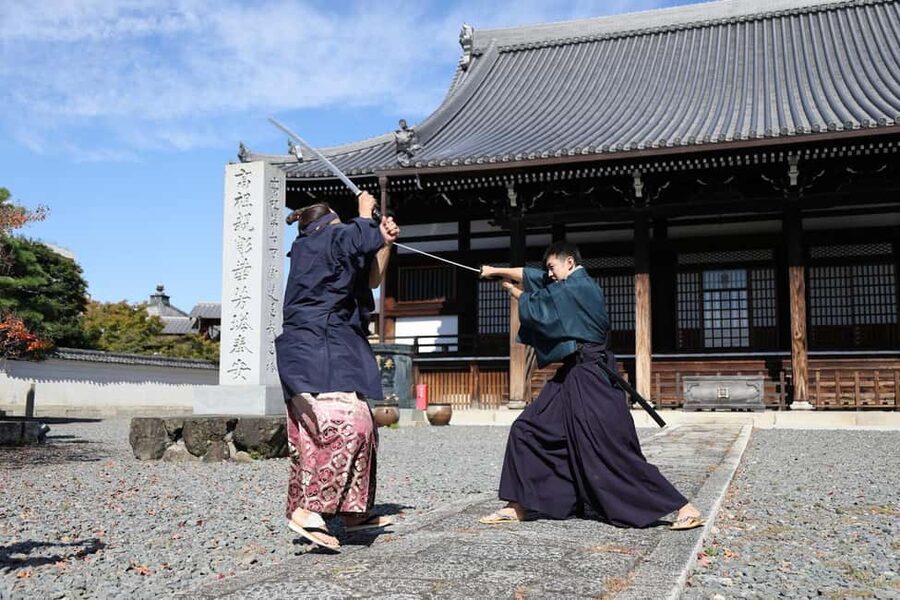
You do not need to arrive with sword experience. The session teaches the basic handling and named moves, then builds toward the filmed performance. The supplied details do not promise a specific skill level or a formal martial arts certificate, so book it for the guided experience rather than technical training.
The instructors’ background in period drama is useful here. They can show how a movement reads on camera, where to pause, and how to make a simple action look deliberate. You are learning presentation as much as technique.
The activity can also work well for a parent and teenager. Latha took part with her teenage son and singled out the encouragement from Keisuke Irie and Kazuya Naito. Another parent sent two boys to the course while doing something else, and the children enjoyed it. These examples point to a session that can suit older children and teens, provided they are comfortable with physical activity and meet the age requirements.
It is less suitable if you want a quiet temple visit. You will be dressing up, handling a sword, practicing movements, and filming an action scene. The attraction is participation, not peaceful sightseeing.
Why the temple setting matters
Kyoto has no shortage of costume photos and cultural workshops. The temple location gives this one a stronger sense of place. You gather at a named dojo within Myokaku-ji, and the sword scene takes place against a site connected with Sengoku warlords.
That setting does not turn the activity into a full historical tour. Still, it gives the performance some context. You are not simply wearing a costume in a studio. You are staging a samurai-style sequence at a temple with a long connection to the period that inspires chambara films.
The experience also lets you bring your own camera, which gives you more control over the memories you create. If photography matters to you, tell your companions what shots you want before the swordplay starts. A wide shot can show the temple setting, while a closer shot can capture the kimono and sword movements.
Photography is included in the activity, but the details do not specify how many images you receive or the technical quality of the final video. Keep your expectations realistic. You are booking an enjoyable filmed performance, not a professionally edited movie production.
The $133 price: good value for the right visitor
At $133 per person, this is not a budget activity. The value comes from the number of elements packed into the session: temple access for the experience, kimono rental, sword instruction, a professional demonstration, your own filming session, photo download service, and specified indemnity insurance.
For a person who only wants to hold a sword for a minute, the price will be hard to justify. You are paying for the teaching, costume, performance, and production of a personal scene. The more of those elements you care about, the better the value becomes.
The price also covers an experience that is difficult to recreate independently. You could rent a kimono or visit a temple on your own, but you would not automatically get instruction in makkogiri and kesagiri, a professional chambara performance, and a filmed sequence with actors guiding you.
Transportation to and from Myokaku-ji is not included, and meals are not included. Plan your route separately and leave enough time to find the temple gate and dojo. The meeting point is clear, but the experience does not include a pickup service.
You can reserve now and pay later, which helps if your Kyoto plans are still changing. Cancellation is available up to 24 hours in advance for a full refund. Those policies add flexibility, though you should still check the exact booking terms when you reserve.
Who should book this Kyoto experience
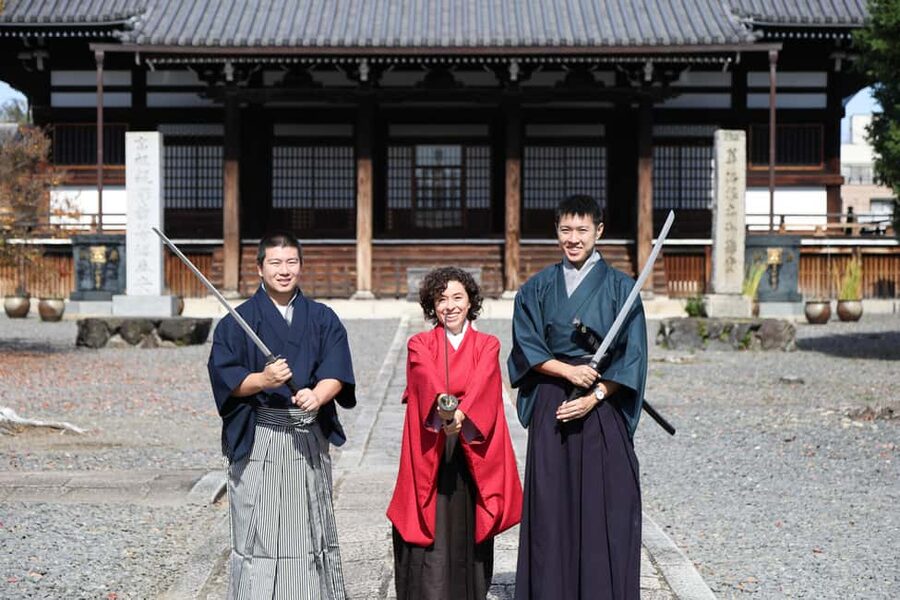
I would point this activity toward several types of visitors:
- Fans of samurai films: You get to watch professionals, learn stage combat moves, and film your own scene.
- Families with older children: Teenagers can take part, and the costume and video give them a clear goal.
- Couples and friends: The activity creates shared photos and a comic performance to remember.
- First-time cultural activity seekers: You do not need to arrange your own costume or know sword techniques in advance.
- Photographers and social media creators: You can use your camera during the session and take home downloadable images.
I would be more cautious if you have limited mobility, a back problem, a pre-existing medical condition, or a pregnancy. The activity specifically says it is not suitable for pregnant women, people with back problems, people with pre-existing medical conditions, children under five, or people over 95. Smoking, alcohol, and drugs are not allowed.
The language support is Japanese and English. That is useful for an international audience, especially because timing and movement are easier to follow when the teacher can explain the sequence clearly.
Practical tips before you arrive
Bring a camera, as requested. Charge it fully, clear storage space, and decide who in your group will record the action. If you are using a phone, a simple case that is easy to hold may be more useful than a bulky accessory.
Wear comfortable clothes suitable for movement. You will change into a kimono, but practical clothing underneath still matters. Avoid arriving in an outfit that is difficult to remove or uncomfortable for standing and arm movement.
Arrive at the Myokaku-ji main gate and look for the dojo to the left after entering. The activity ends back at the same meeting point, so you do not need to arrange a second pickup location.
If you are traveling with children, confirm that everyone meets the age and health rules. The activity can be entertaining for teenagers, but the supplied information does not list a minimum age above five or explain how young children are matched with instructors. For younger participants, ask before booking.
Should you book the Myokaku-ji samurai experience?
Book it if you want an active Kyoto memory rather than another observation-only visit. The strongest reasons are the professional period-drama instructors, the included kimono, and the chance to create a personal chambara video at a temple with samurai-era connections.
Skip it if you want a formal martial arts course, a detailed temple history tour, or a low-cost photo stop. The swordplay is theatrical and beginner-friendly, and the finished footage is a souvenir rather than a film production.
For most people who enjoy dressing up and trying something a little silly, the $133 price is reasonable because it combines several paid elements in one session. Bring comfortable clothes, bring a charged camera, and expect to laugh at your own sword technique. That is part of what makes the scene worth keeping.
FAQ
Where does the samurai experience begin?
Meet at the Myokaku-ji Dojo, located to the left after entering the main gate of Myokaku-ji Temple in Kyoto.
Where does the activity end?
The activity ends back at the meeting point at the Myokaku-ji Dojo.
Is kimono rental included?
Yes. Rental kimono and the kimono dressing experience are included.
What sword techniques will I learn?
Instruction includes how to hold and wield the sword, along with techniques such as makkogiri and kesagiri.
Will I watch a professional samurai performance?
Yes. The instructors are professional actors in period dramas and demonstrate chambara swordplay before your own performance.
Can I take photos and videos?
Yes. You are welcome to take photos and videos during the experience. Photography and video recording with your camera are included, and a photo download service is provided.
What should I bring?
Bring a camera and wear comfortable clothes suitable for physical activity.
Who should not take part?
The experience is not suitable for children under five, pregnant women, people with back problems, people with pre-existing medical conditions, or people over 95. Smoking, alcohol, and drugs are not allowed.
Just added around Japan
- Anime shopping tour in Osaka: figures, Manga, Maid Cafe, Knife★ 5.0 · 4 reviews
- Osaka Cinematic Film experience Video + Photo (ONLY ONE BOOKING)★ 5.0 · 3 reviews
- Kichijoji Food & Anime Tour in Tokyo with Lunch★ 5.0 · 7 reviews
- Whimsical Walk to a Hidden Anime World: Tokyo Half-Day Tour★ 4.5 · 18 reviews
- Toei Kyoto Studio Park Admission Ticket : Japan’s Edo Period★ 4.0 · 2 reviews
- Kamakura Tour with Pro Photographer: Anime Train & Fuji Sunset★ 5.0 · 4 reviews
- Hiroshima:Private lacquer workshop experience tour(gift included)★ 5.0 · 13 reviews
- Explore the Nature that Inspired Ghibli Movies by Kayak (Half Day)★ 5.0 · 10 reviews
Japan Film Location Tours, compared.

Tokyo Studio Ghibli Museum and Ghibli Film Appreciation Tour
Read our review →
Akihabara Anime & Game Adventure Walking Tour (Group or Private)
Read our review →
Go Daikoku PA Fast & Furious 3 Sports Car Meetup
Read our review →

Fast & Furious Tokyo Drift 3 (Kaila Yu-SP) : Experience Ride JDM
Read our review →
Warner Bros. Studio Tour Tokyo – The Making of Harry Potter
Read our review →
Browse the lists this tour appears in