
REVIEW · CHICAGO
Marvels & Feats: An Engineer’s Tour of Chicago Architecture
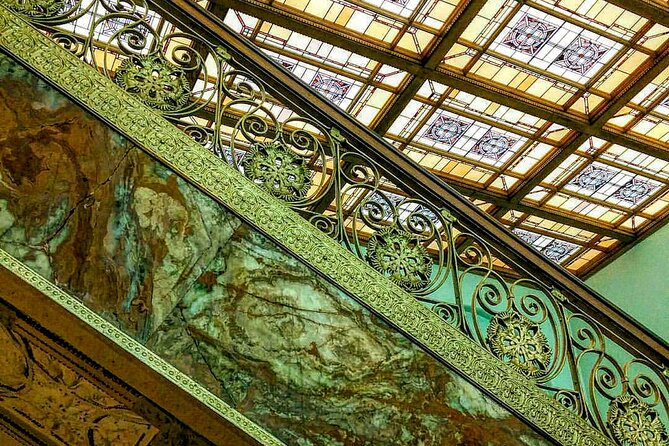
Chicago’s skyscraper story is really an engineering story, and this tour puts that idea front and center. You’ll learn how builders handled Chicago’s soft ground, how tall buildings resist wind, and why one so-called haunted building earned its reputation by settling unevenly on a floating foundation. The tour also connects Chicago’s early experiments with newer construction along the river.
I like the engineer-led approach, which promises real substance without turning the walk into a lecture for specialists. I also like the chance to go inside a few buildings, since Chicago’s architecture makes more sense when you see the structural spaces rather than only their façades. The main consideration is pace: two hours of city walking and technical discussion calls for comfortable shoes, moderate fitness, and weather-ready clothing.
Key points to know before you book
- Chicago’s skyscraper beginnings: Learn about a building linked to the father of the skyscraper, an engineer who was a classmate of Gustav Eiffel.
- Engineering made understandable: The guide explains gravity, wind, foundations, and structural change in plain language without stripping away the interesting details.
- Interior access included: You’ll enter a few notable buildings instead of viewing the city only from the sidewalk.
- Two distinct settings: About 75 minutes takes place in the Loop, followed by 45 minutes along the Chicago Riverwalk.
- Small enough to follow: The group can include up to 20 people, a useful limit for questions and close attention.
- A strong finish: The tour ends at Riverpoint Park with a broad view of the Chicago River.
Why Chicago is the right city for an engineering tour
Chicago gives you a compact lesson in how modern cities learned to build upward. After the Great Chicago Fire, the city became a testing ground for new construction methods, stronger frames, elevators, and ways to place heavy buildings on difficult ground.
You do not need a technical background to enjoy this walk. The point is not to memorize formulas. It is to notice why a building looks the way it does, what forces act on it, and which problems engineers had to solve before taller structures became ordinary.
That practical focus makes this different from a standard architecture walk. A typical tour might ask you to admire a façade, ornament, or famous architect. Here, you’ll be asked to think about what is holding the building up, how it reacts to wind, and why the structure works on this particular patch of Chicago soil.
The tour is also a good fit if you enjoy seeing familiar places from a fresh angle. Even if you have already walked around the Loop, the engineering questions can change what you notice. A broad wall, a narrow tower, a heavy stone exterior, or a building that appears to float all become clues.
Other filming locations people visit in Chicago:
- BYOB Spray Paint and Sip at Studio W.I.P.
★ 5.0 · 401 reviews - Chicago Fire TV Show Set Tour
★ 5.0 · 68 reviews - Chicago Fire TV Show Set Tour
★ 4.9 · 43 reviews
Meeting at 430 South Michigan Avenue
The tour starts at 2:30 pm at 430 S Michigan Ave, near the southern end of the Loop. This is a practical starting point for a downtown walk, and the area is close to public transportation.
Plan to arrive with enough time to find the meeting point and settle in. Hotel pickup and drop-off are not included, so you’ll make your own way there and back. The tour finishes at 150 N Riverside Plaza, at Riverpoint Park, rather than returning to the starting point.
That one-way route is useful if you are planning the rest of your day around the river. It also means you should think ahead about where you want to go after the tour. The finish gives you a sweeping river view, but it is not the same location as the start.
The tour lasts about two hours. That is long enough to cover a clear theme without taking up an entire afternoon, though the combination of walking, standing, and listening may feel demanding if you have mobility concerns or prefer a slower pace.
The Loop: where Chicago learned to build upward
The first 75 minutes take place in downtown Chicago, in the area known as the Loop. This is the heart of the tour and the place where the city’s early skyscraper story becomes easiest to understand.
Your guide will connect more than 150 years of engineering development. That broad time span matters because Chicago’s tall buildings did not appear fully formed. They grew out of a series of practical fixes: better structural systems, improved foundations, new responses to wind, and changing ideas about how buildings should carry weight.
One especially appealing detail is the connection to the father of the skyscraper. You’ll see a building associated with this early figure, who was an engineer and a classmate of Gustav Eiffel. That detail places Chicago’s building story within a wider age of ambitious engineering, when designers were testing the limits of iron, steel, height, and public confidence.
The value here is not just the famous name. You’ll get a chance to understand why this person mattered and how an engineer’s way of thinking shaped the city. Chicago’s early tall buildings were not simply taller versions of older masonry blocks. They required a different approach to support, weight, and height.
Floating foundations and a building with a haunted reputation
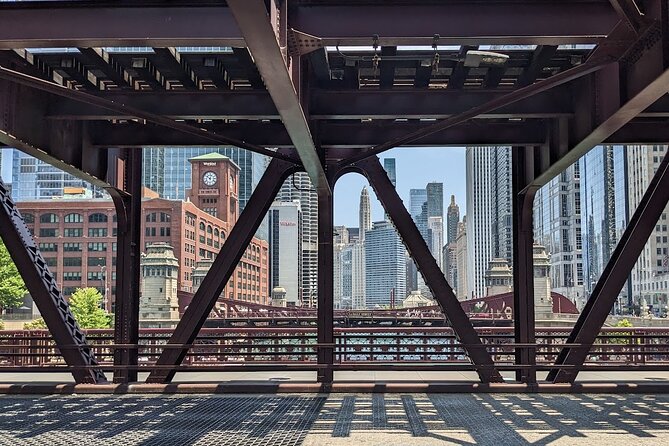
The tour also tackles one of Chicago’s more colorful building stories: a structure known for a haunted reputation. The explanation offered here is grounded in engineering rather than ghosts. The building settled unevenly on its floating foundation, creating the conditions for a story that gained a supernatural reputation.
This is exactly the sort of detail that makes technical history memorable. A floating foundation is not a platform hovering above the soil. It is a way of spreading a building’s weight across a broad area, an important response to Chicago’s challenging ground conditions.
The building’s uneven settling shows the limits of any solution. Even a clever foundation can behave differently from one part of the structure to another. That can produce sloping floors, cracks, odd sensations, or a general feeling that something is not quite right.
You’ll likely appreciate the way this story links a local legend with a physical cause. It does not drain the fun from the tale. Instead, it gives you a stronger explanation for why a building might inspire strange stories in the first place.
Same place, a completely different screen:
- Chicago Gangsters and Movies Tour
★ 5.0 · 38 reviews - Ferris Bueller Movie Tour at the Art Institute of Chicago
★ 5.0 · 26 reviews - Downtown Chicago TV and Movie Sites Guided Walking Tour
★ 4.5 · 23 reviews - Downtown Chicago TV & Movie Filming Locations Walking Tour
★ 4.8 · 21 reviews
Looking up at gravity and wind
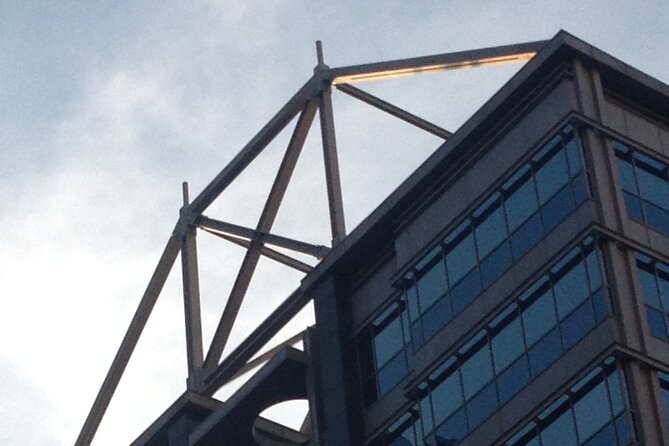
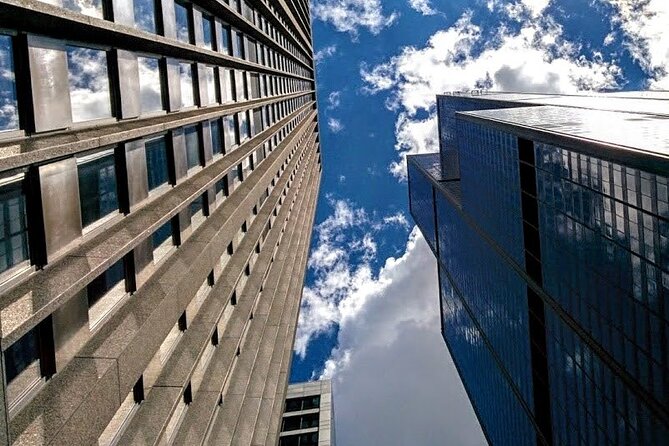
Tall buildings have to deal with two simple but relentless forces: gravity pulls everything down, while wind pushes buildings sideways. The tour explains how Chicago’s structures respond to both.
Gravity sounds basic, but its effects multiply as a building rises. Every floor adds weight, and that weight must travel through the structure into the ground. You’ll learn to think about how columns, frames, floors, and foundations share that burden.
Wind creates a different problem. A tall building does not have to remain perfectly rigid, and some controlled movement can be part of a sound design. The challenge is to keep the movement within safe limits and prevent the building from becoming uncomfortable for the people inside.
This subject is a strong reason to choose an engineer-led tour. You can hear the difference between a building that merely looks tall and one that has been shaped by forces you cannot see. The guide’s job is to make those ideas graspable without making them childish, and that is where the experience earns its price.
You might not leave able to calculate wind loads or foundation pressure. You should leave better able to look at a tower and ask useful questions: How is its weight carried? What happens when the wind hits it? What does the ground below require?
Going inside Chicago’s buildings
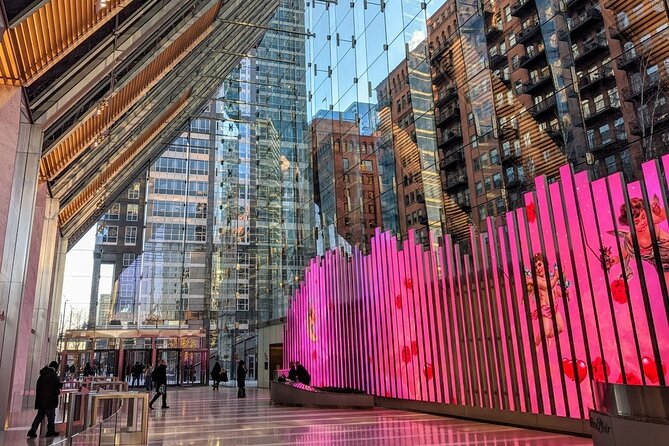
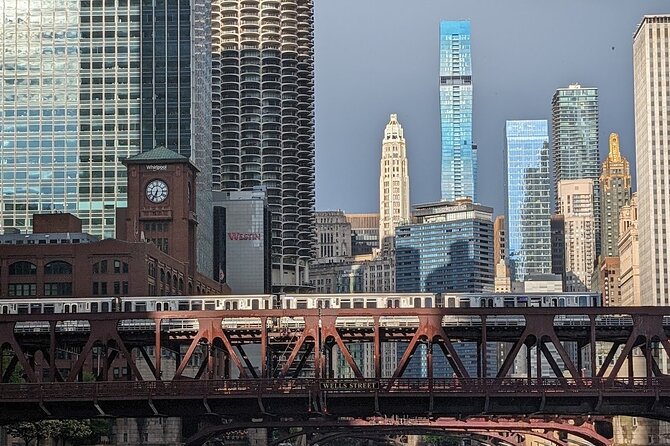
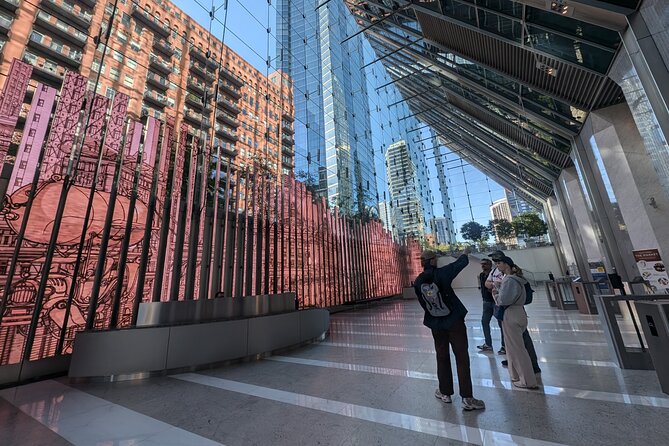
The tour includes interior visits to a few buildings with notable structural design. This is one of its most useful features because the inside of a building can reveal choices that disappear from the street.
From outside, you see height, materials, windows, and decoration. Inside, you may notice the relationship between open space and support, the scale of the structure, or the way a building’s design guides people through it. The available information does not specify which interiors you will enter, so treat the stops as subject to the day’s access and conditions.
That uncertainty is worth keeping in mind. Interior access adds real value, but it also means the experience is not just a fixed set of exterior photo stops. The guide may need to adjust the order or explain a building from outside if access changes.
For someone who has already taken a broad Chicago architecture tour, these interior visits may be the feature that makes this route feel fresh. You are not only hearing how buildings work. You are getting a better sense of their scale and construction from within.
The Chicago Riverwalk: 45 minutes of newer engineering
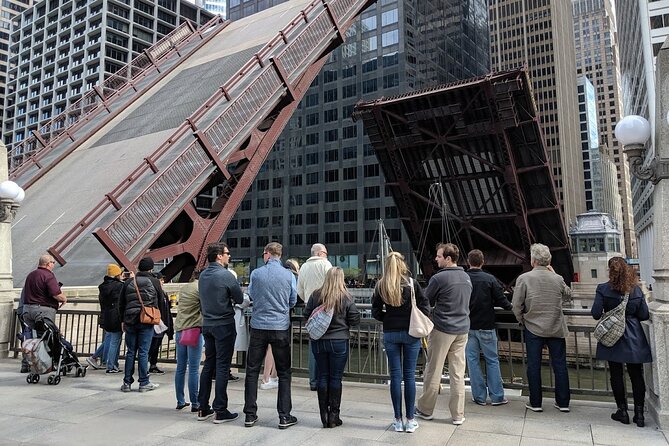
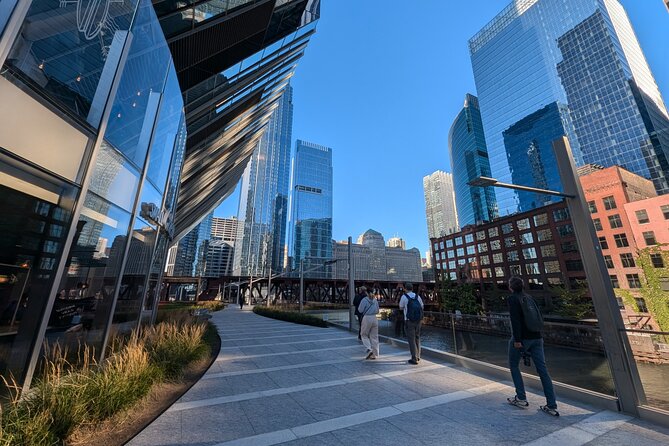
The final 45 minutes move toward the Chicago Riverwalk, where the setting shifts from the early Loop to more recent engineering work. This part of the tour gives you open views and a chance to consider how the riverfront has changed.
The river is an ideal place to end an engineering walk. It offers long sightlines across and along the water, so you can compare buildings by height, width, materials, and shape. From this angle, the city becomes a collection of structural responses rather than a row of unrelated landmarks.
You’ll explore newer feats of engineering while enjoying views along the river. The tour ends at Riverpoint Park, 150 N Riverside Plaza, with a broad view of the Chicago River. That ending feels well chosen: after examining foundations and structural forces at street level, you finish with a wider view of the city’s built environment.
The river section also gives the tour a change of rhythm. The Loop portion is more concentrated and building-focused. Along the river, you have more room to look outward and connect individual structures to the larger city.
What the $35 price gets you
At $35 per person, this is priced as a focused specialty walk rather than a full-day sightseeing tour. You are paying for about two hours with a local guide, a clear engineering theme, interior visits, and a route that connects early skyscraper design with newer riverfront construction.
I see good value here if you are genuinely curious about how buildings work. A general architecture tour may cover more styles or famous names, but this experience gives you a narrower subject in greater detail. The price is easier to justify if you like science, design, construction, city planning, or unusual local stories.
The value is less obvious if you want a fast list of landmark names and photo opportunities. The guide will spend time explaining forces, foundations, and structural choices. That means fewer quick stops and more time with each idea.
The group limit of 20 helps. It is not a private tour, but it is small enough that you should be able to hear the guide and follow the discussion. If you want to ask questions, the capped size is more useful than an open-ended large group.
Guide style and the importance of Hillary’s explanations
Guide Hillary is associated with an approach that makes early Chicago architecture easier to understand. Her explanations connect the city’s old buildings with the engineering problems behind them, including foundation settlement and the challenge of building tall on soft ground.
That matters because technical tours can go wrong in two ways. They can become a pile of jargon, or they can simplify so much that the subject loses its meaning. This tour aims for the middle ground: clear enough for a newcomer, but still substantial for someone who already knows the basics.
I would ask questions as you go, especially if you are curious about a particular building or structural idea. The tour’s format is best used as a conversation, not as background noise while you rush from one stop to the next.
The guide’s skill will shape the experience. Engineering is not visible in the same way as a grand façade, so the explanations need to turn hidden systems into something you can picture. Hillary’s role is especially important during the indoor stops and the discussion of the floating foundation.
Weather, walking, and practical comfort
The tour operates in all weather conditions, so dress for Chicago rather than for an ideal forecast. Bring clothing that suits the day, since much of the experience takes place outdoors and the Riverwalk section may feel more exposed than the Loop streets.
Wear comfortable walking shoes. The stated physical requirement is moderate fitness, which suggests that you should be comfortable walking and standing for the better part of two hours. The route is not presented as a strenuous hike, but it is not a seated lecture.
Service animals are allowed, and the route is near public transportation. No hotel transfer is provided. These details make the tour fairly easy to fit into a downtown day, provided you plan the one-way finish at Riverpoint Park.
You receive a mobile ticket, and confirmation is sent within 48 hours of booking, subject to availability. For flexibility, free cancellation is available if you cancel at least 24 hours before the 2:30 pm start. Changes or cancellations inside that window are not accepted for a refund.
Who will get the most from this tour
I would choose this tour if you want to understand Chicago rather than simply photograph it. It suits adults, students, architecture fans, engineers, builders, and curious visitors who enjoy learning how ordinary-looking systems solve difficult problems.
It is also a good choice for repeat visitors. You do not need a first visit to Chicago to benefit, and you may get more from it if you already recognize the Loop and want a new way to read its buildings.
Families with older children or teenagers may find the subjects engaging, especially the haunted-building story and the discussion of wind. The tour is not described as child-focused, though, so younger children who need constant activity may lose interest during the technical explanations.
I would think twice if you want a relaxed sightseeing stroll with little instruction, or if you have trouble walking and standing for two hours. The route includes building interiors and river views, but the main attraction is the guide’s explanation.
Should you book Marvels & Feats?
Book it if the words foundation, wind, gravity, and skyscraper make you curious rather than sleepy. For $35, you get a compact, specialized look at Chicago with a guide who makes difficult ideas approachable, plus interior access and a riverfront finish.
Skip it if your priority is a broad survey of Chicago architecture, a bus tour, or a route built mostly around famous façades. This is a focused engineering walk, and its best moments come when you slow down and consider what a building is doing, not just how it looks.
The strongest reason to book is the combination of technical detail and real city context. You will hear why Chicago became a laboratory for tall buildings, see how old problems shaped modern design, and finish with the river spread out before you. That is a useful way to spend two hours in the Loop.
FAQ
How long does the Chicago architecture engineering tour last?
The tour lasts approximately two hours. About 1 hour and 15 minutes takes place in the Loop, followed by about 45 minutes along the Chicago Riverwalk.
Where does the tour start?
The tour starts at 430 S Michigan Ave, Chicago, Illinois 60605, at 2:30 pm.
Where does the tour end?
The tour ends at Riverpoint Park, 150 N Riverside Plaza, Chicago, Illinois 60606. The ending provides a broad view of the Chicago River.
What is included in the price?
A local guide is included. Hotel pickup and drop-off are not included.
How large is the tour group?
The tour has a maximum of 20 people.
Does the tour operate in bad weather?
Yes. The tour operates in all weather conditions, so you should dress appropriately.
Just added around Chicago
- Chicago P.D. TV Show Set Tour★ 5.0 · 16 reviews
- Ferris Bueller Movie Tour at the Art Institute of Chicago★ 5.0 · 26 reviews
- Harry Potter Shop Chicago: Magical Brew Bundle★ 5.0 · 4 reviews
- Private Downtown Chicago TV and Movie Sites Guided Walking Tour★ 4.5 · 3 reviews
- Downtown Chicago TV and Movie Sites Guided Walking Tour★ 4.5 · 23 reviews
- Harry Potter Shop Chicago: Confectionary Collection★ 4.5 · 3 reviews
- Chicago’s Midway, Movies, and the 1893 World’s Fair Walking Tour★ 5.0 · 5 reviews
- Chicago: Mobsters and Movies Walking Tour★ 4.9 · 7 reviews
Chicago Film Location Tours, compared.

Ferris Bueller Movie Tour at the Art Institute of Chicago
Read our review →
Downtown Chicago TV and Movie Sites Guided Walking Tour
Read our review →
Downtown Chicago TV & Movie Filming Locations Walking Tour
Read our review →
Browse the lists this tour appears in