
REVIEW · CHICAGO
Chicago’s Midway, Movies, and the 1893 World’s Fair Walking Tour
Chicago’s Midway Plaisance was once the entertainment arm of the 1893 World’s Fair, and this small walking tour shows how that fair helped shape modern movie culture. You’ll meet sculptor and early film enthusiast Lorado Taft, see the massive Fountain of Time, and watch demonstrations of old moving-picture devices.
I like the tiny group size, capped at four, and the way guide Kelli uses film clips, photos, and visual aids instead of relying on talk alone. I also like the unusual route: this is not a standard downtown highlights walk. The main drawback is the short length. At about 90 minutes, it offers a sharp introduction rather than a full tour of the University of Chicago area.
Key points to know before you book
- Lorado Taft’s studio begins the story: See where the sculptor worked and learn about his interest in early moving pictures.
- The Midway connects fairground fun to film: This was the entertainment zone of the 1893 World’s Fair, including an early commercial movie theater.
- The Fountain of Time is the grand finale: The 126-foot-long sculpture has its own film connections and gives the walk a memorable ending.
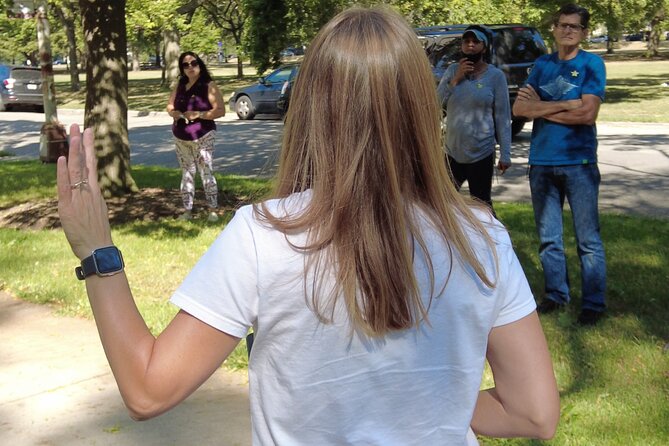
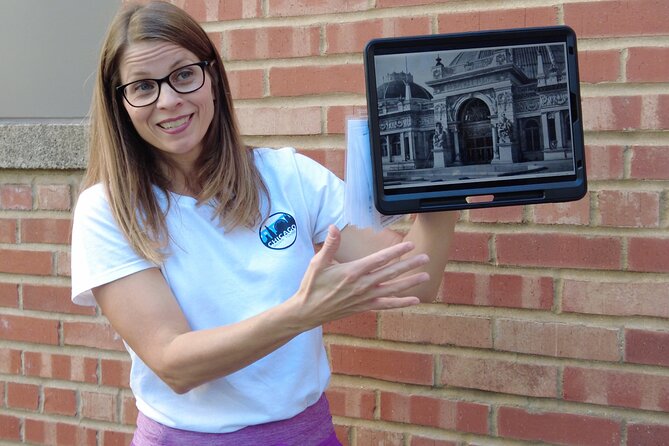
- Kelli keeps the presentation visual: Film clips, photographs, and demonstrations of 19th-century devices help make the subject easier to follow.
- The group is limited to four people: That allows for a more personal pace and easier questions.
- The tour is weather dependent: Good shoes and a forecast check matter because this is an outdoor walking experience.
Why Chicago’s Midway makes such a good film-history route
Chicago’s Midway Plaisance is easy to overlook. It is a long green corridor south of the main downtown sights, yet it carries an outsized piece of Chicago’s cultural story. The 1893 World’s Columbian Exposition helped present new technology, grand architecture, popular amusements, and fresh ideas about entertainment to a mass audience.
This tour focuses on the fair’s playful side. Instead of spending the whole time on famous buildings and formal exhibits, you follow the trail of spectacle. The Midway was where people went for amusement, and the experience links that appetite for novelty to the early development of moving pictures.
That connection gives the walk a clear theme. You are not simply hearing separate facts about sculpture, the World’s Fair, and movies. You are seeing how public entertainment changed from live attractions and mechanical devices toward cinema.
I find that approach useful because it gives the area a purpose. The Midway becomes more than a grassy strip between streets. It becomes a place where art, technology, popular culture, and Chicago’s ambition met.
More location walks in Chicago:
- Downtown Chicago TV and Movie Sites Guided Walking Tour
★ 4.5 · 23 reviews - Downtown Chicago TV & Movie Filming Locations Walking Tour
★ 4.8 · 21 reviews - Chicago: Mobsters and Movies Walking Tour
★ 4.9 · 7 reviews
Starting at Lorado Taft’s Midway Studios
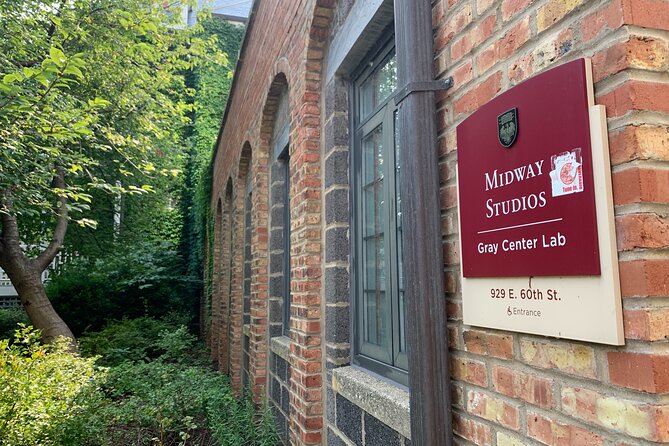
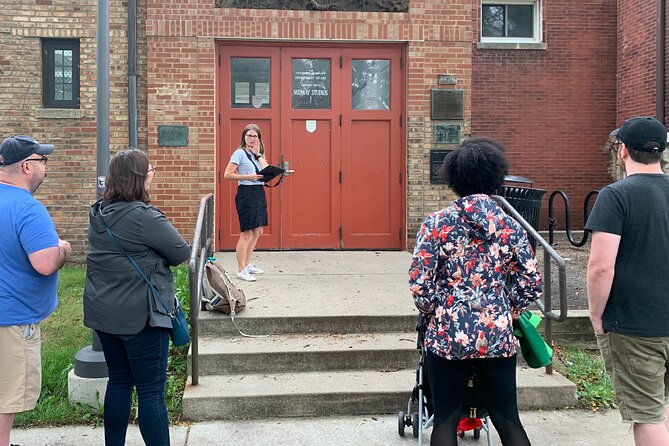
The tour begins at Midway Studios and Taft House, at 6016 South Ingleside Avenue. This is the most personal stop on the route because it introduces Lorado Taft as more than a name attached to a sculpture.
Taft was a sculptor, teacher, and writer. He was also an early adopter of moving pictures, which makes him a natural starting point for a tour about art and film. You’ll hear how his creative work connected with new technology, then see the setting associated with his studio life.
The stop lasts about 30 minutes, so it takes up a substantial part of the walk. That is useful if you enjoy people-centered history. Instead of rushing past a building for a quick photograph, you get time to understand why Taft matters and how his work fits the larger story.
A particularly unusual detail is the presence of Recording Angel. The sculpture provides a visual link to the world of film, while the presentation also includes footage of Hollywood’s first female action star in motion. That combination of sculpture and screen history is one of the tour’s more unexpected turns.
You should expect the guide to do more than point out the building. Kelli uses photographs and clips to make the people and ideas easier to picture. The included demonstration of 19th-century moving-picture devices also belongs to this part of the experience or the broader route, giving you a hands-on sense of how early motion images worked.
The free admission at this stop is worth noting. Your tour price covers the guide’s interpretation and the prepared visual material, rather than a costly entrance ticket. That keeps the focus on the story and makes the experience feel like a specialized neighborhood walk.
The Midway Plaisance and the fair’s entertainment zone
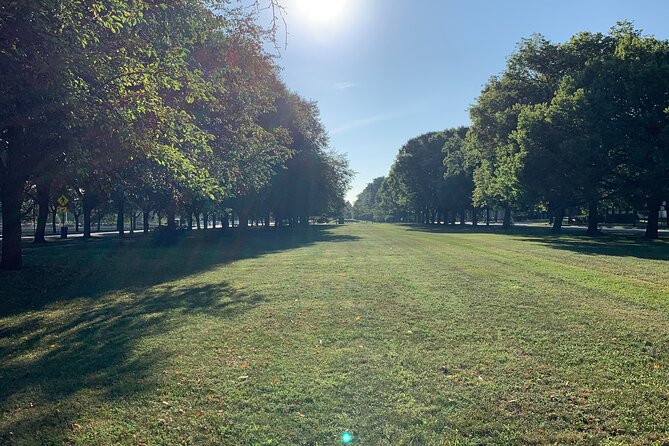
From the studio, the route moves to the Midway Plaisance. The walk is short enough to keep the story moving, but the setting opens up. Here, the guide explains the Midway’s role in the 1893 World’s Columbian Exposition.
The fair’s main displays often receive the attention, but the amusements arm tells a different story. It shows how organizers understood that a major public event needed entertainment as well as exhibits. People wanted to be surprised, amused, and shown something new.
The tour places the first commercial movie theater into that setting. That fact helps explain why Chicago matters in early cinema. Movies did not develop in a vacuum. They grew from public fascination with machines, staged spectacles, visual tricks, and large-scale amusements.
At this stop, the green space is part of the lesson. You can look at the Midway as an outdoor public area while imagining its earlier role as a fairground attraction zone. The contrast between the present-day setting and its past use is part of the fun.
The stop lasts about 15 minutes. That is enough time for context and questions, though not enough for a detailed survey of every part of the World’s Fair. If you want a full architectural or fairgrounds tour, this experience will feel focused rather than exhaustive.
That focus is also its strength. The guide does not need to cover every exhibit or famous figure from 1893. Instead, the story stays tied to moving pictures and the way entertainment evolved. The result is easier to remember than a long list of fair facts.
The Fountain of Time brings the story to a close
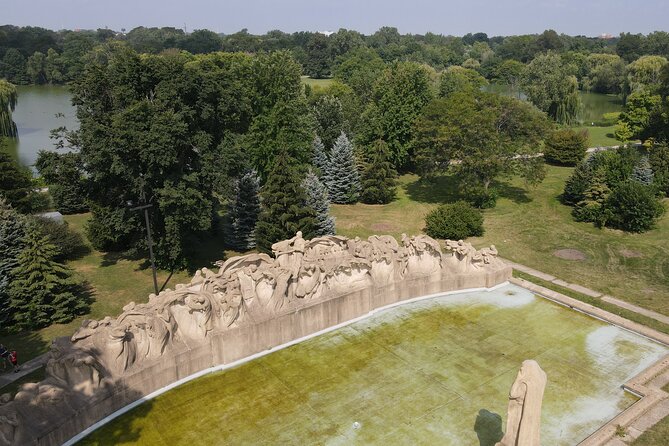
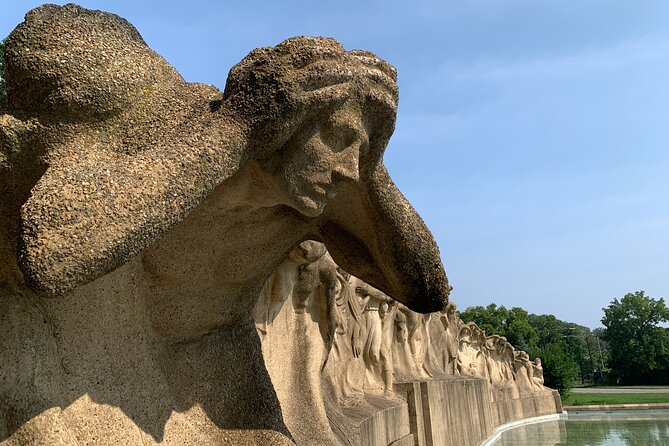
The final stop is the Fountain of Time in George Washington Park, at 6000 South Cottage Grove Avenue. This 126-foot-long sculpture is a dramatic place to finish a walking tour, especially one concerned with images, movement, and the passage of time.
The sculpture has inspired both classic and modern filmmakers, giving the route one last direct connection to cinema. It also shifts the mood from early mechanical devices and fairground amusements toward a larger idea: how artists use motion and time to shape a story.
You’ll have about 15 minutes here. That allows time to take in the scale of the work, hear its film connections, and take photographs. The site also provides some of the tour’s best Instagram opportunities, though the appeal is not only visual. The Fountain of Time gives the route a strong ending because it gathers together sculpture, movement, and public art.
The end point is different from the start, so plan your journey with that in mind. The tour does not include private transportation, and you will need to arrange your own way to Midway Studios and from George Washington Park afterward. Both locations are near public transportation, which makes the route practical without a car, but you should still check your connections before arriving.
A few more filming locations around Chicago worth a look
- Chicago Fire TV Show Set Tour
★ 5.0 · 68 reviews - Chicago Fire TV Show Set Tour
★ 4.9 · 43 reviews - Chicago Gangsters and Movies Tour
★ 5.0 · 38 reviews - Ferris Bueller Movie Tour at the Art Institute of Chicago
★ 5.0 · 26 reviews
A small group makes this a more personal walk
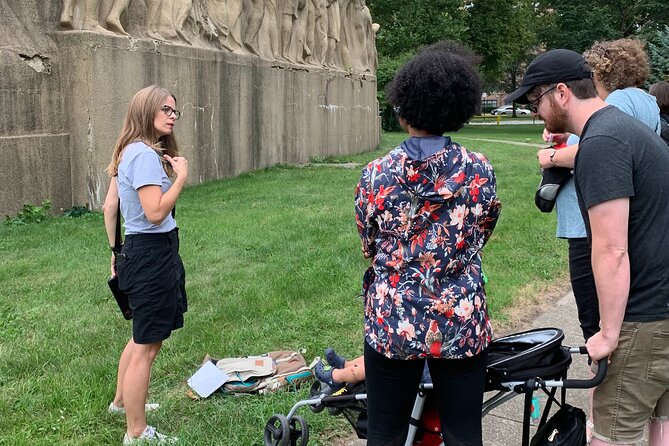
The maximum group size is four people. That is a major part of the experience, not just a booking detail. A small group makes it easier to hear the guide, ask questions, and keep the discussion connected to your interests.
Kelli’s presentation style is built around communication. If you are a few minutes late, the guide has shown that she can communicate with the group and help you catch up, but you should still aim to arrive on time. A compact tour has less slack than a large commercial group.
The limited size also suits the subject. Early film devices and historical photographs are easier to examine when you are not standing behind a crowd. The guide can adjust the explanation instead of delivering one fixed speech to dozens of people.
The tour is offered in English and uses a mobile ticket. Confirmation is sent within 48 hours of booking, subject to availability. The experience lasts about an hour and a half, making it easy to fit into a morning without consuming your whole day.
What the film clips and old devices add
A film-history walk can become dry if it depends only on dates and names. This tour tries to avoid that problem with clips, photographs, and demonstrations of 19th-century moving-picture devices.
Those materials matter because early cinema is hard to imagine from words alone. A machine that produces the illusion of motion makes the technology more concrete. Film clips also help connect the physical places in Chicago with the screen history being discussed.
The visual material is especially helpful at the Midway, where the fair itself is gone. You cannot walk through the original commercial movie theater, but photographs and clips can give you a sense of how novelty and motion were presented to the public.
The goodie bag is a small extra rather than a reason to book the tour. Still, it adds a friendly touch, particularly for families and visitors who enjoy taking home a modest souvenir. The real value is in the guide’s preparation and the unusual subject.
Price, pace, and overall value
The price is $49.99 per person. For a 90-minute walking tour, that is not bargain-basement pricing, but the comparison should be made with the format in mind.
You are paying for a specialized subject, a private-feeling group capped at four, prepared film clips and photos, and a demonstration of old moving-picture equipment. There is no private transportation and no paid admission included, so much of the price reflects the guide’s research, presentation, and personal attention.
I consider the value strongest if you have already seen Chicago’s familiar sights and want a more specific story. The route offers access to places and connections that can be easy to miss, even if you have spent time in Hyde Park or around the University of Chicago area.
The value is less obvious if you want a broad city tour, major architecture, or a long list of attractions. This is a narrow subject presented in a short format. You should book it because you care about Chicago, the 1893 fair, sculpture, or film, not simply because you have a spare morning.
Weather, walking, and practical planning
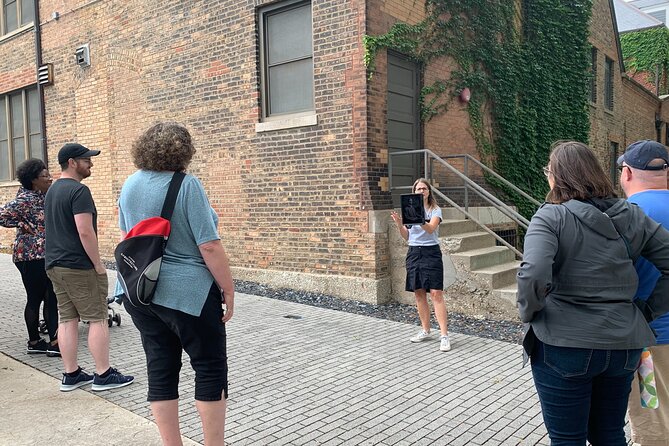
The experience requires good weather. If poor conditions cause cancellation, you are offered another date or a full refund. Since the route moves between outdoor sites, a forecast check is sensible before you leave.
Wear comfortable shoes. The tour is only about 90 minutes, but it includes movement between three locations and time spent standing outdoors. Bring clothing suited to the season, especially if the wind or cold could affect your ability to concentrate.
The walk begins at 10:30 am at Midway Studios. It ends at the Fountain of Time in George Washington Park. Private transportation is not included, but the area is near public transportation.
Service animals are allowed, and most people can participate. The small group size is helpful for anyone who prefers a quieter setting, though the tour remains an outdoor walk rather than a seated presentation.
The cancellation policy is strict: the booking is non-refundable and cannot be changed for personal reasons. The exceptions are weather cancellations and cancellations caused by too few bookings, in which case you are offered another date, another experience, or a full refund.
Who will enjoy this Midway movie tour
I would recommend this tour to you if you like:
- Chicago history with a clear theme
- Early cinema and the technology behind moving pictures
- Public art and sculpture
- Smaller groups and direct contact with a guide
- Places beyond the usual downtown route
- Visual storytelling through photos and film clips
Families can also enjoy it, especially if children respond better to demonstrations than to long historical explanations. The moving-picture devices and film material give the topic something to see and discuss.
It may not suit you if you want extensive indoor time, a full World’s Fair reconstruction, or a long walking route through many attractions. The tour is tightly focused and ends after three principal stops.
Should you book Chicago’s Midway, Movies, and the 1893 World’s Fair Walking Tour?
Book it if you want an offbeat Chicago experience that links Lorado Taft, the 1893 World’s Fair, early movie theaters, and public sculpture. Kelli’s use of film clips, photos, and old moving-picture devices gives the 90-minute route more life than a standard talk.
The best reason to go is the subject itself. You will see a side of the Midway that is easy to miss, and the four-person limit should make the experience feel personal. Just plan for outdoor conditions, arrive at the correct starting point, and decide if the focused theme justifies the $49.99 price.
FAQ
How long does the tour last?
The tour lasts approximately 1 hour and 30 minutes.
Where does the tour begin?
The tour begins at Midway Studios and Taft House, located at 6016 South Ingleside Avenue, Chicago, Illinois 60637.
Where does the tour end?
The tour ends at the Fountain of Time in George Washington Park, at 6000 South Cottage Grove Avenue, Chicago, Illinois 60637.
What time does the tour start?
The scheduled start time is 10:30 am.
How many people can join the tour?
The tour has a maximum of four participants.
Is transportation included?
No. Private transportation is not included, though the locations are near public transportation.
Just added around Chicago
- Chicago P.D. TV Show Set Tour★ 5.0 · 16 reviews
- Ferris Bueller Movie Tour at the Art Institute of Chicago★ 5.0 · 26 reviews
- Harry Potter Shop Chicago: Magical Brew Bundle★ 5.0 · 4 reviews
- Private Downtown Chicago TV and Movie Sites Guided Walking Tour★ 4.5 · 3 reviews
- Harry Potter Shop Chicago: Confectionary Collection★ 4.5 · 3 reviews
- Downtown Chicago TV and Movie Sites Guided Walking Tour★ 4.5 · 23 reviews
- Chicago: Mobsters and Movies Walking Tour★ 4.9 · 7 reviews
- Downtown Chicago TV & Movie Filming Locations Walking Tour★ 4.8 · 21 reviews
Chicago Film Location Tours, compared.

Marvels & Feats: An Engineer’s Tour of Chicago Architecture
Read our review →
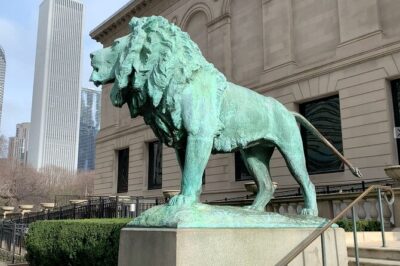
Ferris Bueller Movie Tour at the Art Institute of Chicago
Read our review →
Downtown Chicago TV and Movie Sites Guided Walking Tour
Read our review →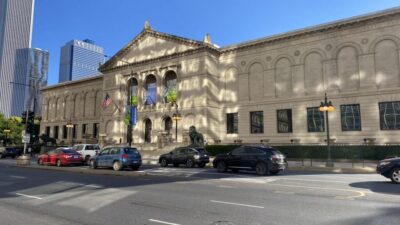
Downtown Chicago TV & Movie Filming Locations Walking Tour
Read our review →Browse the lists this tour appears in