
REVIEW · JAPAN
Tokyo: Mochi-Making Class in a Private Studio
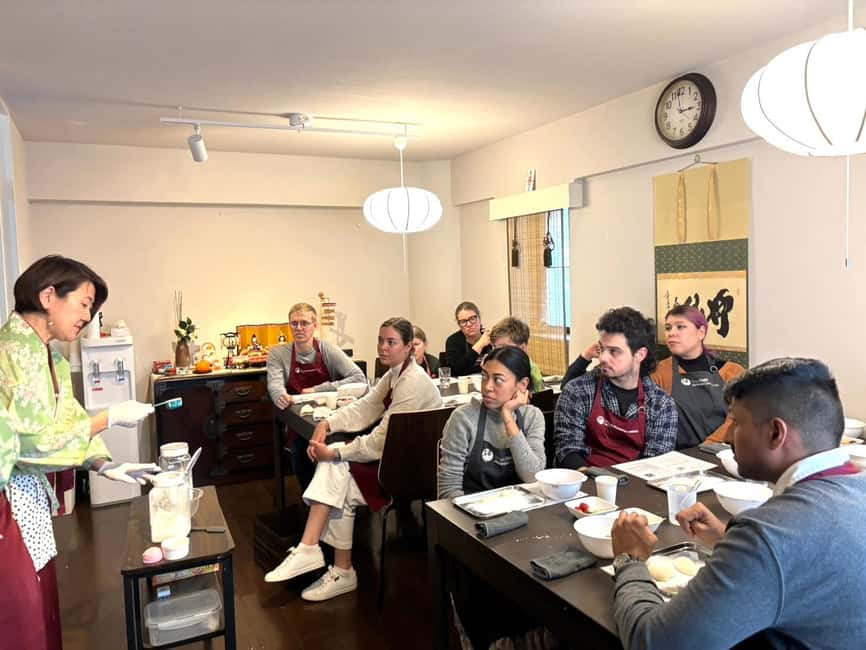
Mochi is best understood with your hands, not just from behind a shop window. In this two-hour class, you shape the soft rice treat into several desserts, taste five preparations, and learn why mochi matters in Japanese culture. I like the small group limit of eight, and I like that instructors such as Owa, Ayumi, Kiyoko, and Michiko make room for questions and personal conversation.
I especially like the five different mochi dishes, since you get more than one sweet sample and can compare textures and shapes. The downloadable recipe is another smart touch: you leave with a way to repeat the experience at home. The main drawback is practical rather than culinary: the studio is reached by stairs or a ramp, but the activity is not suitable for wheelchair users.
Key points to know before booking
- Five mochi dishes from scratch: You touch, shape, prepare, and taste several styles rather than watching a demonstration.
- Small class of up to eight: The size gives you a better chance to ask questions and get help with shaping.
- English and Japanese instruction: Instructors including Owa, Ayumi, Kiyoko, and Michiko teach the class.
- Family-friendly from age four: Children can join, but anyone under four cannot enter the class.
- Gluten-free with a non-dairy option: Tell the provider about your needs when booking or before the class.
- Tea and a recipe included: Finish with hot or cold green tea, then take home a downloadable recipe.
What this Tokyo mochi class actually offers
This is a hands-on wagashi class run by Simply Oishii Wagashi School in a private studio setting. The group can include up to eight people, so you are not being lost in a large cooking crowd or left to watch from the side.
The class lasts two hours. That is long enough to explain the cultural background, work through several preparations, shape the mochi, and sit down to taste what you made. It is also short enough to fit neatly into a day of sightseeing in Tokyo.
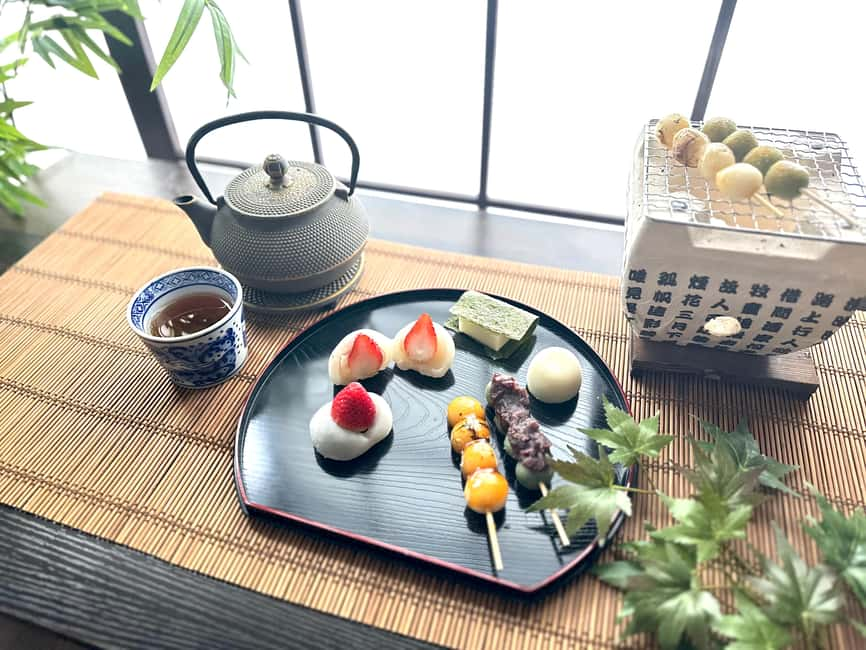
You will make and taste five kinds of mochi dishes from scratch. The exact recipes are not listed in advance, so do not book this expecting one particular flavor or filling. Instead, think of the class as a guided introduction to the many ways mochi can be prepared and presented.
The experience is designed for beginners. You do not need previous cooking skills, and the point is not to produce perfect confectionery on your first attempt. You will handle the dough, shape it into different forms, and learn by doing. That physical part is important. Mochi has a texture that is hard to understand until you have worked with it yourself.
More film workshops in Tokyo:
- Bangkok: White Lotus Thai Cooking Class with Market Tour
★ 5.0 · 285 reviews - The Official Emily in Paris Croissant-Making Workshop
★ 4.9 · 85 reviews - Porto Tile Painting Workshop in artist studio
★ 5.0 · 83 reviews
Meeting the instructor and hearing the story behind mochi
The cultural explanation is more than a quick introduction before the cooking starts. Your instructor explains the background and cultural importance of mochi, giving you context for the food you are preparing.
The instructors named for this experience include Owa, Ayumi, Kiyoko, and Michiko. Your assigned teacher will depend on the class, but the instruction is available in English and Japanese. Michiko, for example, is described as taking time to hear why people are visiting Japan, which helps create a warmer and more personal class atmosphere.
Owa also has a talent for Japanese calligraphy and may share that work during the class. That is a pleasant extra because it connects the sweets to another traditional Japanese art without turning the lesson into a formal cultural lecture.
I like this balance. You get useful cultural context, but the class remains focused on making food. You are not asked to sit through a long talk before touching the ingredients.
Working with the mochi dough
The heart of the experience is the preparation and shaping. You will touch the mochi, work with its soft texture, and form it into several types of dessert. The instructor guides you step by step, which matters because mochi can be unfamiliar to first-time cooks.
Expect a class built around participation. You are not simply watching an expert make five perfect pieces while you take notes. You will have your own chance to shape the sweets, ask for help, and see how small changes affect the final result.
That makes the class especially useful for families. Children from age four can enter, and the activity is interactive rather than lecture-based. Still, young children will need an adult’s attention around the food preparation. The minimum age is four, so families with toddlers will need to choose another activity.
The five-dish format also gives you a wider sense of mochi than a single tasting would. One preparation may appeal because of its softness, another because of its shape or filling. You can compare them while the process is still fresh in your mind.
Do not worry if your shapes are not identical to the instructor’s. Homemade mochi is part of the fun here. The value comes from learning the method and understanding the texture, not from producing a display case full of flawless sweets.
Tasting five dishes with Japanese green tea
At the end of the working session, you taste the mochi you have made with hot or cold green tea. This gives the class a proper finish rather than sending you out with food in a container and no time to enjoy it.
The tea also helps turn the final tasting into a simple Japanese-style break. You can choose hot or cold, which is useful in Tokyo’s changing weather and keeps the ending comfortable for different preferences.
The five dishes are made from scratch during the class, so the tasting is also a chance to see how preparation affects the finished treat. You may find that a mochi you enjoyed shaping is not the one you like best, or that a simple-looking piece has the most appealing texture.
Strawberries may be used when available. If they are not, another fruit is substituted. That detail is worth noting if you are booking this for a particular seasonal fruit. You should treat the fruit as flexible, not as a guaranteed part of the menu.
The tasting is included in the $82 price. So is the green tea. You are not paying for a lesson and then adding a separate charge for the food you prepared.
Same place, a completely different screen:
- Tokyo: Fast & Furious Tokyo Drift III Experience
★ 4.8 · 2,432 reviews - Tokyo Studio Ghibli Museum and Ghibli Film Appreciation Tour
★ 4.5 · 421 reviews - Akihabara Anime & Game Adventure Walking Tour (Group or Private)
★ 5.0 · 404 reviews - Tokyo: Go Daikoku PA Fast & Furious 3 Sports Car Meetup
★ 4.6 · 356 reviews
Why the small group size matters
The class is limited to eight participants. For a practical food lesson, that is a useful limit. You have a better chance of seeing the instructor’s demonstration, asking a question at the right moment, and getting help if your dough is difficult to shape.
A small group also supports the social side of the experience. The atmosphere can feel more personal, and instructors have room to ask about your visit to Japan. That is particularly helpful if you want conversation as well as instruction.
The tradeoff is that a small class may not suit someone who prefers to remain anonymous. You will be taking part in a shared activity, and the included photo session adds to that sense of occasion.
The provider includes a photo-taking session, so you can record the experience instead of relying only on memory. The information does not specify how many photos you receive or in what format, so consider it a chance to have pictures taken during the class rather than a formal photography package.
What the $82 price covers
At $82 per person, this is not the cheapest way to eat mochi in Tokyo. You can buy prepared sweets for much less. The point here is the instruction, the cultural explanation, the time spent making five dishes, the tea tasting, and the recipe you can use later.
I think the price makes the most sense if you value participation. You are paying for two hours of guided work in a small group, not simply for five desserts. The recipe adds some lasting value, since it lets you try to recreate the experience after returning home.
The class also removes some of the guesswork that comes with making mochi alone. The texture can be unfamiliar, and an instructor can show you how to handle and shape it. That guidance is useful for a first attempt.
For a family, calculate the cost carefully because the charge is per person. Children age four and older can participate, so a family of four pays for four places. If you only want a quick taste of mochi, this class may feel expensive. If you want an activity that combines food, culture, and a souvenir recipe, the value is stronger.
Finding the studio near Family Mart
You must arrange your own transportation to the venue. The meeting point is beside a Family Mart convenience store, with a drug store and hair salon on the ground floor of the building.
Look for the provider’s sign. You can use the stairs or the ramp in front of the sign to reach the entrance. At the bottom, press 303 followed by enter to get inside.
This is the kind of arrival detail you should save before leaving your hotel. The studio is not described as a major tourist landmark, so the nearby Family Mart is the useful visual reference. Give yourself enough time to find the building and work out the entry system without rushing.
The activity is not suitable for wheelchair users. Although there is a ramp in front of the sign, the stated accessibility information rules out the class for wheelchair users. If mobility is a concern, contact the provider before booking rather than relying on the ramp alone.
Smoking is not allowed.
Dietary details and fruit substitutions
The class is gluten-free. A non-dairy option is available, which makes the experience workable for people avoiding dairy products.
The information does not specify whether the class can handle every allergy or dietary restriction, so you should confirm any serious allergy directly with the provider before booking. Gluten-free and non-dairy are clearly offered, but that does not automatically answer questions about every ingredient.
Fruit is also flexible. Strawberries may appear, but another fruit will be used if they are unavailable. If strawberries are important to you, this is not a guaranteed menu item.
The recipe is downloadable, giving you a practical souvenir rather than another physical object to pack. You can use it to repeat the dishes at home, though your own ingredients and equipment may differ from those in the studio.
Who will get the most from this class
I would recommend this for first-time visitors who want a food experience with cultural context, not just a restaurant meal. It is also a good fit for families with children age four or older, couples, and small groups of friends who enjoy doing something together.
It suits you especially well if you like:
- Hands-on cooking rather than demonstrations
- Small classes with time for questions
- Japanese sweets and green tea
- Food traditions explained by a local instructor
- Taking home a recipe you can try later
It may be less suitable if you want a quiet, private appointment with no group interaction. The class can include up to eight people, so you should expect to share the studio and the instructor’s attention.
It is also not the right pick for anyone under four or for wheelchair users. And if you have a serious food allergy beyond the stated gluten-free and non-dairy options, confirm the ingredients before paying.
Booking flexibility and timing
The activity runs for two hours, with starting times based on availability. You can check the schedule when choosing your date.
Cancellation is free up to 24 hours in advance for a full refund. The reserve-now-and-pay-later option can help if your Tokyo schedule is still moving around, since you do not need to pay at the time of booking.
I would place this class on a lighter sightseeing day. Two hours in the studio is manageable, but you should add time for reaching the building, finding the entrance, and continuing to your next stop. Since transportation is not included, plan that part yourself.
Should you book the Tokyo mochi class?
Book it if you want to understand mochi by making it, not simply buying it. The strongest reasons are the five from-scratch dishes, the small group, the clear step-by-step instruction, and the recipe you can use after Japan.
The class is also a smart choice for families with children four and older. Owa, Ayumi, Kiyoko, and Michiko bring different personal touches, including cultural explanation, conversation, and in Owa’s case, calligraphy.
Skip it if you only want a cheap dessert tasting, need wheelchair access, or have a strict dietary requirement that goes beyond the stated gluten-free and non-dairy options. For everyone else, $82 buys a focused two-hour activity, a green tea tasting, photos, and a skill you can carry home. That is a fair price for a small, personal food class in Tokyo.
FAQ
How long does the mochi-making class last?
The class lasts two hours.
How many kinds of mochi will I make and taste?
You will make and taste five kinds of mochi dishes from scratch.
Is the class taught in English?
Yes. Instruction is available in English and Japanese.
What is the maximum group size?
The class is limited to eight participants.
What is the minimum age?
The minimum age to enter the class is four years old. Children under four are not suitable for the activity.
Is the experience gluten-free?
Yes, the experience is gluten-free.
Is a non-dairy option available?
Yes, a non-dairy option is available.
Is green tea included?
Yes. You can enjoy hot or cold green tea with the mochi.
Are strawberries guaranteed?
No. Another fruit will be used if strawberries are unavailable.
Is transportation to the studio included?
No. You must arrange transportation to the venue yourself. The building is to the right of a Family Mart, with a drug store and hair salon on the ground floor.
Just added around Tokyo
- Tokyo: Japanese anime stores with ramen lunch in Shibuya★ 5.0 · 3 reviews
- Tokyo: Private Makeover Photography Studio in Luxury Kimono★ 5.0 · 22 reviews
- Tokyo: Anime, Manga or Kanji Tattoo in a Modern Salon★ 4.7 · 5 reviews
- Tokyo: Anime, Manga and capsule toy Tour in Shibuya★ 5.0 · 2 reviews
- Tokyo Akihabara Anime walking tour & Maid Cafe option★ 5.0 · 6 reviews
- Real-Life Anime Pilgrimage Tour: “Shibuya Incident”★ 4.9 · 28 reviews
- Private Akihabara Anime Game Maid Cafe Tour w/ free pickup★ 5.0 · 6 reviews
- Otaku Tour for Anime, Manga and Game Lovers★ 5.0 · 3 reviews
Japan Film Location Tours, compared.

Tokyo Studio Ghibli Museum and Ghibli Film Appreciation Tour
Read our review →
Akihabara Anime & Game Adventure Walking Tour (Group or Private)
Read our review →
Go Daikoku PA Fast & Furious 3 Sports Car Meetup
Read our review →

Fast & Furious Tokyo Drift 3 (Kaila Yu-SP) : Experience Ride JDM
Read our review →
Warner Bros. Studio Tour Tokyo – The Making of Harry Potter
Read our review →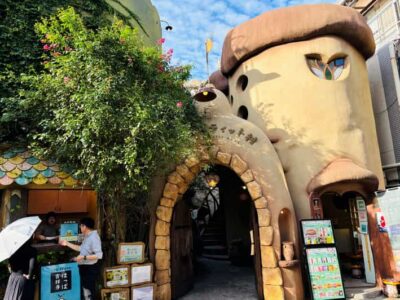
Browse the lists this tour appears in