
REVIEW · FRANCE
Montmartre’s Hidden Gems: Private History & Artist Studios
Montmartre’s best stories are found between the headline sights: Van Gogh’s former home, the old artists’ studios, the Moulin de la Galette, and the corners where Parisian cabaret culture took shape. This private walk follows those threads with a local guide, beginning at Blanche and ending near Sacré-Cœur.
I like the private-group format, which gives you room to ask about family interests, art, or Parisian life without keeping pace with a large crowd. I also like the route’s mix of famous stops and smaller details, especially the Dalida statue, La Maison Rose, and Le Bateau-Lavoir.
The main consideration is the uphill walking and the compact schedule. The experience is advertised as three hours, while the description refers to a two-hour walking tour, so confirm the exact timing when you book. Pont Neuf and Louvre views are also listed among the highlights, but the detailed route focuses mainly on Montmartre.
Key points to know
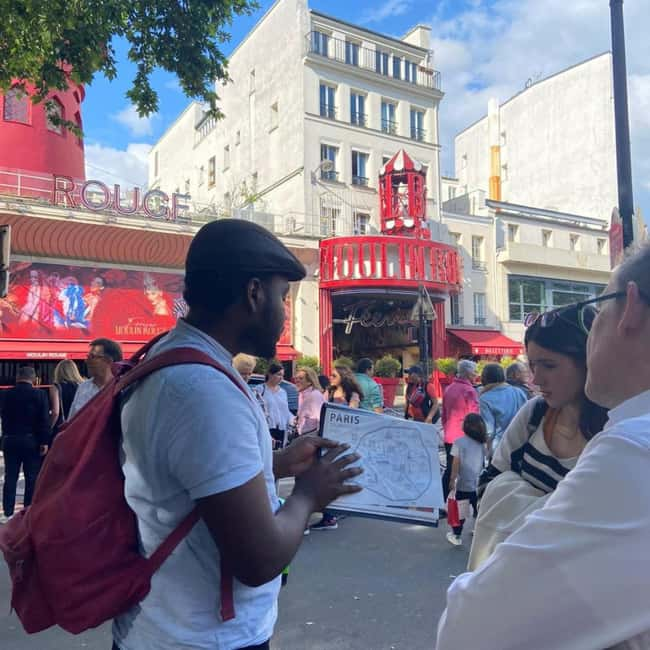
- Meet at Blanche Metro: Find the guide at the exit beside the green kiosk, a simple starting point near the Moulin Rouge.
- A private walk with language choice: Tours are offered in English, French, or Spanish, with no shared group listed.
- Art history is the main theme: The route connects Van Gogh, Picasso, Renoir, Toulouse-Lautrec, Utrillo, Dufy, and Dalida to the neighborhood.
- Sacré-Cœur finishes the walk: You get a guided visit, photos, and wide views over Paris.
- Expect an uphill route: Montmartre’s streets and stairways are part of the setting, so comfortable shoes matter.
- Good family flexibility: A French-speaking guide was praised for adapting explanations to a family with teenagers.
Starting at Blanche, where cabaret became legend
The meeting point is at the exit of Blanche Metro, by the green kiosk. This is practical because you do not need a hotel transfer, and the location puts you close to the Moulin Rouge from the first minute.
Blanche sits in the 18th Arrondissement, the district that contains Montmartre. The neighborhood is not a single postcard view. It shifts from late-night cabaret streets to quiet lanes, small squares, old studios, and steep climbs. A private guide can help you notice those changes rather than simply marching from one famous sign to the next.
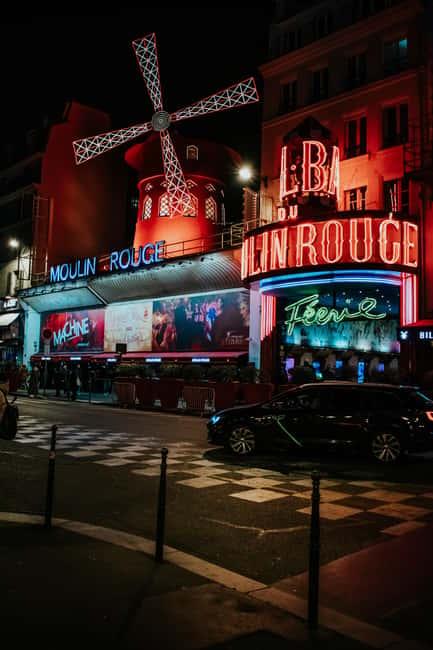
The Moulin Rouge is the natural opening. Its red windmill and elaborate facade make it easy to photograph, but the useful part of the stop is the story behind the stage. You hear about the cancan, the cabaret’s scandalous reputation, and the artists who turned the venue into an image of Parisian nightlife.
Toulouse-Lautrec is especially important here. His posters helped fix the Moulin Rouge in the public imagination, linking painting, advertising, dance, and nightlife. This stop works best when your guide explains how the cabaret shaped the image of Montmartre, not just when you take a picture outside.
The tour does not include a Moulin Rouge performance. You are seeing the exterior and learning about its past, so do not book this walk expecting a cabaret show.
More history behind the scenes in Paris:
- Game of Thrones & History of Dubrovnik Tour
★ 5.0 · 628 reviews - History and Movie Tour of Beaufort by Golf Cart
★ 5.0 · 562 reviews - Memphis: Big Mojo Sun Studio + Music History 3-Hour Bus Tour
★ 4.8 · 325 reviews
Place des Abbesses and the neighborhood below the hill
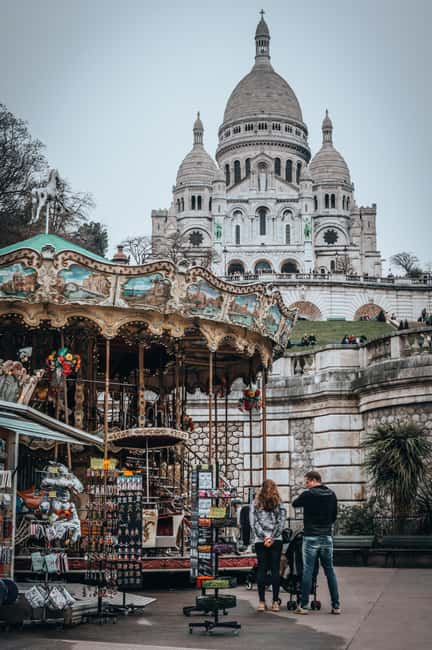
From Blanche, the route reaches Place des Abbesses. This square is one of the more pleasant places to get a feel for everyday Montmartre. It has a village-like character, but it is also a busy sightseeing stop, so the guide’s local knowledge matters.
The square gives the walk a useful change of pace. You move away from the Moulin Rouge’s theatrical atmosphere and toward the streets connected with artists, residents, and neighborhood life. The route returns to Place des Abbesses later, so you may see it both near the beginning and toward the end.
The walk through the 18th Arrondissement is not designed as a long museum visit. You are outside for most of the time, stopping for explanations, photographs, and short visits. That makes it a good choice if you want context without spending half a day indoors.
The private format is a real advantage here. If your group wants more information about Parisian art, you can spend longer on those stories. If teenagers need a faster pace, the guide can adjust. One French-language tour was specifically praised for adapting to a family with adolescents, which suggests that the experience is not tied to a fixed lecture.
Van Gogh’s Montmartre and the artists who changed Paris
One of the most interesting parts of the route is the connection to Vincent van Gogh. You walk near the house where he lived and hear how his time in Montmartre affected his painting style.
The value of this stop is not only the address. Montmartre gave artists changing light, steep streets, city views, cheap studios, and contact with other painters. Van Gogh’s Paris period helped move his work in a new direction, and the neighborhood provides a physical setting for that change.
You should keep expectations sensible. This is not presented as an interior visit to Van Gogh’s home. It is a guided stop connected to the building and the surrounding streets. The guide’s explanation supplies the meaning, so this section will be most rewarding if you enjoy stories about how artists worked and influenced one another.
The same is true of the other artist references along the route. Picasso, Renoir, Utrillo, and Dufy are part of the larger Montmartre story. Their presence turns ordinary streets into places where artistic experiments and friendships took place. You are not just checking off names. You are seeing how one neighborhood brought different painters into contact.
Moulin de la Galette and the old bohemian circle
The Moulin de la Galette is one of the route’s key stops. Its name recalls Montmartre’s windmills and the social life that surrounded them. Today, the important thing is not simply the surviving structure or restaurant association, but the way the guide connects the site to the painters who used Montmartre as a subject and a home.
This is a good point to ask questions. You can ask how the neighborhood looked when artists lived here, what parts remain, and how the old bohemian image compares with present-day Montmartre. Since the group is private, you do not have to wait for a guide to finish a standard speech before speaking up.
The route includes a guided visit and photo stop here. That wording does not promise entry into every building, so plan on an outdoor sightseeing experience unless your guide tells you otherwise. The pleasure comes from the setting and the story rather than from a formal museum display.
For art lovers, this is one of the strongest sections of the walk. For visitors mainly interested in shopping or architecture, it still adds useful context, but the tour’s focus clearly leans toward artists and their lives.
Same place, a completely different screen:
- Behind the Scenes of the Grand Rex: 50-Minute Studio Tour
★ 4.6 · 1,138 reviews - The Official Emily in Paris Locations Walking Tour
★ 4.9 · 383 reviews - Paris: Emily TV Show Locations Guided Walking Tour
★ 4.6 · 140 reviews - Paris Photo Session: Be the Star of Your Own Movie
★ 5.0 · 87 reviews
La Maison Rose and Montmartre’s picture-book streets
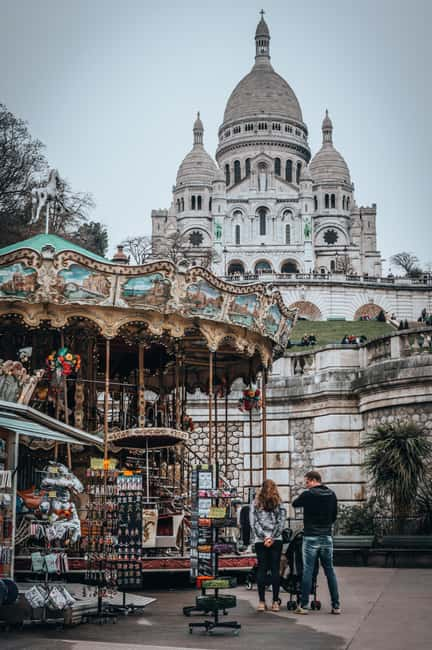
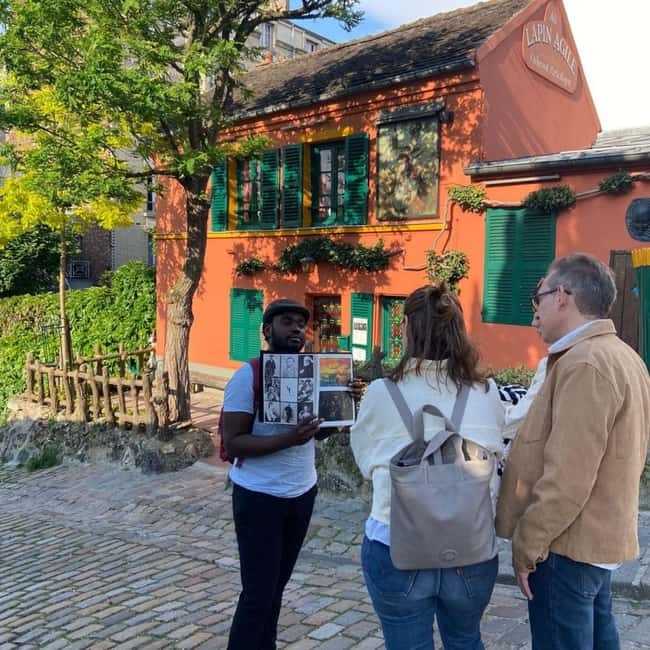
La Maison Rose is one of Montmartre’s most photographed buildings. Its pink facade makes a quick picture tempting, but the surrounding walk is more important than the color alone.
The guide takes you through the streets around the building and explains its place in Montmartre’s visual identity. This part of the route helps you understand why the neighborhood appears so often in paintings, photographs, and films. You get narrow streets, strong color, and a village-like setting within Paris.
There is a tradeoff. Popular photo locations can feel crowded, and the tour cannot control how much space is available at a particular moment. A private guide can point out the best details and keep your stop focused, but you should not expect an empty postcard scene.
This is also where comfortable shoes begin to matter more. Montmartre is hilly, and the route includes walking between several stops. The tour is only around three hours, but the time passes on foot rather than in a vehicle.
Place du Tertre, where the art tradition continues
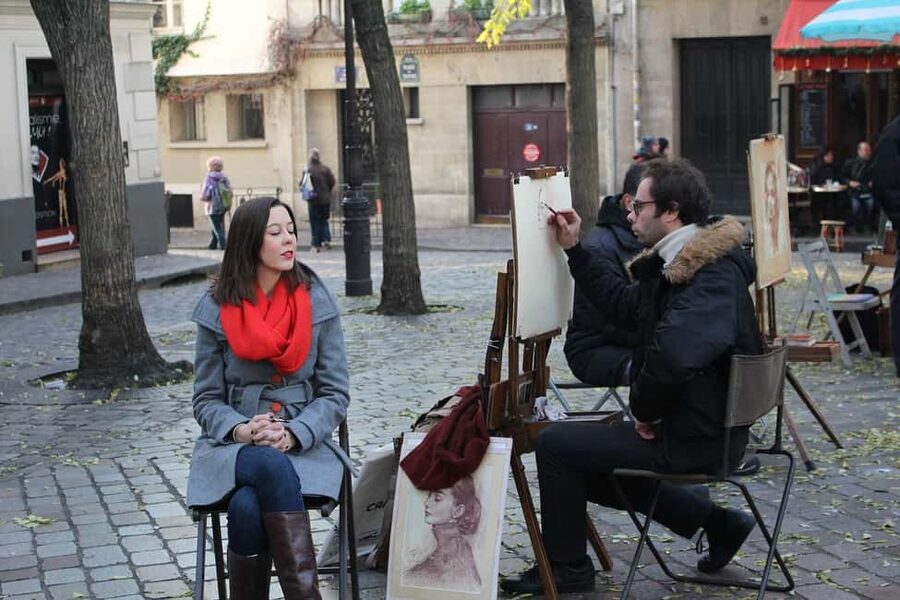
Place du Tertre is the most obvious art square on the walk. Painters work here today, continuing a tradition associated with figures such as Utrillo and Dufy.
You get time for sightseeing, walking, and shopping. The square can feel commercial compared with quieter Montmartre streets, but that does not make it worthless. It shows how the neighborhood’s artist identity has survived while also becoming part of Paris tourism.
I would treat this as a place to watch rather than a place to rush through. Look at how the artists set up their work, notice the portraits and street scenes, and listen to your guide’s explanation of the square’s earlier role. If you want to buy art, keep the purchase separate from the historical experience. The tour provides an introduction, not a personal art appraisal.
The square is also a useful point for different interests within one group. Art lovers can ask about the older painters. Families can take photos and browse. Visitors who want a quieter experience may prefer the nearby lanes, which the guide can put into context.
Rue Lepic and the everyday side of Montmartre
Rue Lepic adds a more ordinary street to the route. You have a photo stop, a visit, and some free time, which gives the walk a less formal rhythm.
This is the kind of stretch where a local guide can be especially useful. Famous monuments explain themselves. A street such as Rue Lepic benefits from someone who can point out its role in the neighborhood and connect it to the artists and residents who used it.
The free time may also help if your group needs a short pause. The itinerary moves through several sights, and the break keeps the experience from feeling like one long lecture. Still, the schedule is fairly full, so do not count on a long cafe stop unless the guide allows it.
Le Bateau-Lavoir and the working life of artists
Le Bateau-Lavoir is one of the most meaningful stops for understanding Montmartre as a place of work, not just a scenic hill. It was associated with artists such as Picasso and with the bohemian circle that made the neighborhood famous.
The name often brings to mind a rough studio environment, and that is the point. Artists were not simply posing in picturesque streets. They were living and creating in shared or modest spaces, trading ideas, and building careers before they became famous.
The stop is listed as sightseeing and walking rather than a detailed interior tour. You should expect to learn about the studio’s role from the guide and see the location from the route. That still makes it valuable, especially if you want a stronger connection between the buildings and the people who worked in them.
This is one of the places where a private tour earns its price. A good explanation can turn a plain facade into a meaningful stop. Without that context, it would be easy to walk past.
Dalida, local memory, and the final climb
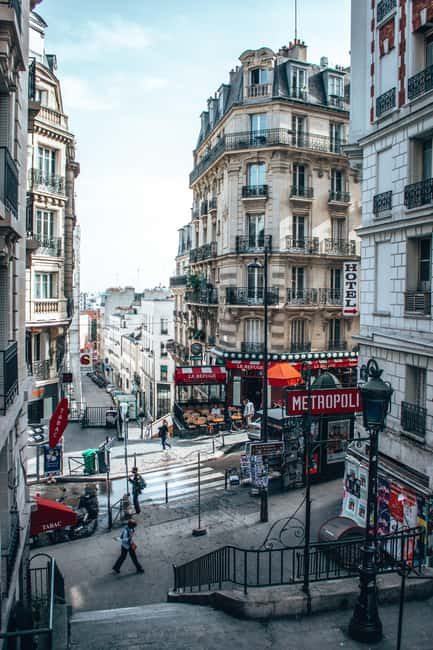
The statue of Dalida gives the tour a different emotional note. She was a beloved singer with a lasting connection to Montmartre, and the statue serves as a local tribute rather than an art-history marker.
Her presence broadens the story of the neighborhood. Montmartre is not only Toulouse-Lautrec, Van Gogh, Picasso, and Renoir. It also has more recent cultural figures whose lives became part of local memory.
The statue is a small stop, but it helps keep the tour from becoming a parade of painters. If you know Dalida’s music, it may carry extra meaning. If you do not, the guide can explain why she remains linked to the area.
The final climb leads toward Sacré-Cœur. Expect streets with inclines and, depending on the exact route, steps. The walk is manageable for many visitors, but the listing does not provide accessibility details, so anyone with mobility concerns should ask before booking.
Sacré-Cœur and the story behind Montmartre’s name
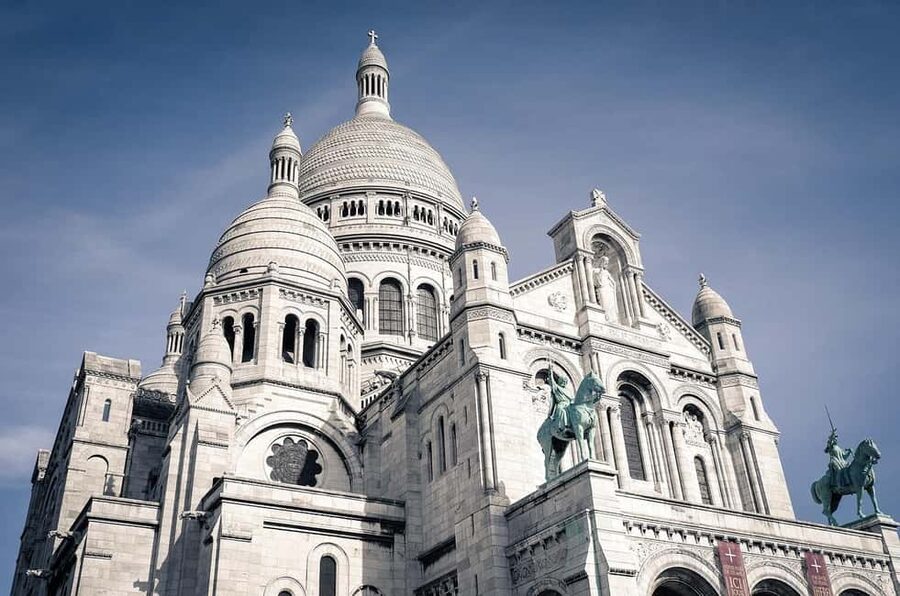
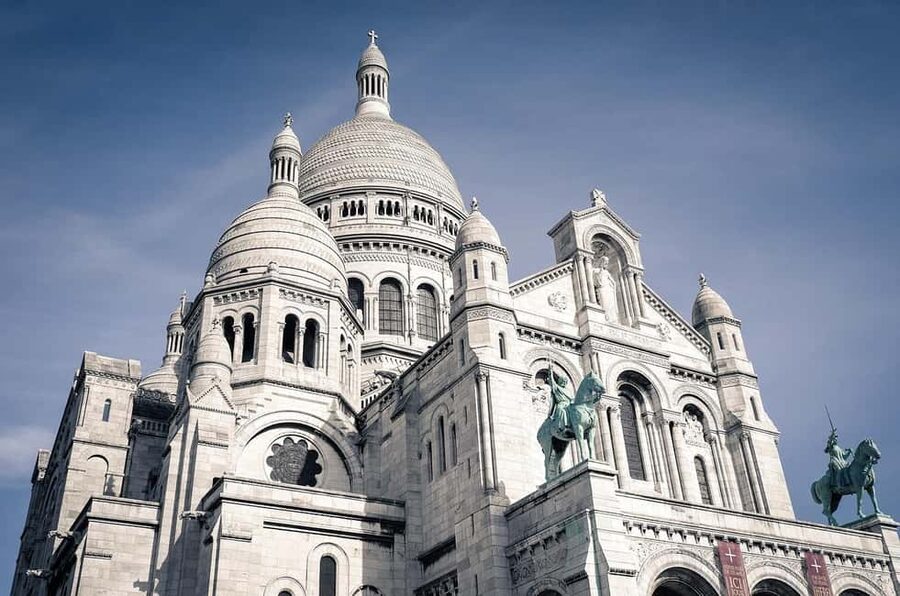
Sacré-Cœur is the grand finish. The basilica offers broad views across Paris, and the elevated position makes the climb worthwhile for many people.
The tour includes a guided visit, sightseeing, and time for photos. That does not necessarily mean a long interior tour or guaranteed access to every area, but it does give you more than a quick stop outside. Your guide explains the site and the local legend of Saint Denis, the headless martyr connected with the name Montmartre.
This story adds a darker edge to the hill’s cheerful artist image. Montmartre has cabarets, painters, singers, and pretty streets, but it also has old religious legends and centuries of memory. The contrast makes the ending more interesting.
The views are one of the clearest practical rewards of the tour. You can see Paris spread below you, and the basilica provides a strong finish after the neighborhood walk. The separate highlights also mention views toward Pont Neuf and the Louvre on the horizon. Since those places are not included in the detailed stop-by-stop route, ask your guide how that view fits into your particular departure and finish.
Sacré-Cœur can be crowded, especially around the steps and exterior viewpoints. A private guide cannot remove the crowds, but can help you understand what you are seeing and keep the final stop organized.
Is $106 per person a fair price?
At $106 per person, this is not a bargain-priced orientation walk. The value depends heavily on your group size and how much you want personal attention.
For a private group, the price can make sense if you want a guide who can adapt the pace, explain art history in detail, and answer questions in English, French, or Spanish. It is also useful for families, since one confirmed experience involved explanations adjusted for teenagers.
The price is harder to justify if you mainly want exterior photos of Moulin Rouge and Sacré-Cœur. You can see many of those places without a guide. The reason to pay more is the connection between them: cabaret, artists, studios, local figures, legends, and the changing character of Montmartre.
The tour includes a guided Montmartre experience and visits to major locations such as Moulin Rouge, Sacré-Cœur, and Place du Tertre. Hotel pickup and drop-off are not included, so you make your own way to Blanche and leave from the final area on foot.
You can cancel up to 24 hours before the activity for a full refund, and the reserve-now, pay-later option keeps your plans flexible. Those policies are useful, but they do not change the central value question: book it for interpretation and private attention, not simply transportation between sights.
Who will enjoy this private Montmartre walk?
I would recommend it most strongly to first-time Paris visitors who want a clear introduction to Montmartre without spending a full day on a museum tour. It also suits people who like art, neighborhood stories, and walking at a flexible pace.
Families may appreciate the private setup. The guide can adjust the level of detail, and the route includes enough visual stops to break up the history. Teenagers may respond better to the Moulin Rouge, Van Gogh, Picasso, and Dalida connections than to a formal art lecture.
Art fans will find the route especially useful because it links several names and places: Toulouse-Lautrec at Moulin Rouge, Van Gogh’s home, the Moulin de la Galette, Le Bateau-Lavoir, and the artists of Place du Tertre.
You may want something else if you dislike hills, want a long indoor museum visit, or prefer a quiet neighborhood walk with little sightseeing traffic. Montmartre’s most famous spots can be busy, and the tour covers a lot in a short time.
Should you book it?
Book this walk if you want Montmartre explained by a local guide rather than viewed as a string of photo stops. The strongest parts are the private format, the artist-focused route, the connection to Van Gogh and Picasso, and the finish at Sacré-Cœur.
Before paying, confirm the exact duration and ask how the Pont Neuf and Louvre views fit into the route. Wear comfortable shoes, arrive at the green kiosk outside Blanche Metro, and allow for an uphill finish.
At $106 per person, it is best for visitors who value conversation and context. If that sounds like your kind of sightseeing, this is a practical way to meet Montmartre through its painters, performers, legends, and living streets.
FAQ
Where does the tour meet?
Meet at the exit of Metro Blanche, beside the green kiosk.
How long does the experience last?
The activity information gives a duration of three hours. The tour description also refers to a two-hour walking tour, so confirm the exact schedule and starting time when booking.
What languages are available?
The live guide can conduct the tour in English, French, or Spanish.
Is this a private tour?
Yes. The activity is offered for a private group.
What places are included?
The route includes Moulin Rouge, Place des Abbesses, Sacré-Cœur Basilica, Moulin de la Galette, La Maison Rose, Place du Tertre, Rue Lepic, and Le Bateau-Lavoir.
Is hotel pickup included?
No. Hotel pickup and drop-off are not included. You make your own way to the Blanche meeting point.
Can I cancel for a full refund?
Yes. You can cancel up to 24 hours in advance for a full refund. The reserve-now, pay-later option is also available.
Just added around Paris
- The Official Emily in Paris Macaron Making Workshop★ 5.0 · 4 reviews
- The Official Emily in Paris Montmartre Walking Tour★ 5.0 · 2 reviews
- The Official Emily in Paris Croissant Making Workshop★ 5.0 · 3 reviews
- The Official Emily in Paris Food Tour★ 5.0 · 3 reviews
- The Official Emily in Paris Locations Walking Tour★ 5.0 · 12 reviews
- Mamma Mia! Paris Louvre Museum Guided Tour Kid-Friendly Activity★ 4.5 · 28 reviews
- The Da Vinci Code in Paris: Follow the Trail with a Local★ 3.5 · 7 reviews
- Paris: Shoot a Vertical Video on a Sidecar with a Pro Filmmaker★ 5.0 · 4 reviews
France Film Location Tours, compared.

Behind the Scenes of the Grand Rex: 50-Minute Studio Tour
Read our review →
The Official Emily in Paris Locations Walking Tour
Read our review →


The Official Emily in Paris Croissant-Making Workshop
Read our review →
The force to escape – Escape game in Montpellier
Read our review →
Browse the lists this tour appears in