
REVIEW · JAPAN
Mochi Making at a Private Studio in Tokyo
Mochi making here is much more than rolling sweet rice dough. In about two hours, you learn why mochi appears at Japanese festivals, make strawberry daifuku and three-color dango, try warabi mochi, and taste the savory side with grilled mochi, soy sauce, and nori. I especially like the small-group format and the chance to learn in a private studio near Meguro rather than in a large tourist kitchen.
I also like that an English-speaking wagashi instructor can explain everyday Japanese food customs and suggest places to shop or visit. The main thing to consider is the price: at $79.26 per person, this is not a cheap snack stop, though the lesson, food, drinks, apron, recipe sheet, and hands-on time make it more useful than a simple tasting.
Key points to know before booking
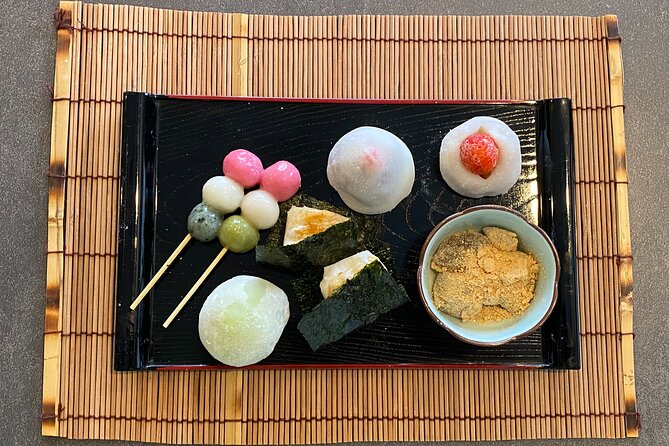
- Several styles in one class: Make strawberry daifuku, three-color dango, warabi mochi, and savory grilled mochi.
- A real cultural introduction: The opening presentation connects mochi with Japanese festivals and seasonal customs.
- Convenient Meguro location: The private studio is a short walk from JR Meguro Station and the nearby metro station.
- English instruction: The wagashi instructor teaches each step and can answer questions about local life in Tokyo.
- Good for families: Children age four and older may attend, and the hands-on work suits older children especially well.
- Useful take-home value: You receive an English recipe sheet, and some classes provide containers for unfinished sweets.
What the two-hour mochi class is really like
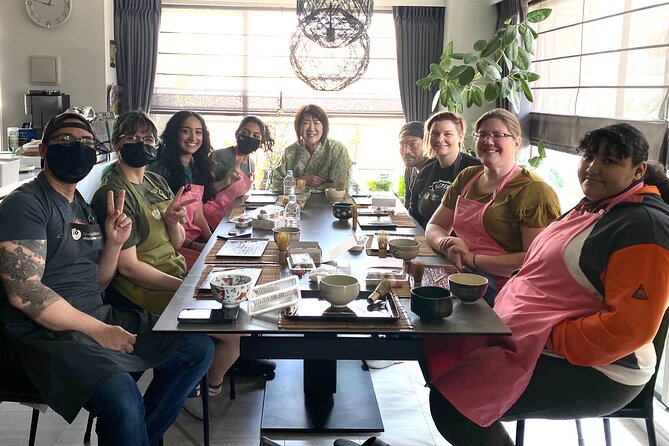
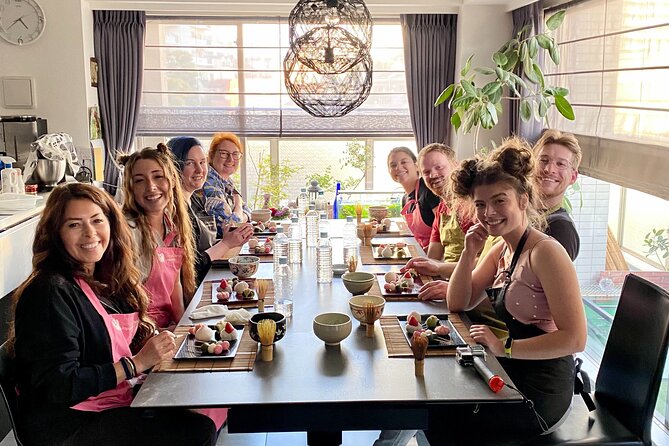
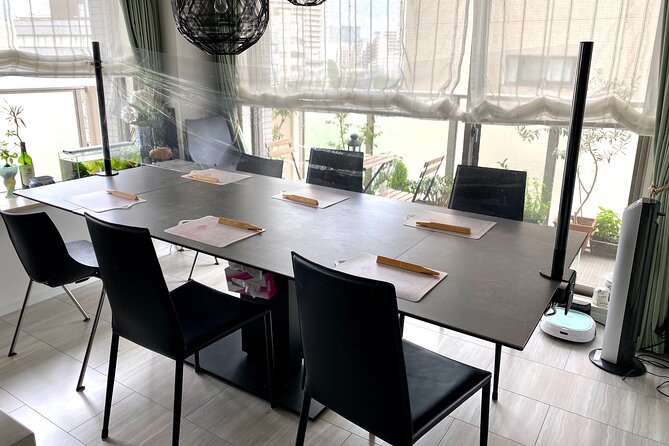
This is a compact cooking lesson built around doing, not just watching. You arrive at a private studio in Meguro, meet the instructor, put on an apron, and settle into a small cooking space. The class is designed for a maximum of six people in its small-group format, though the general activity information gives a maximum of 12 participants, so check the format shown for your booking.
The opening talk gives the class a needed cultural frame. Mochi is not simply a chewy dessert in Japan. It appears in festivals, holiday foods, offerings, seasonal celebrations, and everyday snacks. The instructor explains these connections before you begin, which helps you understand why different colors, fillings, shapes, and serving styles matter.
I like this beginning because it keeps the class from becoming a simple recipe demonstration. You are not just learning how to make a sweet ball. You are learning why mochi has such a large place in Japanese food culture.
The instructor is a certified Wagashi Instructor and teaches in English. Names associated with the classes include Michiko-san, Ayumi, Waka-san, Owa, and Miho, so the teacher may vary by session. The teaching style described for the class is patient and practical, with time for questions about both mochi and life in Tokyo.
Other filming locations people visit in Tokyo:
- Tokyo: Fast & Furious Tokyo Drift III Experience
★ 4.8 · 2,432 reviews - Tokyo Studio Ghibli Museum and Ghibli Film Appreciation Tour
★ 4.5 · 421 reviews - Akihabara Anime & Game Adventure Walking Tour (Group or Private)
★ 5.0 · 404 reviews
Strawberry daifuku and the first hands-on steps
The first major project is strawberry daifuku. This is the familiar soft mochi wrapped around a filling, with a fresh strawberry adding color, texture, and a bright tart note. It is also one of the most photogenic items in the class, though the appearance depends on how evenly you shape the dough.
Making daifuku gives you a quick lesson in handling mochi. The dough is sticky and can be awkward at first, especially if you are not used to working with it. That is part of the fun. You learn how much pressure to use, how to stretch the dough, and how to close it around the filling without tearing it.
The class is suitable for people who do not consider themselves strong cooks. The instructions are broken into manageable steps, and the teacher guides you as you work. Assistants may help keep the workstations tidy, which matters because mochi preparation can quickly turn a neat counter into a dusting of starch and scraps.
Fresh strawberries are a particularly nice touch. They keep the activity connected to Japanese seasonal sweets rather than making it feel like a generic candy class. If you like fruit desserts, strawberry daifuku is likely to be one of your favorite items.
Three-color dango brings shape and color
Next comes three-color dango, served on skewers. Dango has a firmer, chewier texture than some filled mochi, and the skewer presentation makes it easy to recognize as a classic Japanese sweet.
The three colors give the class a simple way to discuss appearance and meaning. The instructor explains the role of colors and ingredients in different types of mochi, rather than treating color as decoration alone. You shape the pieces, arrange them, and prepare them for serving.
This part is especially good for families and pairs. It is active without being difficult, and the finished skewers give you something clear to photograph. Several children who have attended the class enjoyed making the sweets, while adults appreciated learning the cultural background at the same time.
There is a small trade-off. A class that covers several types of mochi cannot spend a long time perfecting one recipe. You get a broad introduction to mochi styles, not an advanced pastry course focused on professional technique.
Warabi mochi shows a softer side of Japanese sweets
Warabi mochi adds a different texture to the session. It is soft, delicate, and unlike the filled strawberry daifuku or the skewered dango. Including it in the same class helps you see that mochi is not one single food with one standard texture.
The instructor explains each stage while you work. You get to compare how the mixture behaves and how the finished sweet is served. This is useful if you have only tried packaged mochi before, since the fresh versions made in class can feel quite different.
The range of textures is one of the strongest parts of the experience. You move from fruit-filled mochi to shaped dango to soft warabi mochi, then finish with a savory preparation. That variety gives the $79.26 price more weight than it would have if the class covered only one small dessert.
Same place, a completely different screen:
- Tokyo: Go Daikoku PA Fast & Furious 3 Sports Car Meetup
★ 4.6 · 356 reviews - Fast & Furious Tokyo Drift 3 (Kaila Yu-SP) : Experience Ride JDM
★ 4.5 · 189 reviews - Warner Bros. Studio Tour Tokyo – The Making of Harry Potter
★ 4.8 · 181 reviews - Tokyo: Kichijoji Walking Tour with Local Guide
★ 4.6 · 164 reviews
Savory grilled mochi with soy sauce and nori
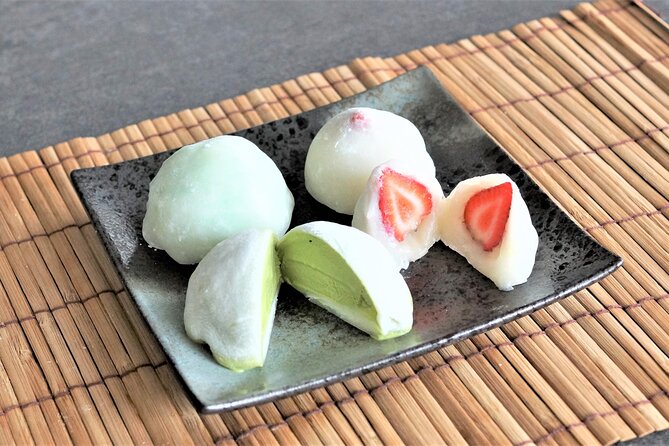
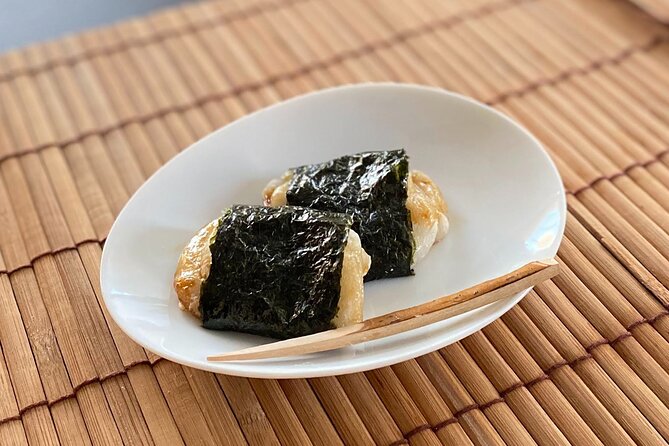
The class also includes grilled mochi with soy sauce and nori seaweed. This is an important part of the lesson because many people first encounter mochi as a sweet treat and do not expect a savory version.
The grilled preparation brings salt, umami, and a slightly smoky quality into the tasting. Soy sauce and nori make the flavor simple and direct. It is a good reminder that mochi can be used as a filling food or snack, not only as a dessert.
The instructor serves this portion for you rather than making every step fully hands-on. That balance works well in a short class. You make several sweets yourself, then watch a demonstration or sample preparations that would take more time or equipment.
If you only like sweet foods, the savory mochi may not be your favorite. Still, it is worth trying because it gives the class more cultural and culinary range. You may find that the savory version is one of the most memorable parts.
Mochi ice cream is demonstrated, not made from start to finish
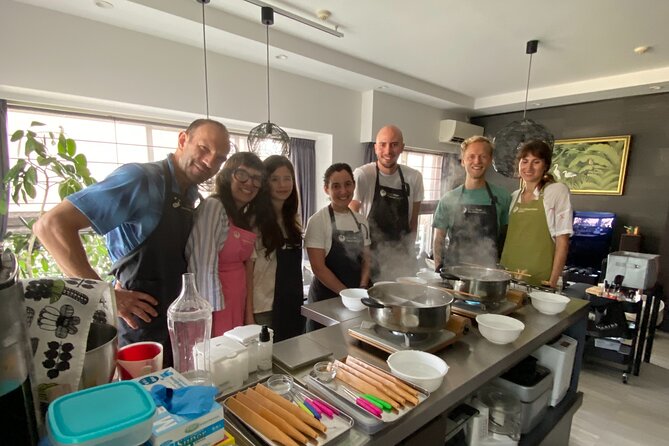
Mochi ice cream is included as a demonstration. You learn how the soft mochi wrapper works with a frozen filling, but the supplied details do not promise that each participant makes a complete batch from beginning to end.
That distinction matters if mochi ice cream is your main reason for booking. You will see the method and understand the basic process, but the hands-on work centers on strawberry daifuku, dango, warabi mochi, and the tasting of grilled mochi.
Dairy-free ice cream can be prepared if requested. Make that request ahead of time rather than assuming the alternative will be ready automatically. The activity information specifically confirms this option, which is useful for people avoiding dairy.
Tea, tasting, and what you may take home
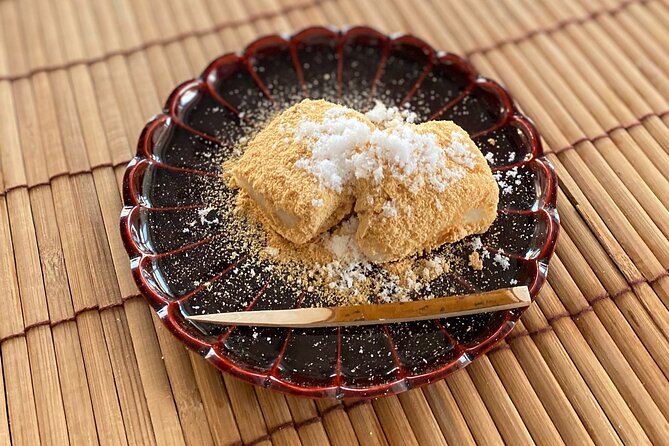
The class concludes with a tasting session. Your creations are served with green tea, hojicha, or coffee, giving you a relaxed finish after the hands-on work.
This final stage is not just a quick bite before you leave. It lets you compare the different textures and fillings while asking follow-up questions. The instructor can also suggest shopping or sightseeing ideas in Tokyo, making the conversation useful beyond the recipe itself.
You should plan to eat much of what you make during the session. Some class arrangements provide containers for leftovers, and one practical detail from the experience is that participants have been able to take unfinished sweets back to their hotel. Still, do not count on every item keeping well for a long time, especially fresh strawberry daifuku or anything with ice cream.
You receive an English recipe sheet, so the class has value after you return home. That makes the experience more than a one-time activity. You can try to recreate the sweets later, though mochi texture can take practice.
Why the private Meguro setting matters
The meeting point is at President Meguro Heights, at 1-chome 3-16 Meguro, Meguro City, Tokyo 153-0063. It is within a short walk of JR Meguro Station on the Yamanote Line and a nearby metro station.
That location is practical for a Tokyo itinerary. Meguro is well connected, so you can fit the class between sightseeing plans without arranging a long transfer. The studio is private rather than a public restaurant, which gives the session a more personal cooking-lesson feel.
You should still allow time to find the exact building. The address includes an apartment-style building name, and the activity ends at the same meeting point. Follow the directions provided at booking and avoid arriving at the last minute.
There is no hotel pickup or drop-off. You are responsible for getting to and from Meguro, and transportation to other attractions is not included. The class itself is near public transportation, so the lack of transfers is not a major problem if you are already using Tokyo’s trains and metro.
Morning or afternoon: choosing the better time
You can choose a morning or afternoon departure. Pick based on your sightseeing plans and how you handle Tokyo’s heat and crowds.
An afternoon class can be a smart break during hot weather. The studio gives you two indoor hours after a morning of walking, and the pace is calmer than squeezing in another outdoor attraction. It also gives you a satisfying snack before dinner, though you may want to leave room for a full meal later.
A morning class works well if you want to use the rest of the day for sightseeing. It also places the cooking activity early, when you may have more energy for shaping and preparing several types of mochi.
Jet lag is worth considering. The class includes several practical steps, and a tired child or adult may lose focus near the end. Families can choose the time that best matches their sleep schedule rather than simply selecting the cheapest or earliest option.
Is $79.26 a fair price?
At $79.26 per person, this is a midrange Tokyo food activity. The price includes the mochi lesson, tasting, apron, English recipe sheet, and green tea, hojicha, or coffee. You also receive direct instruction and access to a certified wagashi teacher in a private studio.
The value is strongest if you want participation and cultural context. You are making several kinds of mochi over two hours, not just watching a chef prepare one item. The variety of sweet and savory foods also means you leave with a better sense of how mochi fits into Japanese cooking.
The value is weaker if you mainly want to eat mochi cheaply. Tokyo has plenty of inexpensive sweets, and this class costs far more than buying a few packaged treats. You are paying for the teaching, the ingredients, the private setting, and the chance to ask questions.
For a family, the cost can add up quickly. For a couple or a small group that enjoys cooking, the personal instruction and shared activity may justify it. The class requires at least two people per booking unless you arrange a private class. For a private class of up to six people, book one adult as instructed by the activity provider.
Who will enjoy this most
I would choose this class for:
- First-time visitors to Japan who want a food activity tied to culture.
- Families with children age four and older, especially children who like shaping, mixing, and tasting.
- Mochi fans who want to compare several styles in one sitting.
- Couples and small groups looking for an indoor activity near a train station.
- People who want English instruction and a chance to ask a local teacher about Tokyo.
- Visitors avoiding dairy, provided they request dairy-free ice cream in advance.
I would think twice if you dislike sticky textures, have very limited time in Tokyo, or want a formal professional cooking course. This is friendly and hands-on, but it is still an introductory experience designed to cover several foods in a short period.
Practical details before you reserve
The minimum age is four. Children under four are not permitted because of safety concerns. The studio is non-smoking and near public transportation.
Confirmation is provided at booking. Free cancellation is available until 24 hours before the scheduled start time. If you cancel or request changes later than that, a refund is not available.
The activity information lists a small-group maximum of six, while the overall maximum is listed as 12. If having the smallest possible group matters to you, confirm the exact booking format before paying.
Should you book this mochi class?
Book it if you want to do more than sample Japanese sweets. The best parts are the range of preparations, the explanation of festival customs, the English instruction, and the private Meguro setting. You also get a useful recipe sheet and a chance to ask a local wagashi instructor about Tokyo beyond the classroom.
Skip it if your budget is tight or if you only want mochi ice cream. That item is demonstrated rather than promised as a full hands-on project. For most people who enjoy food, crafts, and local conversation, though, the two-hour format gives you a pleasant and practical look at a Japanese staple.
FAQ
Where is the mochi-making class held?
The class is held at a private studio in President Meguro Heights, 1-chome 3-16 Meguro, Meguro City, Tokyo 153-0063. It is a short walk from JR Meguro Station on the Yamanote Line and a nearby metro station.
How long does the experience last?
The activity lasts approximately two hours.
What types of mochi will I make?
The class includes strawberry daifuku mochi, three-color dango on skewers, and warabi mochi. You will also be served savory grilled mochi with soy sauce and nori seaweed.
Is mochi ice cream included?
Mochi ice cream is demonstrated during the class. The activity does not state that each participant makes a complete serving from start to finish.
Is the class taught in English?
Yes. The instructor is fluent in English and can explain the cooking steps, mochi traditions, local life, and suggestions for shopping or sightseeing in Tokyo.
What is included in the price?
The price includes the mochi lesson, food tasting, aprons, an English recipe sheet, and green tea, hojicha, or coffee.
Can children attend?
Children age four and older may attend. Children under four are not allowed in the class for safety reasons.
Can I cancel for a refund?
You can cancel for a full refund if you do so at least 24 hours before the experience start time. Cancellations or changes made less than 24 hours before the start time are not accepted for a refund.
Just added around Tokyo
- Tokyo: Mochi-Making Class in a Private Studio★ 5.0 · 8 reviews
- Tokyo: Japanese anime stores with ramen lunch in Shibuya★ 5.0 · 3 reviews
- Tokyo: Private Makeover Photography Studio in Luxury Kimono★ 5.0 · 22 reviews
- Tokyo: Anime, Manga or Kanji Tattoo in a Modern Salon★ 4.7 · 5 reviews
- Tokyo: Anime, Manga and capsule toy Tour in Shibuya★ 5.0 · 2 reviews
- Tokyo Akihabara Anime walking tour & Maid Cafe option★ 5.0 · 6 reviews
- Real-Life Anime Pilgrimage Tour: “Shibuya Incident”★ 4.9 · 28 reviews
- Private Akihabara Anime Game Maid Cafe Tour w/ free pickup★ 5.0 · 6 reviews
Japan Film Location Tours, compared.

Tokyo Studio Ghibli Museum and Ghibli Film Appreciation Tour
Read our review →
Akihabara Anime & Game Adventure Walking Tour (Group or Private)
Read our review →
Go Daikoku PA Fast & Furious 3 Sports Car Meetup
Read our review →

Fast & Furious Tokyo Drift 3 (Kaila Yu-SP) : Experience Ride JDM
Read our review →
Warner Bros. Studio Tour Tokyo – The Making of Harry Potter
Read our review →
Browse the lists this tour appears in