
REVIEW · INDIA
Marvelous 4 Days Golden Triangle India Tour ( Delhi-Agra-Jaipur)
The best moment here is the Taj Mahal at sunrise, when the marble shifts from gray to cream and bright white as the light changes. This four-day route also gives you a fine first look at India’s Mughal monuments, Rajput forts, grand palaces, and planned cities without making you arrange every transfer yourself.
I like the private air-conditioned car and the route’s strong mix of sights: Qutub Minar and Humayun’s Tomb in Delhi, Agra Fort and the Taj Mahal, then Amer Fort and Jaipur’s astronomical observatory. The main drawback is the pace. Four days cover a lot of ground, and the price of $400 per person does not include hotels, meals, entry fees, or a professional guide.
Key points at a glance
- Sunrise at the Taj Mahal: The early visit gives you softer light and a calmer setting than the middle of the day.
- Private car from Delhi to Jaipur: Fuel, tolls, parking, interstate taxes, and driver allowance are included, which keeps the long road sections simple.
- Three major cities in four days: You see Delhi, Agra, and Jaipur, but you will spend plenty of time moving between them.
- Forts, tombs, palaces, and step wells: The route includes Qutub Minar, Humayun’s Tomb, Agra Fort, Fatehpur Sikri, Chand Baori, Amer Fort, and Jaipur’s City Palace.
- Flexible private format: Only your group takes part, and the operator has arranged airport pickups and custom plans for some groups.
- Extra costs matter: Monument tickets, camera fees, hotels, meals, guide services, personal expenses, and tips are not included.
A smart first look at India’s Golden Triangle
The Golden Triangle links Delhi, Agra, and Jaipur in a rough triangle across northern India. Each city offers a different story. Delhi brings Mughal tombs and modern national landmarks. Agra centers on Shah Jahan’s marble masterpiece. Jaipur adds royal courtyards, hill forts, pink-toned architecture, and scientific monuments.
This is a private driving tour, not a small shared group. You travel in an air-conditioned car with a driver, and the program begins in Delhi at about 8:30 a.m. It ends in Jaipur after the final sightseeing stops. That arrangement is useful if you want control over your own group and do not want to coordinate trains, taxis, and hotel transfers across three cities.
The format has also helped groups with special planning needs. The operator has arranged a Delhi airport pickup, helped with train-ticket problems, and adjusted schedules for a group of seven friends. Those details suggest a practical service style, especially if you need help connecting the main tour with arrival plans.
Still, confirm your exact start point, vehicle size, guide arrangements, and hotel plan before paying. The supplied details identify Delhi as the starting city and Jaipur as the ending city, while the location field gives Jaisalmer. That is worth clearing up in writing.
A few more filming locations around India worth a look
- From Edinburgh: Isle of Skye and Hogwarts Express 4-Day Trip
★ 4.8 · 142 reviews - 4-Day Outlander Trail Tour from Edinburgh Including Admissions
★ 5.0 · 81 reviews - 4-Day Outlander Trail From Edinburgh
★ 5.0 · 36 reviews
Day 1: India Gate, Lotus Temple, Qutub Minar, and Humayun’s Tomb
Your first day moves around Delhi’s major sights. It is a broad introduction rather than a slow neighborhood walk, so expect variety and a fair amount of time in the car.
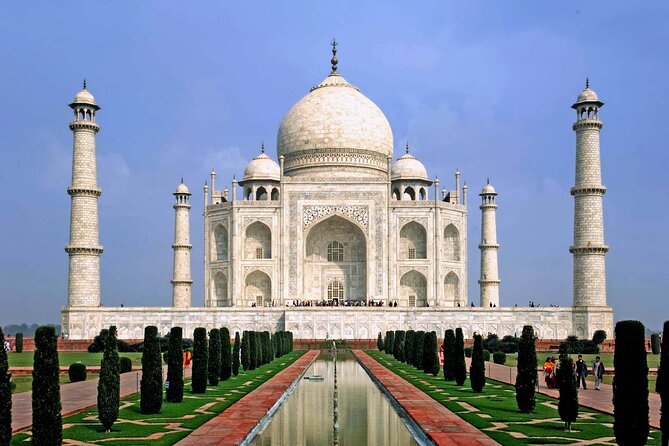
At India Gate, you get a short stop of about 30 minutes. This large war memorial sits near Kartavya Path, the ceremonial axis of New Delhi. It is an easy orientation point and a useful place to see the formal, planned side of the capital. The visit is brief, and admission is not included, so think of it as a photo and context stop rather than a full museum visit.
The Lotus Temple offers a different mood. Its white marble form resembles a lotus, and the surrounding gardens give it breathing room from Delhi’s traffic. The Bahá’í temple welcomes people of any faith for prayer or quiet meditation. You have about an hour here, which gives you time to appreciate both the architecture and the calm interior rules. Admission is not included.
Next comes Qutub Minar, a 73-meter brick minaret within a UNESCO World Heritage site. The tower is the main draw, but the surrounding Qutub complex gives the visit more weight. The monument was begun by Qutub-ud-din Aibak after the defeat of Delhi’s last Hindu kingdom. Your hour here is enough for a focused visit, though a guide would help explain the complex’s many layers.
The day ends at Humayun’s Tomb, one of Delhi’s most important Mughal monuments. Commissioned by Humayun’s first wife, Empress Bega Begum, and designed by Persian architects Mirak Mirza Ghiyas and his son Sayyid Muhammad, it introduced the garden-tomb form to the region. The red sandstone, formal grounds, and domed tomb prepare you for the design language you will see again in Agra.
The schedule gives you four strong sights, but it does not leave much room for wandering. I like that the day includes both religious architecture and imperial monuments. If you prefer markets, food stops, or longer time in Old Delhi, ask about customization before departure.
Day 2: Agra Fort and the Yamuna views
Day two turns toward Agra, home of the Taj Mahal. The main visit is Agra Fort, a huge red sandstone complex shaped by Mughal rulers, especially Emperor Akbar. Inside, you see palaces and halls such as Diwan-e-Aam, Khas Mahal, the Pearl Mosque, and Musamman Burj.
The fort is not just another red wall. It helps explain the power behind the Taj Mahal. It was also the place where Aurangzeb confined his father, Shah Jahan, who had commissioned the Taj. From parts of the fort, the connection between the imperial residence and the famous mausoleum becomes easier to understand.
You have about an hour here. That is enough for the principal courtyards, but not for a leisurely study of every building. Admission and camera fees are extra, so budget for them separately.
The next stop is Itmad-ud-Daulah, a smaller Mughal tomb often called the Baby Taj. It is sometimes viewed as a draft for the Taj Mahal, though it deserves attention on its own. Its delicate decoration and compact scale provide a useful contrast with Agra’s enormous monuments. The scheduled visit lasts about 30 minutes, making this a quick but worthwhile stop.
At Mehtab Bagh, you look across the Yamuna River toward the Taj Mahal. The garden was built by Babur as part of a series of riverside gardens, and its alignment with the Taj complex makes it a good place for a sunset view. The one-hour stop gives you time to sit, take in the profile of the monument, and see it without entering the main Taj grounds.
This is a well-judged afternoon. Agra Fort explains the Mughal court, Itmad-ud-Daulah shows finer decorative work, and Mehtab Bagh gives you a broad view of the Taj. The tradeoff is that the experience remains tightly scheduled. Your driver gets you between the stops, but the amount of time outside the car is limited.
Day 3: Sunrise at the Taj Mahal, Fatehpur Sikri, and Chand Baori
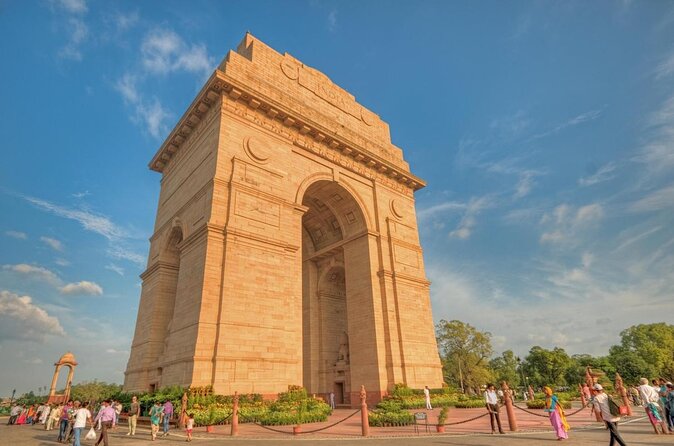
The early start is the heart of the trip. The Taj Mahal at sunrise is worth protecting in your schedule. The white marble can appear soft gray, pale yellow, creamy, and then bright white as the sun rises. Morning haze and gentle light can make the monument feel less severe than it does under the hard midday sun.
The visit lasts about two hours. Use that time carefully. Give yourself room to see the main structure, the surrounding buildings, and the changing reflection on the marble rather than rushing straight to a single photograph. Entry and camera fees are not included.
The Taj was built in the 17th century by Shah Jahan for his wife and took 22 years to complete. Its fame can make the visit feel almost overfamiliar before you arrive, but the scale and detail are still powerful in person. I especially like that this itinerary approaches it after Agra Fort and Mehtab Bagh. You see the monument first from a distance, then in its imperial setting, and finally up close in morning light.
There is one important scheduling note: the Taj Mahal is closed on Fridays. The tour information says the visit will move to the next day when Friday affects the plan. Confirm the exact sequence before booking, since changing the Taj visit can affect the rest of the four-day route.
After Agra, the road continues to Fatehpur Sikri, about 40 kilometers west of the city. This fortified former capital was built during Emperor Akbar’s reign and later abandoned as a capital. Its architecture blends Indian, Persian, and Islamic forms, making it one of the clearest places on this route to see how Mughal design developed.
You have about an hour here, and admission is listed as free. The site is spread out, so comfortable shoes and water are sensible, though the tour details do not specify what refreshments are provided. The short visit works as an overview, but you may want more time if architecture is your main interest.
The final stop is Chand Baori, the famous step well at Abhaneri. Its descending flights of steps form a remarkable geometric pattern, but the structure also had a practical purpose. Step wells stored water and offered a cooler place during dry periods. The stop lasts about 30 minutes and admission is listed as free.
Chand Baori is a strong choice because it breaks up the palace-and-tomb pattern. You see an ingenious piece of water architecture tied to daily life, not only royal power. The drawback is another long road day. By the end of Day 3, you will have seen major monuments, but you may feel the mileage.
Same place, a completely different screen:
- Best Bollywood Tour with Rahil Khan (Transport Included)
★ 5.0 · 548 reviews - Ultimate Mumbai Full Day: Sights, Bollywood Dance, Lunch & Spices
★ 5.0 · 201 reviews - Mumbai: Bollywood Tour in Mumbai Film City
★ 4.7 · 116 reviews - Best Bollywood Tour With Rahil Khan (Without Transport)
★ 5.0 · 113 reviews
Day 4: Jaipur’s palaces, forts, and observatory
Jaipur’s sights are tightly grouped in the final day, with short stops at some landmarks and longer visits at the main sites.
Begin at Hawa Mahal, the Palace of Winds. Its honeycomb-like façade and curved latticework windows are among Jaipur’s best-known views. The stop is only about 15 minutes, so treat it as an exterior photograph and quick introduction. Do not expect a slow palace visit at this point in the schedule.
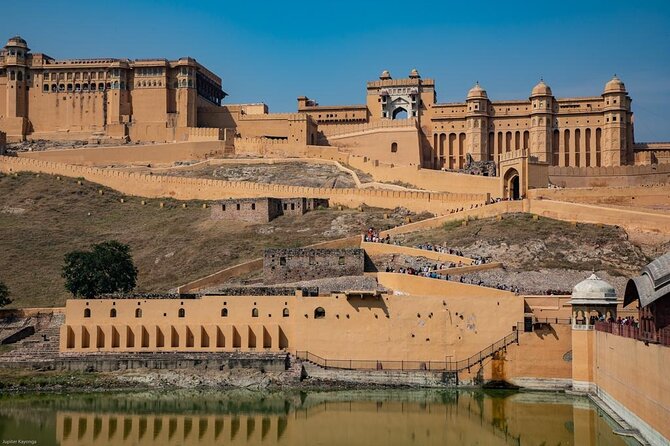
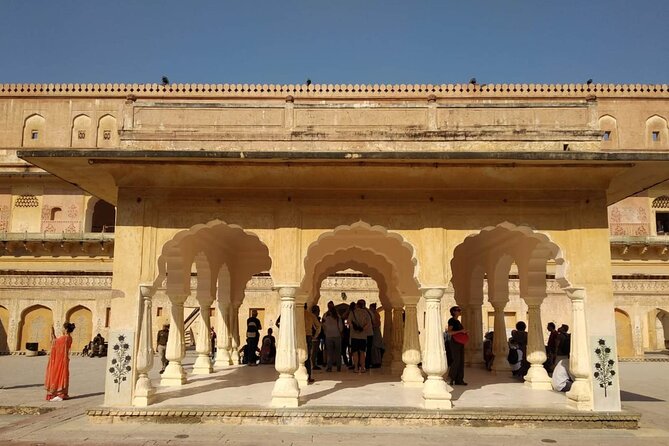
At Amer Fort, you get the day’s main architectural experience. Set among rugged hills outside Jaipur, the fort mixes Hindu and Muslim design in red sandstone and white marble. The two-hour visit gives you time to see courtyards, decorative details, and the larger setting. Admission is listed as free in the provided tour details, but confirm current charges before you travel, since other monument fees are specifically excluded.
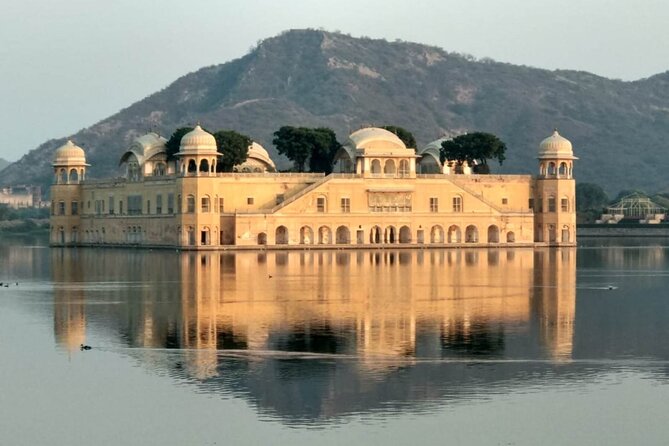
Jal Mahal, the Water Palace, is another brief stop. The five-story red sandstone building sits in Man Sagar Lake and is linked to the Rajput tradition of Jaipur. The palace is generally appreciated from the shore, and the scheduled 15 minutes is enough for a photograph and a quick look across the water.
You then spend about two hours at the City Palace of Jaipur. Its courtyards, gardens, and separate palace areas show the continuing importance of the Jaipur royal court. This is a place where a guide can add real value by explaining which buildings served public, private, or ceremonial purposes. Professional guide service is not included, so arrange one in advance if you want detailed interpretation.
Finish at Jantar Mantar, a UNESCO World Heritage site and one of Jaipur’s most unusual monuments. The observatory includes the world’s largest stone sundial and was built by Sawai Jai Singh. It remains an impressive example of how architecture and astronomy worked together. The one-hour visit is long enough to understand the main instruments, though a guide would make the measurements easier to follow.
Jaipur’s final day is full, but its sights have more visual variety than the schedule suggests. You move from a street-facing palace to a hill fort, a lake view, royal courtyards, and scientific instruments. That range is one of the tour’s best features.
What the $400 price really covers
At $400 per person, the price is easiest to judge for a private group rather than a solo visitor. The included package covers the air-conditioned car, private transport, fuel, parking, tolls, interstate taxes, and the driver’s allowance. Those costs can add up quickly on a multi-city road route.
The price does not cover hotel rooms, food, personal expenses, monument admission, camera fees, professional guide service, activities, or tips. This is important. The headline price is not the final cost of a four-day holiday.
The value improves when several people share the car. A family or group of friends can split the transport cost while keeping a private schedule. The operator has also arranged travel for a group of seven and provided Delhi airport pickup, which makes the format useful for group planning.
If you are traveling alone, compare the $400 cost with a shared tour or train-based plan. The private car gives you direct transfers and less coordination, but you will need to pay the same extras on top. Ask for a complete estimate that includes admission fees, guide costs, accommodation, and any airport transfers you need.
The private car, guide question, and pace
The air-conditioned vehicle is more than a comfort feature. Delhi, Agra, and Jaipur are separated by long road journeys, and the car lets you move on your own schedule. Fuel, tolls, parking, and state taxes are already handled, so you do not need to negotiate each transfer.
The tour includes a driver but does not include a professional guide. That distinction matters. A driver can get you to the monuments and help the day run on time, while a guide can explain Mughal succession, Rajput architecture, religious symbolism, and the astronomical instruments at Jantar Mantar.
You can book this as a private activity for your own group. That makes it easier to adjust the pace, especially if one person wants more time at the Taj Mahal or less time at a smaller stop. The published start time is 8:30 a.m., though the Taj sunrise visit clearly requires an earlier arrangement. Confirm the pickup time for each day.
The tour is designed for most participants, but the schedule is demanding. You should be comfortable with early starts, long drives, and several hours on your feet. The details do not provide a specific accessibility plan, so ask directly if mobility support is important to you.
Small details that can make the trip better
Keep Friday in mind from the beginning. Since the Taj Mahal is closed that day, the order can change, and the sunrise plan may shift.
Ask about airport pickup if you are arriving in Delhi. This service has been arranged for some groups, but it should be confirmed as part of your own booking.
If you want a guide, request one before the trip. Guide service is an extra, and the major monuments are much easier to understand when someone explains the people, dates, and design choices behind them.
Plan your budget beyond the $400 base price. Hotels and meals are not supplied, and every monument entrance fee is not included. Keep money aside for tips and camera charges as well.
Finally, ask about the exact vehicle and group size. The experience is private, but the provided details do not specify the car model or seating capacity. That matters if your group includes seven people or a large amount of luggage.
Should you book this Golden Triangle tour?
Book it if you want a private, organized road trip that covers the classic sights with your own group. The route is strong, the sunrise Taj Mahal visit is well chosen, and the combination of Delhi monuments, Agra’s Mughal sites, Jaipur’s forts, and Chand Baori gives you a broad first look at northern India.
I would be more cautious if you dislike early mornings, long drives, or extra charges that are not part of the headline price. Four days is enough to see the big sights, but not enough for a slow experience in each city.
For families, first-time visitors, and groups of friends, the private car and planning help can be worth the cost. Before booking, confirm the Friday Taj Mahal plan, guide fees, admission costs, hotel arrangements, airport pickup, and the apparent Jaisalmer location mismatch. If those details are clear, this is a practical way to see the Golden Triangle without managing every transfer yourself.
FAQ
Where does the tour start?
The tour starts in Delhi, with a listed start time of 8:30 a.m.
Where does the tour end?
The tour ends in Jaipur after visiting Delhi, Agra, and Jaipur.
How long is the tour?
The tour lasts approximately four days.
Is transportation included?
Yes. Sightseeing and transfers use a private air-conditioned vehicle. Fuel, parking, toll taxes, interstate taxes, and the driver’s allowance are included.
Is the tour private?
Yes. Only your group participates in the activity.
Is a professional tour guide included?
No. A professional guide is not included in the listed inclusions. Guide service is an additional cost.
Is the Taj Mahal included in the route?
Yes. The tour includes a Taj Mahal visit planned for sunrise, with about two hours scheduled there.
What happens if the Taj Mahal visit falls on Friday?
The Taj Mahal is closed on Fridays. The tour information says the visit will be moved to the next day.
Are monument entrance fees included?
No. Monument entrance fees and camera fees are not included. The listed details identify Fatehpur Sikri and Chand Baori as free admission stops.
Are hotels and meals included?
No. Hotel accommodation, meals, and personal expenses are not included.
Can I cancel for a full refund?
Yes, if you cancel at least 24 hours before the experience start time. Cancellations within 24 hours are not refundable. If poor weather or an insufficient number of participants causes cancellation, you are offered another date or a full refund.
Just added around India
- James Bond Island Sunrise Early Bird Tour by Speed Boat★ 4.5 · 3 reviews
- Big Bollywood Studio only Tour with Meal : From Pune★ 4.5 · 3 reviews
- Dance Class in Delhi: Learn to Dance like a Bollywood Star★ 4.5 · 12 reviews
- Full-Day Private Slum and Bollywood Tour with DANCE.★ 4.5 · 24 reviews
- Private Slum tour With Bollywood and Stars Home★ 5.0 · 16 reviews
- Bollywood Tour★ 5.0 · 7 reviews
- Entry Tickets to the Studio in Mumbai★ 5.0 · 15 reviews
- Private Full Day Bollywood Studio tour with Meal★ 5.0 · 22 reviews
India Film Location Tours, compared.

Best Bollywood Tour with Rahil Khan (Transport Included)
Read our review →
Ultimate Mumbai Full Day: Sights, Bollywood Dance, Lunch & Spices
Read our review →

Best Bollywood Tour With Rahil Khan (Without Transport)
Read our review →

Private Mumbai City Tour and Bollywood Tours With Meal
Read our review →Browse the lists this tour appears in