
REVIEW · THE UK
Digbeth, Public art and Peaky Film Guided Walking Tour
Digbeth gives Birmingham a different face: part industrial quarter, part artists’ district, part film set. This 2-hour walk from the Bull statue to Digbeth connects the city centre with old canals, public art, the Custard Factory, Red Brick Market, and the Peaky Blinders production area.
I like the way Jonathan Berg brings together two subjects that work well side by side: Birmingham’s urban history and its modern street art. I also like that the route explains how a market hamlet grew into a major city, rather than simply pointing out colorful walls. The main consideration is the route itself. At just over 4 kilometers, using pavements, footpaths, and towpaths, it is not suitable for people with mobility impairments.
Key points to know
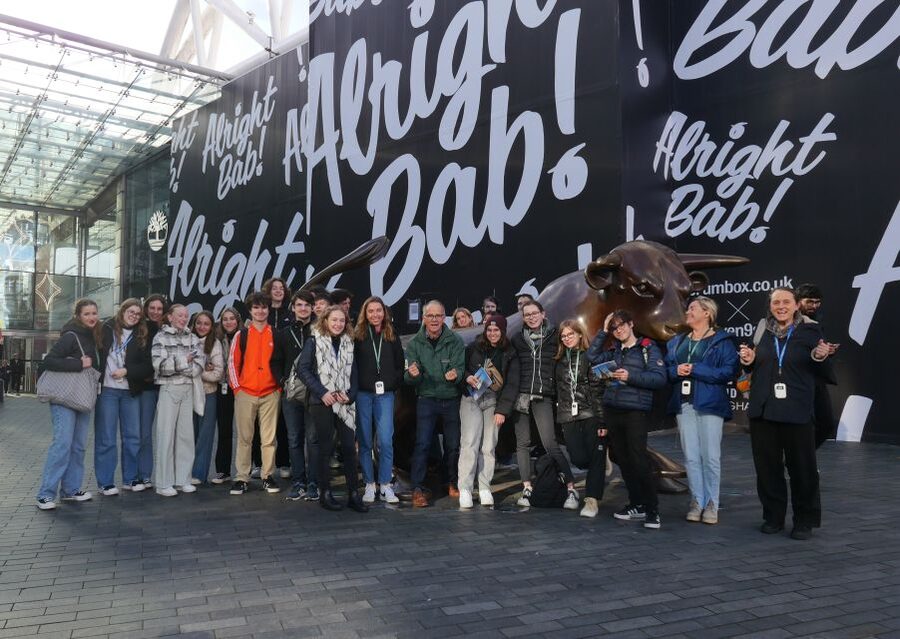
- Start at the bronze Bull: Meet beside the Nike Superstore in Birmingham’s Bullring Shopping Centre.
- Walk from the city centre into Digbeth: The route shows how Birmingham changes from its commercial core to an old industrial and creative district.
- See public art with context: Jonathan Berg is an author and photographer whose work focuses on Birmingham’s public art, especially Digbeth’s street art.
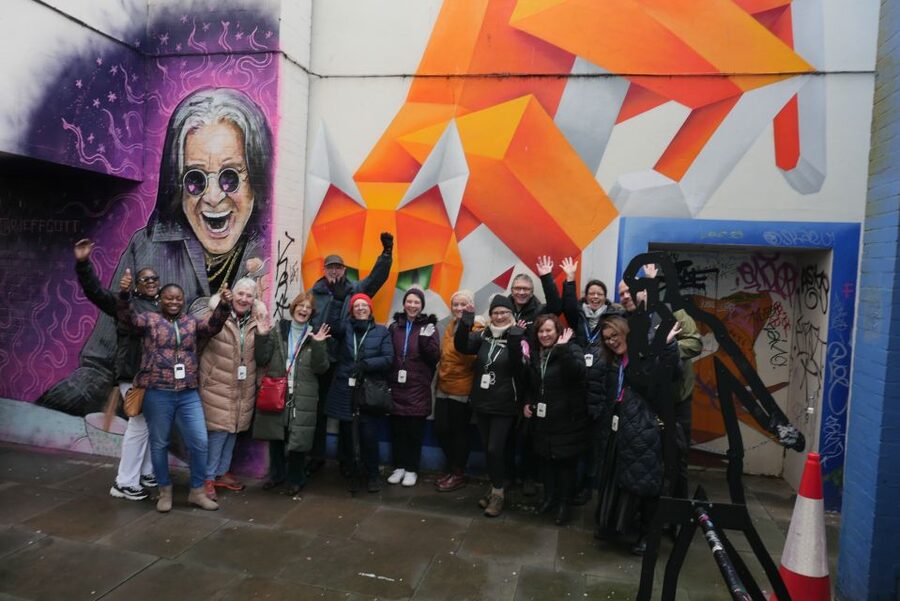
- Visit Peaky Blinders locations: The walk includes the Digbeth LOC studios area, with Peaky Blinders murals that make a good photo stop.
- Cover just over 4 kilometers: Expect pavements, footpaths, and towpaths over about two hours.
- Pay about $20: For a small-group-style guided walk with a specialist local focus, the price is reasonable, especially if you want more than the standard Birmingham sights.
Starting beneath the Bull in Birmingham
The tour begins at the bronze Bull statue by the Nike Superstore in the Bullring Shopping Centre. This is a practical meeting point in the heart of Birmingham, and it gives the walk a clear starting line: from the city’s best-known shopping district toward Digbeth’s older streets.
The Bullring is modern, busy, and easy to recognize. Digbeth feels different. That contrast is part of the point. Instead of treating Birmingham as a collection of separate attractions, the walk shows how the city grew outward from an early market settlement and developed into an industrial city.
You will want to arrive ready to walk, rather than expecting a stop-and-start sightseeing outing. The route covers a little over 4 kilometers, so comfortable shoes matter. The pace and route are designed for walking along public streets, footpaths, and towpaths, with time to pause for the guide’s explanations and the art along the way.
A headset is provided so you can hear Jonathan clearly. If you have earphones with a 3.5 mm jack, you can bring them. Otherwise, a new pair is supplied. That small detail matters on an urban walk, where traffic, city noise, and passing pedestrians can make a guide hard to hear.
More location walks in the UK:
- Magical London: Harry Potter Guided Walking Tour
★ 4.7 · 22,044 reviews - Edinburgh: Harry Potter Magical Guided Walking Tour
★ 4.8 · 11,944 reviews - Tour for Muggles The Ultimate Harry Potter Walking Tour in London
★ 5.0 · 4,684 reviews
Seeing Birmingham grow from a market hamlet
One of the best reasons to take this tour is its story of urban growth. Birmingham can seem like a modern commercial center if you only visit the Bullring, the central shopping streets, and the main attractions. This walk adds the older layer, showing how the city’s development reached into Digbeth and Deritend.
The tour does not simply use Digbeth as a backdrop for photographs. It explains the district’s place in Birmingham’s development and helps you read the streets as evidence of change. You get a sense of how an area linked to trade, industry, transport, and working life has become increasingly connected to the city centre.
That context makes the modern changes easier to understand. The arrival of HS2 and the Metro tram is part of Digbeth’s current story, as the area becomes more closely tied to central Birmingham. Those changes bring new attention and new investment, but they also raise questions about how older industrial districts change when the city expands around them.
Jonathan Berg’s approach suits this setting. He is an author and photographer, and his work on Birmingham’s public art gives him a useful eye for details that can be easy to miss. You are not just being led from one attraction to another. You are being shown how buildings, walls, transport routes, and public spaces fit into the city’s changing identity.
Entering bohemian Digbeth and Deritend
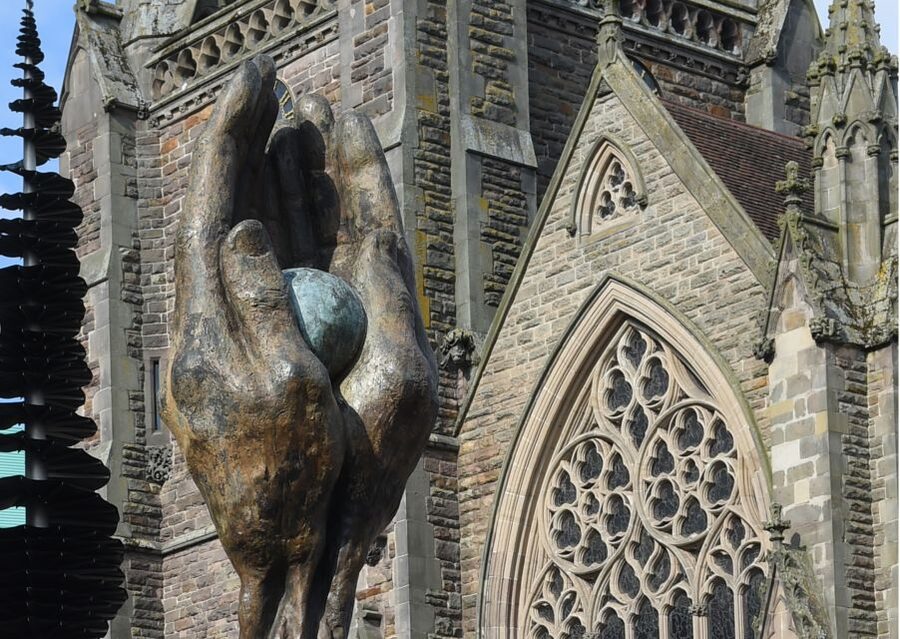
The route leads from the Bullring into the historic Digbeth and Deritend area. Here, the city centre gives way to a more unconventional district, with old industrial character, creative spaces, street art, markets, and cultural venues.
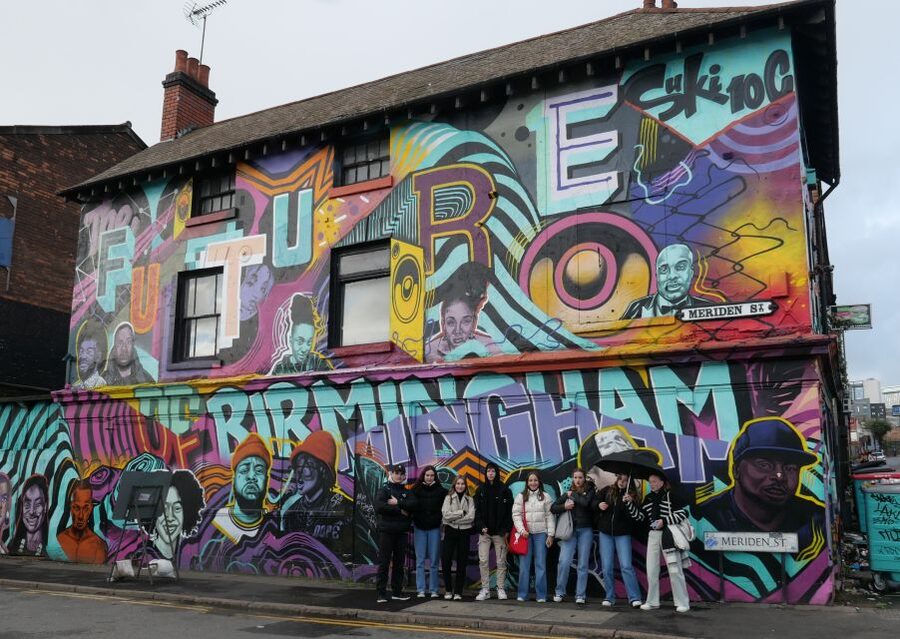
The word bohemian is often used too loosely, but it fits the feel described by this tour. Digbeth has a less polished personality than the central shopping area. You may find weathered brick, large painted walls, independent spaces, and signs of a district still being reshaped.
This is also where the route offers something you are unlikely to get from a standard Birmingham introduction. The guide helps you look beyond the city’s main recommendations and into a quarter that many first-time visitors might otherwise skip.
Annemi from South Africa found the walk interesting precisely because it led to an area outside the usual Birmingham route. That is useful advice if you are building a short city visit around familiar sights. A central city tour and this Digbeth walk work well together: one gives you the main framework, while this one shows a less obvious side of Birmingham.
Do not expect Digbeth to look like a preserved historic quarter. Its appeal comes from the mixture of old and new, including redevelopment, creative activity, transport changes, and film production. If you prefer tidy streets and a long list of formal monuments, this may feel less immediately rewarding. If you enjoy seeing how a city is actually changing, it should be more interesting.
Reading Birmingham through its public art
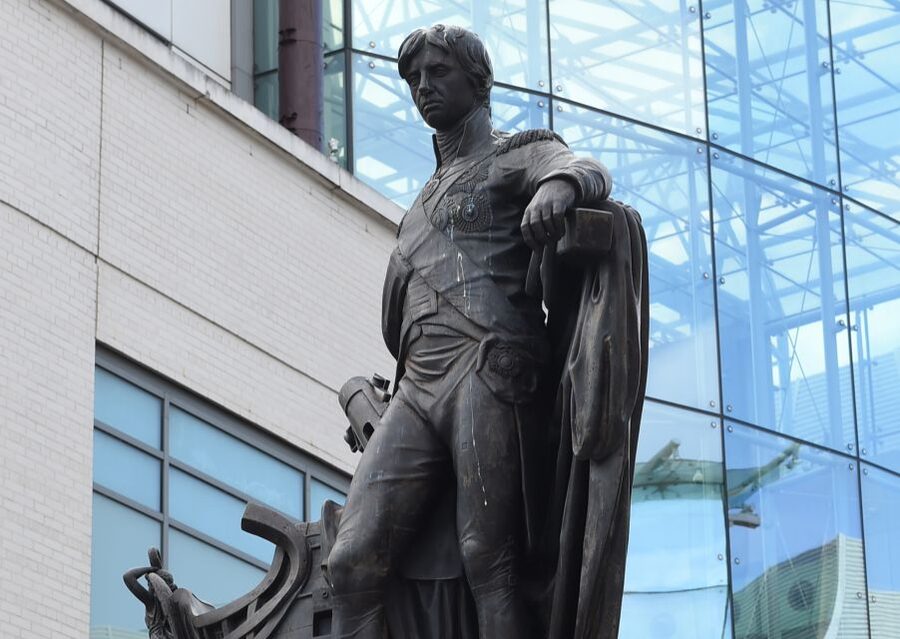
Public art is the tour’s strongest specialist subject. Jonathan Berg has written and photographed Birmingham’s public art, with particular attention to Digbeth’s street art. That background gives the walk a clear focus and helps distinguish it from a general city stroll.
You will see public art as part of the streetscape, not as isolated decoration. The useful question is not only who painted a wall or what an image shows. It is also why art appears in this district, how it changes the feeling of a street, and how creative work relates to Digbeth’s wider redevelopment.
The route can help you notice scale, placement, and setting. A mural beside an old industrial building creates a different impression from a sculpture in a formal square. A wall near a creative venue tells a different story from a piece beside a transport route. Those details are easier to appreciate when someone points them out as you walk.
The public art focus also adds value for photographers. Digbeth’s walls and industrial spaces offer plenty to frame, and the walk’s route gives you time to see more than one style of work. Still, art in an urban district can change. Paint fades, walls are redeveloped, and temporary pieces may disappear. It is better to treat the route as a guided look at a living art scene than as a fixed museum collection.
The praise for the guide is consistent in one important way: people find him enthusiastic, helpful, and well informed. That matters here. Street art can be enjoyed without explanation, but the background turns a collection of murals into a story about Birmingham’s artists, neighborhoods, and changing public spaces.
More guided location tours in the UK:
- Original Harry Potter Locations Tour in Edinburgh : Guided Tour
★ 5.0 · 4,236 reviews - Original Harry Potter Locations Tour – Guided Tour of London
★ 5.0 · 4,117 reviews - London: Fully-Guided Making of Harry Potter Tour
★ 4.8 · 2,915 reviews - From Edinburgh: The Outlander Experience Guided Tour
★ 4.6 · 1,821 reviews
The Custard Factory and Red Brick Market
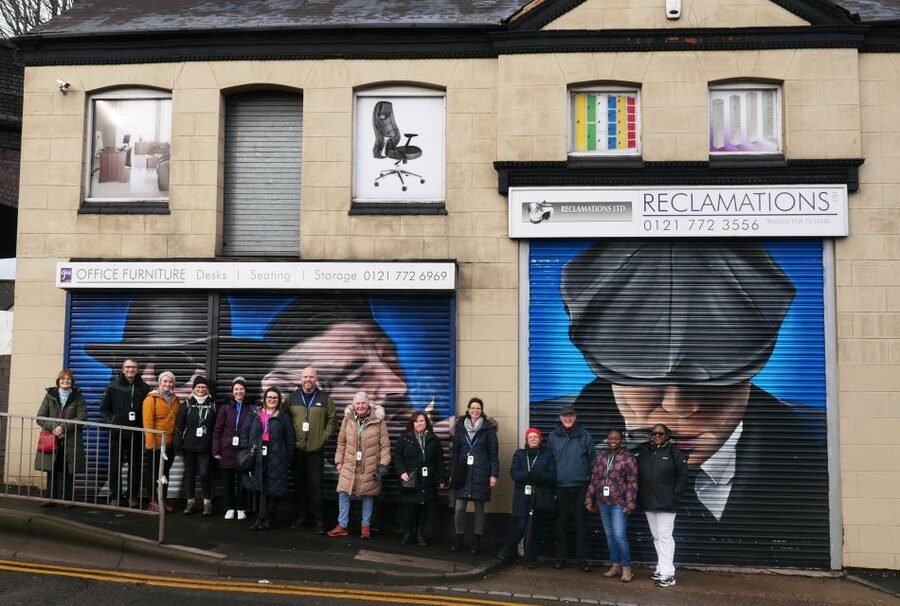
The Custard Factory is one of the main landmarks on the Digbeth section of the walk. Its name links it to Birmingham’s industrial past, while its present-day role connects it to the district’s creative identity.
This is the kind of stop that helps explain why Digbeth feels different from the Bullring. It is not just an old building preserved for its appearance. It forms part of the area’s modern cultural character, where creative businesses, events, art, and independent activity have helped give former industrial spaces a new purpose.
Red Brick Market adds another useful angle. It gives the route a more informal and local feel, with independent stalls and small-scale trading rather than the familiar chain-store experience of the city centre. The tour does not present these places as grand monuments. Their value is in showing how Digbeth functions as a place where older buildings and newer creative commerce meet.
Allow time to look around, but remember that the walk remains a guided route rather than a dedicated shopping visit. You may get an introduction to these places and their role in Digbeth without having a long free period inside each one. If you are hoping to browse every stall or spend an hour at the Custard Factory, plan a separate visit after the walk.
Following the Peaky Blinders trail
Peaky Blinders gives the tour an obvious draw, but the film connection works best when treated as one part of the Digbeth story. The area is being used for the Peaky Blinders feature film, with production underway at Digbeth LOC studios.
You should not assume that the tour takes you inside an active film studio. The route visits the studio area and includes the striking Peaky Blinders murals, which create a strong photo opportunity. Production locations can be restricted or change during filming, so the value lies in seeing the setting and understanding its connection to the film rather than expecting a full studio tour.
The murals are particularly useful for visitors who want a clear Peaky Blinders moment without building an entire day around the show. They also add another layer to Digbeth’s identity. The area is not only an old industrial quarter or a street-art district. It is now part of Birmingham’s screen-production story as well.
If you are a serious fan, keep your expectations sensible. The description points to possible filming locations and the LOC studios area, not guaranteed access to every place seen on screen. The route is still worthwhile if the filming connection changes, because its main subjects are Digbeth’s history and public art.
Walking beside streets, footpaths, and towpaths
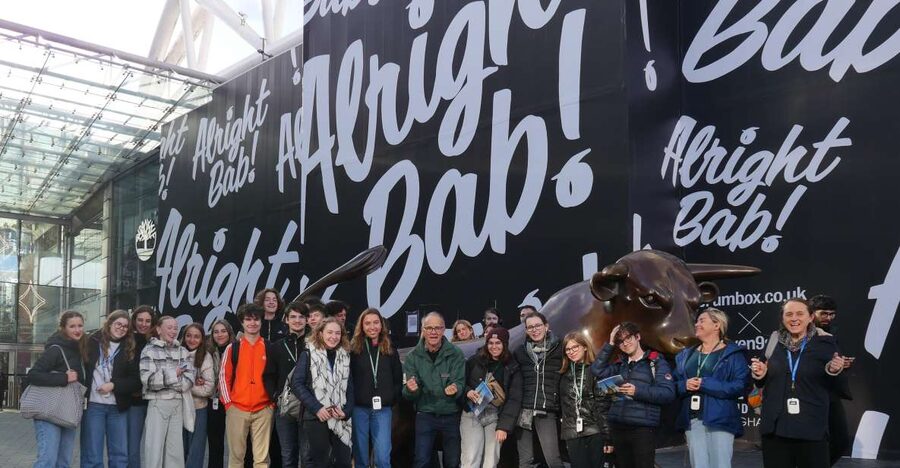
The route is just over 4 kilometers and lasts two hours. That is a moderate amount of walking, but the surface and setting vary. You will use ordinary pavements, footpaths, and towpaths rather than staying inside a pedestrian shopping zone.
The towpath section gives the walk a change of pace and helps connect Digbeth with Birmingham’s canal and industrial past. It also means you should prepare for uneven or less formal walking conditions. The activity is specifically not suitable for people with mobility impairments, so check the route against your own needs before booking.
A two-hour duration is well judged for this subject. It is long enough to link the Bullring with Digbeth and cover several themes, but short enough to fit around other Birmingham plans. You can take it in the morning, afternoon, or at another available starting time, then continue exploring the city afterward.
The headset is another practical advantage. A guide speaking beside a canal, road, or busy street can be difficult to follow. Bringing compatible earphones may be more comfortable, though the tour supplies a new pair if needed.
Is $20 good value for this Birmingham walk?
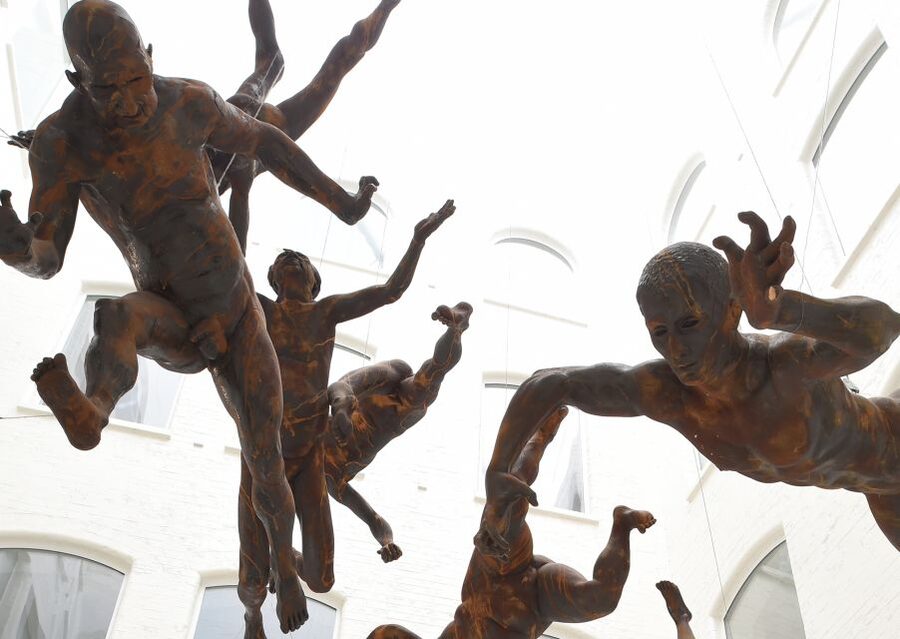
At about $20 per person, the price is fair for a two-hour guided walk with a distinct local focus. You are paying for Jonathan Berg’s knowledge of Birmingham’s public art, his photography and writing background, and the work of connecting Digbeth’s history, film locations, and modern changes into one route.
The value is strongest if you want interpretation. You can walk through Digbeth for free, take photographs of murals, and visit areas such as the Custard Factory and Red Brick Market on your own. What you cannot easily reproduce is the guide’s explanation of how the pieces fit together.
It is also a sensible choice for repeat visitors or residents who have already seen central Birmingham. The walk goes beyond the usual shopping streets and gives you a reason to spend time in a district that may otherwise be overlooked.
For a first-time visitor with only a few hours in Birmingham, the decision depends on your interests. If you want the city’s major landmarks, this is not the most efficient introduction. If you like urban history, street art, film locations, and changing neighborhoods, the price is reasonable.
The rating of 4.7 from 11 reviews supports the strongest part of the experience: the guide’s energy and subject knowledge. Sarah called the guide brilliant, fun, and well informed. Alistair praised the number of sights and the guide’s enthusiasm. Shirley found the walk enjoyable and informative, while Annemi valued the unusual route and the guide’s passion for public art.
Who should book the Digbeth walk?
I would recommend this tour to you if you enjoy:
- Street art and public photography
- Industrial and urban history
- Peaky Blinders and screen locations
- Independent markets and creative districts
- Walking tours that move beyond the standard city centre route
- A guide who explains context rather than handing you a list of facts
It should suit couples, solo visitors, and small groups who want a focused look at one of Birmingham’s changing districts. It may also work well as a second Birmingham tour after a general city walk.
I would be more cautious if you have mobility problems, dislike walking more than 4 kilometers, or want a fully traditional historic tour built around grand buildings. You should also avoid booking it solely because you expect access to film studios. The production connection is interesting, but the public art and Digbeth story remain the main attractions.
Practical details before you book
The tour is in English and is led by Jonathan Berg. It starts at the bronze Bull statue beside the Nike Superstore in the Bullring Shopping Centre, not at the Custard Factory or in Digbeth itself.
You can cancel up to 24 hours before the start for a full refund, and you can reserve now while paying later. Starting times vary, so check availability before making other plans.
Wear comfortable shoes and expect a mix of city pavements, footpaths, and towpaths. Bring compatible earphones with a 3.5 mm jack if you have them, though a new pair is supplied if you do not.
Should you book this tour?
Book it if you want Birmingham with its sleeves rolled up: street art, old industrial districts, creative spaces, canal paths, and a film connection. The strongest reason to go is Jonathan Berg’s focused knowledge of Digbeth’s public art and his ability to connect the area’s past with its rapid changes.
Skip it if you want a short, landmark-heavy introduction or need an accessible route. For everyone else, $20 buys a useful two-hour view of a side of Birmingham that is easy to miss and difficult to understand from a guidebook alone.
FAQ
Where does the Digbeth walking tour begin?
The tour begins at the bronze Bull statue by the Nike Superstore in Birmingham’s Bullring Shopping Centre.
How long is the tour?
The walking tour lasts two hours and covers a route of just over 4 kilometers.
Who leads the tour?
Jonathan Berg leads the tour. He is an author and photographer whose work focuses on Birmingham’s public art, especially the street art of Digbeth.
What language is the tour conducted in?
The live tour is conducted in English.
Does the tour visit Peaky Blinders filming locations?
The route visits the Digbeth LOC studios area, where Peaky Blinders feature-film production is underway. It also includes Peaky Blinders murals suitable for photographs.
Is a headset provided?
Yes. A headset is provided so you can hear the guide clearly. You can bring earphones with a 3.5 mm jack, or use a new pair supplied by the tour.
Is the route suitable for people with mobility impairments?
No. The activity is not suitable for people with mobility impairments and includes pavements, footpaths, and towpaths.
Just added around the UK
- PURBECK HILLS & JURASSIC COAST – PRIVATE – 4×4 LAND ROVER SAFARI★ 5.0 · 14 reviews
- Harry Potter in Oxford Tour Divinity School entry Private Tour★ 5.0 · 10 reviews
- Private | Harry Potter Film Tour By Alumni™ & New College Entry★ 4.5 · 23 reviews
- Harry Potter + Self Guided Christ Church- PRIVATE 9.30am★ 5.0 · 4 reviews
- Oxford food and sightseeing tour★ 5.0 · 5 reviews
- Downton Abbey Day in the Cotswolds from Oxford Private Tour★ 5.0 · 2 reviews
- Game of Thrones – Tollymore Forest Trek★ 5.0 · 20 reviews
- moviESCAPE Stockport Santa’s Express Christmas Escape Room Game★ 5.0 · 4 reviews
the UK Film Location Tours, compared.
Magical London: Harry Potter Guided Walking Tour
Read our review →
Warner Bros. Studio Harry Potter Tour & Branded Bus
Read our review →
Warner Bros. Studio Harry Potter Tour with Transfers
Read our review →Warner Bros. Studio Harry Potter Tour with Transfers
Read our review →
Giant’s Causeway and Game of Thrones Day Tour
Read our review →
Harry Potter: Warner Bros. Studio Tour from King’s Cross
Read our review →Browse the lists this tour appears in