
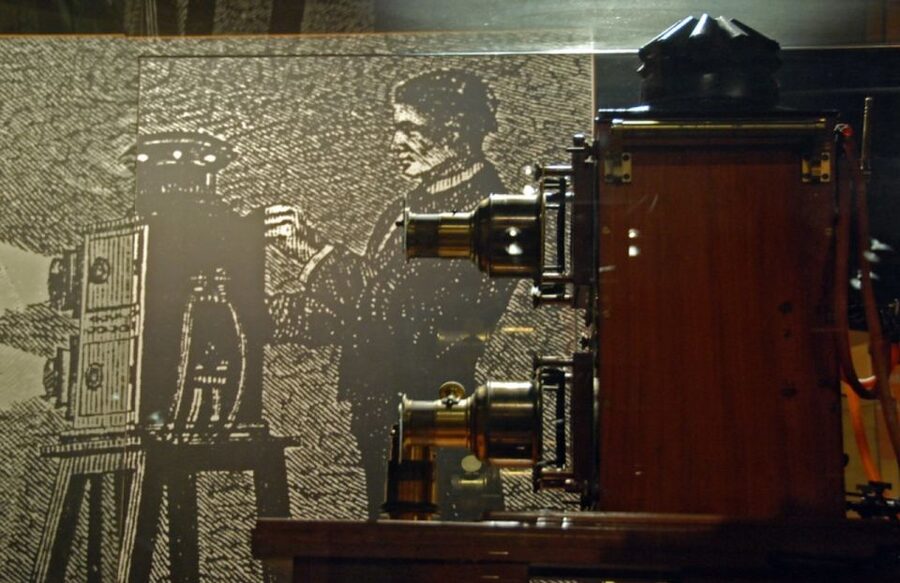
REVIEW · GIRONA
Girona: Museum of Cinema Entry Ticket
Girona’s Museum of Cinema begins long before film. Its collection shows how people created the illusion of movement with optical toys, projection devices, shadows, and other ingenious machines before the first cinematograph appeared in 1895. For a modest $8 ticket, you get both the permanent and temporary exhibitions.
I like the clear path from early image-making to modern cinema, and I like the hands-on elements that help children follow along. The French, English, Catalan, and Spanish information also makes the visit easier for international visitors. One point to check before paying: admission can be free on the first Sunday of the month, so confirm the museum’s current policy if your visit falls then.
Key points to know before you go
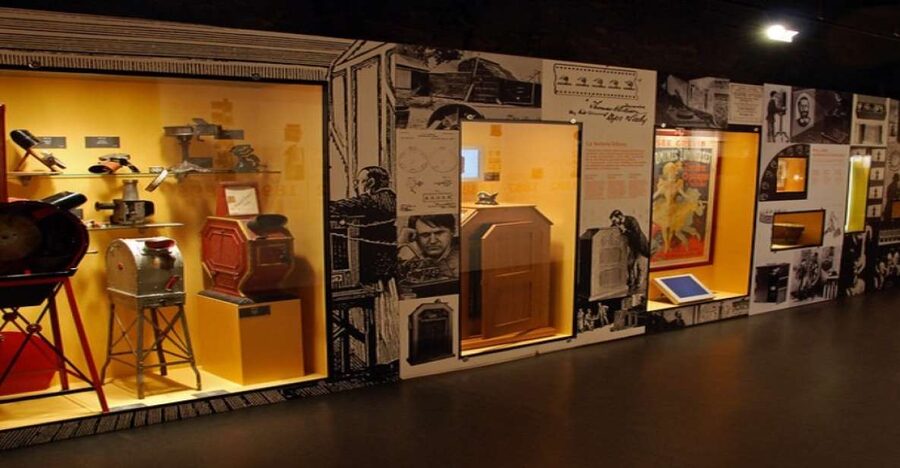
- Nearly 8,000 pre-cinema objects: See the tools and devices that made moving images possible before film.
- The Tomàs Mallol Collection: The museum’s central collection explains the technical steps leading to cinema.
- A good family stop: Interactive displays and activities give children a reason to stay engaged.
- A free online audio guide: Use the guide through the museum’s website for extra explanation beyond the wall panels.
- Permanent and temporary exhibitions: Your ticket covers both parts of the museum.
- Accessible building: The former House of Waters is prepared for people with reduced mobility.
Why Girona’s cinema museum begins before cinema
Many film museums start with cameras, projectors, and famous movie scenes. Girona takes a more useful route. It asks a basic question: how did people learn to represent movement before cinema existed?
That question gives the visit a strong structure. You begin with the visual tricks and devices that helped people create changing images, then follow the technical progress toward the cinematograph in 1895. The subject becomes easier to understand because cinema is presented as the result of many earlier experiments, not as a sudden invention.
The museum’s permanent collection comes from Tomàs Mallol, whose cinematographic and pre-cinematographic objects were acquired by the City of Girona in 1994. The collection includes almost 8,000 objects. That number matters because it lets you see cinema as a long chain of ideas, tools, and experiments rather than a single breakthrough.
You may find optical devices, early projection equipment, and other objects tied to the way images were made and viewed. The exact display arrangement may change, but the main purpose remains clear: explain how images were represented before film and how those methods led to moving pictures.
More film museums and exhibitions in Spain:
- Hidden Art Galleries and Artist’s Studio in Madrid
★ 5.0 · 42 reviews - Barcelona Art & Wine: Galleries, Studios & Street Art
★ 5.0 · 26 reviews - Girona Film Museum – Entrance
★ 5.0 · 20 reviews
Inside the former House of Waters
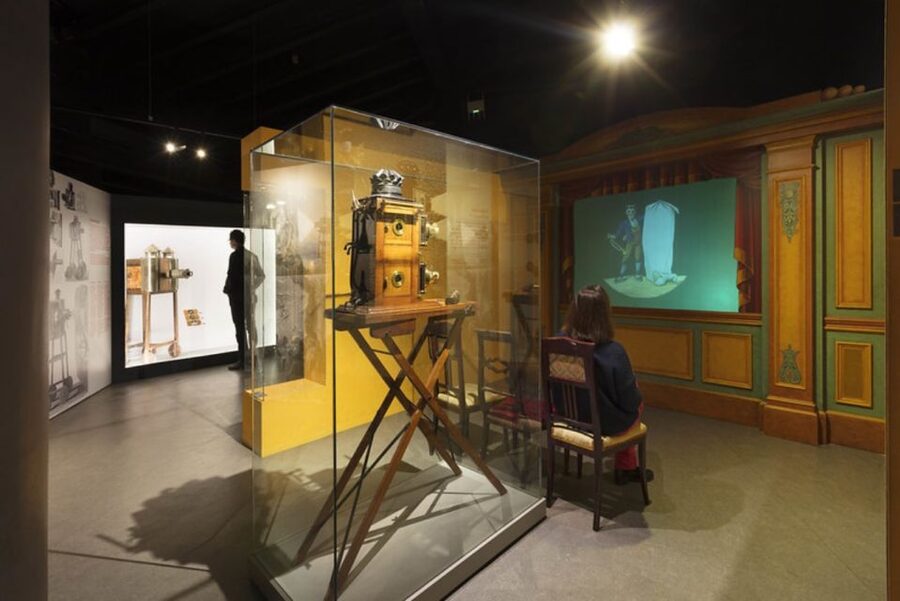
The museum occupies the former headquarters of Girona’s water company, a late nineteenth-century building known as the House of Waters. That setting gives the visit a useful sense of place. You are not walking into a generic modern gallery. You are entering a building connected to the city’s own past, now used for scientific, cultural, and recreational work.
The museum is a permanent, non-profit institution. Its purpose is not simply to display old machines. It also supports research, preservation, interpretation, and public activities connected with cinema and visual shows.
That public focus shows in the way the museum serves different age groups. You can visit as an adult interested in technology, as a family looking for an indoor activity, or as a curious passerby who wants a break from Girona’s streets and monuments. The material is specialized, but the route toward the invention of cinema gives it a natural storyline.
I would allow enough time to read and try the interactive parts rather than rushing through the rooms. The ticket is valid for one day, which gives you flexibility, although the supplied information does not set a specific visit length or timed entry period.
Following 500 years of moving-image experiments
The museum presents about 500 years of cinematic development. That does not mean you watch 500 years of films. It means you follow the history of visual entertainment and image projection from early devices to the birth of cinema.
The early section is valuable because it explains the visual habits that made film possible. Before movies, people were already fascinated by changing pictures, projected scenes, visual illusions, and methods for making still images appear to move. The museum places those developments into one connected story.
As you move toward the nineteenth century, the focus shifts from simple visual effects to more complex machines and projection methods. This is where the Tomàs Mallol Collection becomes especially useful. The objects are not only antiques. They show practical problems that inventors had to solve: how to create a sequence of images, how to display it, and how to make an audience see movement.
The final step is the cinematograph of 1895. The museum’s mission is to explain the technical process that led to its invention, so the ending of the permanent exhibition gives you a better grasp of why cinema arrived when it did.
For me, this is the museum’s strongest idea. You do not need to be a film expert to follow it. Each stage answers the question raised by the previous one.
The Tomàs Mallol Collection and its old machines
Tomàs Mallol’s collection is the heart of the museum. It focuses on cinematographic and pre-cinematographic devices, along with objects that help explain how moving images were created and shown.
A collection of this size can easily feel like a storage room full of unrelated machines. Here, the stated aim is to interpret the objects, not merely place them behind glass. Look for the links between the devices. One object may explain how an image was produced, another how it was projected, and another how viewers experienced it.
This is also where the museum offers something you will not get from a standard film exhibition. Instead of concentrating mainly on directors, actors, or famous productions, it pays attention to the machinery and visual ideas behind the screen.
That technical angle will suit you if you like inventions, design, photography, or the practical side of art. If you mainly want movie memorabilia, famous film clips, or a display centered on Hollywood, this museum may feel more historical and mechanical than expected.
The collection also gives adults a chance to explain cinema to children in simple terms. Ask a child what makes a picture move, then use the old devices on display to work through the answer. The museum’s family activities are designed for this kind of shared visit.
More entry tickets in Spain:
- Peníscola Tour Castle Tickets & Game of Thrones locations
★ 4.1 · 6 reviews - Marvellous Montserrat Private Day Tour : Train & Cable-car tickets Included
★ 4.5 · 2 reviews - Hobbiton Movie Set: Guided Tour Ticket
★ 4.9 · 8,167 reviews - Mellieha: Popeye Village Malta Filmset Entry Ticket
★ 4.6 · 1,802 reviews
Interactive displays for adults and children
The museum offers activities for adult groups and families. The interactive sections are important because the subject can otherwise become abstract. A panel can explain how an optical device works, but a working demonstration or hands-on element gives you a more direct sense of the illusion.
A family visit can work particularly well here. The museum has enough interactive material for an eight-year-old child to enjoy the visit, while adults can follow the technical and cultural background. That balance is useful in Girona, where families may want an indoor activity that still feels educational.
Do not expect a large amusement center. The attraction is still a museum, and some objects require careful reading or quiet observation. The interactive material helps break up the display, but the visit remains centered on collections and explanations.
For adults, the activities also add value. You can test your understanding of the devices rather than simply reading a label and moving on. If you are visiting with friends, the displays give you something to discuss instead of making the museum a silent march from case to case.
Languages, panels, and the online audio guide
Printed information is available in English, French, Catalan, and Spanish. That makes the visit practical for a broad range of visitors, especially because the subject includes technical terms that can be hard to understand from pictures alone.
The free audio guide is accessed online through the museum’s website. It offers more information than the exhibition panels, so I would use it if you want a fuller explanation of the objects and the development of cinema.
Bring a charged phone and allow a moment to open the guide before you start. The online format means it is not a separate device handed to you at the entrance. One person had trouble getting the audio guide to work, so it is sensible to treat it as a useful extra rather than the only way to understand the museum.
If your phone connection or browser causes problems, the printed brochure remains important. It is available in the same four languages as the general information. You can still follow the exhibition without relying entirely on audio.
The temporary exhibition and the permanent collection
Your admission covers the permanent exhibition and the temporary exhibition. The permanent section gives you the main story of pre-cinema and the road to 1895. The temporary section adds a changing subject, although its topic is not specified here and may vary by date.
That combination improves the value of the ticket. You are not paying only to see a fixed collection that you could finish quickly. You also get the chance to see a current display linked to cinema or visual culture.
Because temporary exhibitions change, check the current theme if a particular subject matters to you. The permanent collection is the reliable reason to visit. The temporary display is an added benefit, not something I would plan around without checking its current details.
A library with more than 4,000 titles
The museum also has a library with more than 4,000 titles. This is an important resource, although the supplied information does not state that every visitor can browse it freely during a standard ticketed visit.
Its presence shows that the institution does more than display objects. The library supports study and research into cinema and visual shows. If you are interested in film as a serious subject, this gives the museum more depth than a short sightseeing stop.
For most visitors, the library will be background rather than the main event. Still, it helps explain why the museum places such weight on conservation, research, and interpretation. The building serves the public, but it also supports the wider study of moving images.
Is the $8 ticket good value?
At $8 per person, the ticket is reasonably priced for a city museum with both permanent and temporary exhibitions. You also receive a brochure and access to a free audio guide, which adds explanation without another charge.
The value is strongest if you like museums that tell a clear story through objects. You are paying for a substantial collection, not just a small display of film posters. The almost 8,000 pre-cinema objects and the Tomàs Mallol Collection give the museum a serious scope.
Families can also get good value because the visit works for adults and children. The interactive parts give younger visitors something to do, while the historical and technical material gives adults a reason to stay.
The main price caution is the first Sunday of the month. Admission may be free then. Check before booking, since paying $8 when you could enter without charge would be an avoidable mistake.
Access and practical planning
The building is prepared for people with reduced mobility and is wheelchair accessible. That makes the museum a practical choice if you need an indoor attraction with fewer physical barriers.
The ticket is valid for one day, and the activity information says you should check availability for starting times. No transportation is included or described, so plan this as a self-guided museum visit rather than a guided excursion with a meeting point or transfer.
You can cancel up to 24 hours in advance for a full refund, and the reserve-now, pay-later option keeps your plans flexible. These terms are useful if your Girona schedule may change, but check the booking conditions shown at the time you reserve.
There is no named guide because this is an entry ticket rather than a guided tour. You explore at your own pace, using the brochure, exhibition material, and online audio guide.
Who should visit the Museum of Cinema?
I would recommend it to adults who enjoy technology, photography, visual art, and the story behind familiar inventions. It is also a sensible choice for families, especially if you want a museum with interactive elements rather than a room of objects that children cannot touch or understand.
It suits visitors who want more than a quick look at famous films. The museum is about the machinery and ideas that made cinema possible. That gives you a different angle from a conventional film museum.
You may want to skip it if your interest is limited to modern movies, actors, or film locations. The experience is centered on early image-making and the technical development of cinema.
Should you book this Girona museum ticket?
Book it if you want a focused, affordable museum visit that explains cinema from its earliest visual tricks to the cinematograph of 1895. The old devices, family activities, multilingual information, and free audio guide make the $8 price fair for most visitors.
I would first check whether your date is the first Sunday of the month, when admission may be free. If you go, give the permanent exhibition time to develop its story, and use the audio guide if your phone handles it well. For a family, a curious adult, or anyone who wants to understand how moving images began, this is one of Girona’s more thoughtful indoor stops.
FAQ
Where is the Museum of Cinema located?
The museum is in Girona, Catalonia, in the former headquarters of the city’s water company. The late nineteenth-century building is known as the House of Waters.
What does the Museum of Cinema ticket include?
The ticket includes admission to the permanent exhibition and the temporary exhibition. It also includes an informative brochure in English, French, Catalan, and Spanish.
Is an audio guide included?
Yes. A free audio guide is available online through the museum’s website. It provides additional information beyond the exhibition panels.
What languages are available at the museum?
The informative brochure is available in English, French, Catalan, and Spanish.
How many objects are in the museum’s pre-cinema collection?
The museum presents a summary of almost 8,000 pre-cinematographic objects, including the Tomàs Mallol Collection of cinematographic devices.
Is the museum suitable for children?
Yes. The museum offers family activities and interactive areas. The displays are designed to help adults and children understand the development of moving images.
Is the museum wheelchair accessible?
Yes. The building is prepared for people with reduced mobility and is wheelchair accessible.
How long is the ticket valid?
The ticket is valid for one day. Check availability for the applicable starting times when planning your visit.
Just added around Spain
- City of Italica and Game of Thrones★ 5.0 · 2 reviews
- Game of Thrones filming locations, Itálica, Seville★ 4.5 · 27 reviews
- Game of Thrones Basque Coast Locations Tour from San Sebastian★ 5.0 · 5 reviews
- Mallorca: 5-hours Hidden Marvels Tour★ 5.0 · 4 reviews
- Mallorca Hidden Marvels: Guided Routes for Small Groups★ 4.5 · 24 reviews
- Malaga Film Adventure Star in a Wizards Movie★ 5.0 · 3 reviews
- Mallorca: 5-hours Hidden Marvels Tour★ 5.0 · 17 reviews
- Yoga and Brunch on the beach★ 5.0 · 9 reviews
Girona Film Location Tours, compared.
ONLY Game of Thrones Tour – All the spots in one hour
Read our review →
Browse the lists this tour appears in