
REVIEW · FILM LOCATIONS
We Don’t Talk About Pablo: Untold Narcos Story and Transformation
The most useful thing about We Don’t Talk About Pablo is that it refuses to make Pablo Escobar the hero of his own story. You learn about his life and death, but the tour keeps turning your attention toward victims, communities, government, and the long work of rebuilding Medellín. I like the cable car and tram rides because they help you read the city’s geography, and I like the Museum of Memory because it replaces legend with personal stories and evidence.
The possible drawback is simple: if you want a greatest-hits tour of Escobar houses, graves, planes, and prison sites, this may feel too broad. Some past guides have adjusted stops when needed, but the advertised route focuses on Comuna 8, the museum, Parque Memorial Inflexión, and Medellín’s transformation. At $95 per person, the value depends on wanting context, not just photo stops.
Key points to know before you book
- The tour puts victims and social change ahead of Escobar worship, with a focus on how narcotrafficking affected Colombia.
- Cable cars and the tram are part of the lesson, showing how transport connects Medellín’s hills and eastern neighborhoods.
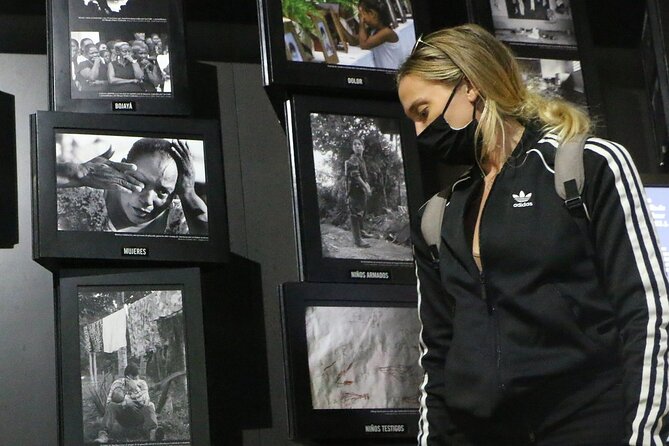
- Museo Casa de la Memoria adds first-person perspective, with interactive exhibits about violence, loss, and resilience.
- Private touring makes the pace flexible, and guides such as Carlos, Juan Carlos, Wilson, and Hector have been praised for strong storytelling.
- Hotel pickup, return transport, tickets, and snacks are included, which helps explain the $95 price.
- Expect walking and public transport, so comfortable shoes and clothing matter more than dressing up.
A Pablo Escobar tour that keeps the spotlight on Medellín
Escobar is the entry point, not the whole subject. The tour explains how narcotrafficking grew, how violence shaped daily life in the 1980s and 1990s, and how the damage still affects Colombia. You also look at what happened afterward: social programs, public transport, memorials, and communities working to build a different future.
That makes this a better choice for you if you want to understand Medellín rather than simply collect Escobar locations. The guide is expected to explain the period in English and Spanish, and the private format gives you room to ask direct questions. Several guides who have led this experience, including Carlos, Juan Carlos, Luis Ospina, Wilson, and Hector, have been praised for turning a difficult subject into a clear, human story.
You should also expect some variation. A private guide may adjust the route based on what you have already seen. One group had already visited Comuna 13 and was taken to La Catedral instead. Other groups were offered extra stops, sometimes for an additional fee. That flexibility can be useful, but you should confirm any special request or extra cost before setting out.
Other filming locations people visit in the world:
- From London: Harry Potter Warner Bros Studio Tour
★ 4.7 · 26,588 reviews - Magical London: Harry Potter Guided Walking Tour
★ 4.7 · 22,044 reviews - London: Warner Bros. Studio Harry Potter Tour & Branded Bus
★ 4.7 · 19,194 reviews
The first hour: Medellín explained from the road
Pickup begins at your Medellín accommodation. The provided description refers to a comfortable, air-conditioned minivan, while the included transport also notes public transportation, so the practical pattern is a mix: private hotel transport to begin and end, then the city’s cable car and tram during the route.
The first hour is less about checking off a famous building and more about setting the facts in place. Your guide explains Escobar’s rise, the narco phenomenon, and the pressure it placed on residents, police, politicians, and institutions. This opening matters because the city can otherwise seem easy to read in black and white: criminal on one side, victims on the other. The history was not so tidy.
A good guide also helps you separate television drama from documented events. Past guides have brought different backgrounds to the subject. One was described as having worked as a police officer during the Escobar era. Another used personal experience to explain how the violence affected ordinary people. You should not assume your guide will have the same background, but the experience is designed to offer more than a rehearsed biography.
I like this start because it gives the rest of the tour a purpose. When you later ride above neighborhoods or walk through a memorial, you are not just looking at scenery. You have been given enough political and social context to ask why these places mattered and what changed.
Cable cars and Comuna 8: geography becomes part of the story
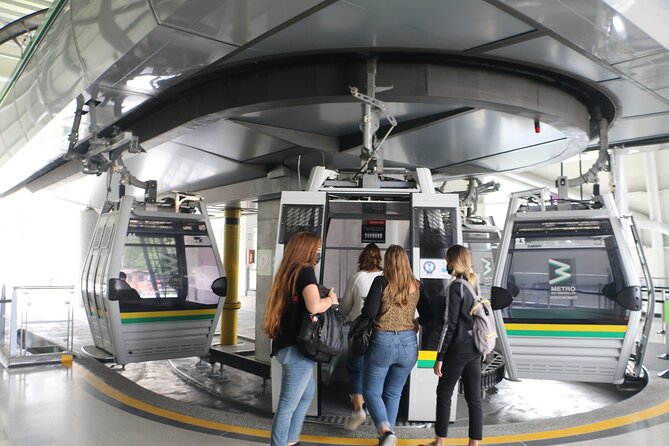
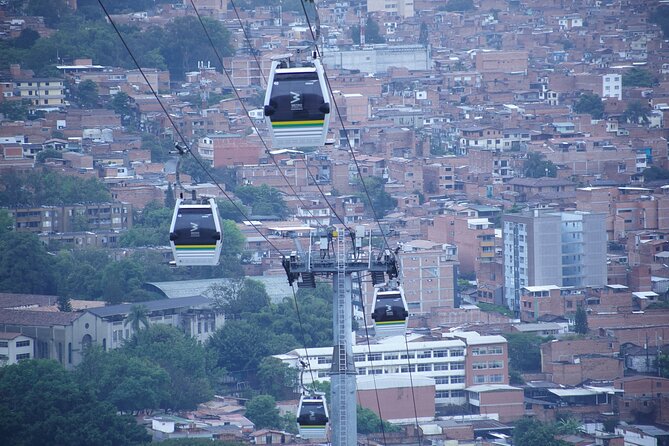
The cable car ride is one of the strongest parts of the experience. Medellín’s geography is central to its modern story, and the ride lets you see the relationship between the valley, the central city, and the hillsides. From above, the scale and density of the city become easier to grasp than they are from a vehicle at street level.
The route reaches Comuna 8, where the tour uses the neighborhood to discuss violence, poverty, public investment, and community strength. You are not simply being taken to a famous viewpoint. The surroundings help explain why transport links, housing, public spaces, and access to services have mattered so much in Medellín’s social renewal.
You will get off and walk through several stops, so wear shoes you can use comfortably for four hours. This is not a sit-back-only excursion. The cable car and tram are public systems, and the movement between them is part of the experience. It also means the day feels more like an introduction to the working city than a sealed sightseeing loop.
The cable car can be busy, and public transportation does not offer the same control as a private car. That is a small tradeoff for seeing how residents move around Medellín. If your main goal is a polished drive between landmarks, you may find this less convenient. If you want the city itself to be part of the lesson, it is a strong choice.
Museo Casa de la Memoria and the voices behind the statistics
The tram takes you to Museo Casa de la Memoria, a major stop in the four-hour route. The museum uses interactive displays to explore Colombia’s violent past and the people who lived through it. The emphasis is not on turning suffering into entertainment. It is on memory, testimony, and the costs paid by families and communities.
This is where the tour’s title makes sense. Escobar’s name may draw you in, but the museum widens the frame. You encounter the effects of narcotrafficking on Colombian society and see how the era is remembered from several points of view. That is far more useful than treating one criminal as a pop-culture character.
Plan to give the museum your attention. One hour can pass quickly, especially if you read the material and stop at the interactive sections. The experience does not promise a light or carefree visit, and you should be ready for difficult subjects involving violence and loss.
I especially like that the museum is paired with the city’s transport system. You are not looking at history in isolation. You have just passed through neighborhoods shaped by the past, then arrive at an institution built to help people examine that past. The connection gives the visit weight.
Same place, a completely different screen:
- Edinburgh: Harry Potter Magical Guided Walking Tour
★ 4.8 · 11,944 reviews - London: Warner Bros. Studio Harry Potter Tour with Transfers
★ 4.6 · 9,709 reviews - London: Warner Bros. Studio Harry Potter Tour with Transfers
★ 4.7 · 9,485 reviews - Hobbiton Movie Set: Guided Tour Ticket
★ 4.9 · 8,167 reviews
Parque Memorial Inflexión and Medellín’s attempt to remember
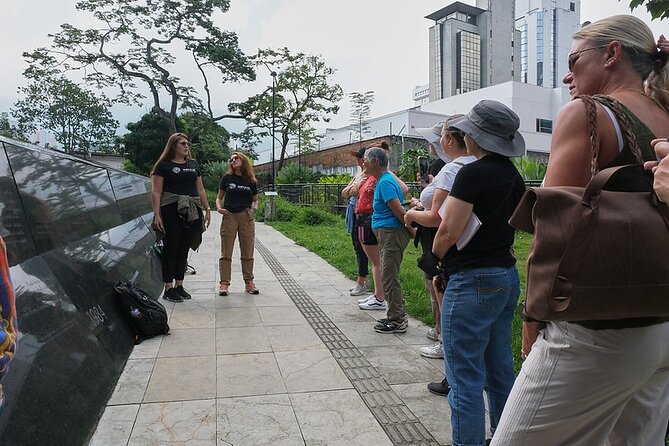
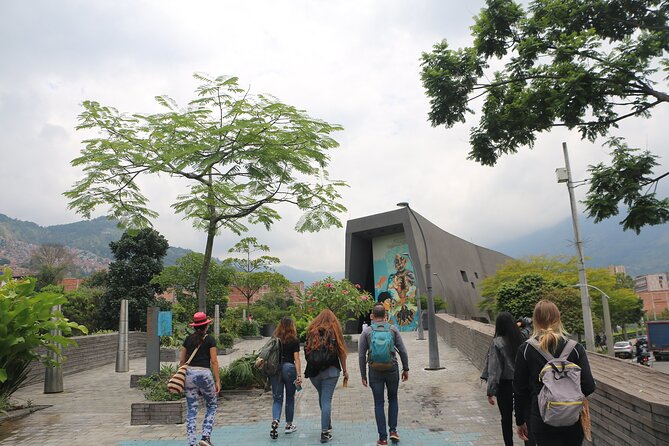
The final two hours include Parque Memorial Inflexión and additional stops from El Pinal toward Ayacucho. Parque Memorial Inflexión honors victims of the narco wars. Its purpose is not to glorify the people who caused the violence, but to mark the human cost.
The memorial works best when your guide explains what you are seeing and why public remembrance matters. The tour’s central idea is that Medellín’s recovery cannot be understood without acknowledging the people who were killed, threatened, displaced, or left with lasting fear. The city’s present-day image of renewal did not appear by accident.
The neighborhood walks also bring the story down to street level. You may see the contrast between older memories of conflict and present efforts to improve public life. The itinerary names El Pinal and Ayacucho, but the exact stops may vary with timing and the needs of your private group.
Do not expect grand Escobar architecture at every stop. One past participant found the physical sights underwhelming, describing ordinary buildings, a damaged structure, and a cemetery with few obvious markers. That is a fair warning. The value here is mainly in the explanation, not in spectacular monuments.
This is also where a strong guide makes the biggest difference. Guides praised for their storytelling have connected the places to current politics, neighborhood life, and the city’s recovery. You should ask questions as you go. The private format is useful precisely because you are not limited to a fixed speech.
What you may and may not see about Escobar
This experience includes Escobar’s life and death in its broader narrative, but the route described does not promise every famous Escobar location. You should not book it expecting a guaranteed visit to La Catedral, the prison he built for himself, his former home, or his grave.
Some previous routes included the exterior of the house where he was killed, his burial place, neighborhoods associated with housing he provided, old aircraft linked to drug flights, and a bar connected with his past. Other groups visited La Catedral for an extra fee, while one group was disappointed not to see it. These details show that the operator has sometimes adapted the day, but they are not guaranteed stops on this current route.
That distinction matters. If you are specifically interested in the house, cemetery, or prison, ask before booking. If you want a broader examination of how Escobar’s power affected Medellín and Colombia, the stated route is better aligned with your goal.
The tour also takes a firm position against presenting Escobar as a leader or folk hero. That does not mean the guide will ignore the complicated reasons some poor residents accepted his help. It means those stories should be placed beside coercion, murder, corruption, and the wider damage caused by the narcotics trade.
The $95 question: what are you paying for?
The price is $95 per person for about four hours. Included are a bilingual English and Spanish guide, hotel pickup and return, cable-car and tram tickets, snacks, and entry fees. Since this is a private activity for your group, you are also paying for a more personal pace and the chance to shape the conversation.
At first glance, the cost may seem high for a city tour using public transportation. That criticism is reasonable if you are mainly looking for a ride around town. The physical sights alone may not justify the price for every budget.
The value improves if you use the guide well. You are paying for the interpretation of a painful and complicated period, transport between several parts of the city, museum entry, and a route that links geography to social change. Previous guides have also added local food stops or extra places for some groups, though you should treat those as possible adjustments, not promised inclusions.
For a solo visitor, $95 is a larger expense than for a couple or family sharing a private booking. For a group, the personal format may compare well with several separate taxi rides, admissions, and an independent attempt to understand the city’s history. Snacks are included, but unspecified food and drinks are not, and personal expenses remain your responsibility.
Who will get the most from this experience?
I would choose this tour for you if you:
- Want the history behind the Narcos image of Medellín.
- Care about victims, public memory, and the city’s social changes.
- Prefer a private guide who can answer questions.
- Like combining walking with cable cars and the tram.
- Have not yet built a basic understanding of Medellín’s geography.
- Want hotel pickup and return rather than arranging every connection yourself.
I would look elsewhere if you only want famous Escobar properties or a quick collection of photo stops. You may also prefer another tour if difficult material about violence and loss is not something you want during your holiday.
The route is suitable for most participants, but it involves walking, public transportation, and several changes of setting. Comfortable clothes and shoes are specifically recommended. The tour is offered in English and Spanish, so check that your preferred language is available when you book.
Timing, flexibility, and practical planning
The experience lasts about four hours, but allow some flexibility around public transportation and walking. It is wise not to schedule a flight, long-distance bus, or tightly timed activity immediately afterward.
The tour is often booked about 124 days ahead, which suggests that you should not leave it until the last minute if your dates are fixed. Confirmation is sent within 48 hours, subject to availability. Free cancellation is available when you cancel at least 24 hours before the start time. Cancellations or changes made inside that window are not refunded or accepted.
You receive hotel pickup and drop-off, but the exact transport arrangement can include public transit during the tour. Ask your accommodation to be ready for the pickup time, keep your phone available, and bring only what you need for a half-day in the city.
Tips and gratuities are optional. There is no need to treat tipping as part of the listed price, though you can decide based on the service you receive.
Should you book We Don’t Talk About Pablo?
Book it if you want Medellín’s full story, not just Pablo Escobar’s celebrity. The strongest elements are the thoughtful framing, the cable car and tram route, Museo Casa de la Memoria, and guides who can connect the past to present-day Colombia. The private setup is especially helpful for a subject that raises hard questions.
Skip it if your priority is a guaranteed prison visit, grave, house, or other Escobar landmark. At $95, this is not the cheapest way to ride around Medellín, and the sights can be modest without a strong explanation.
My practical advice is to book this early, wear comfortable shoes, and tell the operator what you have already seen. Go in ready for history, memory, and social change, with Escobar treated as one part of the story rather than its center.
FAQ
How long does the tour last?
The tour lasts approximately four hours.
What places are included in the route?
The route includes Medellín, Museo Casa de la Memoria, Comuna 8 by cable car, the tram, Parque Memorial Inflexión, and neighborhood stops connected with El Pinal and Ayacucho.
Is hotel transportation included?
Yes. Hotel pickup and drop-off are included. The experience also uses Medellín’s cable car and tram system during the route.
Are cable-car and tram tickets included?
Yes. Cable-car and tram tickets are included in the tour price.
Is the tour offered in English?
Yes. A bilingual English and Spanish guide is included.
Is this a private tour?
Yes. Only your group participates in the activity.
What happens if I need to cancel?
You can receive a full refund if you cancel at least 24 hours before the experience begins. Cancellations or changes made less than 24 hours before the start time are not accepted or refunded.
Just added around the world
- Akihabara: Anime & Gaming Guided Walking Tour★ 3.0 · 2 reviews
- Delft Self Guided Sherlock Holmes Murder Mystery Game★ 4.5 · 2 reviews
- Hobbiton movie set tour and a lot more beautiful NZ sights★ 4.5 · 18 reviews
- Tauranga-Hobbiton-Rotorua : Movie Set & Geysers: Private Tour★ 5.0 · 5 reviews
- Tauranga to Magical Hobbiton Movie Set – Private Shore Excursion★ 5.0 · 7 reviews
- Package of 2 private tours in one day: Etna-Godfather with Lunch★ 5.0 · 9 reviews
- Savoca (The Godfather Town) & Taormina (day trip)★ 5.0 · 2 reviews
- The Godfather Tour, Savoca, Forza D’ Agro’ and Sicilian Lunch★ 5.0 · 10 reviews