
REVIEW · LOS ANGELES
LA Walk of Fame 100 Years of Hollywood Tour By Junket
Hollywood’s famous sidewalks reveal more than celebrity names. On this two-hour walking tour, you connect the Walk of Fame with old movie palaces, acting schools, star hotels, and odd corners of the film capital. The stories range from Charlie Chaplin and Citizen Kane to Max Factor and the first Academy Awards.
I like the strong mix of movie history and unusual local details, including hoof and paw prints beside the human handprints. I also like the personal scale: with a maximum of 25 people, and possibly fewer if bookings are light, your guide can make the walk feel more like a conversation than a parade.
The catch is simple: Hollywood Boulevard can be hot, tiring, and crowded, and this is a walking tour with no food or drink included. Wear comfortable shoes, bring water, and remember that the Hollywood Sign view is from the boulevard, not from a trail near the sign.
Key points to know before you book
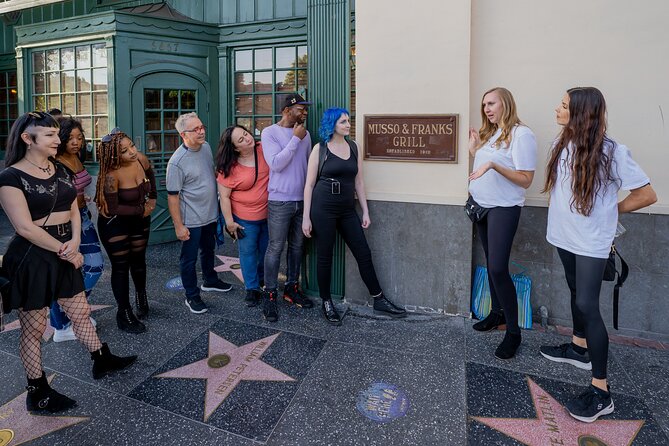
- Start at Musso & Frank Grill: Meet at 6667 Hollywood Boulevard at 11:00 a.m., one of Hollywood’s classic restaurant addresses.
- Follow a century of film culture: The route links early movie premieres, acting schools, beauty salons, theaters, hotels, and celebrity traditions.
- Hear the Charlie Chaplin story: One stop recalls Chaplin racing down a dirt road for a plate of roast lamb kidneys.
- See where Hollywood traditions began: The tour covers the first movie premiere, the first Academy Awards, and the start of handprints in the sidewalk.
- Expect a small-group feel when bookings are light: The listed maximum is 25 people, but a quiet day may produce a much more personal outing.
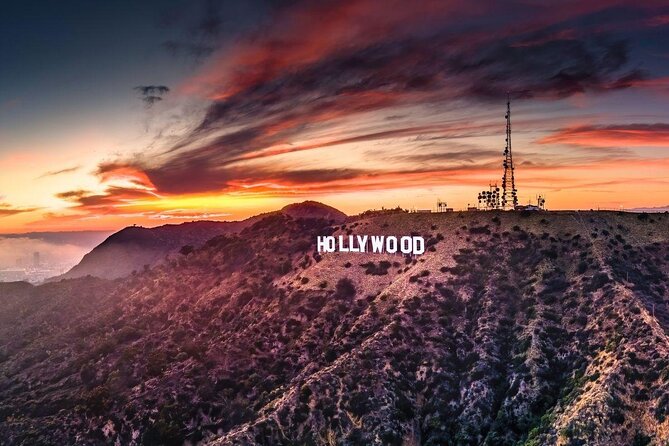
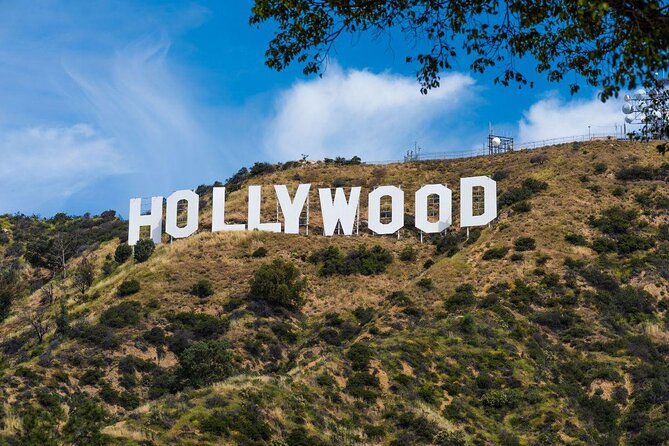
- Finish with a Hollywood Sign view: The tour ends at 6801 Hollywood Boulevard, looking toward the famous sign from the street.
Hollywood Boulevard begins at Musso & Frank Grill
The tour starts at 11:00 a.m. outside Musso & Frank Grill at 6667 Hollywood Boulevard. That starting point gives the walk an immediate sense of old Hollywood. You are not beginning at a generic meeting spot. You are beginning beside one of the boulevard’s best-known classic addresses.
From there, your guide sets the tone with stories about the people and places that shaped Hollywood over roughly a century. The route is designed for curious walkers who want context, not just a list of stars underfoot.
You receive an English-speaking professional guide and a mobile ticket. The guide’s job is especially important here because Hollywood’s famous sights can look scattered or ordinary without explanation. A star on the pavement is easy to photograph. The reason it is there, and what it says about American entertainment, is the useful part.
The group can include up to 25 people. That is large enough to provide a social atmosphere but still small enough for a guide to address the group without shouting at every stop. If attendance is low, the experience may become very personal. One outing even worked as a one-on-one tour, which allowed the guide and guest to move at an easy conversational pace.
More Hollywood and Celebrity Home Tours in Los Angeles
- Full-Day Iconic Sights of LA, Hollywood, Beverly Hills, Beaches and More
★ 5.0 · 6,147 reviews - Warner Bros. Studio Tour Hollywood
★ 4.5 · 5,246 reviews - Hollywood, Beverly Hills & Celebrity Homes Tour by Open Air Bus
★ 5.0 · 2,557 reviews
Charlie Chaplin and Hollywood’s rough early days
One stop reaches back to the days before Hollywood Boulevard became a polished tourist address. You hear about Charlie Chaplin racing down a dirt road for a plate of roast lamb kidneys.
It is a funny, specific story, and that is why it works. Instead of treating the past as a parade of famous names, the guide gives you a glimpse of the scrappy world behind the myth. Hollywood’s early film business was not yet the smooth machine people imagine today. Dirt roads, hungry performers, and quick opportunities were part of the picture.
This stop also helps you read the boulevard differently. Modern Hollywood can feel built for signs, shops, and photo stops. Stories like this remind you that the entertainment industry began with working performers and makeshift conditions, long before the area became a global symbol.
The Egyptian Theatre and the first movie premiere
The Egyptian Theatre brings you into Hollywood’s grand movie-palace era. Its story begins with the first movie premiere, and the site later became linked to the period known as King Tut Fever.
That nickname points to the public fascination with ancient Egypt that swept through popular culture after major archaeological discoveries. The theater’s design and name fit that mood, but the more important point for you is its place in cinema history. This was not simply a place where films were shown. It helped turn a movie screening into a public event.
The building’s history gives the tour a useful shift in scale. Chaplin’s story feels personal and scruffy. The Egyptian Theatre shows Hollywood presenting movies as grand occasions. You begin to see how the industry learned to sell not only films, but also glamour, anticipation, and spectacle.
The stop is best for anyone who likes the story of moviegoing itself. If you only want current celebrity locations, it may feel less immediate. If you enjoy understanding how Hollywood became Hollywood, it is one of the stronger parts of the route.
The acting academy behind famous performances
The tour also visits a renowned academy whose former students include Mark Ruffalo and Marlon Brando. The school represents the training side of the entertainment industry, a useful counterpoint to the usual focus on stars and red carpets.
Names such as Brando and Ruffalo make the stop easy to place, but the larger idea matters more. Hollywood success is often presented as sudden discovery. An acting academy reminds you that performance is also study, practice, discipline, and technique.
This is a good moment to ask your guide about the difference between movie-star mythology and the work required to perform on screen. The route does not promise a class or an inside visit, so you should think of this as an exterior stop with historical context rather than an academy experience.
Same place, a completely different screen:
- Hollywood Sign 2.5-Hour Tour with Comedians and Their Dogs
★ 5.0 · 2,496 reviews - Full-Day LA Tour: Santa Monica, Hollywood and Beverly Hills
★ 5.0 · 2,431 reviews - Hollywood and Celebrity Homes Bus Tour
★ 4.5 · 2,074 reviews - Hollywood Open Bus Tours
★ 4.5 · 1,801 reviews
Max Factor and the changing face of American beauty

The former makeup store connected to Max Factor is one of the tour’s most distinctive stops. The story explains how this location helped launch Max Factor’s career and changed American beauty standards.
Makeup is easy to overlook when people talk about film history, but it shaped the way performers appeared on camera and the way audiences imagined glamour. Max Factor’s work linked cosmetics, celebrity, photography, and commercial beauty in a lasting way.
This stop broadens the tour beyond actors and theaters. Hollywood was built by stylists, makeup artists, designers, photographers, and business owners as much as by performers. The former store helps you see the boulevard as a place where beauty became part of the entertainment product.
I especially like this stop for visitors who want more than familiar star names. It gives the route a social and commercial angle, showing how screen culture changed everyday ideas about appearance.
The theater that screened Citizen Kane
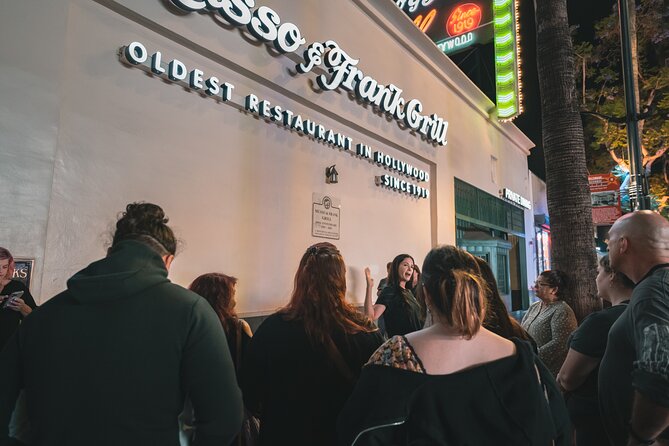
Another building began as a venue for live plays before showing movies. Its first movie screening was the controversial Citizen Kane.
That detail gives the stop a useful sense of transition. Hollywood buildings often changed roles as the entertainment business changed. A theater designed for live performance became part of the cinema system, reflecting the growing power of filmed entertainment.
Citizen Kane is an especially fitting choice for the story because it remains associated with artistic ambition and controversy. You do not need to be a film scholar to appreciate the point. The screening marked a moment when a building, an audience, and a debated movie met in one place.
The tour does not appear to include a film screening, theater admission, or a private interior visit. You are paying for the guide’s explanation and the chance to connect the exterior location with a major chapter in movie history.
Handprints, hoofprints, and Hollywood’s most playful tradition
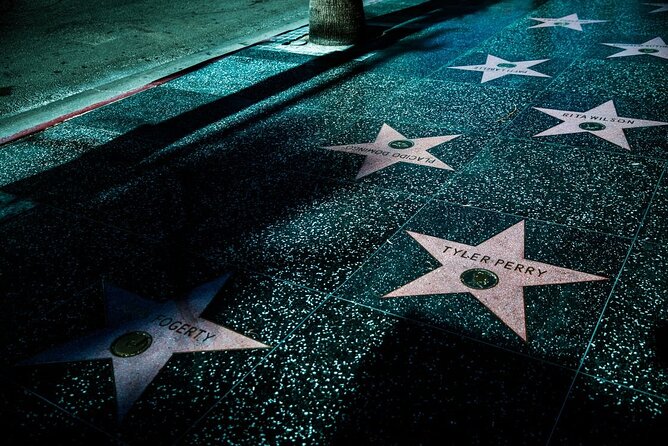
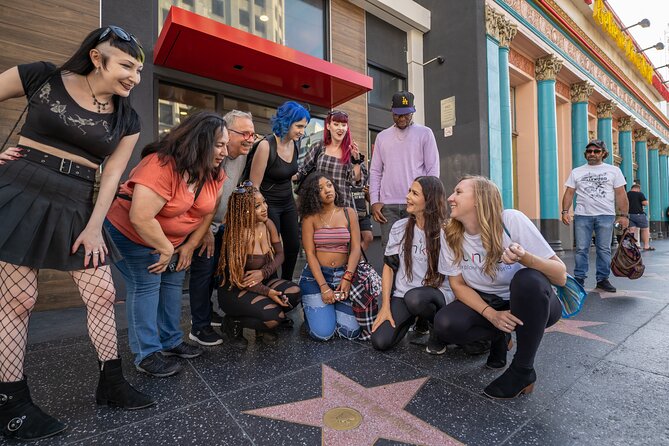
The handprint stop explains where the tradition of leaving celebrity prints in the sidewalk began. It also includes non-human hoof and paw prints.
This is exactly the kind of detail that keeps the walk from becoming too solemn. Hollywood loves its ceremonies, but it also enjoys a joke and a bit of spectacle. The animal prints show that fame on the boulevard has never been limited to people.
You can expect this part of the tour to be popular with families and anyone who enjoys the lighter side of movie culture. It also gives you a practical reason to look down as you walk. The Walk of Fame is not only about the names under your feet. Nearby prints and markings tell a second story about how Hollywood celebrates its icons.
Because this area attracts plenty of attention, your guide’s commentary helps you focus on the details instead of simply stopping for a quick photograph.
The hotel linked to the first Academy Awards
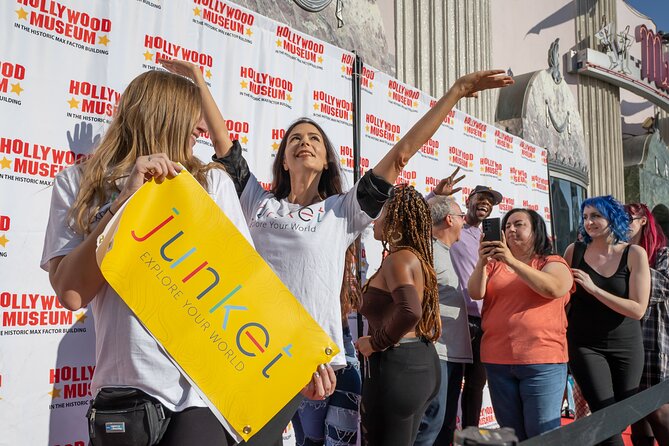
The iconic hotel on the route has served as a playground for stars since hosting the first Academy Awards in 1929. That date places the building near the beginning of the awards tradition that now dominates global movie culture every year.
The stop gives you a chance to think about how different the Academy Awards once were. The ceremony began in a hotel setting, before becoming the elaborate televised event known around the world. Hollywood’s mythology grew from places where performers, producers, and industry figures gathered in person.
You should expect an exterior history stop rather than a hotel stay or private access. The value is in the connection between the building and the early awards culture. It is another example of the tour using a real address to explain a much larger institution.
A magicians’ club with an expensive overnight option
One of the route’s more unusual locations is a members-only club for magicians. A stay can be arranged, but only for a price.
That contrast gives the tour some welcome humor. You move from famous actors and award ceremonies to a private world built around magic. The club’s restricted nature also makes the stop feel different from the public sidewalks and theaters along the route.
You should not expect ordinary walk-in access. The tour presents the location and its story from the outside, with the possibility of a stay mentioned as part of its exclusive character. For many people, this may be a more memorable stop than another standard celebrity address because it reveals a specialized community hiding in plain sight.
Frank Lloyd Wright’s uninhabitable house
The route includes a house designed by Frank Lloyd Wright that is sadly uninhabitable because of its design. This is a good reminder that famous architecture can be admired and impractical at the same time.
Wright’s name carries strong expectations, but the house’s condition gives the story a sharp edge. Great design does not always make a comfortable home. A building can be important, beautiful, or clever while still failing at the basic task of being lived in.
This stop adds architecture to a walk otherwise focused on movies and celebrity culture. It also encourages a more critical way of looking at famous places. You are not being asked to admire every Hollywood landmark without question. Some are successful as homes, some as theaters, some as symbols, and some mainly as stories.
Ending with the Hollywood Sign from the boulevard
The tour ends at 6801 Hollywood Boulevard with a view of the Hollywood Sign. This is a street-level view, not a hike to the sign and not an excursion into the hills.
That distinction matters when you set expectations. You can finish with one of Los Angeles’s most recognizable sights, but you will not be walking up to the letters. The final view works well because the tour has spent two hours explaining the people, businesses, buildings, and traditions that made the sign meaningful.
The ending also makes the tour easy to combine with other plans. You finish on Hollywood Boulevard rather than at a remote trailhead. Since the start and end points are both on the boulevard, you can continue exploring nearby after the guide says goodbye.
Is $26 a fair price for two hours?
At $26 per person, the tour offers solid value if you want a guided introduction to Hollywood’s history. You are paying for a professional guide, researched facts, and a route that connects several different parts of the city’s entertainment story.
The value is not in admission tickets, meals, or private access. Food and drinks are not included, and the supplied details do not list interior entry to the theaters, academy, club, hotel, or house. You are paying for interpretation while walking between notable locations.
That makes the tour a good fit for a first visit, a short stay, or anyone who prefers a clear route over wandering without context. It is less useful if you want a luxury celebrity experience, a studio tour, or a long visit inside historic buildings.
The two-hour length is also practical. You get enough time for a broad overview without giving up a full day. The tradeoff is that each stop receives a concise explanation rather than a long examination.
Practical advice for the walk
Plan for moderate physical activity. You will be on your feet and moving through Hollywood Boulevard, so comfortable shoes matter more than stylish footwear. The heat can make the route tiring, especially around the 11:00 a.m. start.
Bring water because no drinks are included. You may also want sun protection, though the supplied tour details do not promise shade along the route. If you use public transportation, the meeting area is near transit, which makes reaching the start simpler.
The tour is offered in English and uses a mobile ticket. Confirmation is sent within 48 hours of booking, subject to availability. Service animals are allowed.
Free cancellation is available if you cancel at least 24 hours before the 11:00 a.m. start time. Inside that window, you should expect no refund, and changes are not accepted.
Who will enjoy this Hollywood walking tour?
I would choose this tour if you want Hollywood explained through specific places rather than reduced to a star-filled sidewalk. The mix of Chaplin, the Egyptian Theatre, Max Factor, Citizen Kane, the first Academy Awards, magicians, architecture, and the Hollywood Sign gives you more range than a simple Walk of Fame photo stop.
It suits first-time visitors, film fans, architecture enthusiasts, and solo visitors who like asking questions. A light booking can make the outing particularly personal, though the maximum group size is 25.
You may want something else if you dislike walking in heat, need extensive indoor time, or want direct access to the Hollywood Sign. This is a street-level history walk, not a studio tour or a hiking trip.
Should you book the LA Walk of Fame 100 Years of Hollywood Tour?
Book it if you want a reasonably priced, two-hour introduction to Hollywood with a guide who can connect famous names to real places. The strongest reason to go is the variety: you get movie premieres, acting, makeup, architecture, awards, animal prints, magicians, and a final Hollywood Sign view.
Skip it if your main goal is a behind-the-scenes film production experience or a hike near the sign. For everyone else, $26 is a fair price for a focused walk that gives Hollywood Boulevard more meaning than a quick photograph can provide.
FAQ
How much does the tour cost?
The tour costs $26 per person.
How long does the Hollywood tour last?
The tour lasts approximately two hours.
What time does the tour start?
The tour starts at 11:00 a.m.
Where does the tour begin?
The meeting point is Musso & Frank Grill at 6667 Hollywood Boulevard, Hollywood, California 90028.
Where does the tour end?
The tour ends at 6801 Hollywood Boulevard, with a view of the Hollywood Sign from Hollywood Boulevard.
What language is the tour offered in?
The tour is offered in English.
Is food or drink included?
No. Food and drinks are not included in the tour price.
How large can the group be?
The maximum group size is 25 people.
Can I cancel for a full refund?
Yes, if you cancel at least 24 hours before the experience start time. Cancellations made less than 24 hours in advance are not refunded.
More Location Walks in Los Angeles
- Los Angeles Original 90-Minute Walking Tour to The Hollywood Sign
★ 5.0 · 693 reviews - Hollywood Stars Tour: Walk of Fame, Celebrity Homes, Sunset Strip
★ 4.0 · 341 reviews - LA: Express Hollywood Sign Guided Walking Tour with Photos
★ 4.9 · 310 reviews - Haunted Hollywood Walking Tour: True Crime and Creepy Tales
★ 5.0 · 299 reviews
Just added around Los Angeles
- Hollywood and Beverly Hills Bus Tour★ 5.0 · 2 reviews
- The Premier Hollywood Sign Tour: Nature in the Heart of the City★ 5.0 · 4 reviews
- The Ultimate Hollywood Tour★ 5.0 · 8 reviews
- Total Hollywood Experience with Walk of Fame and Celebrity Homes Tour★ 4.0 · 3 reviews
- Hollywood: the Real Walking Tour★ 5.0 · 26 reviews
- Ghosts of Hollywood Night-Time Walking Tour★ 5.0 · 25 reviews
- Small-Group Warner Bros and Hollywood Tour from Anaheim★ 5.0 · 19 reviews
- Holy Biodiversity, Batman! A Naturalist’s “Batcaves” Tour★ 5.0 · 7 reviews
Los Angeles Film Location Tours, compared.
Full-Day Iconic Sights of LA, Hollywood, Beverly Hills, Beaches and More
Read our review →
Hollywood, Beverly Hills & Celebrity Homes Tour by Open Air Bus
Read our review →
Hollywood Sign 2.5-Hour Tour with Comedians and Their Dogs
Read our review →
Full-Day LA Tour: Santa Monica, Hollywood and Beverly Hills
Read our review →
Hollywood & Celebrity Homes Open-Air Bus Tour
Read our review →Browse the lists this tour appears in