
REVIEW · SHERLOCK HOLMES
SHERLOCK Escape Room
The best thing about SHERLOCK is its 120-minute game. You get twice the breathing room of many escape rooms, but the puzzles are still demanding enough to keep a large group busy. You play British agents in 1902, breaking into a Danish colonel’s estate to recover secret photographs tied to Prince Edward the 6th.
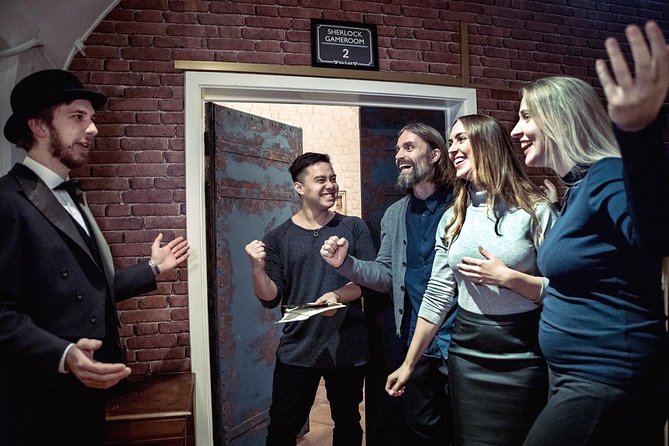
I like the two-room setup, which forces separate teams to describe objects, clues, and locations through a wall. I also like the theatrical welcome, with costumed staff such as Ada, Mia, Poppy, Roxanne, Ian, and Bastian helping set the scene. The main caution is difficulty: this is not a gentle beginner game, and groups of four may find the room harder than a group of six to twelve.
Key points to know before you book
- Two hours of puzzle time: The extended format gives you more time to work through a complicated plot.
- A real communication test: Larger groups may begin in separate rooms and must share information to progress.
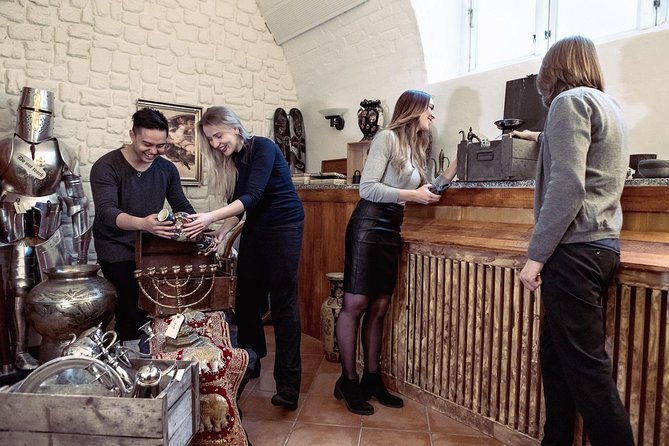
- Strong period atmosphere: Costumes, acting, props, and the 1902 spy story do more than decorate the room.
- Best for six to twelve people: Four can play, but the game is designed around a larger team.
- Private group booking: You play only with your own party, with a dedicated game master available for hints.
- Good value for team events: The group price is high, but the per-person cost becomes more reasonable with a full party.
The 1902 mission at Aldersrogade
Your assignment begins at Aldersrogade 6A in Copenhagen. The premise is wonderfully old-fashioned: you are British agents in 1902, and your team must break into the estate of Danish Colonel Holtenberg. Somewhere inside are secret photographs concerning Prince Edward the 6th.
That story gives the game a clear purpose from the first minute. You are not simply hunting for a code because the clock says so. You have a role, a target, and a reason to search. The staff use costumes and acting to get you into character, so the opening feels more like the beginning of a small stage adventure than a standard briefing.
You should expect the experience to begin with an introduction from the game master, followed by the mission itself. The total booking lasts approximately two and a half hours, while the central escape-room challenge runs for 120 minutes. That distinction matters. You are paying for a longer visit than the game clock alone suggests, but the advertised two hours refers to the puzzle session.
The setting is built around Sherlock Holmes rather than a literal Holmes appearance. You get the pleasure of Victorian detective fiction, British agents, secret documents, costumes, and a country-estate mystery. If you want a faithful adaptation of a particular Holmes story, this is not that. If you enjoy the tone of Holmes and the mechanics of a spy caper, the setup should work well.
More Sherlock Holmes tours in the world:
- London: Sherlock Holmes-Themed Walking Tour
★ 4.7 · 756 reviews - Sherlock: The Official Live Game
★ 4.5 · 460 reviews - Sherlock Holmes Walking Tour in London
★ 5.0 · 207 reviews
How the split-room puzzle works
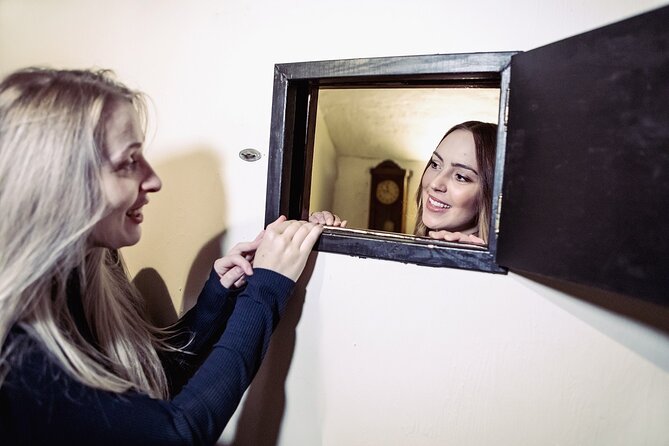
The most distinctive part of SHERLOCK is the use of separate rooms. Large groups may divide into two teams at the beginning, with each side holding different information. Walls prevent you from simply passing an object across, so communication becomes part of the puzzle.
You may need to explain where a symbol is placed, describe a sequence, or tell the other team exactly what you can see. That sounds simple until the clock is running and several details appear similar. A vague message such as there is a key near the papers may not be enough. You need to say which papers, which key, and where each item sits.
I like this design because it gives a large group a real job. In an ordinary escape room, one or two quick solvers can sometimes dominate the action while everyone else watches. Here, the split makes coordination essential. A sharp observer in one room may hold the answer to a puzzle on the other side, but only if the information is passed clearly.
The final stage brings the teams back together. That reunion gives the game a satisfying change of pace. You start by working apart, then combine your discoveries for the last set of tasks. For a company outing or family group, this creates a useful lesson in listening, delegation, and precise communication without turning the event into a formal workshop.
There is a tradeoff. If you have only four people, you might have two people in each room. That can make the game much harder because each pair has fewer eyes, fewer ideas, and less help with communication. The room is generally recommended for six to twelve participants, and I would take that advice seriously.
The puzzles are clever, and not soft
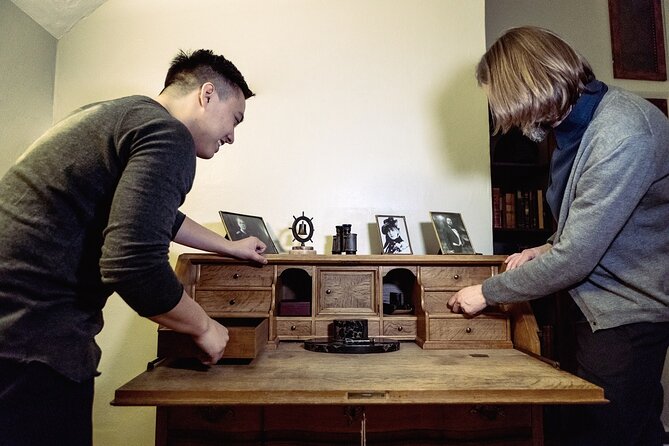
SHERLOCK is aimed at players who want a challenge. The tasks are described as difficult, and the most enthusiastic reactions focus on clever riddles, well-made props, and the feeling of needing to use your brain for the full session.
That difficulty is part of the appeal. You are given 120 minutes, but that does not mean you can work at a relaxed pace. One group reportedly finished a harder room with only 24 seconds remaining, which gives you a good idea of the tension near the end. The long format offers room to recover from a slow start, not a guarantee of an easy win.
The game master can provide hints when your group gets stuck. Good help is especially important in a complex room. The staff aim to give enough guidance to keep the story moving without solving every puzzle for you. Poppy is specifically praised for being helpful and welcoming, while Ian guided a family group with children aged 11 and 14 using what they felt was the right amount of assistance.
That said, the support may not feel identical for every group. One comment found the help reasonable but wished the staff had been more accommodating. I would treat that as a useful reminder to tell your game master what sort of experience you want. If you want a tough test, ask for minimal hints. If your children or less experienced players are becoming frustrated, say so early.
The room seems best suited to people who enjoy solving problems under pressure. You do not need previous escape-room experience, but experienced players may appreciate the harder design more than a group looking for a quick, easy win.
Cost and value for a private group
The listed price is $685.63 per group of up to 12 people. At full capacity, that works out to about $57 per person. For six players, the cost is roughly $114 per person, and for four it is about $171 per person.
That makes group size the key value question. With ten to twelve people, you are buying a two-hour private activity with a dedicated game master, theatrical presentation, props, and a winning-team photo. For a birthday, work event, or family gathering, the price can compare reasonably with several separate entertainment activities.
With four people, the same total cost feels much steeper. You also face the practical disadvantage of having fewer people to search and communicate between the rooms. I would choose this experience for a properly sized group rather than force a small party into it simply because a smaller date is convenient.
The price includes the private escape room, game master, and a photo of winning teams. Alcoholic drinks are not included, though drinks can be purchased. If your group has arranged complimentary snacks or drinks as part of a separate event, make sure the staff know in advance. One team found that this information had not reached the host, so their planned refreshments were not handled as expected.
A few more filming locations around the world worth a look
- From London: Harry Potter Warner Bros Studio Tour
★ 4.7 · 26,588 reviews - Magical London: Harry Potter Guided Walking Tour
★ 4.7 · 22,044 reviews - London: Warner Bros. Studio Harry Potter Tour & Branded Bus
★ 4.7 · 19,194 reviews - Edinburgh: Harry Potter Magical Guided Walking Tour
★ 4.8 · 11,944 reviews
A good choice for team building
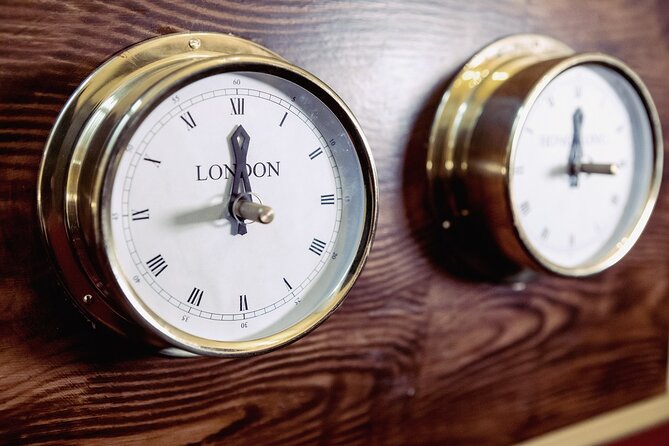
This is one of the better formats for a group that wants more than a shared puzzle room. The two-room structure makes people divide responsibilities and report information clearly. That can reveal how your team handles pressure, who notices details, and who naturally organizes the work.
I would not call it a quiet or passive team activity. You need to speak up, listen carefully, and accept that your first theory may be wrong. The game may also expose uneven participation. A confident solver can take over, while a quieter player may spot an important detail and struggle to get heard.
For a work group, the private format is a major advantage. Nobody outside your party joins the game, so you can set your own pace and avoid being paired with strangers. Afterward, the experience gives you plenty to discuss, especially if the final seconds were close.
The 120-minute length also makes it more substantial than a short corporate icebreaker. You have enough time for the story and puzzles to develop. The downside is that a demanding game can feel long if your group dislikes riddles or becomes frustrated by locked progress. I would explain the challenge level before inviting colleagues who prefer relaxed social activities.
Bringing children and mixed-age groups

Children must be accompanied by an adult. The experience can work for families, and children aged 11 and 14 have been reported as enjoying it, but the difficult puzzles mean that adult involvement matters.
I would divide tasks rather than let adults solve everything. Ask younger players to search for visible details, read documents, track symbols, and report what they see. The game’s communication structure can give children a useful role, especially when a team needs to describe objects in another room.
You should also consider the two-and-a-half-hour total visit. That is a long concentration period for younger children. The 120-minute game may be exciting at first, but tired players can lose interest if the group is stuck. A game master can offer hints, and you should not regard asking for help as failure. The aim is a fun mission, not a perfect score.
The family-friendly label should therefore be read carefully. Most people can participate, and children have enjoyed it, but this is a challenging family activity, not a simple children’s attraction.
The people who make the scene work
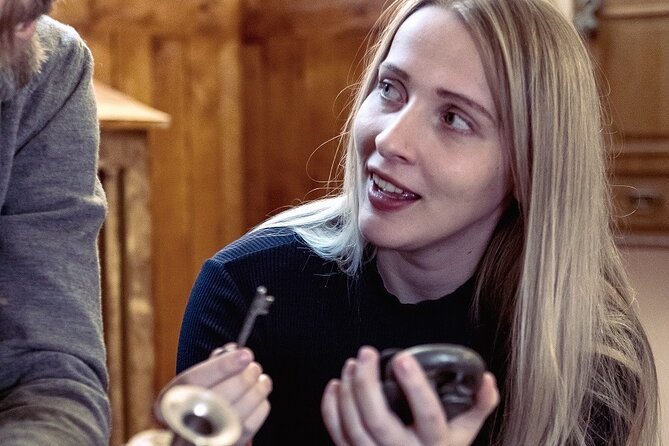
The staff play a large part in the experience. Names connected with the game include Ada, Mia, Poppy, Roxanne, Ian, and Bastian. Their roles are not limited to handing over instructions. The actors help introduce the story, establish the period mood, and guide the game once the puzzles begin.
The opening performance seems particularly important. One group was approached outside by a cast member who drew them into the story before the game had properly started. That sort of unexpected character work can make the assignment feel immediate and playful.
Poppy receives especially strong praise for being welcoming and helpful. Ada is also singled out for playing her role well, while Bastian is associated with a polished, professional experience. These details matter because a game master can either keep a difficult room exciting or allow it to become a wall of frustration.
The staff are not there to give constant answers. Their job is to judge when your team needs a nudge. You should expect guidance, not a private tutor who solves the room for you.
Getting there and planning your visit
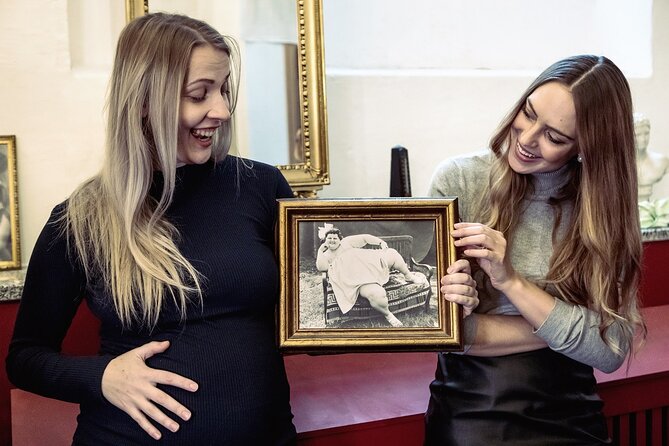
The meeting point is Aldersrogade 6A, 2100 Copenhagen, and the activity ends at the same location. It is near public transportation, which makes it easier to reach without a car.
If you drive, street parking is listed at DKK 9 per hour. Since the full visit lasts approximately two and a half hours, allow for more than the game’s 120 minutes when estimating parking. Parking costs are not included.
Choose your preferred starting time in the booking requirements. Confirmation is sent within 48 hours, subject to availability, so do not assume that a requested time is final until you receive confirmation.
Arrive ready to take part in a role-playing game. Comfortable clothes make sense, but the provided information does not state that special clothing or equipment is required. The mobile ticket is convenient, and the activity is private for your party.
The booking cannot be refunded or changed after purchase. That is important for a group event, where one person may be arranging the plans for several people. Check your date, group size, and preferred start time before paying.
Who should book SHERLOCK?
I would book this for a group of six to twelve people who enjoy demanding puzzles, theatrical storytelling, and a little time pressure. It is especially suitable for a team-building event, a birthday group, or a family with older children who like solving problems together.
I would think twice if your party has only four people, dislikes difficult riddles, or wants a short and casual activity. You can play with four, but the room’s communication design works better when each side has enough people to search, reason, and speak.
The value is strongest with a full group. At maximum capacity, you get a private two-hour mission, a dedicated host, a costumed introduction, a distinctive split-room structure, and a final team photo. It is not the cheapest Copenhagen activity, but it offers more time and more group interaction than a standard escape room.
FAQ
Where does SHERLOCK Escape Room take place?
The meeting point is Aldersrogade 6A, 2100 København, Denmark. The activity ends back at the same meeting point.
How long does the escape room last?
The Sherlock game lasts 120 minutes. The full experience is approximately two hours and 30 minutes, allowing time for the introduction and other parts of the visit.
How many people can join?
The private booking allows up to 12 people. The room is generally recommended for groups of six to twelve participants.
Can a group of four play?
Yes, a group of four can play, but the room is harder with fewer people. The split-room design gives each small team less help with searching, solving, and communicating.
Is this a private activity?
Yes. Only your own group participates in the escape room.
Are children allowed?
Children can participate, but they must be accompanied by an adult. Most people can take part, and the game has been enjoyed by children aged 11 and 14.
Is a game master included?
Yes. A dedicated guide or game master is included. The game master introduces the experience and can provide hints if your group needs help.
What is included in the price?
The price includes the private escape room, a dedicated guide or game master, and a picture of winning teams. Alcoholic drinks are not included, though they are available to purchase. Parking is also not included.
Should you book SHERLOCK?
Book it if you want a serious, story-led puzzle challenge where communication matters as much as cleverness. Bring six or more people, prepare for difficult tasks, and accept a hint when the clock is draining away.
Skip it if you want a simple activity with little pressure, or if your party cannot commit to the date because the booking is non-refundable and cannot be changed. For the right group, SHERLOCK offers a lively Copenhagen evening with costumes, teamwork, and enough time to make the mystery feel like a real mission.
Just added around the world
- The Godfather★ 5.0 · 13 reviews
- Godfather Tour and Taormina★ 5.0 · 5 reviews
- Godfather tour★ 5.0 · 14 reviews
- Best of Godfather and Taormina Tour with Street Food Tasting★ 5.0 · 3 reviews
- City of Italica and Game of Thrones★ 5.0 · 2 reviews
- Godfather Private Tour from Messina cruise port★ 5.0 · 5 reviews
- Game of Thrones filming locations, Itálica, Seville★ 4.5 · 27 reviews
- K-pop boyband Film Location Private Day Trip★ 5.0 · 26 reviews
Sherlock Holmes Tours, compared.


Sherlock Holmes Old London – Very Small Group Walking Tour
Read our review →
Private Sherlock Holmes Adventure Tour Challenge
Read our review →Browse the lists this tour appears in